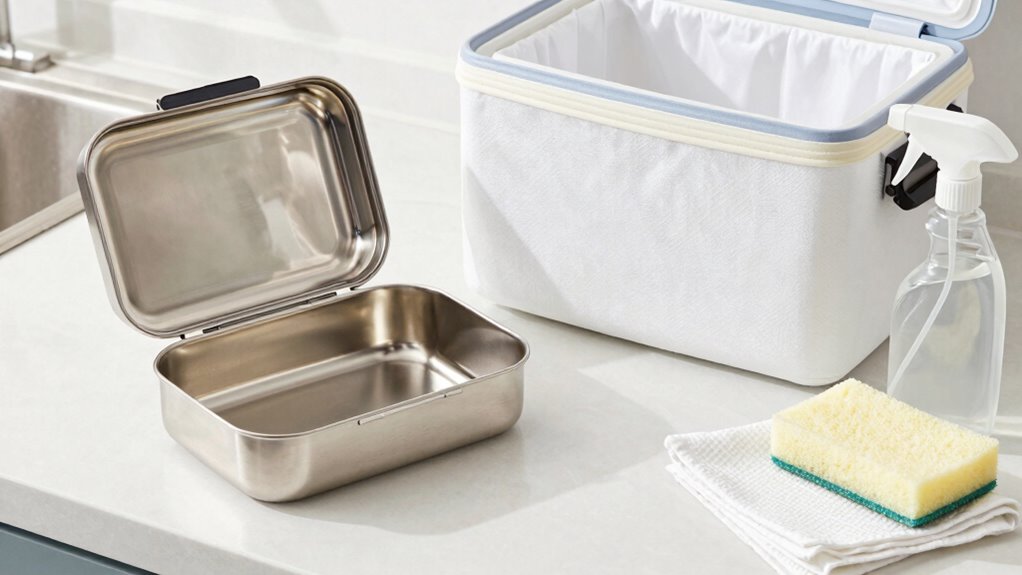

To clean your lunch boxes and soft coolers properly, start by emptying all contents and rinsing them with warm water. Use eco-friendly soap or a vinegar solution to wipe down all surfaces, paying attention to corners and seams. For stubborn stains or odors, sprinkle baking soda and let it sit before scrubbing. Make sure everything is dry before storing, with lids slightly open for airflow. For more helpful tips, keep exploring how to keep your containers fresh and safe.

Get cleaning gear delivered free with Prime
- Fast, free delivery on millions of items
- Prime Video, Amazon Music and more included
- Member-only deals all year
Key Takeaways
- Empty and rinse containers thoroughly with warm water to remove leftover food and debris.
- Use a damp cloth with eco-friendly soap or a vinegar solution to wipe both interior and exterior surfaces.
- For stubborn stains or odors, apply baking soda, let sit, then scrub and rinse thoroughly.
- Dry containers completely, leaving lids open or slightly ajar to promote airflow and prevent mold.
- Perform regular deep cleaning with a vinegar and water mix to disinfect and maintain hygiene.
Keeping your lunch boxes and soft coolers clean is essential for maintaining food safety and extending their lifespan. Regular cleaning prevents bacteria buildup, keeps odors at bay, and guarantees your containers stay fresh for future use. When it comes to cleaning, eco-friendly cleaning methods are a smart choice. Using natural ingredients like vinegar, baking soda, and mild soap not only helps reduce your environmental impact but also guarantees that no harmful residues remain on your containers. These gentle cleaners are effective at breaking down grime and odor without the harsh chemicals found in many commercial cleaning products. Incorporating sustainable living practices into your routine can further support environmental conservation efforts.
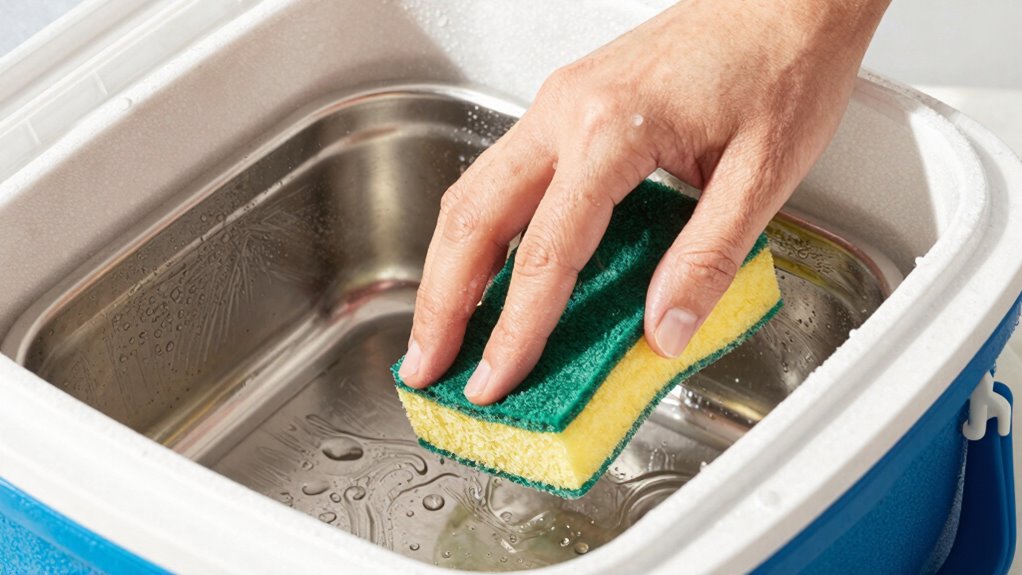
Storage maintenance is equally important in keeping your lunch boxes and soft coolers in top shape. Before cleaning, empty out any leftover food or liquids. Rinse the containers thoroughly with warm water to remove loose debris. For soft coolers, wipe down the interior with a damp cloth soaked in a solution of water and a small amount of eco-friendly soap. Pay special attention to corners and seams where mold and bacteria can hide. Additionally, ensuring proper storage techniques helps prevent the development of odors and mold. Proper cleaning routines can also help avoid the buildup of stubborn stains and germs, making maintenance easier over time. Regular cleaning and proper maintenance can also prevent the need for more intensive deep cleaning, saving you time and effort. After cleaning, dry everything completely before storing. Moisture trapped inside can lead to mold growth and unpleasant smells, so leave the lids open or the cooler slightly ajar during storage to promote airflow.
When it’s time to deep clean, you can utilize natural disinfectants. Mix equal parts of water and white vinegar to create an effective antibacterial solution. Wipe down the interior and exterior surfaces of your lunch boxes and coolers with this mixture. For stubborn stains or lingering odors, sprinkle baking soda inside, let it sit for a few hours, then scrub gently with a soft brush or sponge. Rinse thoroughly to remove any residue. Regular maintenance like this not only keeps your containers hygienic but also prolongs their usability.
As an affiliate, we earn on qualifying purchases.
Frequently Asked Questions
Can I Put Lunch Boxes in the Dishwasher Regularly?
Yes, you can put lunch boxes in the dishwasher regularly if they’re dishwasher safe. Always check the manufacturer’s guidelines for dishwasher safety before doing so. For cleaning frequency, it’s best to wash lunch boxes after each use to prevent odors and bacteria buildup. Soft coolers, however, usually require hand washing to preserve insulation and materials. Regular cleaning keeps your lunch gear fresh, safe, and ready for your next meal.
How Often Should I Deep Clean Soft Coolers?
You should deep clean your soft cooler every one to three months, depending on how often you use it and its material. If it’s made of fabric, clean it more frequently to prevent odors and mold. For plastic or vinyl coolers, a thorough cleaning every few months keeps it fresh. Regular cleaning, including spot cleaning after use, helps maintain your cooler’s condition and guarantees it’s always ready for the next adventure.
Are There Eco-Friendly Cleaning Methods for Lunch Boxes?
Yes, you can clean lunch boxes eco-friendly by using biodegradable cleaning products and natural disinfectants like vinegar or baking soda. These options effectively sanitize without harming the environment. Simply mix vinegar with water or sprinkle baking soda inside, scrub gently, and rinse thoroughly. This method keeps your lunch box clean, safe, and eco-conscious, reducing chemical use and supporting sustainability.
What Should I Do if Mold Develops Inside the Cooler?
If mold develops inside your cooler, act quickly—molds can cause allergies or respiratory issues. According to the CDC, mold spores can become airborne and pose health risks. To address this, remove all contents, scrub the inside with a mixture of vinegar and baking soda, and rinse thoroughly. For mold prevention, make sure your cooler dries completely after each use and maintain regular cooler maintenance to keep mold at bay.
Which Cleaning Supplies Are Safest for Children’s Lunch Containers?
You should use safe cleaning agents like mild dish soap and warm water for children’s lunch containers. Avoid harsh chemicals that can leave residues. Look for BPA-free containers to guarantee safety, especially after cleaning. Rinse thoroughly to remove any soap or cleaner. These steps help keep your child’s lunch containers hygienic and safe for everyday use, preventing any potential health risks from harmful substances.
Conclusion
By breezily brushing off bacteria and grime, you’ll boost your lunch box’s longevity and keep your coolers clean and craving-free. Consistent care, careful cleaning, and clever drying create a cycle of cleanliness that keeps your gear gleaming and germ-free. Remember, a simple sanitation strategy saves you stress and spoils, so stay steadfast in your sanitation routine. Sustain your supplies with swift, smart, and simple steps—so your snacks stay fresh and your coolers continue to cool!
Halloween Picks
halloween
As an affiliate, we earn on qualifying purchases.