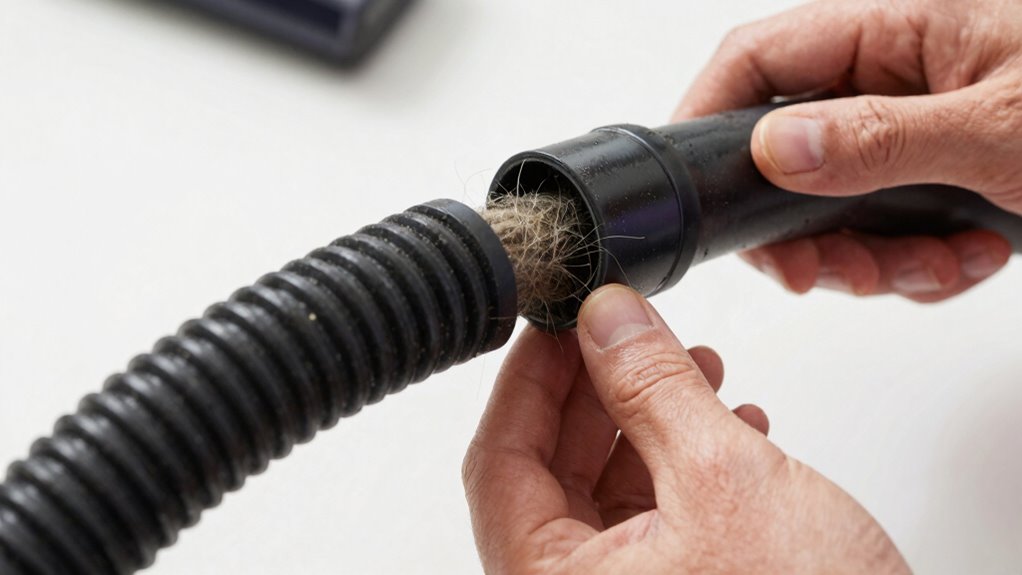

To fix a sudden drop in suction, start by unplugging your vacuum for safety. Detach the hose and look for visible blockages like hair or string. Carefully remove any debris you find. Rinse the hose with warm water, adding a little mild detergent if needed, then shake and hang it to dry completely. Regularly inspecting and cleaning your hose can prevent future issues. Keep going to discover more tips for maintaining your vacuum’s performance.

Get cleaning gear delivered free with Prime
- Fast, free delivery on millions of items
- Prime Video, Amazon Music and more included
- Member-only deals all year
Key Takeaways
- Unplug the vacuum and detach the hose for inspection.
- Check for and remove visible obstructions like hair or string inside the hose.
- Rinse the hose with warm water, adding mild detergent for stubborn grime.
- Shake gently to dislodge debris and hang to dry completely before reattaching.
- Regularly inspect and maintain filters to prevent suction loss.
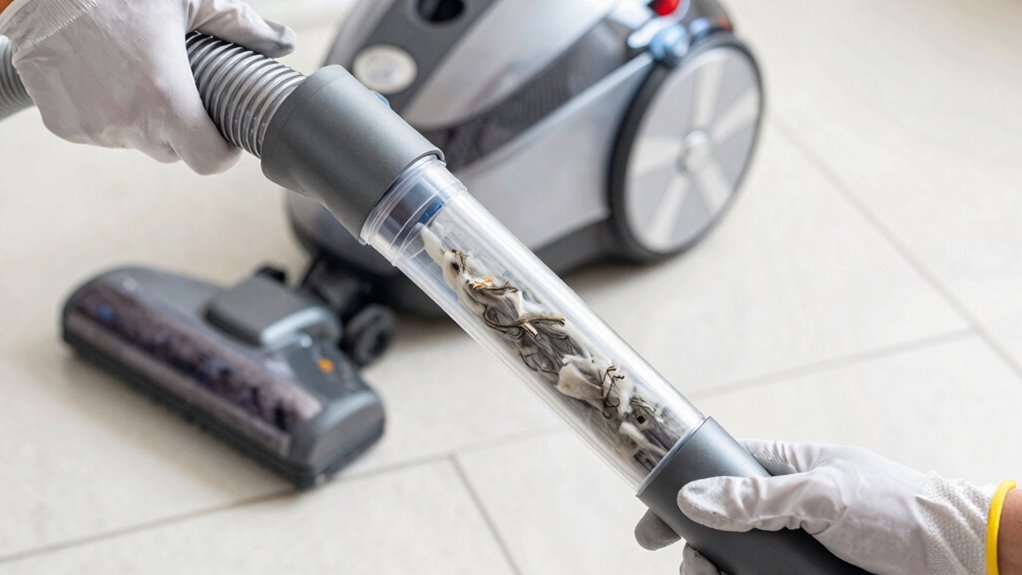
Over time, vacuum hoses can become clogged with dust, hair, and debris, which reduces their suction power. When you notice your vacuum isn’t pulling as strongly as it used to, it’s a clear sign it’s time to clean the hose. Start by unplugging your vacuum for safety. Detach the hose from the unit, and inspect it for any visible blockages. Often, hair or string can wrap around the hose’s interior, so pull out any obvious obstructions carefully. Next, try to clear out dust and smaller debris by running water through the hose. Use a sink or tub with warm water, and consider adding a mild detergent if there’s stubborn grime. Hold the hose at an angle to let the water flow from one end to the other, ensuring you flush out dirt and dust. Once rinsed, shake the hose gently to dislodge any remaining debris, then hang it up to dry completely before reconnecting it to your vacuum.
Clean your vacuum hose regularly by rinsing with warm water to maintain strong suction power.
While you’re at it, take a moment to review your vacuum’s filter maintenance routine. A clogged or dirty filter can also cause a drop in suction, so replacing or cleaning your filter regularly can restore performance. Check your vacuum’s manual for specific instructions on filter care—some filters are washable, while others need replacement. Keeping your filter clean ensures your vacuum runs efficiently, saving you time and energy in the long run. Incorporating routine filter maintenance into your cleaning schedule can help prevent performance issues before they arise.
Another often-overlooked aspect is cord storage tips. Proper cord management isn’t just about convenience; it can prevent damage that might affect your vacuum’s suction. Wrap the cord loosely, avoiding tight coils that could strain the cord or internal wiring. Store your vacuum in a dry, accessible place, and keep the cord untangled to prevent wear and tear. Well-maintained cords help maintain consistent power, which supports strong suction. Regularly inspecting your vacuum’s hoses and connections for blockages and leaks can help identify potential issues before they impact performance. Additionally, paying attention to the overall condition of your vacuum can help you catch small issues before they become major problems. Proper vacuum maintenance and understanding how to troubleshoot common issues can save you time and money in the long run. Being proactive in your maintenance routine can extend the lifespan of your vacuum and ensure it operates at peak efficiency.
As an affiliate, we earn on qualifying purchases.
Frequently Asked Questions
How Often Should I Clean My Vacuum Hose?
You should clean your vacuum hose at least once every three to six months, especially if you’re using it for pet hair removal or odor elimination. Regular cleaning prevents clogs, maintains suction, and keeps odors at bay. If you notice a drop in suction or lingering smells, clean it more often. Removing debris and hair regularly ensures your vacuum performs efficiently and keeps your home fresh.
Can I Use Chemicals to Clean the Hose?
Using chemicals for hose sterilization isn’t recommended, as most cleaners can damage the hose material or leave residues that clog your vacuum. Did you know regular cleaning extends the lifespan of your vacuum? Instead, opt for natural solutions like vinegar and water, which effectively clean without harsh chemicals. Chemical cleaning might seem quick, but it risks more harm than good, so stick to gentle methods for a safe, thorough clean.
What Tools Are Best for Cleaning Inside the Hose?
You should use hose brushes and compressed air to clean inside your vacuum hose. Hose brushes are specially designed to scrub away dirt and debris stuck inside, making it easier to remove blockages. After brushing, use compressed air to blow out remaining dust and loose debris, ensuring a thorough clean. These tools help restore suction power effectively, keeping your vacuum functioning at its best without damaging the hose.
How Do I Prevent Future Blockages in the Hose?
To prevent future blockages, prioritize regular hose maintenance. For example, you might check and clear debris after each use, especially if you vacuum pet hair or larger particles. Use a gentle brush or a flexible rod to keep the hose clear of obstructions. Avoid vacuuming small, hard objects that can cause blockages. Consistent hose maintenance and blockage prevention measures keep your vacuum working efficiently and extend its lifespan.
Is It Necessary to Replace the Hose Regularly?
You don’t need to replace your vacuum hose regularly unless it’s damaged or worn out. The hose material, like plastic or rubber, determines how often replacement is necessary. Usually, if you notice cracks, holes, or persistent blockages despite cleaning, it’s time for a replacement. Regular maintenance extends its lifespan, but keep an eye on signs of wear, and replace the hose when needed to maintain maximum suction.
Conclusion
Regularly cleaning your vacuum hose can boost its efficiency and extend its lifespan. Did you know that clogged hoses are responsible for nearly 30% of vacuum performance issues? By taking a few simple steps to clear out debris, you’ll keep your vacuum running smoothly and avoid costly repairs. So, make it a habit to check and clean your hose periodically—your vacuum and your home will thank you for it!
Evergreen bestsellers Picks
bestsellers
As an affiliate, we earn on qualifying purchases.