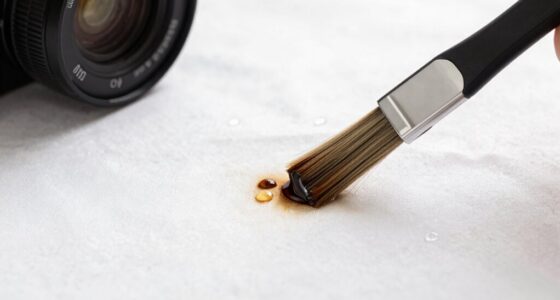
To remove lotion and body oil buildup from bedsheets, start by pre-treating stained areas with a mixture of dish soap and warm water, gently rubbing it in. Let it sit for 10-15 minutes before washing in hot water if the fabric allows. Add a cup of white vinegar to help break down oils naturally. For more tips on keeping your sheets fresh and clean, keep exploring helpful techniques.

Get cleaning gear delivered free — and shop member deals
- Fast, free delivery on millions of items
- Access to Prime Big Deal Days deals on October 6–7
- Prime Video, Amazon Music and more included
Key Takeaways
- Pre-treat affected areas with a stain remover or dish soap mixed with warm water before washing.
- Wash sheets in hot water (if fabric allows) with a cup of white vinegar to break down oils.
- Use natural softeners like vinegar or baking soda instead of commercial fabric softeners to prevent buildup.
- Air dry sheets in the sun or use high heat in the dryer to help eliminate residual oils and bacteria.
- Regularly wash sheets promptly to prevent deep oil embedding and maintain bedding hygiene.
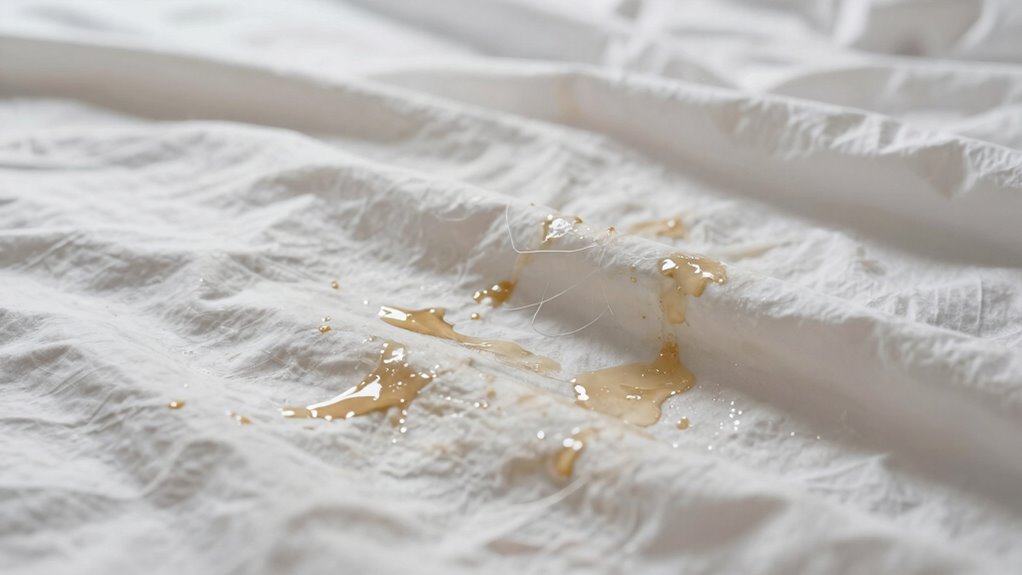
Lotion and body oil buildup on bedsheets can be stubborn to remove, but with the right approach, you can restore your sheets to their fresh, clean state. When dealing with these residues, it’s important to understand both the causes and the most effective cleaning methods. Oils from lotions and skincare products tend to cling to fabric fibers, especially if they’re not washed promptly. Over time, they can embed deep into the fabric, making regular washing less effective. To combat this, you need to target the oils directly, using specific cleaning techniques.
First, pre-treat your sheets with a stain remover or a mixture of dish soap and warm water. Dish soap is designed to cut through grease and oils, so applying it directly on the affected areas can loosen the buildup. Gently rub the solution into the fabric and let it sit for 10-15 minutes before washing. When you wash your sheets afterward, use hot water if the fabric allows—hot water helps break down oils more effectively. Additionally, testing the water temperature on a small, inconspicuous area can prevent damage to delicate fabrics.
In addition to pre-treatment, adding a cup of white vinegar to your wash cycle can be particularly beneficial. Vinegar acts as a natural degreaser and helps break down stubborn residues. However, be cautious if you’re sensitive to the smell; it dissipates after drying. Utilizing fabric softeners sparingly or opting for natural alternatives like vinegar or baking soda can help prevent further buildup, as some commercial softeners may trap oils and dirt, making residues worse over time. Understanding oil buildup and how it interacts with various fabrics can make your cleaning efforts more effective. Incorporating knowledge about fabric fibers and their response to different cleaning agents can improve your results.
You might also consider incorporating fabric softener effects into your laundry routine. Although fabric softeners can leave a fragrant, smooth feel, they sometimes trap oils and dirt, which may worsen buildup over time. To avoid this, use softeners sparingly or switch to natural alternatives like vinegar or baking soda in the wash. Many people overlook the aromatherapy benefits of certain natural products, which can make laundry feel more pleasant without the chemical buildup associated with commercial softeners. Additionally, understanding the interaction between oils and fabrics can guide you in selecting the most suitable cleaning methods.
Once your sheets are clean, guarantee they’re thoroughly dried. Air drying in the sun can help eliminate any residual oils and bacteria, leaving your sheets fresh and smelling clean. If you prefer machine drying, use a high heat setting, as this can help break down remaining residues. Regularly washing your sheets and changing your bedding routine can prevent future buildup, saving you time and effort in deep cleaning. Proper bedding maintenance is essential for maintaining a hygienic sleep environment and prolonging the life of your sheets.
As an affiliate, we earn on qualifying purchases.
Frequently Asked Questions
Can Fabric Softeners Help Prevent Lotion Buildup on Sheets?
Fabric softeners won’t prevent lotion residue from building up on your sheets. Instead, they can sometimes worsen the problem by leaving a coating that traps lotion and body oils. To keep your sheets lotion-free, wash them regularly with a gentle detergent, and avoid using fabric softeners. If you want extra softness, opt for natural alternatives like white vinegar or baking soda, which won’t interfere with your sheets’ cleanliness or cause buildup.
How Often Should I Wash My Bedsheets to Prevent Buildup?
You should wash your bedsheets at least once a week for proper bed sheet maintenance and to prevent lotion residue buildup. Regular laundering helps break down and remove lotion and body oil, keeping your sheets fresh and clean. If you tend to use lotions frequently, consider washing them more often, like twice a week. Using warm water and a good detergent also enhances lotion removal and keeps buildup at bay.
Are There Specific Stain Removers Effective Against Body Oil?
Yes, enzymatic cleaners are highly effective against body oil stains, breaking down oils at a molecular level. Chemical solvents can also work well, dissolving stubborn residue. When treating stains, apply the enzymatic cleaner first, then use a chemical solvent if needed. Always follow the product instructions and test on a small area first to avoid fabric damage. Regular washing helps prevent buildup, keeping your bedsheets fresh and clean.
Can I Use Bleach to Remove Oily Stains From Sheets?
Using bleach on oily stains is like trying to put out a fire with gasoline—it’s risky. Bleach safety is essential because it can weaken or discolor your sheets if not used properly. For stain removal, opt for enzyme-based cleaners or pre-treat with a mixture of detergent and warm water first. If you decide to use bleach, dilute it well, and test on a small area to prevent damage.
What Natural Remedies Can I Try for Stubborn Buildup?
You can try natural remedies like using natural exfoliants such as baking soda or uncooked oatmeal to gently scrub away stubborn buildup. Adding a few drops of essential oils like tea tree or lavender to your laundry can help break down oil residues and freshen your sheets. These natural options are effective and gentle, making them a great choice for tackling stubborn lotion and body oil stains without harsh chemicals.
Conclusion
Think of your bedsheets as a canvas, and lotion and body oil as stubborn paint stains. With a little patience and the right techniques, you can restore their fresh, clean look. Just like gently lifting a stubborn smudge, treating your sheets with warm water, a good detergent, and a splash of vinegar will make them feel new again. Soon, your sheets will be as spotless as a clear sky, ready for restful nights ahead.
Fall Picks
fall essentials
As an affiliate, we earn on qualifying purchases.