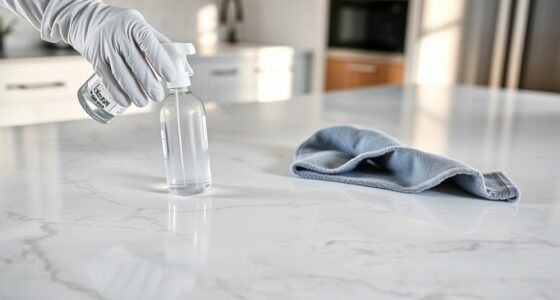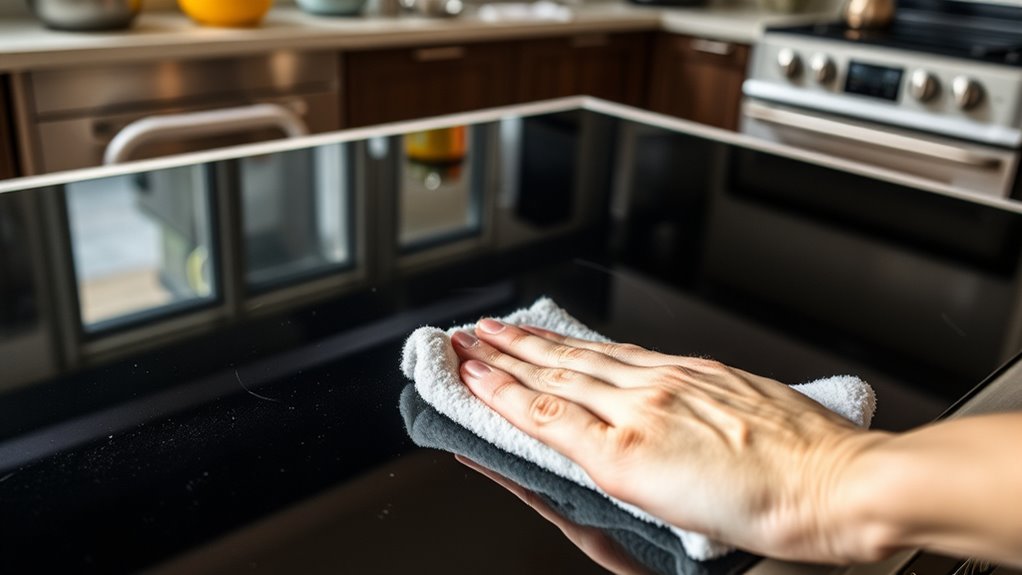

To clean your glass cooktop without scratching, use a soft microfiber cloth or sponge, and avoid abrasive pads or steel wool. Apply a gentle cleaner designed for glass surfaces and wipe in light, circular motions, letting the cleaner loosen grime before gentle scrubbing. Wipe spills immediately to prevent buildup, and always buff dry after cleaning. For more tips on keeping your cooktop spotless and scratch-free, continue exploring effective cleaning methods.
Key Takeaways
- Remove loose debris with a soft cloth or dry paper towel before cleaning.
- Use gentle, non-abrasive cleaners and apply directly onto the surface or cloth.
- Clean with microfiber cloths or soft sponges using light, circular motions.
- Avoid abrasive pads, steel wool, and metal scrapers to prevent scratches.
- Wipe spills immediately and buff with a dry microfiber cloth to prevent residue buildup.
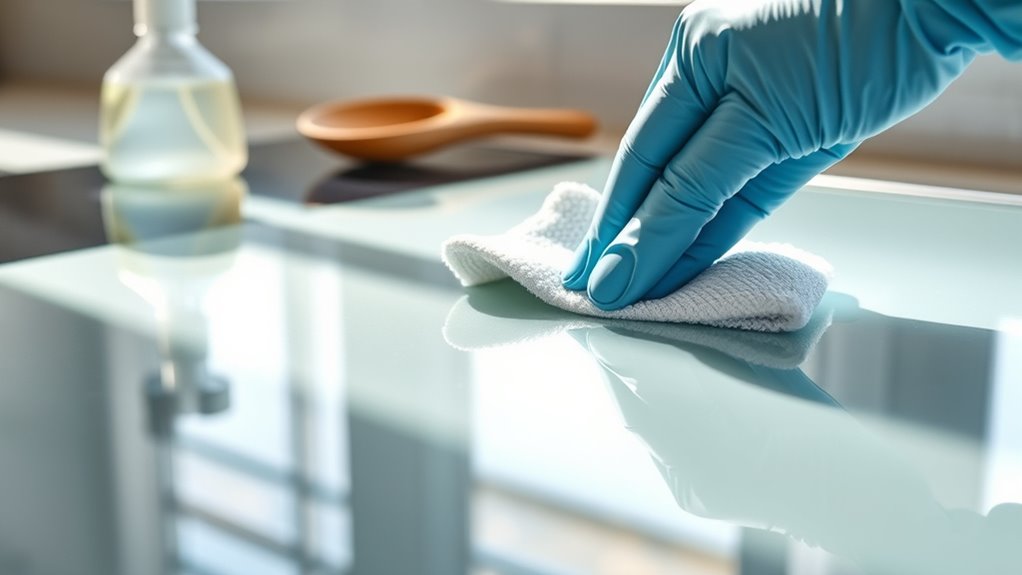
A clean glass cooktop not only looks great but also works more efficiently. When your cooktop is spotless, it heats evenly and reduces the risk of food sticking or burning. To achieve this, the right cleaning products and techniques are essential. Using harsh abrasives or metal scrapers can scratch the surface, so it’s important to choose gentle cleaners and follow proper cleaning tips.
Start by removing loose debris and crumbs with a soft cloth or a dry paper towel. This prevents scratching when you begin wiping down the surface. For tougher stains or baked-on residues, opt for a specialized glass cooktop cleaner or a gentle non-abrasive cleaning product. Avoid using regular abrasive scrubbing pads or steel wool, as they can scratch the glass. Instead, a microfiber cloth or a soft sponge works best. Apply the cleaning product directly onto the surface or onto the cloth, then let it sit for a few moments to loosen grime.
Remove crumbs with a soft cloth before cleaning to prevent scratches.
When cleaning, use a light touch and gentle circular motions. This avoids unnecessary pressure that could cause scratches. If you encounter stubborn spots, don’t force the cleaner or scrub harder. Instead, reapply the cleaner and let it sit longer. For everyday maintenance, a mixture of warm water and a few drops of dish soap can be effective. This not only keeps your cooktop looking shiny but also prevents buildup that can be harder to remove later.
Additionally, understanding the importance of color accuracy in maintaining the appearance of your glass surface can help you select the right cleaning products that won’t alter its clarity or transparency. Cooking tips can help you keep your glass cooktop in top shape. For instance, avoid sliding heavy pots and pans across the surface, as this can cause scratches. Use a flat, soft-bottomed cookware that sits evenly on the surface. Also, always wipe up spills immediately to prevent them from hardening and becoming more difficult to clean. If you notice sticky residue or burnt-on stains, apply a bit of cooktop cleaner and let it sit for a few minutes before gently wiping away.
After cleaning, buff the surface with a clean, dry microfiber cloth to remove any streaks or residue. This will leave your cooktop crystal clear and shiny. Regular cleaning following these tips not only maintains the appearance but also extends the lifespan of your glass cooktop. Remember, patience and gentle handling are key—abrasive tools and forceful scrubbing can cause damage, so stick to soft cloths and proper cleaning products. With consistent care, your cooktop will stay gleaming and function perfectly for years to come.
Frequently Asked Questions
Can I Use Steel Wool on My Glass Cooktop?
You shouldn’t use steel wool on your glass cooktop because it can cause scratches. Steel wool is too abrasive and can damage the smooth surface, leading to glass scratches that are hard to remove. Instead, opt for a non-abrasive cleaning pad or a soft cloth combined with a specialized glass cooktop cleaner. This way, you keep your cooktop spotless without risking scratches or damage.
Is It Safe to Use Vinegar for Cleaning?
Yes, cleaning with vinegar is generally safe for your glass cooktop, but you should be cautious about vinegar safety. Use it diluted with water to avoid any potential damage. Apply vinegar sparingly, and avoid letting it sit too long. Always wipe with a soft cloth or sponge to prevent scratching. Vinegar can be a natural, effective cleaner if used properly, helping you keep your cooktop spotless without harming its surface.
How Often Should I Clean My Glass Cooktop?
Consistent cleaning keeps your cooktop shining! For ideal maintenance tips, clean your glass cooktop at least once a week, especially after heavy use. Regular wiping prevents stubborn stains and keeps it looking its best. If you cook frequently or spill often, consider more frequent cleanings. By maintaining a routine, you prolong the lifespan of your surface and prevent scratches. Remember, a little care goes a long way in keeping your cooktop pristine and polished!
Can I Use a Razor Blade to Remove Tough Stains?
Yes, you can use a razor blade to remove tough stains, but you must prioritize razor blade safety. Hold the blade at a 45-degree angle and gently scrape the stain, avoiding excessive pressure that could scratch your glass cooktop. For stain removal techniques, always start with a gentle cleaner and use the blade only as a last resort. Carefully follow safety instructions to prevent damage and injury.
What Should I Do if My Cooktop Gets Cracked?
If your glass cooktop cracks, stop using it immediately to prevent further damage or safety hazards. Contact a professional for glass crack repair, as attempting DIY fixes can worsen the issue. To prevent future damage, avoid applying excessive pressure or using abrasive tools. Regularly clean and inspect your cooktop, and handle pots carefully to minimize stress on the glass. Taking these steps helps keep your cooktop safe and in good condition.
Conclusion
Keeping your glass cooktop spotless is like tending a delicate garden—gentle care yields the best results. With the right cleaning techniques, you’ll protect its shine and avoid scratches, making it look brand new every time. Remember, patience and soft tools are your best allies. Think of your cooktop as a mirror to your kitchen’s heart—cleaning it carefully keeps your space bright and welcoming, just like a well-loved canvas waiting for its next masterpiece.