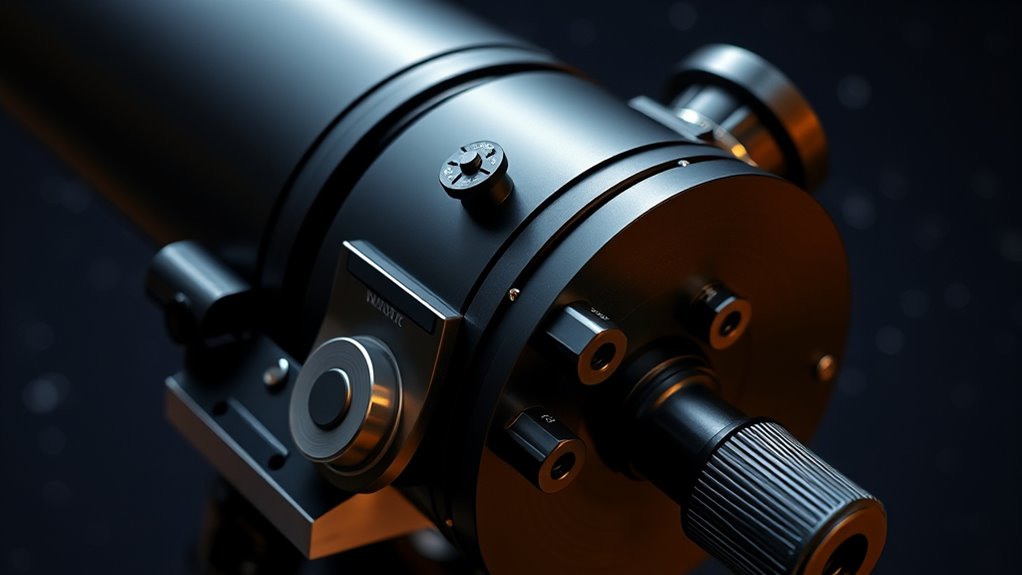

Choosing an equatorial mount with a belt drive system means balancing carrying capacity, portability, and how much of the imaging setup is built in. My leading picks are the Celestron CGX for heavier telescopes and a robust computerized platform, and the MirroSky GX35 for a lighter travel setup with an integrated guidescope and camera. Their main divide is clear: the CGX has more than twice the stated payload capacity, while the GX35 weighs just 8.8 pounds and packages guiding hardware into the mount system. Neither is a universal choice, so I rank them by the kind of rig they can realistically support.

Get cleaning gear delivered free with Prime
- Fast, free delivery on millions of items
- Prime Video, Amazon Music and more included
- Member-only deals all year
Complete the kit


Key Takeaways
- The Celestron CGX leads for heavier rigs, with a stated 55-pound payload capacity and a computerized hand controller.
- The MirroSky GX35 is the portability pick at 8.8 pounds, with a 22-pound payload limit and EQ and Alt/Az modes.
- Both use belt-drive components, but the GX35 specifically pairs synchronous belts with an RA worm gear and 144-tooth main gear.
- The GX35 includes a 53 mm ED guidescope and Sony IMX662 camera, reducing the number of separate guiding components to plan for.
- Choose the CGX for payload headroom and a hand-controller workflow; choose the GX35 for a lighter, app-controlled imaging system.
| Celestron CGX Computerized German Equatorial Mount & Tripod, 55 lb Payload |  | Best Overall for Heavy Telescope Rigs | Mount type: German Equatorial | Payload capacity: 55 lb | Motor type: High-torque servo motors | VIEW ON AMAZON | See Our Full Breakdown |
| MirroSky GX35 Smart EQ Mount with Guide-Scope |  | Best Compact Pick for Integrated Guiding | Mount weight: 8.8 lb (4 kg) | Payload capacity: 22 lb (10 kg) | Counterweight: 4 lb (1.8 kg) with shaft | VIEW ON AMAZON | See Our Full Breakdown |
| equatorial mounts with belt drive system | Payload capacity | Drive system | Mount type | Motor type |
|---|---|---|---|---|
| Celestron CGX Computerized Ger | 55 lb | Belt drive | German Equatorial | High-torque servo motors |
| MirroSky GX35 Smart EQ Mount w | 22 lb (10 kg) | RA worm gear with 144-tooth main gear and synchronous belt drives | — | — |
More Details on Our Top Picks
Celestron CGX Computerized German Equatorial Mount & Tripod, 55 lb Payload
The CGX takes the top position because it offers the largest stated payload capacity in this comparison: 55 pounds, against the GX35’s 22 pounds. That gap matters to buyers who want room for a telescope, camera, and additional accessories without starting with the more compact mount. Its high-torque servo motors and belt-drive system make it the more substantial option here for motorized tracking, though the supplied specifications do not quantify tracking accuracy or guiding performance.
Control is another point of separation. The CGX includes a NexStar+ hand controller with a 40,000-object database, guided tours, and custom object filters. That provides a dedicated controller and a broad object-selection workflow, rather than relying on the GX35’s free phone app. Buyers who prefer to operate from a handset may find that distinction useful; those who want a compact phone-led setup may prefer the GX35’s simpler travel-minded package.
The tradeoff is physical scale. Celestron describes the CGX as large and heavy, which makes it a less natural choice for frequent transport or cramped storage. The GX35 is far easier to carry at a listed 8.8 pounds, and it includes an ED guidescope and camera that the CGX listing does not specify. I would choose the CGX for payload capacity and a dedicated computerized controller, but skip it if portability or an integrated guiding package matters more than supporting a heavier rig.
Pros:- Stated 55-pound payload capacity exceeds the GX35’s 22-pound limit.
- High-torque servo motors and a belt-drive system support motorized tracking.
- NexStar+ controller includes a 40,000-object database, guided tours, and custom filters.
- A more suitable capacity choice for heavier telescopes and accessory loads.
Cons:- Large and heavy, making frequent transport and storage more demanding than with the GX35.
- The supplied description does not list an integrated guidescope or guide camera.
- The provided specifications do not give gear counts or quantified tracking performance.
Best for: Astrophotographers and observers planning a heavier telescope-and-accessory setup who want a high-capacity mount and a dedicated computerized hand controller.
Not ideal for: Travelers, buyers with limited storage or setup space, and anyone specifically seeking a lightweight mount with an included guide camera.
- Mount type:German Equatorial
- Payload capacity:55 lb
- Motor type:High-torque servo motors
- Drive system:Belt drive
- Controller:NexStar+ computer hand controller
- Database:40,000 objects
Our verdict“I recommend the CGX when payload capacity and a dedicated computerized controller matter more than a lightweight, travel-friendly setup.”
MirroSky GX35 Smart EQ Mount with Guide-Scope
The GX35 wins on portability and packaged guiding rather than raw capacity. At a listed 8.8 pounds, it is much lighter than the CGX, and its 22-pound payload limit suits buyers building a more modest rig. The supplied 4-pound counterweight and shaft add useful context to the package, while the mount’s EQ and Alt/Az modes offer more operating flexibility than an EQ-only specification suggests. The stated payload remains the boundary: it is not a substitute for the CGX when the telescope and accessories approach a heavier load.
Its defining feature is the included 53 mm ED guidescope with an integrated Sony IMX662 CMOS camera. That combination can simplify assembling a guiding setup because the scope and camera are part of the package. By comparison, the CGX emphasizes capacity and a broad object database, but its supplied description does not list integrated guiding hardware. Buyers should still check that the GX35’s payload allowance covers their complete imaging train, not just the telescope body.
The drive description is more specific than the CGX listing: the GX35 uses an RA worm gear with a 144-tooth main gear and synchronous belt drives. It can be controlled with the free MirroSky app on iOS or Android. This phone-based approach may appeal to a mobile imaging workflow, though buyers who prefer a dedicated hand controller may lean toward the CGX. The GX35’s strengths are compactness and included guiding equipment; its limit is the smaller payload ceiling.
Pros:- Listed weight of 8.8 pounds makes it more portable than the CGX.
- Includes a 53 mm ED guidescope and Sony IMX662 CMOS camera.
- RA worm gear, 144-tooth main gear, and synchronous belt drives are specified.
- Offers EQ and Alt/Az modes with free iOS and Android app control.
Cons:- Its 22-pound payload limit is well below the CGX’s 55-pound capacity.
- App-based control may not suit buyers who prefer a dedicated hand controller.
- The supplied description does not provide a quantified tracking accuracy figure.
Best for: Imagers seeking a lightweight EQ mount with an included guidescope and camera, and whose telescope plus accessories fit within the 22-pound capacity.
Not ideal for: Owners of heavier telescope rigs, buyers who want more than 22 pounds of stated payload capacity, or those who prefer a dedicated hand controller over app control.
- Mount weight:8.8 lb (4 kg)
- Payload capacity:22 lb (10 kg)
- Counterweight:4 lb (1.8 kg) with shaft
- Drive system:RA worm gear with 144-tooth main gear and synchronous belt drives
- Guidescope:53 mm ED
- Integrated camera:Sony IMX662 CMOS, 2.1 MP, 1/2.8-inch sensor
- Recommended power input:12 V DC, 3 A
- Mount modes:Equatorial (EQ) and Alt/Az
Our verdict“I would pick the GX35 for a portable, lighter imaging rig that benefits from included guiding hardware, not for a heavy telescope setup.”

How We Picked
I ranked these two mounts by the features that make a belt-drive equatorial mount useful in practice: drive design, payload headroom, setup weight, and control approach. A belt drive can support smooth motion, but it does not make two mounts interchangeable. A heavier imaging rig needs more capacity and a substantial mount; a portable setup benefits from lower carry weight and fewer separate guiding pieces.
I gave the CGX the lead for buyers prioritizing telescope and accessory capacity. Its stated 55-pound payload limit, high-torque servo motors, and NexStar+ hand controller make it the more substantial option in this pairing. The GX35 earns a separate recommendation rather than a direct capacity win: its 8.8-pound weight, integrated guide camera, and mobile control suit a lighter, more self-contained setup. Its listed limit is 22 pounds, so it is not the pick for a large telescope train.
I also compared what the supplied details do and do not establish. The GX35 description specifies an RA worm gear, 144-tooth main gear, and synchronous belt drives. The CGX listing identifies a belt-drive system and high-torque servo motors, but does not give a gear count or detailed guiding package. I avoid treating either description as proof of a particular tracking result. My order reflects fit and stated features, not an assumption that belt drive alone guarantees imaging performance.
| equatorial mounts with belt drive system | Drive system |
|---|---|
| Celestron CGX Computerized Ger | Belt drive |
| MirroSky GX35 Smart EQ Mount w | RA worm gear with 144-tooth main gear and synchronous belt drives |
Factors to Consider When Choosing Equatorial Mounts With Belt Drive Systems
I would choose between these mounts by starting with the complete rig and the way I plan to set it up. Belt drive is part of the decision, but capacity, included guiding equipment, controller preference, and carrying weight separate these two models more sharply.Start With the Full Payload
Compare the mount’s stated capacity with the entire mounted load, including telescope, camera, guide equipment, adapters, and other accessories. The CGX lists 55 pounds, while the GX35 lists 22 pounds. That makes the CGX the clearer choice for heavier equipment and gives it a much wider capacity margin on paper. The GX35 suits a lighter rig, but its compactness does not erase its lower limit. I would not choose by telescope weight alone; attached equipment contributes to the load too.
Look Beyond the Belt-Drive Label
Both products describe belt-drive components, but their specifications differ in detail. The GX35 lists synchronous belt drives alongside an RA worm gear and 144-tooth main gear. The CGX description gives a belt-drive system and high-torque servo motors without a gear count. Those details help explain the design, but the listings do not provide a direct, quantified tracking comparison. I would treat belt drive as one design feature, then weigh the capacity and setup that fit my telescope.
Decide How Much Guiding Hardware You Want Included
The GX35’s 53 mm ED guidescope and integrated Sony IMX662 camera make it the more complete stated guiding package. That may simplify matching separate guiding components, although it does not remove the need to check compatibility with the rest of an imaging setup. The CGX description does not list an included guidescope or guide camera, so buyers should verify what they need to add. If an all-in-one guiding package matters, the GX35 has the stronger claim; if capacity matters more, the CGX takes priority.
Match the Mount to Your Setup Routine
The GX35’s listed 8.8-pound weight makes it the easier fit for buyers carrying gear between locations or working with limited storage. The CGX is described as large and heavy, a practical tradeoff for its higher stated capacity. Control preferences also differ: the CGX includes a NexStar+ hand controller and object database, while the GX35 uses a free iOS or Android app. I would pick the interface I am comfortable using at the telescope, not assume one style suits every setup.
Check Power and Operating Mode
The GX35 lists a recommended 12 V DC, 3 A input and supports both EQ and Alt/Az modes. Those details can matter when planning field power and deciding how I want to operate the mount. The supplied CGX information confirms a computerized German equatorial mount but does not list a power input specification here, so I would verify that detail before assembling a complete power plan. Do not infer missing compatibility information from the belt-drive description alone.
Frequently Asked Questions
Which mount has the higher payload capacity?
The Celestron CGX has the higher stated payload capacity at 55 pounds, compared with 22 pounds for the MirroSky GX35. That makes the CGX the more appropriate starting point for heavier telescope and accessory combinations. I would still check the load of the complete rig against the mount’s specifications before buying.
Do both mounts use belt-drive systems?
Yes. Both product descriptions identify belt-drive components. The GX35 description is more specific, listing synchronous belt drives alongside an RA worm gear and 144-tooth main gear. The CGX description identifies a belt-drive system with high-torque servo motors. The available details do not give a direct measured tracking comparison between them.
Which mount is easier to carry?
The MirroSky GX35 is the portability choice in this pairing, with a listed weight of 8.8 pounds. The CGX is described as large and heavy, despite offering substantially more stated payload capacity. If frequent transport is part of my routine, I would give the GX35 serious consideration, provided the full telescope setup fits its 22-pound limit.
Does the GX35 include guiding equipment?
Yes. The GX35 package description includes a 53 mm ED guidescope and an integrated Sony IMX662 CMOS camera. That makes it the more clearly specified option for buyers who want guiding hardware included. The supplied CGX description does not list an integrated guidescope or guide camera, so I would confirm what additional components its intended setup requires.
Which mount should I choose for astrophotography?
I would base that choice on the imaging rig rather than the word “astrophotography” alone. The CGX is better suited to heavier equipment, with a 55-pound stated capacity and a computerized hand controller. The GX35 is a lighter option with an included guide scope and camera, but its capacity is 22 pounds. Check the complete load and preferred control method before choosing.
Conclusion
My recommendation depends on what the mount must carry. Choose the Celestron CGX if you are building around a heavier telescope, want the higher stated payload capacity, and prefer a dedicated NexStar+ hand controller. Choose the MirroSky GX35 if a lighter setup, app control, EQ and Alt/Az modes, and an included guidescope-camera package are more useful than extra capacity. The CGX ranks first for broad rig support; the GX35 is the more practical match for portable imaging within its 22-pound limit.