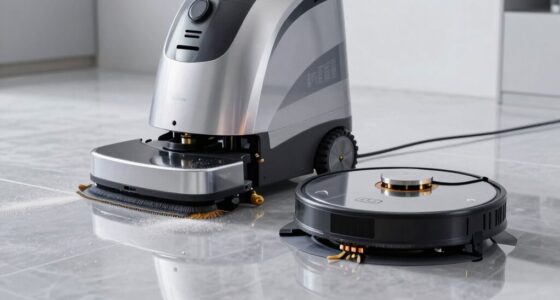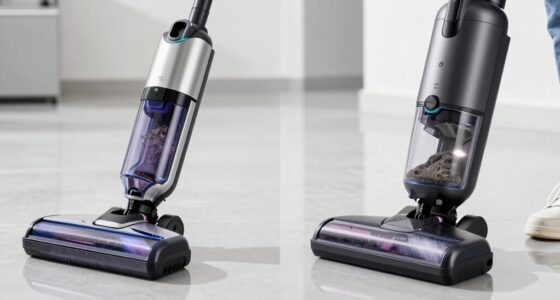
For large facilities, choosing between a walk-behind and a ride-on floor scrubber depends on your workspace and needs. Ride-on models offer better operator comfort, faster coverage, and are ideal for big areas, but come at a higher initial cost and maintenance. Walk-behind scrubbers are more affordable and better suited for narrow spaces and detailed cleaning. To find the best fit for your facility, explore the factors influencing efficiency and costs more deeply.

Get cleaning gear delivered free — and shop member deals
- Fast, free delivery on millions of items
- Access to Prime Big Deal Days deals on October 6–7
- Prime Video, Amazon Music and more included
Key Takeaways
- Ride-on scrubbers are ideal for large areas due to higher efficiency, faster coverage, and operator comfort.
- Walk-behind models are better suited for narrow spaces, complex layouts, and tighter access areas.
- Initial costs for ride-on units are higher, but they may reduce long-term labor and cleaning time expenses.
- Walk-behind scrubbers offer easier maintenance and lower upfront investment, suitable for less demanding environments.
- The choice depends on workspace size, layout complexity, cleaning frequency, and budget considerations.

Choosing between a walk-behind and a ride-on floor scrubber depends on your cleaning needs and workspace size. If you’re managing a large facility, this decision can critically impact your efficiency and overall costs. One of the key factors to consider is maintenance costs. Ride-on scrubbers tend to have higher initial prices and repair expenses due to their more complex mechanics and larger parts. However, they often require less downtime because of their durability and ease of access to key components. Walk-behind models, on the other hand, usually come with lower upfront costs and are simpler to maintain. Their smaller size makes it easier and quicker to perform routine checks and repairs, which can help keep maintenance expenses down over time. Additionally, high performance features in ride-on models can further enhance productivity and cleaning effectiveness.
User comfort is another vital aspect you shouldn’t overlook. Ride-on scrubbers are designed with operator comfort in mind, featuring ergonomic seats, adjustable controls, and easier maneuverability over extensive areas. You’ll find that operating a ride-on model reduces fatigue during long cleaning shifts, especially if you’re covering large surfaces daily. This increased comfort can translate into higher productivity and less worker fatigue, making it a worthwhile investment for busy facilities. Conversely, walk-behind scrubbers are more compact and lightweight, offering excellent maneuverability in tight spaces or areas with obstacles. While they require more physical effort to operate over large expanses, they’re often preferred for smaller or more complex layouts where precision is more important than speed.
When considering your workspace, think about how often and how quickly you need to clean large areas. Ride-on scrubbers are ideal for expansive environments like warehouses, airports, or large manufacturing plants where efficiency and operator comfort are paramount. They cover ground faster and reduce the number of operators needed, which can save you money in the long run despite their higher maintenance costs. Walk-behind models work well in areas with narrow aisles or intricate layouts, where their size and agility are advantages. They also cost less upfront, making them a sensible choice for facilities with budget constraints or less frequent cleaning needs.
ride-on floor scrubber for large facilities
As an affiliate, we earn on qualifying purchases.
As an affiliate, we earn on qualifying purchases.
Frequently Asked Questions
What Is the Average Lifespan of Each Type of Scrubber?
You can expect a walk-behind floor scrubber to last around 5-7 years, while ride-on models typically endure 8-12 years. The durability comparison shows ride-on scrubbers often have a longer lifespan due to sturdier construction and higher-quality components. Replacement frequency for walk-behind units tends to be higher, especially if used intensively. Proper maintenance can extend the lifespan of both types, ensuring better value over time.
How Do Maintenance Costs Compare Between Walk-Behind and Ride-On Models?
You’ll find that ride-on floor scrubbers generally have higher initial costs but offer better cost efficiency over time due to lower repair frequency and faster cleaning. Walk-behind models tend to have lower upfront costs but may incur more frequent repairs, increasing overall maintenance expenses. For large facilities, choosing a ride-on can reduce long-term maintenance costs, making it a more economical choice despite the higher initial investment.
Are There Specific Safety Features Unique to Each Type?
Like a modern-day Icarus, you benefit from safety innovations tailored to each scrubber type. Ride-on models often include hazard prevention features such as advanced sensors, automatic shut-off, and ergonomic controls. Walk-behind machines emphasize safety with anti-slip handles, clear visibility, and emergency stop buttons. Both prioritize hazard prevention, but ride-ons tend to integrate more automated safety features, reducing operator fatigue and increasing overall safety during extended use.
Can These Scrubbers Operate Effectively on Uneven Surfaces?
Yes, both walk-behind and ride-on floor scrubbers can handle uneven surfaces effectively. Look for models with enhanced surface adaptability and uneven terrain handling features, such as adjustable scrub decks and powerful suspension systems. Ride-on scrubbers often excel on rougher terrains due to their larger wheels and stability, while walk-behind units are more maneuverable on tight, uneven spots. Choose a model designed specifically for your facility’s surface conditions for ideal performance.
What Are the Environmental Impacts of Each Cleaning Method?
You might think ride-on scrubbers consume more energy, but they often offer eco-friendly options with lower energy consumption per square foot cleaned. Walk-behind models typically use less power but may require more water and chemicals, impacting the environment. Choosing the right machine depends on your facility’s sustainability goals, as both types can be eco-friendly if equipped with energy-efficient features and eco-conscious cleaning supplies.
Conclusion
Choosing between a walk-behind and a ride-on floor scrubber depends on your facility’s unique rhythm. While one offers nimbleness, the other provides comfort for longer shifts. Imagine finding the perfect partner that seamlessly fits your needs, making cleaning feel less like a chore and more like a breeze. Whichever you select, remember it’s about harmonizing efficiency with ease—turning a routine task into a smooth, effortless dance across your floors.
Fall Picks
fall essentials
As an affiliate, we earn on qualifying purchases.