If you need a scrubber head for deep cleaning textured, heavily soiled, or abrasive surfaces, cylindrical brushes are your best choice—they provide superior agitation and durability. For versatile cleaning tasks, including stripping and polishing, disc brushes work well and are easier to maintain. Each type excels in different environments, so understanding where each shines helps you pick the right one. To discover which option fits your needs, explore the details further.
Key Takeaways
- Cylindrical brushes excel in deep cleaning textured, heavily soiled surfaces due to their superior agitation and durability.
- Disc brushes are more versatile, suitable for stripping, polishing, and general cleaning tasks with easier maintenance.
- Cylindrical brushes last longer in abrasive environments but require more complex replacement and alignment procedures.
- Disc brushes are ideal for standard cleaning needs, offering quick replacements and minimal debris buildup.
- Modern, sustainable cleaning technologies often favor cylindrical brushes for their efficiency in demanding, eco-conscious applications.
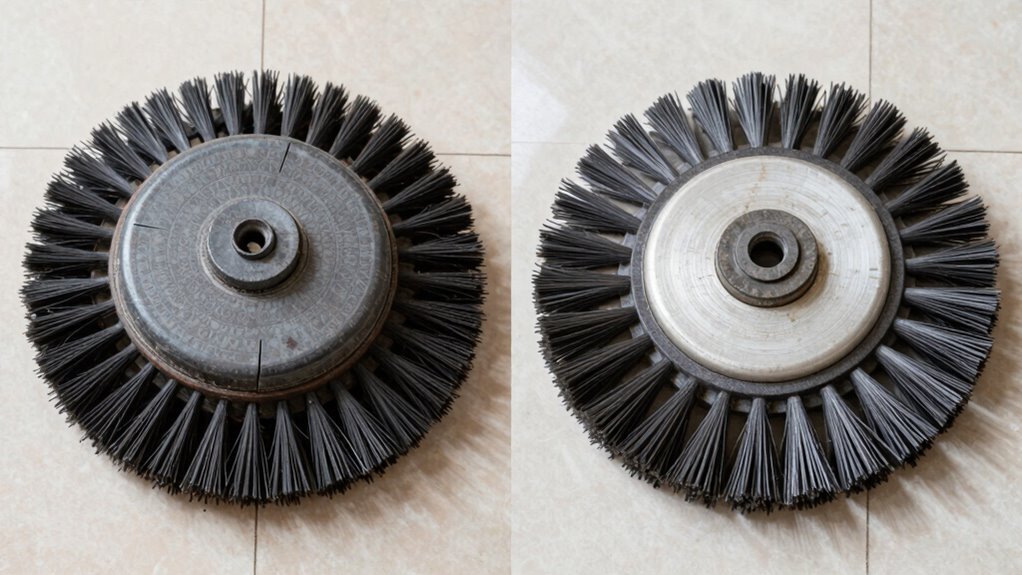
When choosing between cylindrical and disc brushes, understanding their differences can help you select the right tool for your application. Both types play a crucial role in floor scrubbing, but they vary considerably in design, durability, and maintenance needs. Knowing these distinctions allows you to optimize cleaning performance and extend the lifespan of your equipment. Cylindrical brushes are characterized by their long, rotating cylinders with bristles that spin along the floor’s surface. Their design provides excellent agitation, making them ideal for deep cleaning textured or heavily soiled surfaces. One of the key advantages of cylindrical brushes is their durability; their sturdy construction means they often withstand abrasive environments better and tend to last longer under constant use. However, their maintenance considerations are slightly more involved. Because of their longer bristles and complex rotation, cylindrical brushes require regular inspection for wear and tear. Over time, bristles can become frayed or bent, which diminishes cleaning efficiency. Replacing these brushes involves ensuring proper alignment and securing of the cylinder, which can be more time-consuming compared to disc brushes. Additionally, cylindrical brushes are often associated with European cloud innovation, emphasizing their role in modern, sustainable cleaning technologies. Disc brushes, on the other hand, feature a flat, circular design with bristles arranged around the perimeter. They tend to be more versatile, suitable for both stripping and polishing tasks. When it comes to brush durability, disc brushes often hold up well in standard cleaning environments, especially when used with appropriate pad types. Their flat surface makes them easier to replace and maintain; you can quickly swap out worn pads or brushes without much hassle. Maintenance considerations for disc brushes are generally simpler, as their design minimizes the buildup of debris that can clog or damage bristles. However, their durability can be compromised if used on particularly rough surfaces or with aggressive cleaning chemicals, which can wear down the bristles faster.

Factory Cat Cylindrical Brush 38" Midi Grit 180 387‑697C (2 Pack)
- OEM-Compatible Replacement: Cylindrical brushes for Factory Cat
- Size and Grit: 38-inch length, 180 grit bristles
- Design and Fit: Exact size with 8-spline hub
As an affiliate, we earn on qualifying purchases.
As an affiliate, we earn on qualifying purchases.
Frequently Asked Questions
Which Brush Type Is More Environmentally Friendly?
You’ll find that cylindrical brushes are generally more eco-friendly due to their longer lifespan and easier recyclability considerations. They often use fewer materials and can be repaired or refurbished more readily. Disc brushes, while effective, may wear out faster and contain materials that are harder to recycle. When choosing, consider the eco friendliness comparison, focusing on durability and recyclability, to minimize environmental impact and promote sustainability in your cleaning routines.
How Do Brush Types Affect Noise Levels During Operation?
You’ll notice that disc brushes typically produce less noise during operation because they generate lower vibration levels, making for quieter cleaning. Cylindrical brushes tend to create more vibration, which increases noise levels. If noise reduction is your priority, opt for disc brushes to keep vibrations and sound levels down. This makes disc brushes ideal for environments requiring minimal disruption, like hospitals or offices, where quieter operation matters most.
Can Cylindrical or Disc Brushes Be Used on Delicate Floors?
Imagine you’re cleaning a polished marble floor; both cylindrical and disc brushes can be gentle if designed for delicate surface care. Cylindrical brushes often provide softer contact, making them more compatible for fragile surfaces, while disc brushes can be adjusted with softer bristles. Choose brushes specifically labeled for delicate surface care to guarantee brush compatibility, preventing scratches and preserving the floor’s shine. Always verify the brush type suits your delicate flooring needs.
What Is the Typical Lifespan of Each Brush Type?
You can expect cylindrical brushes to last around 300 to 500 hours of use, while disc brushes typically last between 200 and 400 hours. Brush durability depends on your cleaning frequency and the surfaces you tackle. You’ll need to replace cylindrical brushes less often if you clean regularly, but disc brushes may require more frequent replacements. Proper maintenance can extend the lifespan of both types, saving you money over time.
Are There Specific Cleaning Solutions Better Suited for One Brush Type?
Just like a chef selects the perfect ingredients, you should choose cleaning solutions based on chemical compatibility and stain removal efficiency. For cylindrical brushes, use milder solutions to prevent damage, while disc brushes can handle stronger chemicals for tough stains. Always check manufacturer recommendations to avoid deterioration. Matching the right solution to your brush type ensures ideal cleaning, longevity, and a spotless finish—like a well-crafted recipe.
Conclusion
So, which floor scrubber head is right for you—cylindrical or disc? It really depends on your cleaning needs and the surfaces you’re tackling. Are you prioritizing deep scrubbing power or gentle, precise cleaning? Ultimately, understanding the strengths of each brush type helps you make the best choice. Don’t settle for less—choose the head that’ll get your floors spotless every time! Ready to upgrade your cleaning game?