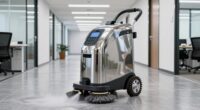
Most escalator cleaning plans fail by Day 3 because they underestimate the job’s complexity and neglect safety protocols. Many don’t adjust cleaning frequency based on usage, allowing grime and debris to build up quickly. Skipping safety steps can cause accidents and damage, making maintenance unsafe and ineffective. If you want to avoid these common pitfalls and keep your escalators safe and clean, there’s more you need to know.
Key Takeaways
- Most cleaning plans fail by Day 3 due to neglecting safety protocols and inflexible schedules.
- Inadequate adaptation to escalator usage levels leads to grime buildup and missed maintenance.
- Poor adherence to safety procedures increases risk of accidents and escalator damage.
- Inconsistent or infrequent routines cause quick deterioration, making cleaning ineffective.
- Lack of regular inspections and timely cleaning results in safety hazards and operational failures.
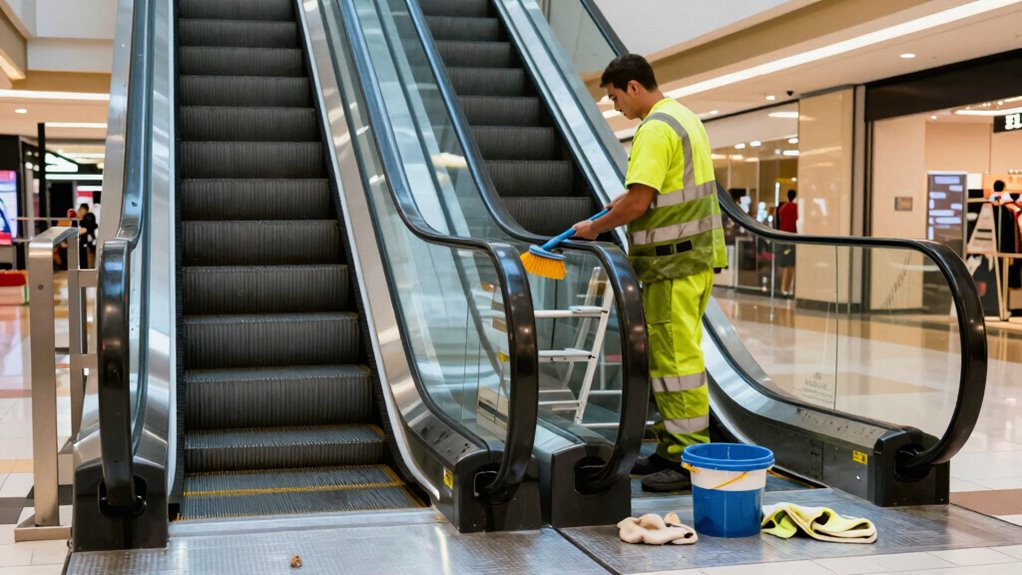
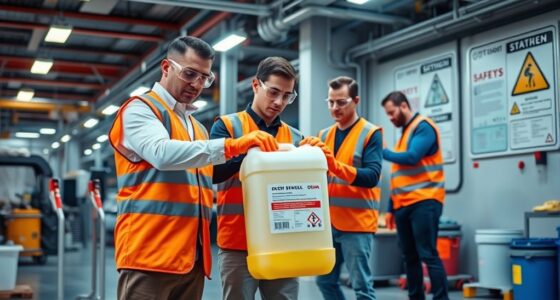
Escalator cleaning often appears straightforward, but behind the scenes, it involves challenging and meticulous work that many overlook. You might think it’s a simple matter of wiping down handrails and brushing off debris, but to do it correctly, you need to follow strict safety protocols. These protocols aren’t just bureaucratic hoops; they’re essential to guarantee that both the workers and the public stay safe during maintenance. When you’re cleaning escalators, you have to shut down the equipment properly, lock out electrical sources, and use appropriate personal protective equipment. Skipping or rushing through these steps can lead to accidents or damage to the escalator system, which no one wants.
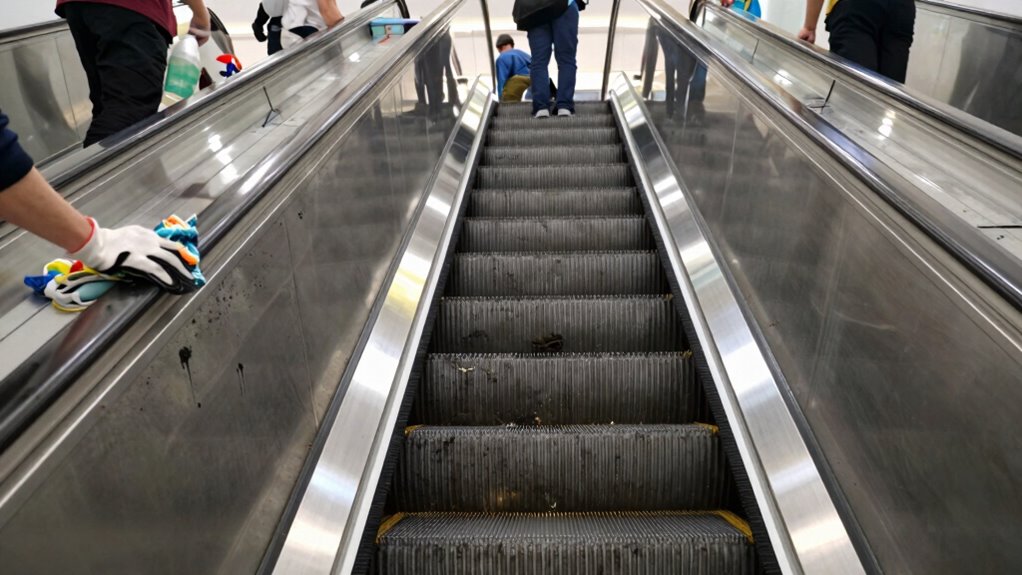
Your cleaning schedule plays a key role in maintaining safety and operational efficiency. Relying on a haphazard or infrequent routine often backfires, especially by Day 3. Most plans fail because they underestimate the importance of a well-structured cleaning schedule that includes daily, weekly, and monthly tasks. For example, neglecting routine checks on handrails or step treads can cause buildup of grime, which not only looks unsightly but can also become slippery hazards. When these schedules are inconsistent or poorly planned, dirt and debris accumulate faster than expected, making a quick fix insufficient. The more you delay, the more challenging and time-consuming the cleaning becomes, ultimately disrupting daily operations and risking safety.
A well-structured cleaning schedule prevents grime buildup and ensures escalator safety and efficiency.
Furthermore, a common mistake is not adapting your cleaning schedule to the escalator’s usage levels. High-traffic areas require more frequent attention, yet many plans treat all escalators the same regardless of their wear and tear. This oversight can lead to spots being overlooked or neglected altogether, especially after the initial days of cleaning. By Day 3, the buildup of dust, grease, and grime often reaches a point where standard cleaning methods are no longer effective. If you don’t adjust your schedule accordingly, it’s easy for your maintenance plan to fall apart, leaving escalators in a subpar state and increasing the likelihood of safety issues. Additionally, neglecting to incorporate safety protocols into your cleaning routine can compromise both worker and public safety, making thorough planning even more critical.
Ultimately, the failure of most escalator cleaning plans by Day 3 traces back to a lack of adherence to safety protocols and inflexible or poorly designed cleaning schedules. To succeed, you need to implement a thorough plan that prioritizes safety at every step and adapts to the escalator’s usage and condition. Regular inspections, timely cleaning, and strict compliance with safety procedures are your best tools for guaranteeing that escalators stay safe, clean, and operational long-term. Without these measures, what seems like a simple task quickly turns into a costly, problematic challenge.

YONILL Deck Brush with Long Handle – Floor Scrub Brushes for Cleaning Shower, Stiff Bristle Scrubbing Brush, 50" Floor Scrubber Brush for Bathroom, Bathtub, Tub, Tile Floors, Garage and Patio
Scrub Brush with Long Handle: The shower cleaning brush consist of stainless steel pole and PP material brush…
As an affiliate, we earn on qualifying purchases.
As an affiliate, we earn on qualifying purchases.
Frequently Asked Questions
What Are Common Reasons Cleaning Plans Fail by Day 3?
You often see cleaning plans falter by day 3 because of inconsistent cleaning frequency and inadequate staff training. When the schedule isn’t maintained regularly, dirt and grime build up quickly. Additionally, untrained staff may lack the skills or motivation to follow proper procedures, leading to ineffective cleaning. To avoid this, guarantee consistent schedules and invest in thorough staff training, so your team can stick to the plan and keep escalators spotless.
How Can Maintenance Schedules Impact Escalator Cleaning Success?
Think of your maintenance schedule as the heartbeat of your escalator’s cleanliness. When you align cleaning with precise maintenance timing, you guarantee each task complements the other, like a well-choreographed dance. A consistent cleaning schedule prevents buildup and breakdowns, boosting success. If you neglect this rhythm, your cleaning efforts become a broken record, and escalator upkeep suffers. Proper timing turns routine maintenance into a symphony of smooth operation.
What Equipment Is Most Effective for Escalator Cleaning?
You’ll find that automatic scrubbers are most effective for escalator cleaning, as they provide thorough, consistent results quickly. Pair them with eco-friendly solutions to guarantee you’re minimizing environmental impact while maintaining cleanliness. Using these tools, you can efficiently remove dirt and grime from escalator steps and handrails, keeping the escalator safe and attractive for users. This combination maximizes cleaning effectiveness and sustainability in your maintenance routine.
Are There Industry Standards for Escalator Cleanliness?
Think of industry standards for escalator cleanliness as the North Star guiding your efforts. While there’s no single global benchmark, many facilities follow cleaning technology best practices aligned with industry benchmarks, ensuring safety and efficiency. These standards emphasize regular inspections, effective cleaning procedures, and using specialized equipment. Adhering to these guidelines helps maintain high cleanliness levels, minimizes downtime, and keeps your escalators safe and inviting for everyone.
How Does Customer Traffic Affect Cleaning Plan Longevity?
Customer foot traffic greatly impacts your cleaning plan’s longevity. High foot traffic areas require more frequent cleaning to maintain safety and appearance, so you should increase cleaning frequency accordingly. If foot traffic spikes unexpectedly, your current schedule might not suffice, leading to quicker deterioration. Regularly monitor foot traffic patterns and adjust your cleaning plan to guarantee escalators stay clean and safe, preventing plan failures early on.

Lockout Tagout Station Safety Kit Electrical Loto Devices – OSHA Compliant Industrial Organizer | 14 Safety Locks, 2 Plug Locks, 5 Hasps, 40 Tags and Ties, 5 Circuit Breaker Lockouts – OSHA Compliance
Rugged All-METAL Construction – Lock Out Tag Out Devices Built for Harsh Industrial Environments. This LOTO station Unlike…
As an affiliate, we earn on qualifying purchases.
As an affiliate, we earn on qualifying purchases.
Conclusion
By day three, your carefully planned escalator cleaning feels like trying to tame a wild beast—suddenly, grime seeps back, and progress slips away. The shiny steps once gleaming now look dull, and the squeak of neglected gears echoes like a warning. Without consistent effort and realistic expectations, your cleaning efforts risk becoming a fleeting illusion. Stay vigilant, adapt your approach, and remember: true cleanliness is a marathon, not a sprint.

Nylon Strip Brush, Abrasive Resistant Cleaning Brush with Hard Bristles for Industrial Machinery, Conveyor Cleaning(500 * 30 * 15+50mm)
Customizable Sizes – Non-standard dimensions available to fit specific machinery and equipment requirements
As an affiliate, we earn on qualifying purchases.
As an affiliate, we earn on qualifying purchases.

INTSUPERMAI Automatic Escalator Cleaning Machine 17.7" Commercial Escalator Cleaner Escalator Step Ladder Cleaning Machine
【Roller Brush Design】High quality rolling brush, the bristles are hard, clean more clean.When working, the rolling brush rotates…
As an affiliate, we earn on qualifying purchases.
As an affiliate, we earn on qualifying purchases.