
To stay compliant, you need to understand OSHA regulations on hazard communication, PPE, and training. Guarantee all chemicals are labeled, and Safety Data Sheets are accessible. Always wear appropriate PPE, including gloves and masks, and know how to use it correctly. You should also maintain a clean workspace and follow emergency procedures. Staying aware of these safety protocols helps protect you and your team—continue, and you’ll discover more essential safety tips.

Get cleaning gear delivered free with Prime
- Fast, free delivery on millions of items
- Prime Video, Amazon Music and more included
- Member-only deals all year
Key Takeaways
- Proper hazard communication requires clear chemical labels and accessible Safety Data Sheets (SDS) for all cleaning products.
- Employers must provide and ensure correct use of PPE such as gloves, goggles, and masks to prevent chemical exposure.
- All cleaning staff must receive OSHA-mandated training on hazard identification, label interpretation, and PPE procedures before starting work.
- Maintaining an organized workspace and proper chemical storage reduces slip, trip, fall, and chemical contamination hazards.
- Regular safety reviews and accessible emergency equipment, like eyewash stations and spill kits, are essential for compliance and injury prevention.
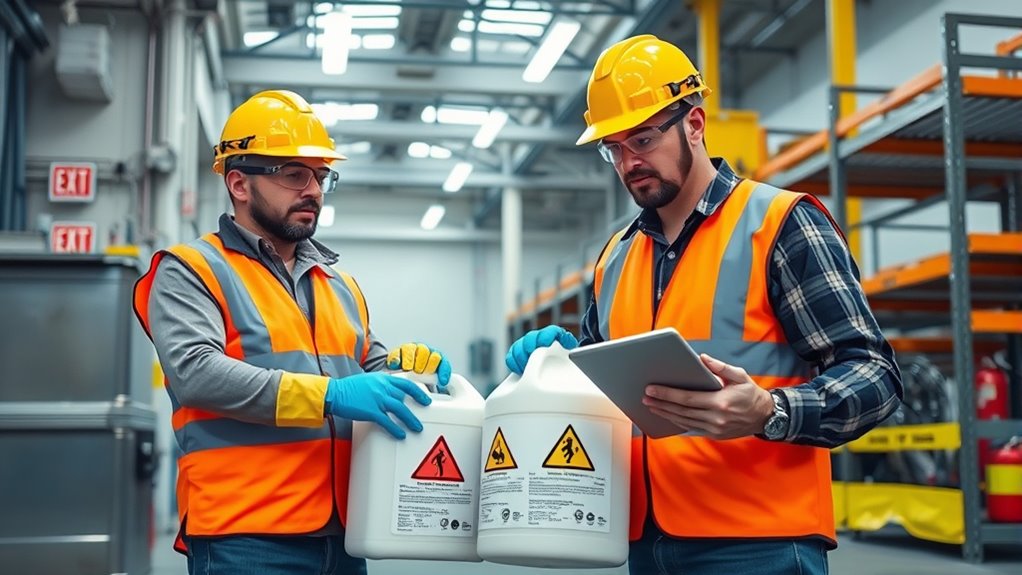
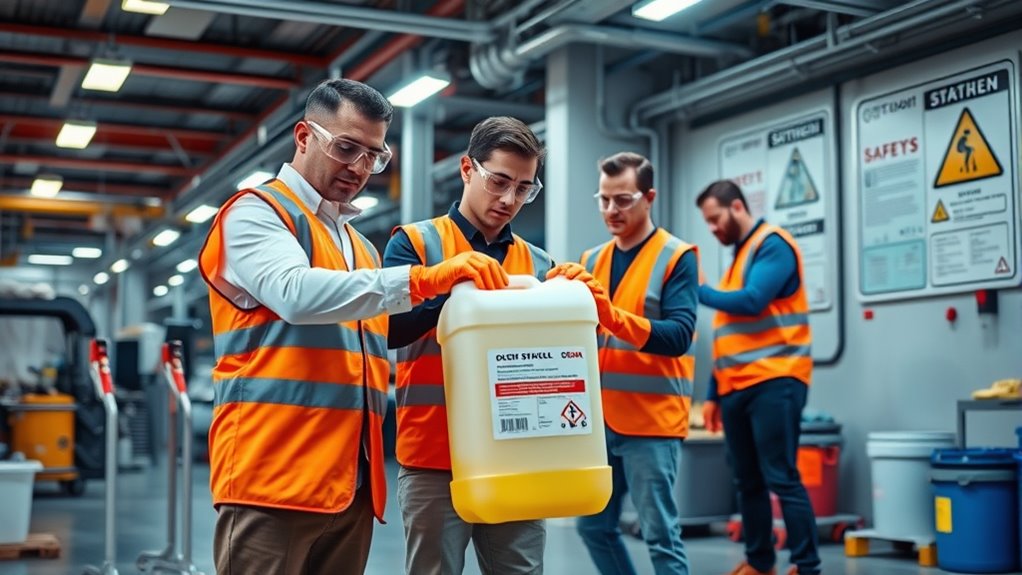
Have you ever wondered how workplaces stay safe and compliant? It all begins with understanding and adhering to OSHA regulations that protect workers like you. One of the most important aspects is hazard communication. As a member of a commercial cleaning crew, you encounter a variety of chemicals and substances daily. OSHA mandates that employers provide proper hazard communication to guarantee you understand the risks associated with these materials. This includes clear labeling of chemical containers, safety data sheets (SDS), and training on how to interpret this information. When you know what hazards you’re dealing with, you’re better equipped to handle chemicals safely, reducing the risk of accidents or health issues.
Alongside hazard communication, personal protective equipment (PPE) plays an essential role in maintaining safety on the job. OSHA requires that employers provide appropriate PPE—such as gloves, goggles, masks, and aprons—to safeguard you from exposure to harmful substances. It’s not enough for PPE to just be available; it must fit properly, be maintained in good condition, and be used correctly at all times. Your responsibility is to wear the PPE whenever it’s necessary and to follow proper procedures for its use. Doing so minimizes your risk of chemical burns, respiratory problems, or other injuries caused by exposure to cleaning agents or biological hazards.
OSHA also emphasizes the importance of training. You should receive an all-inclusive training on hazard communication and PPE use before starting your tasks. This training should cover how to identify hazards, interpret labels and SDS, and properly don and doff PPE. When you understand the purpose and correct use of PPE, you’re more likely to comply with safety protocols. Regular refresher courses help reinforce this knowledge, keeping safety at the forefront of your work routine.
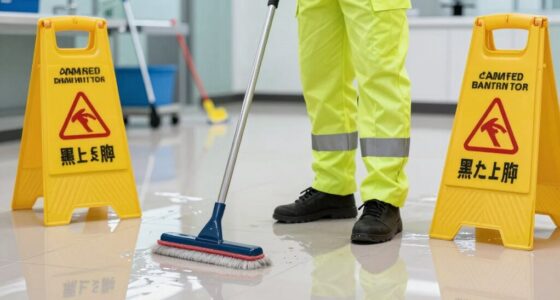
In addition, OSHA regulations insist that workplaces maintain a clean and organized environment. This reduces slip, trip, and fall hazards—common injuries in cleaning settings. Proper storage of chemicals and PPE ensures that safety equipment isn’t contaminated or damaged. Furthermore, having clear emergency procedures and accessible safety equipment, like eyewash stations and spill kits, helps you respond effectively if an incident occurs. Maintaining a safe work environment is essential for preventing injuries and promoting overall safety compliance.
Staying compliant with OSHA’s hazard communication and PPE requirements doesn’t just protect you legally; it genuinely keeps you safe and healthy. By understanding and following these rules, you actively contribute to a safer work environment for yourself and your colleagues. Remember, safety is a shared responsibility, and being informed about hazard communication and PPE is an integral part of that responsibility. When you prioritize safety protocols, you help prevent accidents, promote well-being, and ensure that every day on the job is as safe as it can be.
Frequently Asked Questions
How Often Should OSHA Training Be Refreshed for Cleaning Crews?
You should refresh your cleaning crew’s OSHA training every year through refresher courses. This training frequency helps make certain everyone stays updated on safety protocols and regulations. Regular refreshers reinforce proper procedures, reduce accidents, and maintain compliance. Don’t wait too long—annual updates keep safety top of mind and ensure your team is prepared to handle hazards effectively, ultimately protecting both your workers and your business.
Are There Specific PPE Requirements for Different Cleaning Chemicals?
You should always follow chemical safety guidelines because PPE standards vary depending on the cleaning chemicals you use. For example, strong acids require eye protection and gloves, while disinfectants may need respirators. Always check the labels and Safety Data Sheets to establish the appropriate PPE. By doing so, you protect yourself from chemical exposure and ensure you’re complying with safety protocols. Proper PPE use is essential for safe and effective cleaning.
What Are the Penalties for OSHA Violations in Cleaning Companies?
Imagine walking a tightrope over a canyon—one misstep could send you tumbling. When your cleaning company faces OSHA violations, liability fines act as heavy weights pulling you down. The penalties can range from hefty fines to safety violations citations, risking your reputation and finances. Staying compliant keeps your balance, preventing costly penalties and safeguarding your crew’s well-being. Avoid the fall, and keep your business steady and secure.
How Can Small Cleaning Businesses Ensure OSHA Compliance Affordably?
To guarantee OSHA compliance affordably, you should focus on cost-effective safety and simple compliance strategies. Regularly train your staff on safety protocols, use affordable safety equipment, and keep detailed records of training and incidents. Stay updated on OSHA guidelines through free online resources or local workshops. By proactively managing safety, you minimize violations and penalties, ensuring your cleaning business stays compliant without breaking the bank.
Does OSHA Provide Resources for Training on New Cleaning Technologies?
When it comes to cleaning technology, OSHA offers valuable resources to keep you up-to-date. They provide training materials, guidelines, and safety protocols that help you adapt to new cleaning methods safely. Think of OSHA resources as a safety net, ensuring you’re not flying blind. Staying informed about OSHA’s training options helps your crew master new cleaning tech while maintaining compliance, so you can work smarter and safer every day.
Conclusion
By mastering OSHA regulations, you’re not just following rules—you’re embodying the shield that shields your team from harm, much like Athena’s aegis. Staying compliant guarantees safety becomes second nature, transforming your cleaning crew into vigilant guardians of health. Remember, neglecting these standards risks more than fines; it risks your crew’s well-being. Embrace OSHA guidelines as your armor, and lead with confidence, forging a safer, more responsible workplace where everyone can thrive.
Fall Picks
fall essentials
As an affiliate, we earn on qualifying purchases.