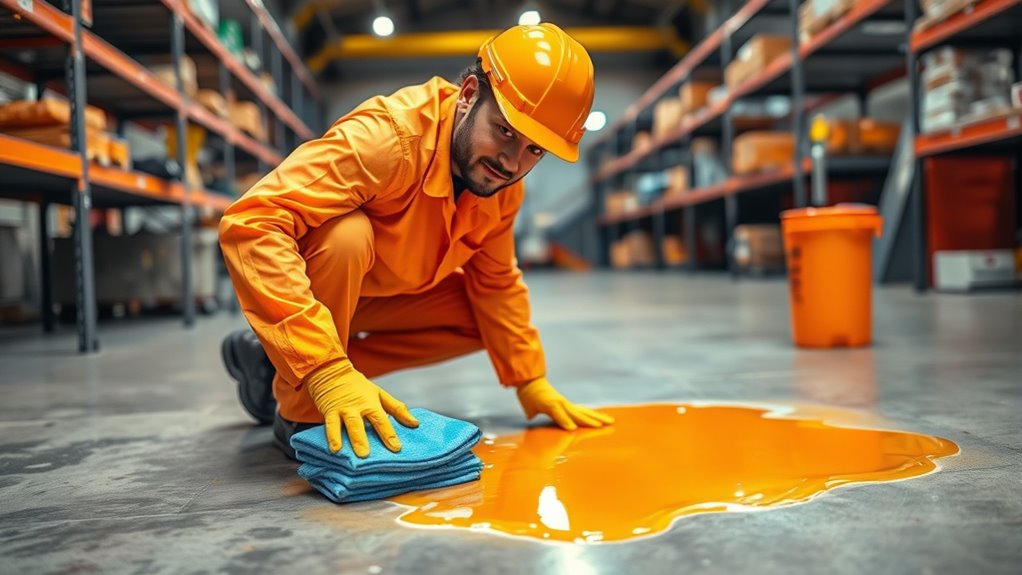

When responding to a spill as a cleaner, promptly identify the spill type using safety data sheets, then isolate the area to prevent contamination. Wear appropriate PPE, contain the spill with absorbent materials like booms or pads, and alert your supervisor. Follow your organization’s spill response plan to neutralize or remove the substance safely. Staying prepared and knowing your procedures helps protect everyone and the environment. Keep learning to handle spills even more effectively.
Key Takeaways
- Quickly identify spill type and hazards using safety data sheets to determine appropriate response actions.
- Isolate the spill source and use barriers like absorbent materials to contain liquids safely.
- Wear suitable PPE and alert supervisors immediately, following the organization’s spill response plan.
- Contain and neutralize the spill, ensuring it is fully controlled before cleanup to prevent environmental damage.
- Regularly review training, maintain spill containment tools, and familiarize yourself with safety procedures for effective response.
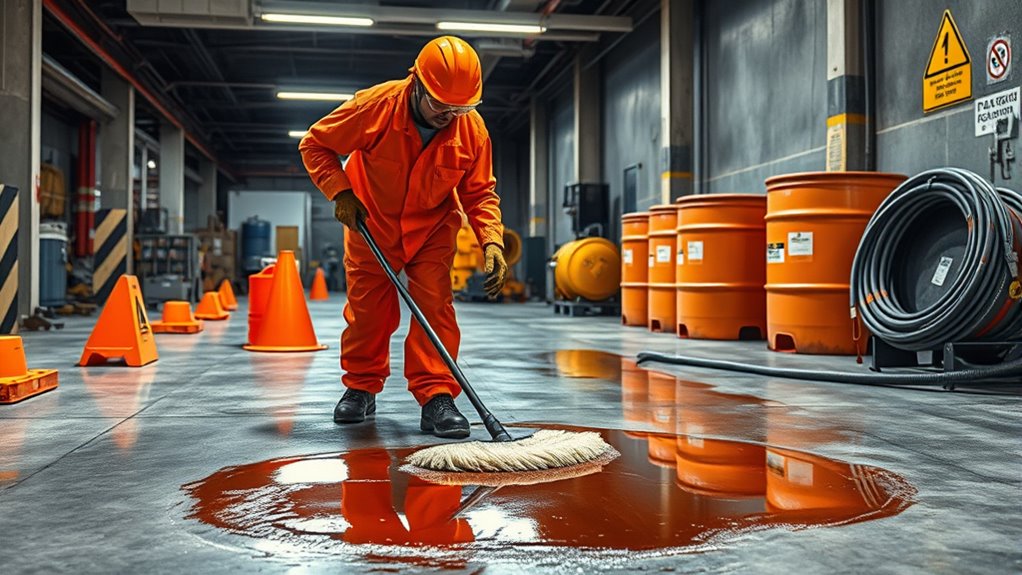
Have you ever wondered what to do when an unexpected spill threatens your environment or safety? The first step is to act swiftly and confidently, and that begins with proper hazard identification. Recognizing the type of spill is vital because it determines how you respond. Ask yourself: Is the substance flammable, corrosive, toxic, or reactive? Knowing this helps you decide whether to evacuate the area, ventilate the space, or use specific protective equipment. Always review safety data sheets (SDS) for the materials involved, so you understand the hazards and recommended response actions. Accurate hazard identification isn’t just about knowing the chemical name; it’s about understanding the risks associated with it and planning accordingly. Having the right spill containment**** tools on hand can significantly reduce the impact of a spill and facilitate a safer cleanup process.
Quickly identify spill hazards to ensure a safe and effective response.
Once you’ve identified the hazard, your immediate goal is to contain the spill to prevent it from spreading further. Spill containment is essential in protecting the environment, reducing exposure, and simplifying cleanup. Your first action should be to isolate the spill source if possible, stopping the release. Use barriers such as absorbent booms, dikes, or spill pillows to contain the liquid within a specific area. If the spill involves a hazardous material, make sure to wear appropriate personal protective equipment (PPE)—gloves, goggles, and respirators if necessary—before handling containment devices. The goal is to prevent the spill from reaching drains, waterways, or other sensitive areas, which could cause environmental damage or health hazards.
Effective spill containment also involves creating a safe perimeter around the spill site. Clear the area of untrained personnel to minimize exposure, and alert your team or supervisor immediately. Be aware of the spill’s size and substance, and follow your organization’s spill response plan. Sometimes, using absorbent materials specifically designed for hazardous chemicals can speed up containment and reduce secondary contamination. After the spill is contained, you may need to neutralize the substance or remove it for proper disposal, but containment is your first line of defense.
Throughout this process, stay calm and focused. Rushing can lead to mistakes or accidents. Remember, hazard identification guides your response, and proper spill containment minimizes the impact on people and the environment. By acting quickly and following established procedures, you’re not only protecting yourself but also ensuring a safer cleanup process. Always review your training regularly so that when an incident occurs, your response is both instinctive and effective. The key is preparation—knowing what hazards you face and having the right containment tools at hand will make all the difference in managing spills safely and efficiently.

FLASHDRY Universal Spill Absorbent Pads, 100-Count Dispenser Box, 17.5" x 13.5", Absorbs Oil, Grease, Coolant & Solvents, for Garages, Warehouses, Factories & Industrial Facilities
Absorbs Oil, Grease, Fuel & More: Tackles oil, coolant, hydraulic fluid, transmission fluid, brake fluid, solvents, and grease…
As an affiliate, we earn on qualifying purchases.
As an affiliate, we earn on qualifying purchases.
Frequently Asked Questions
What Personal Protective Equipment Is Necessary During Spill Cleanup?
You need to wear protective gear, including gloves, goggles, and a long-sleeved apron, to shield your skin and eyes. A respirator mask is essential to guard your lungs from inhaling hazardous fumes or vapors. Make sure your protective gear fits properly and is rated for chemical exposure. Always follow safety guidelines, and double-check your equipment before starting spill cleanup to stay safe and effective.
How Do I Dispose of Hazardous Spill Waste Properly?
Think of hazardous waste as a ticking time bomb—you need to handle it carefully. You should follow proper waste segregation and disposal procedures by placing waste in designated, clearly labeled containers. Never mix hazardous materials with regular trash. Contact your local hazardous waste disposal facility or environmental agency for pick-up. Always wear protective gear and document the disposal process to guarantee compliance and safety. Proper disposal keeps everyone safe and the environment clean.
What Are the First Steps in a Chemical Spill Emergency?
In a chemical spill emergency, you should first prioritize your safety. Quickly contain the spill using spill containment materials to prevent spreading. Then, assess the hazard by identifying the chemical involved and its risks. If necessary, evacuate the area and alert others. Always wear appropriate personal protective equipment and avoid direct contact. Your quick response helps minimize hazards and protects everyone around you.
How Can I Prevent Spills in the First Place?
To prevent spills, you should prioritize spill prevention measures and guarantee proper safety training for all staff. Regularly inspect containers and storage areas to catch leaks early. Use appropriate, well-maintained equipment and handle chemicals carefully, following safety protocols. Educate yourself and your team on proper procedures and potential hazards. Staying vigilant and well-trained helps reduce the risk of spills, protecting everyone and minimizing cleanup efforts.
Are Special Certifications Required for Spill Responders?
You need a spill responder certification if you’re handling hazardous materials. For example, a cleaning crew responsible for chemical spills in a factory should complete hazardous materials training to respond effectively. These certifications ensure you understand proper containment and cleanup procedures. Without them, you risk unsafe handling and legal issues. So, always pursue spill responder certification to stay prepared and compliant during emergencies.

Spill Ready Modular Spill Berm Kit, 50 ft x 5.5 in x 2 in, Custom Spill Containment Barrier System with Corners and Connectors
Complete 50 ft modular spill berm kit helps create custom spill containment layouts around equipment, drums, and storage…
As an affiliate, we earn on qualifying purchases.
As an affiliate, we earn on qualifying purchases.
Conclusion
Remember, quick and calm actions help keep your workspace safe and smooth. By staying prepared and knowing the gentle art of spill response, you create a more comfortable environment for everyone. Think of each response as a graceful dance, turning a small mishap into an opportunity for care and control. With confidence and a steady hand, you can transform potential disruptions into moments of reassurance. Your calm presence makes all the difference in maintaining a harmonious setting.

keebomed Hazmat suit, Chemical Protective Coverall, Category III, Type A, Microporous,Hood, Elastic Wrists and Ankles, Zipper (M)
Pack of 1 Hazmat Suit.
As an affiliate, we earn on qualifying purchases.
As an affiliate, we earn on qualifying purchases.

22 Piece Bodily Fluid Cleanup Pack/Bloodborne Pathogen Spill Kit – Meets OSHA Regulations – Protect from Dangerous Exposure to Blood and Other Potentially Infectious Materials
Bodily Fluid Clean Up Pack|Use as a BBP Kit refill, addition to first aid kit or cabinet, or…
As an affiliate, we earn on qualifying purchases.
As an affiliate, we earn on qualifying purchases.