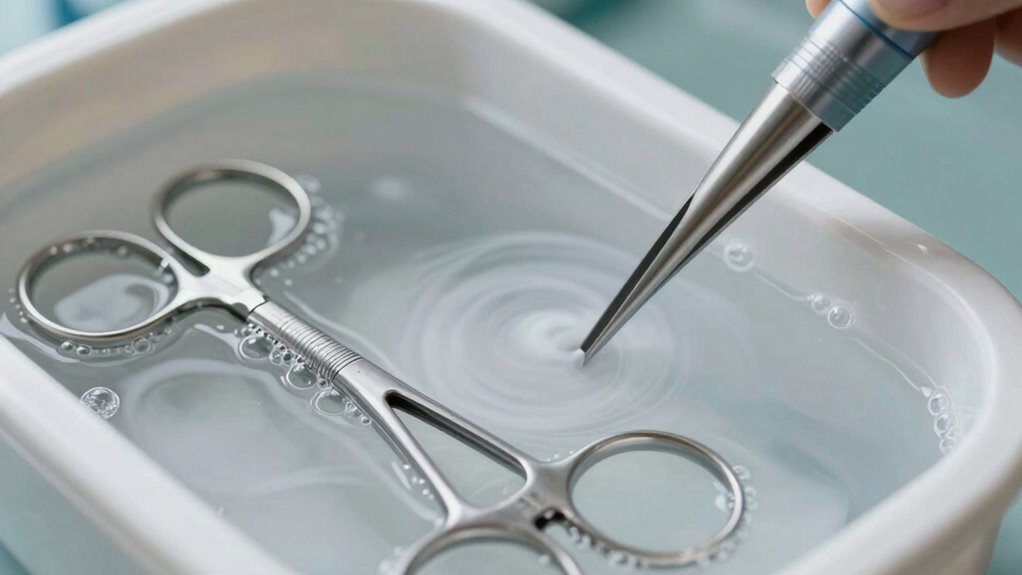

Ultrasonic cleaners use high-frequency sound waves to generate microscopic bubbles that effectively lift away dirt, grease, and grime from tools and jewelry, even in tiny crevices you can’t see or reach manually. The process is gentle yet deep-cleaning, ensuring your items stay in top condition without scratches or damage. If you want to discover how this invisible cleaning method works and benefits your tools, there’s more to explore below.
Listen free for 30 days with Audible
Thousands of audiobooks and originals — cancel anytime.
As an affiliate, we earn on qualifying purchases.
Key Takeaways
- Ultrasonic cleaners remove microscopic dirt, grease, and residues from tools that are invisible to the naked eye.
- The cavitation process dislodges grime from tiny crevices and complex geometries unreachable by manual cleaning.
- They effectively eliminate oil and debris that can cause corrosion or impair tool performance.
- Ultrasonic cleaning preserves tool surfaces, preventing scratches or damage from abrasive scrubbing.
- Regular use maintains tools’ cleanliness, ensuring optimal function and extending their lifespan.
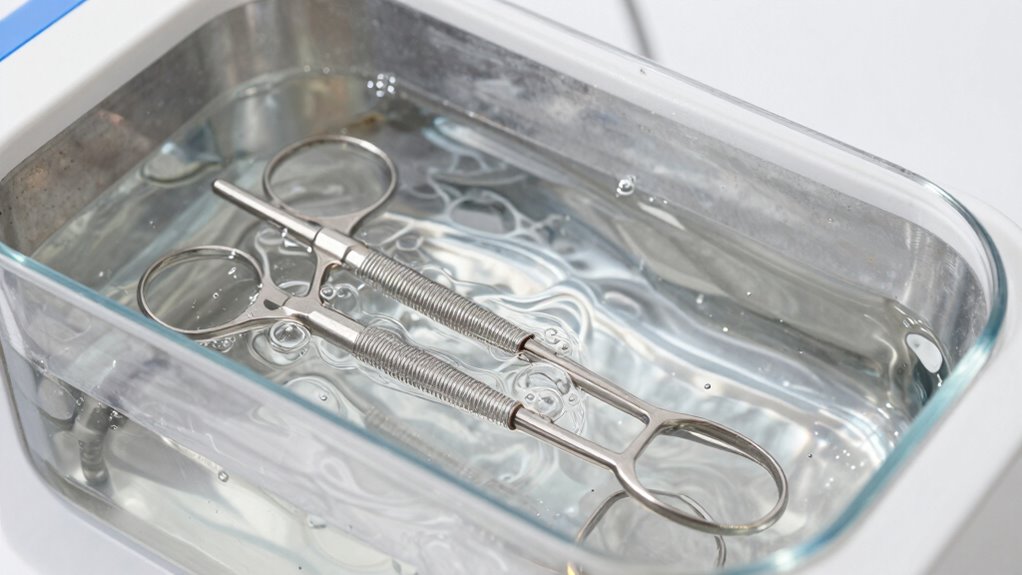
Have you ever wondered how tiny, hard-to-reach dirt and grime can be effectively removed from delicate items? Ultrasonic cleaners use high-frequency sound waves to generate millions of microscopic bubbles in a cleaning solution. These bubbles collapse forcefully, creating a scrubbing action that reaches into every nook and cranny, removing dirt that traditional cleaning methods often leave behind. This cleaning mechanics process is gentle yet highly effective, making ultrasonic cleaners ideal for cleaning delicate tools, jewelry, and intricate parts that require meticulous care. Additionally, ultrasonic cleaning is a non-abrasive method, making it suitable for sensitive surfaces that could be damaged by traditional scrubbing. When you operate an ultrasonic cleaner, you’re harnessing the power of cavitation—an phenomenon where rapid sound wave vibrations produce tiny implosions that dislodge dirt, grease, and debris from surfaces. Because these bubbles are so small, they can penetrate areas that are otherwise inaccessible, such as the tiny crevices of jewelry or the intricate components of precision instruments. This makes ultrasonic cleaning especially useful for maintaining the cleanliness of jewelry, where dirt can hide deep within filigree or beneath settings, and where harsh scrubbing could damage delicate surfaces. Regular use of ultrasonic cleaners can considerably improve jewelry maintenance, keeping pieces sparkling without risking scratches or wear that manual cleaning might cause.
Using an ultrasonic cleaner is straightforward. You fill the tank with a suitable cleaning solution, turn it on, and submerge your items. The sound waves do the work, loosening grime from surfaces without the need for abrasive scrubbing. For jewelry, you should choose a gentle, non-abrasive solution that preserves the metal and any gemstones. You can run the cleaner for a few minutes, then rinse and dry your jewelry for a like-new appearance. Similarly, for tools or small mechanical parts, ultrasonic cleaning helps remove oils, dirt, and residues that can hinder performance or cause corrosion over time.
This process not only saves you time but also ensures thorough cleaning, especially for items with complex geometries. Since ultrasonic cleaners operate without harsh chemicals or vigorous scrubbing, they’re also safer for delicate surfaces and more environmentally friendly. Proper maintenance of your jewelry and tools becomes easier, as ultrasonic cleaning reaches every hidden corner, maintaining the integrity and appearance of your possessions. With continued use, you’ll notice your jewelry maintains its shine longer, and your tools perform better, thanks to the deep-cleaning action of ultrasonic technology. It’s an efficient, reliable way to keep even the most delicate items pristine, ensuring they look their best and last longer.
As an affiliate, we earn on qualifying purchases.
Frequently Asked Questions
Are Ultrasonic Cleaners Safe for Delicate Jewelry?
Yes, ultrasonic cleaners are generally safe for delicate jewelry if you follow proper jewelry safety guidelines. They effectively remove dirt and grime while preserving delicate materials. However, avoid using them on jewelry with fragile stones, pearls, or sentimental pieces that might be sensitive to ultrasonic vibrations. Always check the manufacturer’s instructions and consult a professional if you’re unsure, ensuring delicate preservation and avoiding potential damage.
How Long Does a Typical Ultrasonic Cleaning Cycle Last?
Wondering how long your ultrasonic cleaning cycle lasts? Typically, it’s between 3 to 10 minutes, but it depends on the cleaning solutions you use and the items’ dirtiness. You’ll want to pay close attention to the cycle duration to avoid over-cleaning or damaging delicate items. Keep an eye on the timer, and trust that adjusting it based on your cleaning solutions will give you the best results every time.
Can Ultrasonic Cleaners Remove All Types of Grime?
Ultrasonic cleaners can’t remove all types of grime, especially stubborn or chemically bonded residues. They excel in industrial applications and household cleaning for delicate tools, jewelry, and electronics. You’ll find they’re highly effective at removing dirt, grease, and biofilms, but tougher grime like paint or corrosion may require additional methods. For ideal results, match the cleaning process to the specific grime and material, ensuring safe and thorough cleaning.
What Maintenance Is Required for Ultrasonic Cleaning Machines?
Think of your ultrasonic cleaner like a vintage jukebox—regular maintenance keeps it singing. You should check chemical compatibility to prevent damage and change the cleaning solution regularly. Also, calibrate the machine to guarantee peak performance and prevent uneven cleaning. Keep the tank clean to avoid buildup, and inspect the transducers periodically. Proper maintenance guarantees your ultrasonic cleaner stays efficient and extends its lifespan.
Are Ultrasonic Cleaners Effective on Electronic Components?
Yes, ultrasonic cleaners can be effective on electronic components if you prioritize electronics safety and cleaning accuracy. You should use a suitable, non-corrosive cleaning solution and avoid immersing delicate parts for too long. Keep the ultrasonic frequency appropriate to prevent damage, and always dry components thoroughly afterward. This careful approach guarantees you remove grime effectively without risking harm to sensitive electronics, maintaining their performance and longevity.
Conclusion
Don’t let the invisible grime hold your tools back. Ultrasonic cleaners effortlessly remove dirt you can’t see, ensuring your equipment stays in top shape. Some might think they’re unnecessary or too complicated, but once you see the spotless results, you’ll realize how essential they are. Investing in one means fewer repairs, longer tool life, and better performance. Trust in ultrasonic cleaning—because the tiniest grime can make the biggest difference.
Fall yard work Picks
leaf blowers
As an affiliate, we earn on qualifying purchases.