To improve indoor air quality, it’s important to understand that air scrubbers, negative air systems, and purifiers serve different purposes. Air scrubbers directly clean contaminants from the air with high-efficiency filters. Negative air systems create pressure to contain or prevent contaminated air from spreading, often used during construction or remediation. Purifiers are smaller, standalone units for general use. Knowing these differences helps you choose the right tool for your needs—more details can help you make the best choice.
Key Takeaways
- Air scrubbers, negative air systems, and purifiers serve distinct functions: air cleaning, containment, and air circulation, respectively.
- Negative air systems create pressure differentials to contain contaminants, unlike standalone purifiers or scrubbers.
- Proper maintenance and component checks are crucial for each tool’s effectiveness and safety in their specific applications.
- Equipment complexity varies: negative air systems involve ductwork and fans, whereas purifiers are smaller, consumer devices.
- Using these tools interchangeably can compromise safety, efficiency, and indoor air quality; select and maintain each appropriately.
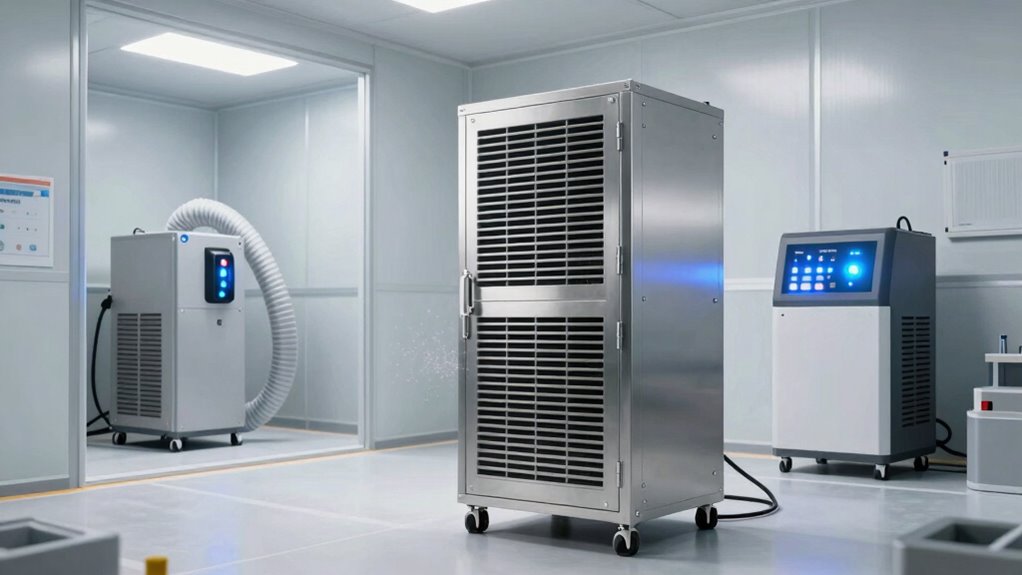
Whether you’re dealing with indoor air quality issues or aiming to maintain a healthier environment, air scrubbers, negative air systems, and purifiers are essential tools. While these devices are often grouped together, they serve distinct purposes and require different approaches to equipment maintenance. Recognizing these differences helps guarantee you use each tool effectively, enhancing your indoor air quality and protecting your health.
Air scrubbers are designed to remove contaminants directly from the air. They typically contain high-efficiency filters, such as HEPA or activated carbon, that trap dust, mold spores, odors, and volatile organic compounds (VOCs). When maintaining this equipment, you need to regularly check and replace filters to ensure peak performance. Neglecting filter replacements can reduce filtration efficiency, allowing pollutants to circulate back into your environment. Proper equipment maintenance also involves inspecting the unit for any damage or blockages, cleaning the exterior, and ensuring fans and motors run smoothly. This proactive approach guarantees that the scrubber continues to clean the air effectively. Understanding the differences in system functions can help you select and operate these tools more effectively.
Regularly check and replace filters to ensure your air scrubber works efficiently and keeps your environment clean.
Negative air systems, on the other hand, are primarily used during construction, renovation, or remediation projects. They create a pressure differential that prevents contaminated air from escaping a designated space, protecting surrounding areas. These systems often employ powerful exhaust fans and multiple filters, including HEPA filters, to trap airborne particles. Maintenance here focuses on ensuring the fans operate correctly, filters are replaced or cleaned frequently, and ductwork remains free of obstructions. Since negative air systems are often used in environments with hazardous materials, consistent equipment maintenance is critical to prevent leaks or failures that could compromise safety. Additionally, understanding the difference in function between these systems can help you choose the right equipment for your specific needs. Proper maintenance also reduces the risk of system failure, which is vital in hazardous environments.
Air purifiers are usually smaller, standalone devices intended for everyday use in homes or offices. They improve indoor air quality by circulating air through filters that trap pollutants. Maintenance involves regularly replacing filters, cleaning the exterior, and checking for any operational issues like strange noises or reduced airflow. Unlike air scrubbers or negative air systems, purifiers are more consumer-focused, requiring less technical upkeep but still benefiting from consistent filter changes and proper placement to maximize efficiency. Regular maintenance of these devices not only extends their lifespan but also ensures they continue to operate at optimal levels for healthier indoor environments.

CADPXS Shield-550 Air Scrubber 550 CFM with 3-Stage Filtration, Negative Air Machine, Airborne Cleaner HEPA Scrubber, Water Damage Restoration Equipment, Commercial Air Purifier
- Whole-Home HEPA Air Purifier: Removes airborne particles including smoke and dust
- Commercial Heavy-Duty Design: Suitable for renovation and restoration projects
- Pre-Filter for Larger Particles: Protects HEPA filter from larger debris
As an affiliate, we earn on qualifying purchases.
As an affiliate, we earn on qualifying purchases.
Frequently Asked Questions
Can Air Scrubbers Remove All Types of Airborne Toxins?
Air scrubbers with HEPA filtration can remove many airborne particles, including dust, mold spores, and bacteria. However, they might not eliminate all toxins, such as certain VOCs (volatile organic compounds). To effectively reduce all types of airborne toxins, you need a device that combines HEPA filters for particles and activated carbon for VOC removal. So, while air scrubbers are effective, they don’t remove every toxin on their own.
How Often Should Negative Air Units Be Maintained?
You should maintain negative air units at least weekly, or more often during heavy use. Neglecting maintenance can drastically shorten the equipment’s lifespan and reduce its effectiveness, making it almost useless overnight. Regular maintenance schedules, including filter checks and cleanings, ensure peak performance. Think of it as giving your equipment a boost of energy—it keeps working like new and protects your space constantly. Don’t underestimate the power of consistent upkeep!
Are Portable Air Purifiers Effective for Large Spaces?
Yes, portable air purifiers can be effective for large spaces if they have high filtration efficiency and are appropriately sized for the area. To maximize their effectiveness, you should conduct air quality testing regularly to monitor improvements. Keep in mind that multiple units might be needed for extensive spaces, and maintaining filters is essential for peak performance. Proper placement ensures better air circulation and cleaner air overall.
What Are the Costs Associated With Professional Air Scrubber Rental?
Renting an air scrubber costs typically between $100 and $500 per day, depending on size and features. Think of rental logistics as planning a road trip—you need to budget for fuel, tolls, and accommodations. When comparing costs, consider rental duration and maintenance. You might find that investing in a high-quality rental for a week is more cost-effective than multiple small purchases, ensuring cleaner air without breaking your budget.
Do Air Purifiers Eliminate Odors Completely?
Air purifiers greatly improve air quality and help with odor removal, but they rarely eliminate odors completely. They work best for ongoing air purification and reducing airborne particles, yet stubborn smells from pets, smoke, or mold may persist. For thorough odor removal, especially in severe cases, combining purifiers with proper cleaning or specialized odor treatments is necessary. Relying solely on an air purifier might leave some odors behind.
Conclusion
Don’t assume that air scrubbers, negative air machines, and purifiers are interchangeable—they each serve unique purposes. While some believe they’re all the same, the truth is that understanding their differences guarantees you select the right tool for your needs. Think of it like using a wrench instead of a screwdriver; choosing the right device makes all the difference in effectively improving your air quality. Know the facts, make the right choice.