To clean fireplace ashes without making a mess, always wait at least 24 hours for the ashes to cool completely. Use a metal ash container with a tight lid and handle the ash gently with a scoop or dedicated shovel. Wear gloves and a dust mask for safety, and work in a well-ventilated space. Avoid overfilling containers, and make certain all ashes are cool before disposal. Keep your process clean and safe; if you continue, you’ll learn more tips to make cleanup effortless.

Get cleaning gear delivered free with Prime
- Fast, free delivery on millions of items
- Prime Video, Amazon Music and more included
- Member-only deals all year
Key Takeaways
- Use a metal ash container with a tight lid and wait 24 hours for ash to cool before handling.
- Wear gloves and a dust mask, and ensure good ventilation during cleanup to prevent inhalation and dust buildup.
- Transfer ash gently with a metal scoop, leaving space in the container to prevent overflow and fire hazards.
- Clean tools and surrounding areas thoroughly with a damp cloth to remove residual ash dust.
- Avoid disposing of hot ashes in trash or compost; always confirm they are completely cooled to prevent fires.

Cleaning out fireplace ash is an essential part of maintaining a safe and efficient hearth. Proper ash disposal isn’t just about keeping your fireplace looking tidy; it’s also critical for safety. When you’re ready to clean out the ash, you want to handle it carefully to prevent accidents or fire hazards. Always remember that even cooled ash can retain enough heat to ignite nearby materials. Before you start, make sure the ashes have completely cooled—wait at least 24 hours after your last fire. Once cooled, you should use a metal ash container with a tight-fitting lid to prevent any stray embers from sparking a fire. Never use plastic or cardboard containers for ash disposal, as these can quickly catch fire if there’s residual heat.
When it comes to ash disposal, safety precautions are your top priority. Always wear gloves and a dust mask to avoid inhaling ash particles, which can be harmful to your lungs. Ash contains tiny, abrasive particles that can irritate your respiratory system, so protect yourself. Keep your workspace well-ventilated to minimize dust buildup and avoid sweeping or handling ash in confined spaces. When you transfer ash from your fireplace to the storage container, do it gently to reduce dust clouds. Use a metal scoop or dedicated ash shovel, and avoid overfilling your container—leaving some room for any remaining heat or settling ash. This extra caution helps prevent overflow, which could create a mess or pose a fire risk. Additionally, understanding the proper handling of ash can help prevent accidental fires and health hazards.
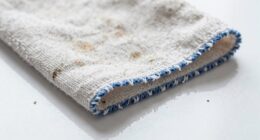
Once you’ve safely disposed of the ash, clean your tools and the surrounding area thoroughly. Use a damp cloth to wipe down any surfaces that may have ash dust settled on them. Regularly inspecting your fireplace and tools ensures everything stays in good condition and reduces the risk of accidental fires. Remember, never dispose of ashes in a compost bin or trash can without proper containment, as heat or smoldering embers can ignite other materials. If you’re unsure whether the ash is completely cool, err on the side of caution and wait longer before handling it. By following these safety precautions and proper ash disposal techniques, you ensure a cleaner, safer hearth, and you reduce the risk of unexpected fires or health hazards. Keeping your fireplace maintained not only prolongs its life but also guarantees that your home remains a safe and cozy space.
As an affiliate, we earn on qualifying purchases.
Frequently Asked Questions
What Safety Gear Should I Wear During Ash Cleanup?
You should wear protective gloves and a dust mask during ash cleanup. Gloves protect your hands from sharp particles and potential irritants, while a dust mask prevents inhaling fine ash dust that can harm your lungs. Make certain your gloves are sturdy and fit well, and choose a mask with a proper filter. Taking these precautions keeps you safe and makes the cleanup process easier and cleaner.
How Often Should I Clean Out Fireplace Ash?
Have you ever wondered how often you should clean out fireplace ash? Typically, you should do it after every few fires or once a week during heavy use. Regularly emptying your ash storage prevents buildup and makes ash recycling easier. Remember, cleaning frequently keeps your fireplace safe and efficient, while also reducing mess and potential hazards. Don’t wait too long—stay on top of your maintenance to enjoy a warm, clean fire every time.
Can Fireplace Ash Be Used in Garden Compost?
Yes, you can use fireplace ash in your garden compost, but do so cautiously. Ash from hardwoods adds valuable nutrients, enriching garden soil, and can help with pest repellent properties. Mix small amounts into your compost to improve soil quality without overwhelming plants with alkalinity. Avoid using excessive ash, especially from treated or non-wood sources, to prevent imbalances and guarantee your garden benefits safely from its natural pest-repelling effects.
What Is the Best Way to Dispose of Excess Ash?
Think of ash disposal as guiding gentle flames into a peaceful retreat. To do it safely, let the ash cool completely before handling. Use a metal container with a tight lid to prevent sparks. Dispose of the cooled ash in your trash or sprinkle it on non-vegetable garden beds as a soil amendment. Always wear gloves and mask for safe handling, ensuring your ash finds its proper, mess-free end.
Are There Any Health Risks Associated With Ash Dust?
Yes, there are health hazards associated with ash dust. Breathing in fine ash particles can cause respiratory issues and irritation to your lungs and eyes. To stay safe, wear a mask and gloves when handling ash, and clean up carefully to prevent dust from becoming airborne. Proper disposal and ventilation help minimize health risks, ensuring you avoid unnecessary exposure to potentially harmful ash dust.
Conclusion
Cleaning out your fireplace ash doesn’t have to be messy or overwhelming. With the right tools and techniques, you can keep your space tidy and safe, even if you worry about dust or stray ash spreading. Imagine effortlessly sweeping away the remnants, knowing you’ve avoided a cloud of dust that settles everywhere. So, next time, approach ash cleanup confidently—you’ll enjoy a spotless hearth without the cleanup chaos, making your cozy fireside moments even more enjoyable.
Halloween Picks
halloween
As an affiliate, we earn on qualifying purchases.