
Electrostatic sprayers are great for quickly covering large areas, wrapping around surfaces, and reaching into tight crevices, making disinfection faster and more efficient. However, they can’t replace manual cleaning or physical removal of dirt and grime, especially on heavily soiled surfaces. They’re best used as part of a thorough cleaning process, not the sole method. To learn how to maximize their effectiveness safely and properly, keep exploring the details below.
Key Takeaways
- Electrostatic sprayers excel at rapidly covering large surfaces with disinfectant, including hard-to-reach areas and crevices.
- They are ideal for large-scale disinfection but cannot replace manual cleaning for removing heavy dirt or grime.
- Proper surface assessment is essential, as sensitive surfaces may be damaged by overuse or incompatible disinfectants.
- They enhance disinfection efficiency but should be combined with manual cleaning for thorough sanitation.
- Safety protocols are crucial, as they do not eliminate chemical handling risks or the need for protective equipment.
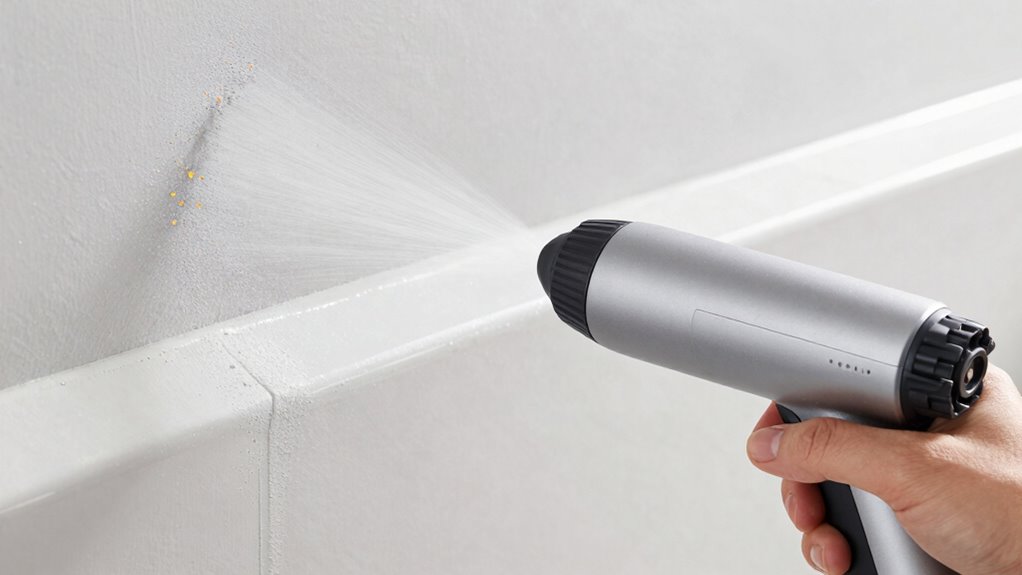
Have you ever wondered how electrostatic sprayers provide such effective and even coverage when disinfecting surfaces? It’s all about their unique technology. These devices electrically charge the disinfectant droplets, causing them to wrap around surfaces and reach into crevices that traditional sprayers might miss. This electrostatic charge guarantees the disinfectant clings more effectively, making the process faster and more thorough. But while they excel at delivering a uniform coating quickly, understanding their limitations is equally important.
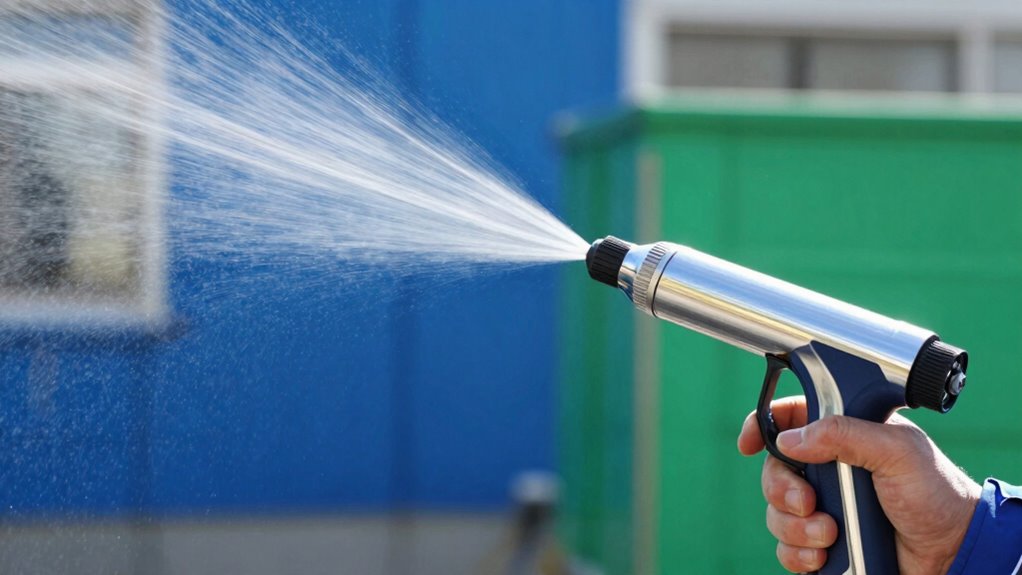
Electrostatic sprayers electrically charge disinfectants for faster, more thorough coverage, reaching into crevices others can’t access.
When considering electrostatic sprayers, surface durability becomes a key factor. You need to be mindful of the types of surfaces you’re disinfecting. Some materials, especially delicate ones like certain plastics, painted surfaces, or electronics, may be sensitive to the chemicals used or the spraying process itself. Over time, repeated exposure to disinfectants can cause deterioration, discoloration, or weakening of the surface. That’s why it’s vital to select appropriate disinfectants and follow manufacturer guidelines to prevent damage. Proper training on usage can help you avoid over-application, which might compromise surface integrity. Additionally, understanding the disinfectant’s chemical properties can help ensure compatibility with various surfaces and prevent unintended damage. Regularly assessing the surface compatibility of disinfectants can help you avoid long-term damage and maintain surface integrity.
Chemical safety is another vital aspect. Electrostatic sprayers use potent disinfectants that, if misused, could pose health risks to you or others nearby. It’s essential to wear proper personal protective equipment, like gloves and masks, and ensure good ventilation during application. Always read labels and follow safety instructions for the chemicals you’re using. While these sprayers considerably reduce the amount of disinfectant needed compared to traditional methods, they still deliver a powerful dose. Misapplication or accidental spills can lead to chemical exposure, so handling with care is vital. Additionally, you should be aware of the potential for chemical residues to remain on surfaces, especially if not properly wiped or rinsed after spraying. Proper application techniques can help minimize chemical residues and ensure safety.
Furthermore, understanding the limitations of electrostatic sprayers can help users develop more effective disinfection strategies. Electrostatic sprayers are excellent tools for large-scale disinfection, especially in settings like schools, hospitals, or commercial spaces. They save time, reduce waste, and enhance coverage. However, they may not be as effective on surfaces that require scrubbing or physical removal of dirt. They’re most effective when used as part of a thorough cleaning protocol, not as the sole approach. For example, they’re great at quickly covering broad areas but may not remove dirt or grime on heavily soiled surfaces. Combining manual cleaning with electrostatic spraying ensures both physical and chemical sanitation, maintaining the longevity of surfaces while safeguarding everyone’s health.

The Original Disinfectant Fogger Machine – Professional Sanitizer Sprayer – ULV Atomizer & Nano Steam Gun – Rechargeable Barber Spray Gun with Blue Light V2
- Fast Cleaning: Cleans rooms in under 5 minutes
- Wide Spray Range: Sprays 12-20 inches for even coverage
- No Preheating Needed: Power on and spray instantly
As an affiliate, we earn on qualifying purchases.
As an affiliate, we earn on qualifying purchases.
Frequently Asked Questions
Are Electrostatic Sprayers Safe for Use Around Children and Pets?
Electrostatic sprayers can be safe around children and pets if you follow proper precautions. You should keep kids and pets out of the area during and immediately after spraying until surfaces dry completely. Using child safety and pet safety protocols guarantees no harmful residues remain. Always read the label, choose pet- and child-friendly disinfectants, and ventilate the space well. This way, you protect their safety while effectively disinfecting.
How Long Does the Disinfectant Residue Last After Spraying?
The disinfectant residue from electrostatic spraying generally lasts for about 30 minutes to a few hours, depending on factors like surface type, ventilation, and chemical formulation. Chemical evaporation gradually reduces residue longevity, so it’s best to wait until the area is dry before touching surfaces. Keep in mind that some disinfectants may leave longer-lasting residues, so always follow product instructions for safety and effectiveness.
Can Electrostatic Sprayers Be Used Outdoors Effectively?
Yes, electrostatic sprayers can be used outdoors effectively, especially for large areas. They offer cost-effective coverage and help reduce chemical waste, which benefits the environment by minimizing overuse. However, you should consider environmental impact, like wind and weather conditions, that can affect spray accuracy. When used properly outdoors, they provide efficient, thorough disinfection without harming the environment or your budget.
What Maintenance Is Required for Electrostatic Sprayers?
To keep your electrostatic sprayer working well, you need to regularly clean and check the nozzles and filters. Calibrate it often to guarantee accuracy and even coverage, especially if you notice uneven spraying. Also, monitor the battery life, charging it fully after use and replacing batteries as needed. Proper maintenance ensures your sprayer stays reliable, maintains calibration accuracy, and has ideal battery life for effective, efficient use.
Do Electrostatic Sprayers Work on All Types of Surfaces?
Electrostatic sprayers are effective on many surfaces, but their surface compatibility varies. They work well on smooth, non-porous surfaces like metal, plastic, and sealed wood, ensuring excellent spray coverage. However, they may struggle on porous or uneven surfaces where spray may not adhere evenly. You should test the sprayer on a small area first, as some delicate or porous surfaces could be damaged or receive uneven coverage.
Conclusion
While electrostatic sprayers are fantastic for quickly covering surfaces and reducing chemical use, they aren’t a one-size-fits-all solution. Some experts argue they can’t fully replace traditional cleaning methods, especially for delicate or hard-to-reach areas. So, don’t rely solely on them—combine their efficiency with thorough manual cleaning for the best results. After all, technology is a tool, not a magic fix, and understanding its limits helps keep your spaces truly safe and clean.