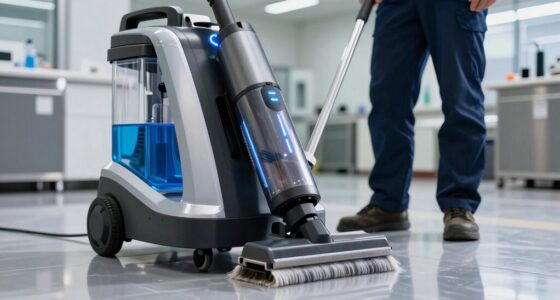
Carbon filters in commercial air cleanup work by capturing odors, volatile organic compounds, smoke, and fumes from the air through tiny pores in porous carbon material. They also neutralize harmful chemicals, transforming them into less harmful substances, which improves air safety. The effectiveness depends on factors like air flow and filter maintenance. Keeping the filters in good shape is key to sustained performance. To discover how these processes work together for cleaner air, explore further below.

Get cleaning gear delivered free with Prime
- Fast, free delivery on millions of items
- Prime Video, Amazon Music and more included
- Member-only deals all year
Key Takeaways
- Carbon filters adsorb odors, VOCs, smoke, and airborne pollutants to improve indoor air quality.
- They chemically neutralize harmful fumes, enhancing safety in industrial and commercial environments.
- Effectiveness depends on activated carbon amount, air flow rate, and proper maintenance.
- Regular replacement or regeneration maintains filter efficiency and prevents saturation.
- Advances in technology promote sustainable, longer-lasting filters for effective air cleanup.

Have you ever wondered how to effectively remove odors and airborne pollutants from your indoor environment? If so, understanding the role of carbon filters is key. These filters are a common component in commercial air cleanup systems because of their unique ability to handle a variety of airborne contaminants. Their primary job is to improve air quality by targeting substances that cause bad smells and potentially harmful particles floating in the air.
Carbon filters work through a process called odor absorption, which is different from simply trapping particles. When air passes through the porous carbon media, odors and certain chemicals are drawn into the tiny pores within the carbon structure. This process effectively captures volatile organic compounds (VOCs), smoke, fumes, and other malodorous substances, leaving the air cleaner and fresher. The pores serve as a trap for these molecules, preventing them from recirculating into the environment.
Carbon filters absorb odors and chemicals through tiny pores, effectively capturing VOCs, smoke, and fumes for fresher indoor air.
But odor absorption isn’t the only thing carbon filters do. They also perform chemical neutralization, which involves reactions that transform harmful or unpleasant chemicals into less harmful or odorless substances. This process is especially important in industrial or commercial settings where chemical fumes or vapors are prevalent. By neutralizing these chemicals, carbon filters help protect indoor air quality and reduce health risks associated with inhaling toxic compounds.
Additionally, the effectiveness of carbon filters can be influenced by factors such as adsorption capacity, which determines how much odor or chemical the filter can handle before becoming saturated. Unlike other air purification methods that only trap particles, carbon filters actively engage with airborne chemicals, making them highly effective against complex pollutants. They don’t just mask odors but eliminate their source, which is crucial in environments like restaurants, laboratories, or manufacturing plants. When properly maintained and replaced, carbon filters continue to absorb odors and neutralize chemicals, keeping the air safe and comfortable for everyone inside. Proper filter maintenance is essential to sustain their effectiveness over time.
You should also know that the effectiveness of a carbon filter depends on factors such as the amount of activated carbon used, the air flow rate, and the type of contaminants present. Over time, the carbon becomes saturated with captured substances and loses its ability to absorb new odors or neutralize chemicals. That’s why regular replacement or regeneration is essential for maintaining optimal performance. Additionally, understanding the adsorption process helps in selecting the right filter for specific needs. Furthermore, advancements in carbon filter technology continue to improve their efficiency and lifespan, making them an increasingly vital part of indoor air quality management. It’s also beneficial to consider the environmental impact of the filters, as sustainable options are now being developed to reduce waste and improve eco-friendliness.
As an affiliate, we earn on qualifying purchases.
Frequently Asked Questions
How Often Should Carbon Filters Be Replaced for Optimal Performance?
For ideal performance, you should replace your carbon filters every 3 to 6 months, depending on usage and air quality. Regular filter maintenance is essential to prevent odors and pollutants from bypassing the filter. Monitor the filters regularly; if you notice a decrease in air quality or a strong odor, it’s time for replacement. Following the recommended replacement frequency guarantees your air cleanup system remains effective and efficient.
Are Carbon Filters Effective Against All Types of Airborne Odors?
Carbon filters are highly effective against many airborne odors because they use chemical absorption to trap odor molecules. However, they’re not effective against all types, especially those caused by gases or chemicals that don’t easily bond with activated carbon. Over time, the filter becomes saturated, reducing its effectiveness. Regular replacement is essential to prevent filter saturation and maintain peak odor removal performance.
What Are the Signs That a Carbon Filter Needs Replacement?
You’ll know it’s time to replace your carbon filter when you notice a decline in air quality, such as persistent odors or increased airborne contaminants. If your filter looks dirty, clogged, or shows signs of wear, it’s a clear sign for filter maintenance. Regularly checking these signs helps guarantee your system remains effective at removing odors and maintaining clean, fresh air in your space.
Can Carbon Filters Remove Harmful Gases Besides Odors?
Hold the phone — carbon filters can definitely remove more than just odors. They use chemical adsorption to trap harmful gases, including VOCs, making your air safer. When you install a carbon filter properly, it acts like a modern-day shield, absorbing toxins and pollutants. So, yes, these filters are effective at removing a broad range of hazardous gases besides odors, ensuring cleaner, healthier air in your space.
How Do Environmental Factors Affect the Lifespan of Carbon Filters?
Environmental factors considerably impact the lifespan of your carbon filters. Poor air quality with high levels of pollutants, humidity, and temperature fluctuations can cause faster saturation, reducing filter effectiveness. To guarantee ideal performance, you need consistent filter maintenance, replacing filters as recommended. Keep an eye on air quality and environmental conditions, and don’t delay filter changes—doing so helps maintain good air quality and prolongs your filter’s usefulness.
Conclusion
Now you see how essential carbon filters are in keeping the air clean and safe. They act as the unsung heroes, quietly removing odors and harmful chemicals that can otherwise go unnoticed. Don’t wait until the air feels off—trust in these filters to do the heavy lifting. Remember, a clean environment is a happy environment; sometimes, you have to look beyond the surface to find what truly keeps you safe.
Halloween Picks
halloween
As an affiliate, we earn on qualifying purchases.