
To care for your pillows and duvets at home, start by using fabric protector sprays to create a barrier against stains and dirt. Wash regularly with gentle cycles and cold water, avoiding overloading your washer. Treat stains promptly with mild detergents, and make certain everything is thoroughly dry before reuse to prevent mold. Proper ventilation and careful drying keep fabrics fresh and lasting longer. Keep exploring for more tips to maintain your bedding’s comfort and cleanliness.
Key Takeaways
- Apply fabric protector sprays before washing to create a barrier against stains and extend bedding lifespan.
- Blot spills immediately with a clean cloth and use mild detergent for effective stain removal.
- Wash pillows and duvets on gentle cycles with cold or lukewarm water to preserve fabric quality.
- Ensure thorough drying, preferably in a well-ventilated space or low-heat tumble dryer, to prevent mold and mildew.
- Regularly clean, protect, and promptly treat stains to maintain bedding softness, cleanliness, and longevity.
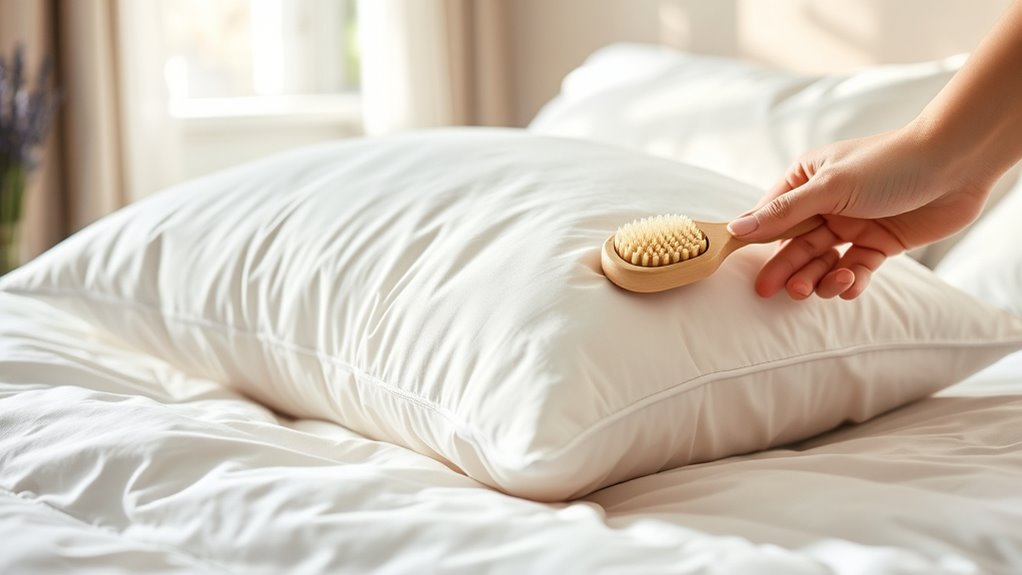
Ever wondered how to keep your pillows and duvets fresh and comfortable for longer? The secret lies in proper care, especially when it comes to fabric protection and stain removal. These steps not only prolong the life of your bedding but also ensure a healthier sleeping environment. Start by understanding that fabrics, whether cotton, linen, or synthetic blends, benefit from a protective layer that guards against dirt, oils, and spills. Using a fabric protector spray can be a game-changer—just spray evenly over your pillows and duvets before regular washing. This creates a barrier that repels liquids and stains, making future stain removal much easier and less frequent. Protecting your bedding with these sprays is a simple yet effective way to maintain its appearance and feel over time.
When it comes to stain removal, acting quickly is key. The moment you notice a spill or stain, don’t wait for it to set. Blot the area gently with a clean, absorbent cloth to soak up as much liquid as possible—don’t rub, as that can push the stain deeper. For common stains like coffee, wine, or food, mix a solution of mild detergent and cool water. Dab this mixture onto the stain using a clean cloth, then rinse with cold water. If the stain persists, consider using a dedicated stain remover suitable for your fabric type. Always check the care label on your bedding before applying any products, and test stain removers on a small, inconspicuous area first. Regularly removing stains prevents them from setting, keeping your pillows and duvets looking fresh and new. Additionally, ensuring proper ventilation during washing and drying helps prevent mold and mildew growth, which can compromise fabric integrity.
In addition to stain removal, maintaining fabric protection involves proper washing techniques. Use a gentle cycle with cold or lukewarm water, and avoid overloading your washing machine. High heat can damage fabric protectors and weaken fibers, so opt for air drying or tumble dry on low heat. When drying, ensure your bedding is completely dry before putting it back on your bed to prevent mold and mildew growth. Regular cleaning, combined with fabric protection and prompt stain removal, helps your bedding stay soft, fresh, and inviting for longer periods. Remember, the key to lasting comfort is consistency—make these practices a routine, and your pillows and duvets will reward you with many nights of restful sleep.
Frequently Asked Questions
How Often Should I Replace My Pillows and Duvets?
You should replace your pillows every 1 to 2 years and your duvets every 5 to 10 years. Following a pillow replacement schedule helps maintain comfort and hygiene, while understanding duvet lifespan tips guarantees you enjoy fresh, cozy bedding for longer. Regularly inspecting your bedding for wear and tear can also signal when it’s time for a change, keeping your sleep environment clean and supportive.
Can I Wash Pillows With Memory Foam Inserts?
You shouldn’t wash pillows with memory foam inserts in a washing machine. Memory foam care requires spot cleaning and gentle hand washing, as the foam can break down or lose shape. To maintain pillow hygiene, regularly fluff and air out your pillow, and use a removable, washable cover. If you need to wash the pillow, follow the manufacturer’s instructions carefully, avoiding excess water to keep your memory foam in good condition.
What’s the Best Way to Remove Stubborn Stains?
Imagine gently coaxing a stubborn mark to fade away like a whisper in the breeze. To remove stubborn stains, try effective stain removal techniques with eco-friendly cleaning methods. Blot the stain with a mixture of mild detergent and water, then gently scrub. For extra power, use natural solutions like baking soda or white vinegar. Always test a small area first, and let your pillow breathe in the fresh air afterward.
Are There Eco-Friendly Cleaning Options for Bedding?
Yes, you can choose eco-friendly cleaning options for your bedding. Use organic detergents, which are free from harsh chemicals and better for the environment. For stubborn stains, try DIY stain removal methods like baking soda and vinegar, which are safe and effective. These eco-friendly options keep your bedding fresh while reducing your ecological footprint, ensuring you get clean, healthy sleep without compromising sustainability.
How Can I Prevent Dust Mites in My Bedding?
Dust mites thrive in warm, humid environments, with over 10 million mites often found in a single mattress. To prevent them, focus on allergy prevention by regularly washing your bedding in hot water and using allergen-proof covers. Improve bedding ventilation by airing out your bedding frequently and keeping humidity levels low. These steps help reduce dust mite buildup, making your sleep environment healthier and more comfortable.
Conclusion
By regularly washing, fluffing, and airing your pillows and duvets, you guarantee freshness, comfort, and longevity. Keep them clean, keep them inviting, and keep them supportive. Treat them with care, protect them from dirt, and give them the attention they deserve. In doing so, you create a cozy sanctuary, a restful retreat, and a peaceful escape. Your bedding becomes more than just sleep essentials — they become your daily comfort, your nightly refuge, and your ultimate relaxation.