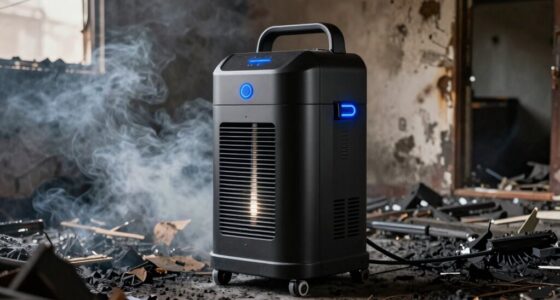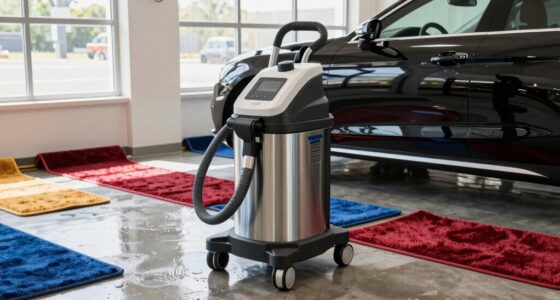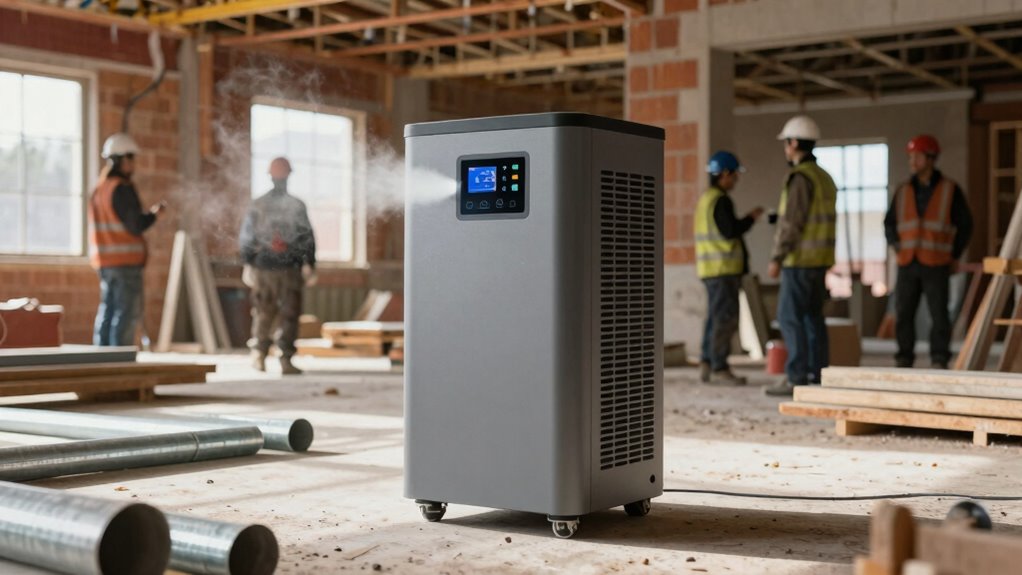
For a commercial dehumidifier for job sites, my best overall pick is the ALORAIR Storm 80X, which offers a practical balance of jobsite-focused pumping and manageable capacity. For demanding restoration work, I’d also compare the Dri-Eaz LGR 5000Li and MOUNTO 310-Pint LGR, both aimed at heavier moisture loads than the smaller-capacity choices. The main tradeoffs are moisture removal versus portability, LGR performance versus simpler high-capacity designs, and built-in pumping versus gravity drainage. A dehumidifier that suits a contained room may fall short in a large, wet structure, while a very high-capacity unit can be more equipment than a small crew needs. Read on for the full breakdown and help matching a machine to your site conditions.

Get cleaning gear delivered free with Prime
- Fast, free delivery on millions of items
- Prime Video, Amazon Music and more included
- Member-only deals all year
Complete the kit


Key Takeaways
- The Storm 80X leads on balance: I rank it first for buyers seeking jobsite-oriented pumping and useful capacity without starting with the lineup’s largest machines.
- Large-scale drying favors the heavy-capacity options: the MOUNTO 310-Pint LGR and Moiswell V320 stand apart for buyers prioritizing high stated extraction capacity.
- LGR models target tougher drying conditions: picks such as the Dri-Eaz LGR 5000Li, MOUNTO DH80, and MOUNTO DH95 are more relevant when wet materials and cool conditions complicate drying.
- A pump is a site-planning feature, not a capacity upgrade: built-in pumps help move condensate to a drain or out of the work area, but hose routing and lift limits still matter.
- Not every large-area rating fits restoration work: the AEOCKY RHEA-003 is a different kind of option from the rugged, pump-equipped jobsite units and needs closer scrutiny for construction-site handling.
| ALORAIR Storm 80X Commercial Dehumidifier with Pump |  | Best Overall for Mid-Size Job Sites | AHAM capacity: 80 pints per day | Saturation capacity: Up to 170 pints per day | Recommended floor area: 2,100 sq. ft. | VIEW ON AMAZON | See Our Full Breakdown |
| Waykar 150-Pint Commercial Dehumidifier with Pump and Drain Hose |  | Best for Broad Coverage | Moisture removal: Up to 150 pints per day at 95°F, 90% RH | Coverage area: Up to 7,500 sq. ft. | Airflow: 212 CFM | VIEW ON AMAZON | See Our Full Breakdown |
| MOUNTO DH80 150-Pint LGR Commercial Dehumidifier with Built-In Pump |  | Best for High-Airflow Restoration Work | AHAM capacity: 80 pints per day | Saturation capacity: 150 pints per day | Floor area: 2,500 sq. ft. | VIEW ON AMAZON | See Our Full Breakdown |
| Abestorm Hurricane 850 Commercial Dehumidifier with Pump |  | Best for High-Capacity Drying | AHAM capacity: 85 pints per day | Saturation capacity: 180 pints per day | Coverage area: 2,300 sq. ft. | VIEW ON AMAZON | See Our Full Breakdown |
| ALORAIR Storm LGR Extreme Commercial Dehumidifier with Pump |  | Best for Compact High-Capacity Jobs | AHAM capacity: 85 pints per day | Saturation capacity: 180 pints per day | Recommended floor area: 2,300 sq. ft. | VIEW ON AMAZON | See Our Full Breakdown |
| ALORAIR 180 PPD Commercial Dehumidifier with Pump |  | Best for Confined Job-Site Spaces | Moisture removal: 180 PPD at saturation; 85 PPD at AHAM | Coverage area: Up to 2,300 sq. ft. | Airflow: 210 CFM | VIEW ON AMAZON | See Our Full Breakdown |
| AEOCKY RHEA-003 8,000 sq. ft. Dehumidifier, ENERGY STAR Most Efficient 2025 |  | Best for Quieter, Broad-Area Moisture Control | Coverage: Up to 8,000 sq. ft. | Capacity at 95°F / 95% RH: Up to 140 PPD | Capacity at 86°F / 80% RH: 95 PPD | VIEW ON AMAZON | See Our Full Breakdown |
| Dri-Eaz LGR 5000Li Commercial Dehumidifier with Pump |  | Best for Connected Restoration Work | Model: LGR 5000Li (127690) | Daily water removal: Up to 164 pints | Recommended space: Up to 8,000 cu. ft. | VIEW ON AMAZON | See Our Full Breakdown |
| Airzentti 155-Pint Commercial Dehumidifier with Built-In Pump |  | Best for Ducted Large-Area Drying | Dehumidification capacity: 155 PPD near saturation; 70 PPD at AHAM | Floor area: Up to 7,500 sq. ft. | Airflow: 220 CFM | VIEW ON AMAZON | See Our Full Breakdown |
| MOUNTO DH95 180-Pint LGR Commercial Dehumidifier with Pump and Drain Hose |  | Best for High-Airflow Restoration | Moisture removal: Up to 180 PPD at 95°F and 90% RH | Coverage area: 3,000 sq. ft. | Airflow: 350 CFM | VIEW ON AMAZON | See Our Full Breakdown |
| MOUNTO 310-Pint LGR Commercial Dehumidifier with Built-In Pump |  | Best for High-Capacity Restoration | Capacity: 310 pints/day at saturation; 165 pints/day at AHAM conditions | Airflow: 550 CFM | Pump lift: 15 feet | VIEW ON AMAZON | See Our Full Breakdown |
| Kesnos 155-Pint Commercial Dehumidifier with Pump and Drain Hose |  | Best for Easier Site Relocation | Moisture removal: 155 pints/day under saturated conditions (95°F, 90% RH) | Airflow: 164.7 CFM | Humidity control range: 10%–90% RH | VIEW ON AMAZON | See Our Full Breakdown |
| BlueDri BD-130P Industrial Commercial Dehumidifier with Hose |  | Best for Rugged Restoration Handling | Model: BD-130P | Moisture removal: Up to 225 pints/day | Airflow: 410 CFM | VIEW ON AMAZON | See Our Full Breakdown |
| Moiswell MP100 Commercial Dehumidifier with Pump |  | Best for Balanced Airflow and Coverage | Maximum capacity: 235 pints/day | AHAM capacity: 100 pints/day | Airflow: 442 CFM | VIEW ON AMAZON | See Our Full Breakdown |
| Moiswell V320 Commercial Dehumidifier, 305 Pints per Day |  | Best for Large Sites with Dedicated Power | Model: Explorer V320 | Capacity: 305 pints/day maximum; 130 pints/day at AHAM | Airflow: 412 CFM | VIEW ON AMAZON | See Our Full Breakdown |
| commercial dehumidifier for job site | Airflow | Dimensions | Weight | Power |
|---|---|---|---|---|
| ALORAIR Storm 80X Commercial D | 200 CFM | 15.2 x 14.4 x 24.8 in | 63.9 lbs | 607 W |
| Waykar 150-Pint Commercial Deh | 212 CFM | 21.85 x 12.6 x 17.91 in | 56.3 lbs | 500 W; 115 V |
| MOUNTO DH80 150-Pint LGR Comme | 350 CFM | 21.7 x 12.6 x 18.1 in | 65 lbs | — |
| Abestorm Hurricane 850 Commerc | 210 CFM | — | — | — |
| ALORAIR Storm LGR Extreme Comm | 210 CFM | 22.8 x 13.7 x 17.3 in | — | — |
| ALORAIR 180 PPD Commercial Deh | 210 CFM | 22.8 × 13.7 × 17.3 in. | 64.3 lb | 646 W, 115 V |
| AEOCKY RHEA-003 8,000 sq. ft. | — | 17.68 × 11.14 × 24.09 in. | 43.4 lb | — |
| Dri-Eaz LGR 5000Li Commercial | — | — | — | — |
| Airzentti 155-Pint Commercial | 220 CFM | 14.2 × 24.3 × 15 in. | 59 lb | — |
| MOUNTO DH95 180-Pint LGR Comme | 350 CFM | 20 × 22 × 35 in. | 95 lb | 650 W |
| MOUNTO 310-Pint LGR Commercial | 550 CFM | 22 × 23 × 35 inches | 125 pounds | 1,150 watts; 10.5 A; 120 V |
| Kesnos 155-Pint Commercial Deh | 164.7 CFM | — | — | 790 watts; 115 V |
| BlueDri BD-130P Industrial Com | 410 CFM | — | — | 115 V, 60 Hz |
| Moiswell MP100 Commercial Dehu | 442 CFM | 15.74 × 25.59 × 17.12 inches | 89 pounds | 1,300 watts |
| Moiswell V320 Commercial Dehum | 412 CFM | — | — | — |
More Details on Our Top Picks
ALORAIR Storm 80X Commercial Dehumidifier with Pump
The Storm 80X balances capacity, mobility, and drainage in a package suited to many active renovation and drying jobs. Its 80-pint AHAM rating and 200 CFM airflow give a clearer planning baseline than saturation-only figures, while the built-in pump and 19.6-foot hose make continuous drainage practical when a floor drain is not nearby. Compared with the larger-rated Abestorm Hurricane 850, the Storm 80X is much lighter and less cumbersome, though it gives up some rated moisture removal and coverage. Wheels and a retractable handle help with movement between rooms, but 63.9 pounds still makes stair carries a two-person task for many crews. I’d choose it for regular job-site drying where portable handling matters as much as capacity; crews tackling the wettest, largest spaces may want a higher-capacity unit.
Pros:- 80-pint AHAM capacity offers a useful standard-condition benchmark.
- Built-in pump and 19.6-foot hose support continuous drainage away from the unit.
- Wheels and retractable handle aid movement between rooms.
- Automatic defrost, humidity control, and memory restart reduce routine supervision.
Cons:- At 63.9 pounds, it is still difficult for one person to carry up stairs.
- The longer warranty coverage applies to refrigeration system parts, not the full unit.
Best for: Renovation and restoration crews drying mid-size rooms that need a built-in pump and frequent movement between work areas.
Not ideal for: Crews who must lift equipment up stairs alone or dry very large, heavily saturated spaces where higher capacity takes priority.
- AHAM capacity:80 pints per day
- Saturation capacity:Up to 170 pints per day
- Recommended floor area:2,100 sq. ft.
- Airflow:200 CFM
- Drainage:Built-in pump; 19.6 ft hose
- Dimensions:15.2 x 14.4 x 24.8 in
- Weight:63.9 lbs
- Power:607 W
Our verdict“Choose the Storm 80X for a portable, pump-equipped workhorse for mid-size drying jobs, but not for solo stair carries or the most demanding large-area work.”
Waykar 150-Pint Commercial Dehumidifier with Pump and Drain Hose
The Waykar 150-Pint is the coverage-focused choice here, with a stated reach of up to 7,500 square feet and 212 CFM airflow. That makes it a plausible fit for open work zones where repositioning equipment repeatedly would slow a crew down. Its 150-pint figure is specified at 95°F and 90% RH, so I would not compare it directly with the AHAM ratings listed for the ALORAIR Storm 80X without accounting for those different test conditions. Waykar adds a built-in pump, 16-foot hose, wheels, and a stackable form for storage between jobs. The tradeoff is a single speed, which gives operators less control over airflow than a more adjustable setup, and its coverage claim should not replace a site-specific drying plan. It suits large, less compartmentalized spaces better than tight rooms or crews needing speed options.
Pros:- Stated coverage reaches up to 7,500 sq. ft. for broad work zones.
- Built-in pump and 16-foot hose allow continuous drainage.
- Wheels and handles support movement between work areas.
- Stackable design helps reduce storage footprint between jobs.
Cons:- Single-speed operation limits airflow adjustment.
- The 150-pint rating uses 95°F and 90% RH conditions, unlike AHAM figures on some alternatives.
Best for: Contractors drying broad, open commercial areas who value wide stated coverage, pump drainage, and stackable storage.
Not ideal for: Crews working in small, segmented rooms or those who need multiple fan speeds to adjust airflow to changing site conditions.
- Moisture removal:Up to 150 pints per day at 95°F, 90% RH
- Coverage area:Up to 7,500 sq. ft.
- Airflow:212 CFM
- Drainage:Built-in pump; 16 ft hose
- Humidity control range:30%–80%
- Dimensions:21.85 x 12.6 x 17.91 in
- Weight:56.3 lbs
- Power:500 W; 115 V
Our verdict“Pick the Waykar for broad, open spaces where coverage and stackable storage matter more than variable fan-speed control.”
MOUNTO DH80 150-Pint LGR Commercial Dehumidifier with Built-In Pump
The MOUNTO DH80 stands out for airflow rather than a headline capacity advantage: its 350 CFM rating is higher than the 200–212 CFM figures on the ALORAIR Storm 80X and Abestorm Hurricane 850. For restoration crews coordinating air movement across a work zone, that can make it a more compelling match than units focused on compact handling. Its capacity is listed as 80 pints per day at AHAM and 150 at saturation, so buyers can separate standard-condition performance from the more aggressive saturation figure. The built-in pump, 15-foot lift, and 25-foot cord and drain hose help with placement around a site. The compromises are real: at 65 pounds with only one speed, it is not the easiest unit to reposition or fine-tune. I’d favor it for airflow-led restoration work over the lighter Storm 80X, not for frequent solo moves.
Pros:- 350 CFM airflow exceeds the listed airflow of the other products in this batch.
- Built-in pump has a 15-foot lift for flexible drainage placement.
- 25-foot power cord and drain hose support wider placement options.
- Memory restart and automatic defrost support unattended operation.
Cons:- Weighs 65 pounds, making frequent solo relocation difficult.
- One fan speed offers limited control over airflow.
Best for: Water-damage restoration crews who prioritize strong airflow, long reach for power and drainage, and reliable restart after outages.
Not ideal for: Solo operators who move equipment frequently or crews that need variable fan speeds for different rooms.
- AHAM capacity:80 pints per day
- Saturation capacity:150 pints per day
- Floor area:2,500 sq. ft.
- Airflow:350 CFM
- Pump lift:15 ft
- Power cord and drain hose:25 ft
- Dimensions:21.7 x 12.6 x 18.1 in
- Weight:65 lbs
Our verdict“Choose the MOUNTO DH80 for restoration jobs where high airflow and long cord-and-hose reach outweigh easy handling and speed adjustment.”
Abestorm Hurricane 850 Commercial Dehumidifier with Pump
With 85 pints per day at AHAM conditions and 180 pints at saturation, the Hurricane 850 offers the strongest stated standard-condition capacity in this group, edging the ALORAIR Storm LGR Extreme at 85 AHAM only by no margin while matching its listed saturation figure. Its 2,300-square-foot coverage and pump with a 19.6-foot hose suit larger drying zones where continuous drainage is needed. The main distinction is physical: at 93 pounds, it is substantially heavier than the 64.3-pound Storm LGR Extreme, so wheels and handles help on level surfaces but do not solve stair transport. Its operating range down to 36°F may also suit cooler work areas better than a unit without a stated low-temperature rating. I’d select it for demanding stationary or ground-level jobs, while crews that regularly move equipment should favor the lighter ALORAIR option.
Pros:- 85-pint AHAM capacity and 180-pint saturation capacity suit demanding drying work.
- Built-in pump and 19.6-foot hose support continuous drainage.
- Rated to operate at temperatures as low as 36°F.
- Wheels and handles aid movement across level surfaces.
Cons:- At 93 pounds, it is much heavier than the ALORAIR Storm LGR Extreme.
- Warranty terms vary by component and include several different coverage periods.
Best for: Restoration teams drying large, wet spaces who can keep the unit mostly on one level and need a stated low-temperature operating rating.
Not ideal for: Small crews that carry equipment between floors or job sites where low weight and easy loading are priorities.
- AHAM capacity:85 pints per day
- Saturation capacity:180 pints per day
- Coverage area:2,300 sq. ft.
- Airflow:210 CFM
- Drainage:Built-in pump; 19.6 ft hose
- Maximum pump lift:14.7 ft
- Operating temperature:As low as 36°F; upper rating 105°F
- Dimensions and weight:22 x 21 x 38 in; 93 lbs
Our verdict“Choose the Hurricane 850 for high-capacity, cooler-area drying when the unit can stay on one level, not when crews must carry it often.”
ALORAIR Storm LGR Extreme Commercial Dehumidifier with Pump
The Storm LGR Extreme pairs an 85-pint AHAM rating with a notably compact listed footprint, making it a strong fit when a job needs substantial drying capacity but has limited equipment space. It shares the 180-pint saturation rating and 2,300-square-foot recommendation of the Abestorm Hurricane 850, yet weighs 64.3 pounds rather than 93. That difference can matter when loading a van or shifting the unit between rooms, though it is still too heavy to treat as an easy one-person stair carry. A 19.6-foot pump hose, automatic defrost, and restart support continuous operation with less routine attention. The tradeoff is that its six-year warranty coverage applies only to refrigeration system parts, and its 646-watt draw is higher than the Storm 80X’s 607 watts. I’d pick it for constrained sites needing more capacity than the Storm 80X provides.
Pros:- 85-pint AHAM capacity supports substantial drying under standard conditions.
- Lighter than the comparable Abestorm Hurricane 850.
- Built-in pump and 19.6-foot hose allow flexible continuous drainage.
- Automatic defrost and restart reduce the need for repeated site visits.
Cons:- At 64.3 pounds, it remains cumbersome for regular stair carrying.
- The six-year warranty applies only to refrigeration system parts.
- Uses 646 watts, more than the ALORAIR Storm 80X’s listed 607 watts.
Best for: Restoration contractors who need high-capacity drying in tight rooms and want a lighter alternative to the Hurricane 850.
Not ideal for: Buyers who need broad full-unit warranty coverage or who frequently carry equipment alone up stairs.
- AHAM capacity:85 pints per day
- Saturation capacity:180 pints per day
- Recommended floor area:2,300 sq. ft.
- Airflow:210 CFM
- Drainage:Built-in pump; 19.6 ft hose
- Maximum vertical drain height:14.7 ft
- Dimensions:22.8 x 13.7 x 17.3 in
- Weight and power:64.3 lbs; 646 W; 115 V
Our verdict“Pick the Storm LGR Extreme when high capacity and a compact, lighter-than-Hurricane format matter more than low weight or broad warranty coverage.”
ALORAIR 180 PPD Commercial Dehumidifier with Pump
The ALORAIR is a practical fit when drying work is happening in a crawl space, basement, or other tight area where gravity drainage is not convenient. Its built-in pump can lift condensate up to 14.7 feet through the included 19.6-foot hose, which gives crews more placement options than the Airzentti’s shorter included hose. At 210 CFM and 85 PPD at AHAM conditions, its working capacity is more modest than the headline 180 PPD suggests, so I would match it to contained drying zones rather than judge it by saturation capacity alone. The 64.3-pound body is still a lift for one person, despite its compact footprint and carrying handles. Automatic defrost and restart reduce routine attention, but defrost temporarily slows moisture removal.
Pros:- Built-in pump and 19.6-foot hose allow flexible condensate routing
- Compact dimensions suit confined work areas
- Automatic defrost and restart reduce manual monitoring
- Adjustable humidity control and digital display support straightforward operation
Cons:- 64.3-pound weight makes frequent lifting awkward
- AHAM capacity is 85 PPD, well below the 180-PPD saturation figure
- Defrost cycles temporarily reduce moisture removal
Best for: Restoration crews drying crawl spaces and basements that need pumped drainage and a compact footprint.
Not ideal for: Teams drying broad, open job sites that need higher airflow or want a lighter unit to move frequently.
- Moisture removal:180 PPD at saturation; 85 PPD at AHAM
- Coverage area:Up to 2,300 sq. ft.
- Airflow:210 CFM
- Pump lift:Up to 14.7 ft.
- Drain hose:19.6 ft.
- Dimensions:22.8 × 13.7 × 17.3 in.
- Weight:64.3 lb
- Power:646 W, 115 V
Our verdict“Choose the ALORAIR for compact restoration jobs where a built-in pump matters more than maximum open-area drying speed.”
AEOCKY RHEA-003 8,000 sq. ft. Dehumidifier, ENERGY STAR Most Efficient 2025
The AEOCKY RHEA-003 is the outlier in this group: it offers a large stated coverage area and a low fan-noise figure of 50 dB, but its supplied details do not list a built-in pump or a drain-hose length. That makes it less job-site-ready for unattended restoration than the Dri-Eaz LGR 5000Li, which includes a pump and a 40-foot hose. Its capacity is listed as 140 PPD in hot, very humid conditions and 95 PPD at a lower test condition, so buyers should not treat the 8,000-square-foot claim as a guarantee of fast drying in every layout. At 43.4 pounds it is lighter than the ALORAIR and MOUNTO DH95, a plus for repositioning, though the seller-provided performance claims deserve verification before specifying it for demanding commercial work.
Pros:- Up to 140 PPD capacity under hot, humid conditions
- 50 dB minimum noise figure may suit occupied work areas
- 43.4-pound weight is lower than several pump-equipped commercial options here
- Power-off memory and smart humidity control support unattended operation
Cons:- Provided product data does not specify a built-in pump or drainage hose
- Capacity varies by test conditions, with 95 PPD listed at 86°F and 80% RH
- Seller-provided performance and efficiency claims are not independently verified here
Best for: Contractors managing broad, occupied spaces who value lower operating noise and can confirm drainage needs before purchase.
Not ideal for: Water-damage restoration crews that require a documented built-in pump, long drain hose, and clearly specified job-site drying performance.
- Coverage:Up to 8,000 sq. ft.
- Capacity at 95°F / 95% RH:Up to 140 PPD
- Capacity at 86°F / 80% RH:95 PPD
- Noise level:As low as 50 dB
- Dimensions:17.68 × 11.14 × 24.09 in.
- Weight:43.4 lb
- Certification:ENERGY STAR Most Efficient 2025
- Listed features:Smart humidity control, power-off memory, low-temperature operation
Our verdict“Consider the AEOCKY for quieter broad-area moisture control only after confirming it meets your job site’s drainage and commercial-duty requirements.”
Dri-Eaz LGR 5000Li Commercial Dehumidifier with Pump
For crews coordinating several drying zones, the Dri-Eaz LGR 5000Li’s strongest distinction is not just its 164-PPD capacity; it is the combination of a built-in pump, a 40-foot drain hose, and remote monitoring through the Command Center Pro app and dashboard. That hose is much longer than the ALORAIR’s 19.6-foot line, which can simplify drainage routing when the unit has to sit near the wet area. The listed recommended space is 8,000 cubic feet, however, not square feet, so I would avoid comparing it directly with products whose coverage claims use floor area. Its portable, stackable design and large wheels suit restoration teams moving equipment between jobs, while the commercial focus may be unnecessary for a small, isolated drying task.
Pros:- Built-in pump includes a 40-foot drain hose
- Remote monitoring and control through app and dashboard
- Portable, stackable design with large wheels
- Up to 164 PPD capacity for substantial drying workloads
Cons:- Commercial restoration capacity can be excessive for small rooms or isolated tasks
- Recommended space is listed in cubic feet, making direct comparisons with square-foot claims difficult
- Provided specs do not include dimensions or weight for transport planning
Best for: Water-damage restoration crews that need remote status checks, long pumped drainage, and equipment suited to repeated job-site moves.
Not ideal for: Small contractors handling occasional, contained moisture problems who do not need app monitoring or large-scale restoration capacity.
- Model:LGR 5000Li (127690)
- Daily water removal:Up to 164 pints
- Recommended space:Up to 8,000 cu. ft.
- Power consumption:5 A
- Drain hose:40 ft.
- Pump:Built-in
- Operation:Automatic
- Monitoring:Command Center Pro app and dashboard
Our verdict“Pick the Dri-Eaz when remote oversight and long-distance pumped drainage are more useful than a compact, simple setup.”
Airzentti 155-Pint Commercial Dehumidifier with Built-In Pump
The Airzentti makes the most sense when a job site needs ducted airflow and continuous pumped drainage, rather than simply the largest headline capacity. Its 6-inch air duct collar gives crews a way to direct dry air into a specific zone, a useful difference from the ALORAIR, whose supplied details emphasize compact placement instead. The Airzentti is rated at 155 PPD under nearly saturated conditions but 70 PPD at AHAM, so the lower figure is the more useful reference for comparing typical capacity claims. Its pump can lift water up to 16.4 feet, although the included hose is only 6.56 feet long; an elevated drain route may require a longer hose. At 59 pounds, it is heavy enough to make frequent solo repositioning a chore.
Pros:- 6-inch air duct collar supports directed airflow
- Built-in pump lifts condensate up to 16.4 feet
- Continuous drainage, humidity settings, and timer support ongoing drying
- Automatic defrost, restart, and shutoff reduce routine intervention
Cons:- Included drain hose is just 6.56 feet despite the pump’s 16.4-foot lift
- AHAM capacity is 70 PPD, below the 155-PPD saturation figure
- 59-pound weight limits easy one-person moves
Best for: Contractors drying large or partitioned spaces who can use the 6-inch collar to direct airflow and have a suitable drainage route.
Not ideal for: Crews needing a long included pump hose, lightweight portability, or a machine with clearly higher AHAM capacity than 70 PPD.
- Dehumidification capacity:155 PPD near saturation; 70 PPD at AHAM
- Floor area:Up to 7,500 sq. ft.
- Airflow:220 CFM
- Pump lift:Up to 16.4 ft.
- Drain hose:6.56 ft.
- Air duct collar:6 in. (150 mm)
- Dimensions:14.2 × 24.3 × 15 in.
- Weight:59 lb
Our verdict“Choose the Airzentti when ducted air delivery and pumped drainage fit the job better than compact size or a long included hose.”
MOUNTO DH95 180-Pint LGR Commercial Dehumidifier with Pump and Drain Hose
The MOUNTO DH95 is the airflow pick in this batch: its 350 CFM rating exceeds the ALORAIR’s 210 CFM and the Airzentti’s 220 CFM, which can help circulate dry air across a larger active work zone. It also lists up to 180 PPD at 95°F and 90% RH, a test condition that matters when comparing it with models whose capacity is stated at saturation or AHAM conditions. The built-in pump has a 15-foot lift head, and wheels help with rolling the unit between rooms, but its 95-pound weight makes stairs and vehicle loading a two-person task. The listed 0.25-liter tank is small, so this unit is best treated as a continuous-drain machine rather than a useful tank-first option.
Pros:- 350 CFM airflow is the highest listed among these five products
- Up to 180 PPD capacity at 95°F and 90% RH
- Built-in pump with 15-foot lift supports continuous drainage
- Wheels, digital display, and automatic restart support job-site operation
Cons:- 95-pound weight makes lifting and loading difficult
- Very small 0.25-liter tank makes continuous drainage important
- Large 20 × 22 × 35-inch body takes more transport and storage space
Best for: Restoration crews working across larger, humid zones who prioritize strong airflow, continuous drainage, and wheeled transport on level surfaces.
Not ideal for: Solo contractors who regularly carry equipment up stairs, or buyers seeking a lightweight unit for small, contained spaces.
- Moisture removal:Up to 180 PPD at 95°F and 90% RH
- Coverage area:3,000 sq. ft.
- Airflow:350 CFM
- Pump lift head:15 ft.
- Power:650 W
- Tank volume:0.25 L
- Dimensions:20 × 22 × 35 in.
- Weight:95 lb
Our verdict“Choose the DH95 for high-airflow restoration work where the unit can be rolled into place and left on continuous drainage.”
MOUNTO 310-Pint LGR Commercial Dehumidifier with Built-In Pump
For a large restoration job where drying speed matters, the MOUNTO LGR165 pairs 165 pints per day at AHAM conditions with 550 CFM airflow. That airflow is the highest listed among these five, giving it an advantage over the Moiswell MP100 when air needs to circulate through a broad, wet work area. Its pump can lift water 15 feet, and the included 25-foot drain hose gives crews options for routing discharge away from the machine. Digital humidity controls and restart with saved settings also suit unattended drying cycles. The tradeoff is substantial: at 125 pounds and 22 × 23 × 35 inches, it is less convenient to move or place than the more compact Kesnos. I’d choose it for capacity and airflow, not for frequent solo relocation.
Pros:- 165-pint AHAM capacity and 550 CFM airflow suit demanding drying jobs
- Built-in pump provides a 15-foot lift for flexible drainage routing
- Automatic restart restores saved settings after a power interruption
- Digital controls display temperature and relative humidity
Cons:- At 125 pounds, it is difficult for one person to move
- Large 22 × 23 × 35-inch footprint limits placement in cramped work areas
Best for: Water-damage restoration crews drying large, open job sites that can provide 120-volt power and accommodate a heavy unit.
Not ideal for: Small contractors who frequently carry equipment between floors or need a compact machine for tight rooms.
- Capacity:310 pints/day at saturation; 165 pints/day at AHAM conditions
- Airflow:550 CFM
- Pump lift:15 feet
- Power:1,150 watts; 10.5 A; 120 V
- Drain hose:25 feet included
- Dimensions:22 × 23 × 35 inches
- Weight:125 pounds
Our verdict“Choose the MOUNTO LGR165 when restoration capacity and airflow matter more than portability or compact placement.”
Kesnos 155-Pint Commercial Dehumidifier with Pump and Drain Hose
The Kesnos is the easiest of these five to position in a job-site workflow: it weighs 80.7 pounds, has wheels and a foldable handle, and measures 13.58 × 16.06 × 26.18 inches. That makes it a more practical choice for crews moving between rooms than the heavier MOUNTO LGR165 or BlueDri BD-130P. Its 155-pint saturated-condition capacity and stated coverage of up to 7,500 square feet make it suitable for sizable spaces, though its 164.7 CFM airflow is far below the MOUNTO’s 550 CFM. The built-in pump offers a 16.4-foot vertical lift, with a gravity-drain option when a suitable outlet is available. I’d favor it when handling and drainage flexibility matter more than maximum air movement.
Pros:- Wheels and foldable handle make repositioning more manageable
- Built-in pump offers a 16.4-foot vertical lift
- Gravity-drain option provides an alternative drainage setup
- Automatic defrost and restart support continuous operation
Cons:- 164.7 CFM airflow is modest beside the MOUNTO LGR165 and Moiswell MP100
- Still weighs 80.7 pounds, so stairs and vehicle loading can take effort
- Operates at one speed, limiting airflow adjustment
Best for: Small restoration and construction crews that need pump drainage and regularly reposition a commercial unit between work areas.
Not ideal for: Crews prioritizing high airflow for fast circulation across a large, open drying zone.
- Moisture removal:155 pints/day under saturated conditions (95°F, 90% RH)
- Airflow:164.7 CFM
- Humidity control range:10%–90% RH
- Pump drainage:16.4-foot hose; 16.4-foot vertical lift
- Gravity drainage:6.56-foot hose
- Power:790 watts; 115 V
- Dimensions and weight:13.58 × 16.06 × 26.18 inches; 80.7 pounds
Our verdict“Pick the Kesnos if your crew needs a comparatively manageable, pump-equipped unit and can work with its lower airflow.”
BlueDri BD-130P Industrial Commercial Dehumidifier with Hose
The BlueDri BD-130P takes a practical restoration-focused approach, combining up to 225 pints per day with a roto-mold plastic housing and a long 38-foot drain hose. That hose gives crews more freedom to place the machine away from a drain than the Moiswell MP100, whose pump hose is 16.4 feet. Its 410 CFM airflow is respectable, though lower than the MOUNTO LGR165’s 550 CFM. Digital controls, humidity and temperature sensors, an automatic pump, and restart support ongoing drying without constant adjustment. The body is built for commercial use, but the unit still weighs 97 pounds, and the supplied data does not specify pump lift or AHAM capacity. I’d choose it for hose reach and a job-site-oriented shell, not for easy carrying.
Pros:- 38-foot drain hose allows flexible placement relative to a discharge point
- Roto-mold plastic housing is suited to commercial job-site handling
- Automatic pump, digital controls, and environmental sensors support ongoing drying
- 410 CFM airflow supports circulation across work areas
Cons:- At 97 pounds, it is demanding to move without help
- Airflow is below the MOUNTO LGR165’s 550 CFM
- Provided specifications do not state AHAM capacity or pump lift
Best for: Restoration contractors who need a long drain run and a durable-feeling roto-mold housing for recurring site work.
Not ideal for: Workers who must carry equipment upstairs often or buyers who need a stated AHAM capacity or pump-lift figure.
- Model:BD-130P
- Moisture removal:Up to 225 pints/day
- Airflow:410 CFM
- Drain hose:38 feet
- Power:115 V, 60 Hz
- Power cord:25 feet
- Housing material:Roto-mold plastic
- Dimensions and weight:20 × 21 × 32.5 inches; 97 pounds
Our verdict“Choose the BlueDri when long drainage reach and a commercial-style housing outweigh the burden of moving a 97-pound machine.”
Moiswell MP100 Commercial Dehumidifier with Pump
The Moiswell MP100 is a balanced pick for contractors who want substantial air movement without stepping up to the MOUNTO LGR165’s 550 CFM and 165-pint AHAM capacity. It provides 442 CFM airflow and a stated maximum of 235 pints per day, with an AHAM figure of 100 pints per day—useful distinctions when comparing capacity claims across machines. Its rated 8,000-square-foot coverage and pump drainage suit larger work areas, while a gravity hose provides another route where floor drainage is available. Automatic defrost, restart, humidity control, and a timer support continuous job-site operation. At 89 pounds and 1,300 watts, it is neither light nor especially modest in power use. Compared with the Kesnos, it moves more air but gives up some portability.
Pros:- 442 CFM airflow supports circulation across large work zones
- Lists both maximum capacity and AHAM capacity for clearer comparison
- Built-in pump and gravity hose offer two drainage approaches
- Automatic defrost and restart support continuous operation
Cons:- 89-pound weight makes frequent solo relocation difficult
- Draws 1,300 watts, which can constrain use alongside other site equipment
- Larger body may be awkward to position in tight rooms
Best for: Contractors drying broad commercial areas who want strong airflow, pump drainage, and both maximum and AHAM capacity figures.
Not ideal for: Crews that need a lightweight unit for frequent solo moves or have limited electrical capacity at the work site.
- Maximum capacity:235 pints/day
- AHAM capacity:100 pints/day
- Airflow:442 CFM
- Coverage:Up to 8,000 sq. ft.
- Power:1,300 watts
- Drain hoses:16.4-foot pump hose; 6.56-foot gravity hose
- Dimensions:15.74 × 25.59 × 17.12 inches
- Weight:89 pounds
Our verdict“Choose the MP100 for a large work area where 442 CFM airflow and flexible drainage matter more than low weight or power draw.”
Moiswell V320 Commercial Dehumidifier, 305 Pints per Day
For a large job site with a suitable receptacle, the Moiswell V320 offers the strongest stated maximum removal among these five at 305 pints per day, plus a 130-pint AHAM figure and coverage listed up to 9,000 square feet. That makes it a higher-capacity choice than the MP100, though its 412 CFM airflow is lower than the MP100’s 442 CFM and the MOUNTO LGR165’s 550 CFM. Four swivel casters, a sturdy handle, and recessed handles help with rolling and lifting, but do not make this a small-room machine. The key constraint is electrical: it requires a 20-amp receptacle and NEMA 5-20 plug, so standard site outlets may not suit it. I’d select it for large, planned drying jobs with power access confirmed.
Pros:- 305-pint maximum capacity and 130-pint AHAM capacity are stated separately
- Coverage is listed up to 9,000 square feet
- Four swivel casters and multiple handles aid movement around a site
- Automatic humidity control, drainage, defrost, and restart support continuous use
Cons:- Requires a 20-amp receptacle with a NEMA 5-20 plug
- 412 CFM airflow is below the MOUNTO LGR165 and Moiswell MP100
- Commercial-scale capacity may be excessive for small rooms
Best for: Commercial crews drying large buildings who can confirm access to a 20-amp receptacle before bringing equipment on site.
Not ideal for: Contractors working from standard outlets, moving between small rooms, or seeking a stated built-in pump and hose setup.
- Model:Explorer V320
- Capacity:305 pints/day maximum; 130 pints/day at AHAM
- Airflow:412 CFM
- Power connection:20-amp receptacle; NEMA 5-20 plug
- Operation:Continuous mode; one speed
- Mobility:Four swivel casters, sturdy handle, and two recessed handles
- Refrigerant system:R32
Our verdict“Choose the V320 for large drying areas only when its 20-amp power requirement and substantial footprint fit the job.”

How We Picked
I ranked these models around the problems a jobsite buyer has to solve: how much moisture the space is likely to produce, whether water can drain continuously, and how easily a crew can position and maintain the machine. I gave weight to stated extraction capacity and LGR design, while treating capacity figures as comparison points rather than guarantees; actual output depends on temperature, humidity, and site conditions. Pump and hose arrangements mattered because frequent tank emptying can interrupt drying work.
The order favors a useful balance for varied jobsite tasks, then separates machines aimed at larger restoration loads from more compact or simpler choices. I also considered transport, controls, serviceability, and whether the product’s design appears suited to a worksite rather than ordinary household use. Models with a distinct role remain lower when their specialization serves fewer buyers or when a buyer should verify jobsite durability, electrical needs, or drainage details before choosing.
Factors to Consider When Choosing Commercial Dehumidifier For Job Sites
Product capacity is only one part of a jobsite drying plan. I’d start with the conditions the unit will face, then check how the crew will move it, drain it, power it, and keep it operating during a long workday.
Match extraction capacity to the wet load, not just floor area
Room-size claims can hide the difference between a mildly damp finished space and a structure with wet framing, flooring, or insulation. Think about the moisture source, how long materials have been wet, and whether drying is happening in one enclosed zone or across connected rooms. A higher pint-per-day figure can help with heavier loads, but it does not mean the machine will remove that amount under every site condition. Capacity ratings are measured under specified conditions, so compare products using the same rating basis when available. A common mistake is buying by the largest number alone and then struggling to move or power an oversized machine. For multiple rooms or changing work areas, two suitably sized units may be easier to place than one very large unit.
Choose LGR design for the conditions you actually expect
LGR machines are designed to keep extracting moisture as air gets drier, a useful trait during structural drying after the initial dampness has been reduced. That specialty can matter more than a headline capacity when the job involves wet building materials or a prolonged restoration schedule. For a short-term, humid job in a warm enclosed space, a simpler commercial model may meet the need with less specialized equipment. Ask whether the manufacturer states performance across different temperatures and humidity levels rather than comparing a single maximum figure. Avoid assuming every commercial dehumidifier handles cool conditions equally well. The right choice depends on the drying target, not on the LGR label alone.
Plan the drain route before buying a pump-equipped unit
A built-in pump can send condensate to a sink, drain, or exterior exit, reducing stops to empty a reservoir. That benefit depends on the discharge hose reaching a suitable drain and staying clear of foot traffic, sharp edges, and vehicle paths. Check the pump’s stated vertical lift and hose requirements; the word “pump” alone does not tell you how far water can travel. Gravity drainage can be simpler when a floor drain sits below the machine, while a pump adds flexibility when the outlet is higher or farther away. Crews should also have a backup plan for a kinked or disconnected hose. A poor drain setup can cause downtime even when the dehumidifier itself has ample capacity.
Treat portability and protection as productivity features
On a jobsite, a machine may need to pass through doorways, climb ramps, or move between floors, so dimensions and weight deserve attention alongside wheels and handles. A high-capacity unit that is difficult to position can slow a small crew or require extra lifting equipment. Look for controls and filters that can be reached without awkward disassembly, especially when dust is part of the work environment. Check what protection the manufacturer specifies for the unit’s housing and electrical components rather than assuming “commercial” means suitable for exposure to debris or rain. Keep the machine away from direct water spray and follow the required clearance around air intakes and outlets. Better placement and basic protection can matter as much as a small increase in extraction capacity.
Check power draw and circuit availability at the site
Construction and restoration sites may have limited circuits, shared tools, or temporary power, which can make electrical requirements a practical constraint. Compare each unit’s voltage, amperage, and plug details with the power available where it will operate. A machine that fits the moisture load may still be a poor choice if it repeatedly trips a shared circuit. Avoid relying on long, undersized extension cords; follow the manufacturer’s electrical guidance and applicable site rules. If several machines will run together, plan their circuit allocation before delivery. This check can prevent lost drying time and last-minute changes to the work plan.
Budget for upkeep and the length of the job
Filters collect dust, coils need clean airflow, and hoses and pumps can need inspection during repeated jobsite use. Before choosing a model, find out how filters are accessed, which maintenance tasks the crew can perform, and what support or replacement parts are available. For occasional water removal, a simpler unit may be easier to justify than a specialized restoration machine. For frequent, extended drying jobs, paying more for a design that fits the workload and is straightforward to service can reduce interruptions. Don’t overlook transport and storage needs when comparing the total operational burden. The best fit is the machine your crew can keep running correctly, not merely the one with the strongest advertised specification.
Frequently Asked Questions
Should I choose an LGR dehumidifier or a standard commercial model for a restoration job?
I’d favor LGR when the job involves wet building materials or drying needs that continue after the room’s humidity has already fallen. Its design is aimed at continued moisture removal in drier conditions, which can make it a better match for structural drying than a basic high-capacity unit. For a warm, humid, short-duration task, a standard commercial model may be enough. Compare stated performance at the temperatures and humidity levels expected on site, not just the maximum daily extraction claim. If the job spans different conditions, the LGR models in this roundup deserve closer comparison.
Is a built-in pump necessary if the dehumidifier already has a drain hose?
No; the deciding factor is whether water can flow to the drain by gravity. If the outlet sits below the dehumidifier and the hose can run without dips or kinks, gravity drainage may be simpler. A pump is useful when condensate must travel upward or to a drain that is not near floor level. Check the pump’s lift capability and hose arrangement before relying on it for a particular site. Either way, plan hose placement so it does not create a trip hazard or obstruct work.
Can I run a high-capacity dehumidifier on a typical jobsite circuit?
Don’t assume that every outlet or temporary circuit can support a commercial unit. Check the machine’s voltage and current draw, then compare them with the circuit and any other tools running on it. Shared loads can cause nuisance trips, especially when several drying machines operate at once. Follow the manufacturer’s instructions for cords and circuit use rather than extending power with an unsuitable cable. If power is limited, a smaller unit or a planned circuit allocation may be more reliable than choosing the largest model.
Does a stated pint-per-day capacity tell me how quickly a room will dry?
It gives a useful reference, but it does not predict drying time by itself. Extraction changes with temperature, humidity, airflow, room size, and how much water remains in the materials. A room can feel less humid while framing or flooring still holds moisture, so surface impressions alone are not a dependable stopping point. For restoration work, use appropriate moisture checks and follow the drying plan for the materials involved. Compare ratings under similar test conditions and treat them as one part of the decision.
When is it better to use two smaller dehumidifiers instead of one large unit?
Two smaller machines can help when the work spans separated rooms, multiple floors, or areas with limited access. Their placement may improve coverage where one large unit cannot move easily or where doors and walls restrict airflow. A single large machine may be simpler when the wet area is open and the site has adequate power and drainage. Running two units can add electrical demand, hose management, and maintenance, so check those limits first. Choose based on layout and access, not just the combined capacity figures.
Conclusion
For the broadest mix of jobsite drying needs, I’d start with the ALORAIR Storm 80X as best overall. The best value depends on your workload: compare the Waykar 150-Pint or Airzentti 155-Pint against the Storm 80X if you need pump-equipped capacity but do not require a specialized high-output LGR machine. For large restoration loads, my best premium direction is the Dri-Eaz LGR 5000Li or MOUNTO 310-Pint LGR, with the right choice depending on the site and service needs. The best option for beginners is a pump-equipped model whose controls, drainage setup, and maintenance instructions are easy for the crew to manage; I’d shortlist the Storm 80X and compare those details before purchase. For specific needs, choose an LGR model for demanding structural drying, a high-capacity unit such as the Moiswell V320 for large wet areas, or the AEOCKY RHEA-003 only when its handling and jobsite suitability fit the work. Match the machine to the moisture load, drainage route, power supply, and crew before settling on a model.
Evergreen bestsellers Picks

De'Longhi 15-Bar Pump Espresso Machine with Milk Frother & Temperature Control

Vitamix 5200 Professional-Grade Blender, 64 oz. Container, Black

Breville Bambino Espresso Machine, Brushed Stainless Steel (BES450BSS)
As an affiliate, we earn on qualifying purchases.