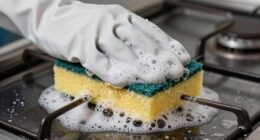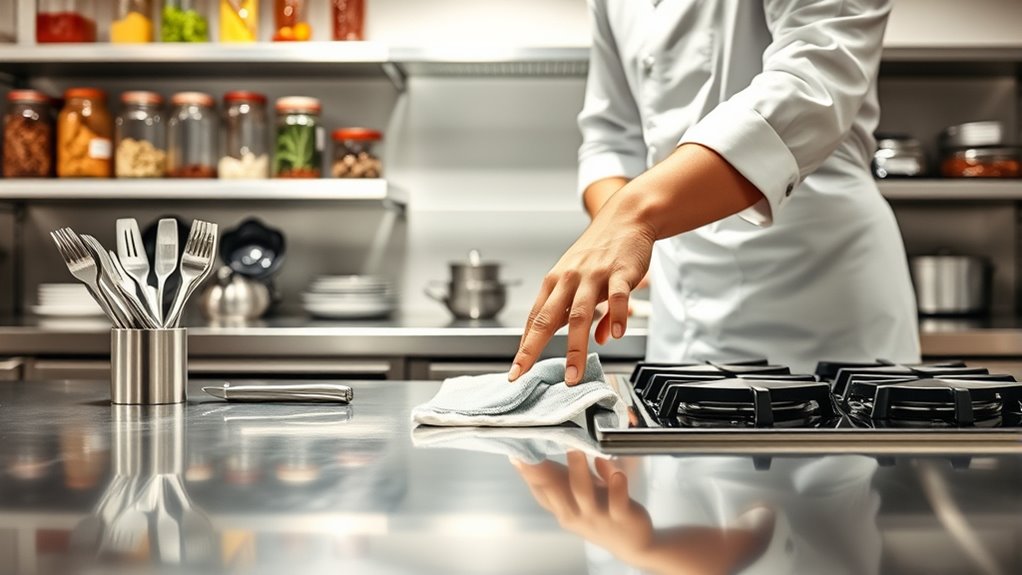

Professional chefs recommend starting with effective tools like microfiber cloths and dish soap to keep your kitchen spotless. Clean as you go to prevent grease and grime buildup, using damp microfiber cloths for quick surface wipes between tasks. Focus on tackling stubborn spots with targeted soap and soaking dishes first. Maintain organized supplies and develop a routine to save time and ensure hygiene. Keep exploring these proven strategies to master your kitchen upkeep effortlessly.

Get cleaning gear delivered free with Prime
- Fast, free delivery on millions of items
- Prime Video, Amazon Music and more included
- Member-only deals all year
Key Takeaways
- Clean as you go using microfiber cloths and soapy water to prevent grease buildup and maintain a tidy workspace.
- Use hot water and dish soap to soak and loosen stubborn food residues on dishes and surfaces.
- Wipe down counters, stove, and sink immediately after use to minimize grime and bacteria.
- Apply extra dish soap on greasy spots and let sit briefly before wiping for easier stain removal.
- Keep cleaning tools organized and within reach to facilitate quick, efficient kitchen maintenance.
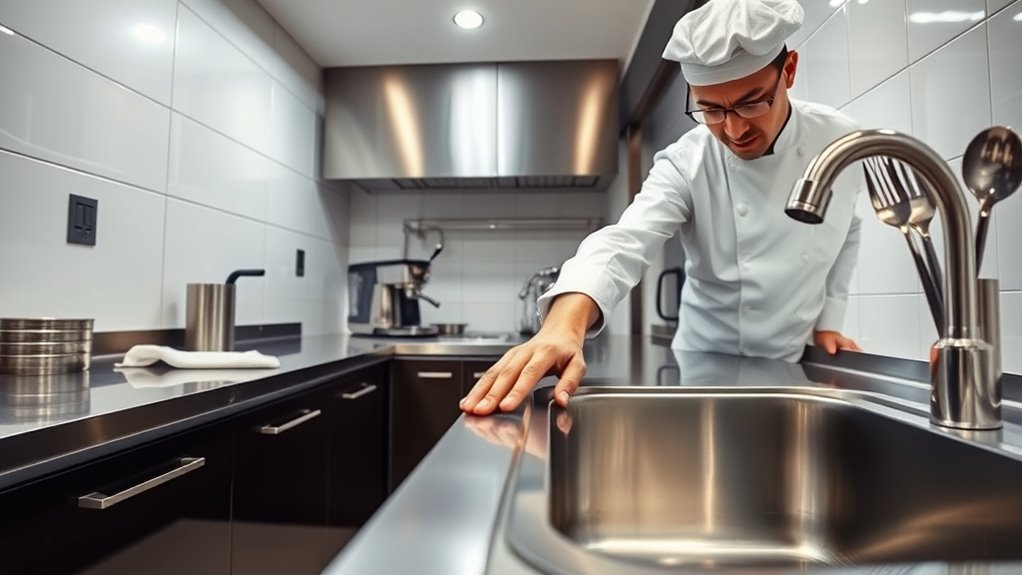
Keeping your kitchen spotless doesn’t have to be a formidable task. With a few simple techniques that professional chefs swear by, you can maintain a clean and inviting space without feeling overwhelmed. The key is understanding the best tools and routines to tackle everyday messes efficiently. One of the most effective ways to start is with the right cleaning supplies, especially when it comes to surfaces and dishes. A reliable dish soap is your best friend for breaking down grease and food residues. Use it generously on your sponge or microfiber cloth to cut through stubborn stains without harsh scrubbing. The microfiber cloth, in particular, is a game-changer because it picks up dirt and grime more effectively than regular cloths and reduces the need for excessive chemical cleaners. When cleaning countertops, appliances, or your sink, dampen the microfiber cloth with a mixture of water and a few drops of dish soap. This combination ensures a thorough clean while being gentle on surfaces.
Professional chefs often emphasize the importance of a clean workspace for both hygiene and efficiency. They recommend starting your cleaning routine right after meal prep or cooking, rather than letting messes pile up. Wipe down your counters, stove, and sink with your microfiber cloth dipped in soapy water. This prevents grease buildup and keeps your kitchen looking fresh. When it’s time to clean dishes, fill your sink with warm water and a few squirts of dish soap. Let your dishes soak briefly before scrubbing them with your microfiber cloth or a soft sponge. This makes removing stuck-on food much easier and spares your hands from unnecessary scrubbing. Remember, a clean dish soap and microfiber cloth combo not only speeds up the cleaning process but also helps preserve your dishes and cookware.
Another tip from pro chefs is to stay organized and clean as you go. Keep your microfiber cloth and dish soap within reach, so you can quickly wipe down surfaces after each use. This habit prevents grime from setting in and reduces the overall cleaning time at the end of the day. For stubborn stains or greasy spots, apply a little extra dish soap directly onto the area, let it sit for a minute, then wipe away with your microfiber cloth. This approach minimizes the need for harsh scrubbing and keeps your kitchen looking pristine. Incorporating effective cleaning tools can make your routine even more efficient and thorough. By incorporating these simple yet effective strategies, you’ll find that maintaining a spotless kitchen becomes second nature, allowing you to enjoy cooking without the stress of clutter or grime.
microfiber cleaning cloths for kitchen
As an affiliate, we earn on qualifying purchases.
As an affiliate, we earn on qualifying purchases.
Frequently Asked Questions
How Often Should I Deep Clean My Kitchen Appliances?
You should deep clean your kitchen appliances at least once every three to six months to maintain proper kitchen maintenance and guarantee appliance longevity. Regularly cleaning appliances like your oven, fridge, and microwave prevents buildup of grime and extends their lifespan. Keep an eye out for signs of dirt or residue, and don’t wait too long—consistent deep cleaning helps your appliances work efficiently and keeps your kitchen hygienic.
What Are the Best Natural Disinfectants for Kitchen Surfaces?
You want to keep your kitchen surfaces safe and germ-free using natural alternatives. Essential oils like tea tree, lemon, and lavender are excellent choices because they have antimicrobial properties. Mix a few drops with water or vinegar to create a powerful, natural disinfectant. These options are effective, eco-friendly, and leave a fresh scent, making your kitchen a healthier space without relying on harsh chemicals.
How Can I Remove Stubborn Stains From Kitchen Countertops?
To remove stubborn stains from your kitchen countertops, first identify your countertop material to choose the right stain removal techniques. For granite or marble, use a gentle baking soda paste; for laminate, try a mix of baking soda and water. Always avoid harsh chemicals. Gently scrub the stain with a soft cloth and rinse thoroughly. Consistent cleaning and quick stain treatment prevent future buildup, keeping your surface looking pristine.
What’S the Safest Way to Clean Greasy Oven Vents?
To clean greasy oven vents safely, start by disconnecting the power. Use a mixture of warm water and mild dish soap to soften grease buildup. Dampen a soft cloth or sponge and gently wipe the vents, avoiding abrasive materials that could damage them. For stubborn grease, a solution of baking soda and water works well. Regular vent maintenance prevents heavy grease buildup, making cleaning easier and safer over time.
How Do Professional Chefs Prevent Cross-Contamination During Cleaning?
To prevent cross-contamination during cleaning, you should follow strict food safety and sanitation practices. Always use separate cleaning tools and cloths for different areas, like raw meats and vegetables, to avoid bacteria transfer. Wash your hands thoroughly and wear gloves when handling different foods or surfaces. Regularly sanitize sponges and scrub brushes, and keep your workspace organized. These steps help maintain a hygienic environment and guarantee food safety.
Conclusion
Now that you’ve uncovered these professional kitchen cleaning secrets, your space will shine brighter than a Michelin-starred kitchen under perfect lighting. With just a little effort, you’ll banish grime and chaos faster than a chef can plate a five-star meal. Remember, a spotless kitchen isn’t just about looks—it’s your secret weapon for cooking safely and confidently. So go ahead, wield these tips like a culinary ninja, and turn your kitchen into the envy of every chef!
Halloween Picks
halloween
As an affiliate, we earn on qualifying purchases.