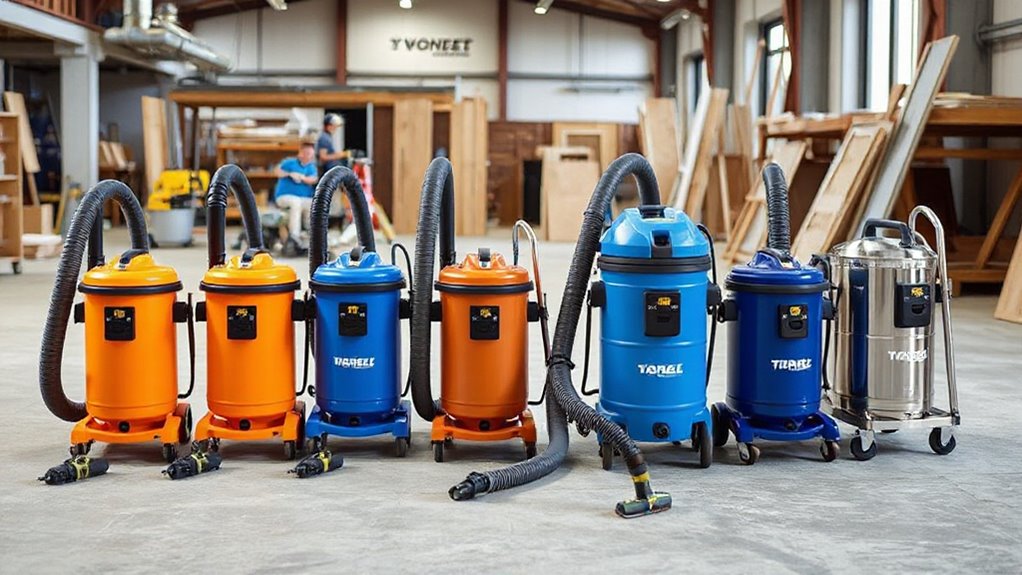

For drywall sanding, the right dust extractor depends on whether you need powered sanding or a simple hand tool that connects to a vacuum. I’d choose the DEWALT DWV010 as the best overall extractor for pairing with compatible sanding tools, thanks to its HEPA filtration and automatic filter cleaning. The DEKOPRO electric sander stands out for powered sanding with an LED light, while the Goldblatt hand sander suits controlled touch-ups without an electric sander. The main tradeoffs are dust capacity, reach, filtration, and how much setup each tool requires. Read on for the full breakdown of which option fits your project.

Get cleaning gear delivered free with Prime
- Fast, free delivery on millions of items
- Prime Video, Amazon Music and more included
- Member-only deals all year
Complete the kit


Key Takeaways
The roundup spans two different jobs: the DEWALT DWV010 is a standalone extractor, while most other picks are sanders or hand tools with vacuum connections.
Powered sanders suit large wall areas: the DEKOPRO, IMQUALI, and 1000W models add features such as LED lighting, variable speeds, or extension handles, but need more setup and storage space.
Hand sanders favor control over speed: the Goldblatt, Zipcase, and Hyde vacuum hand sanders make more sense for patches, edges, and finishing work than for sanding whole rooms quickly.
Dust control depends on the complete setup: a hose connection alone does not specify filtration quality, so buyers should check the vacuum, filter, bag, and tool compatibility together.
Matching reach to the room matters: extension poles can help with ceilings and high walls, while a short hose and hand pad can be easier to manage in tight spaces.
| 1000W Electric Drywall Sander with Vacuum Dust Collector, Digital Display, 9 Speeds, and Extendable Handle |  | Best for High Ceilings | Motor Power: 1000W | Speed Range: 800–2100 RPM | Speed Settings: 9 | VIEW ON AMAZON | See Our Full Breakdown |
| DEWALT DWV010 HEPA Dust Extractor with Automatic Filter Cleaning, 8-Gallon |  | Best Premium Dust Containment | Capacity: 8 Gallon | Motor Power: 15 Amp | Airflow: 150 CFM | VIEW ON AMAZON | See Our Full Breakdown |
| Electric Drywall Sander with Vacuum Dust Collector and LED Light |  | Best Value All-in-One | Power: 950W | Sanding Base: 9 inches | Speed Settings: 9 Variable | VIEW ON AMAZON | See Our Full Breakdown |
| IMQUALI 8-Amp Drywall Sander with Vacuum and LED Light |  | Best for Long Sanding Sessions | Power Source: Corded Electric, 120V | Amperage: 8 Amps | Speed Range: 800–1800 RPM | VIEW ON AMAZON | See Our Full Breakdown |
| Goldblatt Dust-Free Drywall Hand Sander with 6.5 ft Vacuum Hose |  | Best for Small Repairs and Patch Work | Hose Length: 6.5 ft | Hose Adapter: Φ1-1/4 in | Dust Reduction: Up to 90% | VIEW ON AMAZON | See Our Full Breakdown |
| Zipcase 9-Inch Dust-Free Hand Sander with Vacuum Hose and Adapters |  | Best Complete Starter Hand-Sanding Kit | Sanding head size: 9 inches | Dust capture: Up to 95% | Head rotation: 360° | VIEW ON AMAZON | See Our Full Breakdown |
| HYDE 9160 Dust-Free Sponge Sander |  | Best for Detail and Touch-Up Sanding | Type: Dust-free hand sponge sander | Included sponges: Two medium-grit sanding sponges | Vacuum hose compatibility: 1-1/4 in, 1-1/2 in, and 2-1/2 in | VIEW ON AMAZON | See Our Full Breakdown |
| Hyde 09170 Dust-Free Vacuum Sander |  | Best Pole Sander for Whole-Room Work | Model: 09170 | Type: Dust-free pole sander | Hose length: 6 feet | VIEW ON AMAZON | See Our Full Breakdown |
| DEKOPRO 7.5 Amp Electric Drywall Sander with Vacuum Dust Collection and LED Light |  | Best Powered Option for Big Jobs | Power: 7.5 A, 120V corded electric | Speed range: 600–1,800 RPM, 7 settings | Pole length: 4.2 ft to 6.2 ft telescopic | VIEW ON AMAZON | See Our Full Breakdown |
| Hyde Tools 09165 Dust-Free Drywall Vacuum Hand Sander with 6-Foot Hose |  | Best Value Hand Sander | Model: 09165 | Type: Dust-free vacuum hand sander | Hose length: 6 feet | VIEW ON AMAZON | See Our Full Breakdown |
| Electric Drywall Sander with Vacuum, 780W Motor, 7 Variable Speeds, LED Light, and Extension Pole |  | Best for Ceiling Sanding | Motor power: 780 W | Speed range: 900–1800 RPM | Voltage: 120 V | VIEW ON AMAZON | See Our Full Breakdown |
More Details on Our Top Picks
1000W Electric Drywall Sander with Vacuum Dust Collector, Digital Display, 9 Speeds, and Extendable Handle
This sander stands out for its telescopic reach of up to 6.2 feet — the longest extension in this lineup — which makes it the most practical choice for vaulted ceilings and stairwells where the IMQUALI’s 5.5-foot pole would leave you reaching for a ladder. The 360° rotating head and 120° rod swing angle help keep the pad flat against awkward surfaces, and the digital display with nine speeds from 800 to 2100 RPM gives more fine control than the IMQUALI’s seven-speed dial. That said, the listing data raises a red flag: the power source is listed as battery-powered with a 1 A capacity, which is inconsistent with a 1000W motor. Buyers should verify the corded configuration before ordering.
Pros:- Longest telescopic reach in the lineup (up to 6.2 ft) for high ceilings
- Nine speeds with a digital display for precise control from 800 to 2100 RPM
- 360° rotating head plus 120° swing angle handles corners and angles
- Complete kit includes hose, dust bag, 15 sanding sheets, and carrying bag
Cons:- Listed battery power source and 1 A capacity conflict with the claimed 1000W motor
- Claimed 98.5% extraction efficiency is unverified and may fall short with fine drywall dust
Best for: DIYers and pros tackling high ceilings, stairwells, or tall walls who want maximum pole reach without a ladder
Not ideal for: Buyers who need guaranteed spec accuracy — the conflicting battery vs. 1000W motor listing makes this a risky purchase sight-unseen
- Motor Power:1000W
- Speed Range:800–2100 RPM
- Speed Settings:9
- Handle Length:4.9–6.2 ft
- Head Rotation:360°
- Dust Extraction Efficiency:Up to 98.5% (claimed)
- Included Sandpaper:15 sheets, assorted grits
Our verdict“If ceiling height is your biggest challenge and you confirm the power configuration, this is the reach champion of the group.”
DEWALT DWV010 HEPA Dust Extractor with Automatic Filter Cleaning, 8-Gallon
This is the only true HEPA-certified dust extractor in the roundup, and it plays a different role than the integrated sanders: pair it with any dust-free sander — like the Goldblatt hand sander or a pole sander — and you get jobsite-grade containment. The automatic filter cleaning that pulses every 30 seconds is the standout feature, because fine drywall dust clogs filters fast, and competing shop vacs lose suction within minutes without manual cleaning. Power tool actuation also syncs the vacuum to your tool, so it only runs when you’re sanding. The tradeoffs are real: this is a significant investment on top of a sander, EPA lead-safe compliance requires a separate filter purchase, and the 15-foot hose can come up short on sprawling jobsites.
Pros:- HEPA filtration captures fine drywall dust that cloth bags miss
- Automatic filter pulsing every 30 seconds maintains suction continuously
- Power tool actuation syncs vacuum with your sander for hands-free operation
- 8-gallon capacity and durable wheels built for jobsite abuse
Cons:- EPA Lead RRP compliance requires a separate DWV9330 filter purchase
- Requires pairing with a separate sander, adding to total cost
- 15-foot hose can limit reach on large or multi-room jobsites
Best for: Contractors and serious renovators who already own sanders and want HEPA-grade dust containment across multiple tools
Not ideal for: Budget DIYers doing one room — buying this plus a sander costs far more than an all-in-one electric sander like the 950W model with its built-in collection bag
- Capacity:8 Gallon
- Motor Power:15 Amp
- Airflow:150 CFM
- Hose Length:15 ft
- Hose Diameter:1.25 inch
- Filter Type:HEPA
Our verdict“This is the containment backbone for a pro setup — overkill for a single DIY room, unbeatable for repeat jobs.”
Electric Drywall Sander with Vacuum Dust Collector and LED Light
For buyers who want a complete dust-controlled sanding package without buying two tools, this 950W sander makes the most sense. Unlike the DEWALT DWV010, which demands a separate sander, this model bundles the motor, dust collection bag, hose, 16 sanding discs from 80 to 320 grit, and even safety gear — everything needed to start within minutes of unboxing. At 9.59 pounds with a telescopic pole, it’s lighter than many rivals and eliminates ladder work on most ceilings. Compared with the 1000W model, it gives up a little top-end reach and RPM range, but the 360° LED light strip and 9-inch base deliver comparable performance for whole-room jobs. The tradeoff is filtration: a cloth collection bag simply cannot match HEPA-level containment of fine joint compound dust.
Pros:- Complete kit includes 16 discs, hose, collection bag, carrying bag, and safety gear
- Lightweight 9.59 lb build with telescopic pole reduces fatigue and ladder use
- 360° LED lighting improves visibility on ceilings and dim areas
- Nine variable speeds cover coarse leveling through fine finishing
Cons:- Cloth collection bag falls short of HEPA filtration for fine dust
- Built-in dust extraction is less powerful than a dedicated extractor paired with a hand sander
Best for: Homeowners and DIY renovators who want a ready-to-work kit for whole-room drywall projects on a single budget
Not ideal for: Lead-paint or occupied-home remodelers who need HEPA-grade containment — a bag-based system will leak fine dust compared to the DEWALT
- Power:950W
- Sanding Base:9 inches
- Speed Settings:9 Variable
- Weight:9.59 lbs
- Included Sanding Discs:16 discs, 80–320 grit
- Lighting:360° LED strip
Our verdict“The best single-purchase entry point for a DIY drywall project — accept bag-level filtration and you get everything in one box.”
IMQUALI 8-Amp Drywall Sander with Vacuum and LED Light
At 8.6 pounds, this is the lightest electric pole sander in the batch, and that difference compounds over hours of overhead work — the 950W kit model weighs more and the 1000W sander is heavier still. The pure copper 8-amp motor with seven speeds from 800 to 1800 RPM trades the finer speed gradations of rivals for simplicity, which most drywall finishers won’t miss. Its claimed 99% dust extraction efficiency edges out the 1000W model’s 98.5%, though both rely on bag-based collection rather than true HEPA. Two quirks matter: the unit can build static in dry conditions, and the sanding disc must be aligned precisely or dust leaks around the edges — a fussy detail that competitors don’t share.
Pros:- Lightest electric sander here at 8.6 lbs for reduced fatigue
- Pure copper 8-amp motor with 99% claimed dust extraction efficiency
- Detachable corner chassis reaches tight corners most round pads miss
- 360° LED light strip and 5.5 ft telescopic handle cover ceilings and dim areas
Cons:- Can generate static electricity in dry conditions
- Requires precise sand disc alignment to prevent dust leakage
- 7-speed range tops out at 1800 RPM, lower than the 1000W model’s 2100 RPM
Best for: Users facing multi-hour ceiling or wall sanding sessions who prioritize low tool weight and low arm fatigue
Not ideal for: Set-and-forget operators — the precise disc alignment requirement and static buildup make this less forgiving than the 950W kit sander
- Power Source:Corded Electric, 120V
- Amperage:8 Amps
- Speed Range:800–1800 RPM
- Weight:8.6 lbs
- Extension Length:3.9–5.5 ft
- Grit Range:80–240
- Dust Extraction Efficiency:99% (claimed)
Our verdict“Pick this if long overhead sessions are the norm and you don’t mind careful disc setup; choose the 950W kit if convenience matters more than weight.”
Goldblatt Dust-Free Drywall Hand Sander with 6.5 ft Vacuum Hose
Not every job needs a powered pole sander. For patching a few seams or smoothing a repair, this manual hand sander with vacuum hookup is the cheapest, simplest path to dust control — no motor, no speeds to dial in, nothing to break. Its 6.5 ft hose and Φ1-1/4 inch adapter connect to the shop vac you already own (or pair beautifully with the DEWALT DWV010 for serious containment), and the 360° pivoting elbow makes vertical wall work comfortable where powered sanders feel bulky. Compared with powered options like the IMQUALI, you give up speed dramatically — this is elbow-grease sanding — and it’s limited to sanding screens only, with a stated incompatibility with fast-setting compounds. But for a door-sized patch, powered sanders are simply overkill.
Pros:- Affordable, low-maintenance manual option with no motor to fail
- 6.5 ft hose and universal 1-1/4 inch adapter fit most shop vacs
- 360° pivoting elbow and soft rubber grip ease vertical surface work
- Reduces dust by up to 90% when paired with a vacuum
Cons:- Requires a separate vacuum — useless without one
- Works only with sanding screens, not standard sandpaper
- Not compatible with special fast-setting drywall compounds
Best for: DIYers and patchers doing small repairs, spot finishing, or touch-up work where a powered sander would be excessive
Not ideal for: Whole-room or new-construction finishing — manual sanding at that scale is exhausting compared to any electric model here
- Hose Length:6.5 ft
- Hose Adapter:Φ1-1/4 in
- Dust Reduction:Up to 90%
- Sanding Screen Grit:120
- Pivoting Elbow:360°
- Vacuum Required:Yes
Our verdict“The right tool for repairs and small patches — skip it if you’re finishing entire walls or ceilings.”
Zipcase 9-Inch Dust-Free Hand Sander with Vacuum Hose and Adapters
What separates this Zipcase hand sander from the Hyde 09165 is that it arrives genuinely ready to work: hose, adapters, and four sheets of sandpaper in two grits come in the box, so there’s no accessory shopping before the first pass. The adjustable suction valve is a thoughtful touch the Hyde models lack — being able to dial back vacuum pull keeps the head from locking onto the wall, which matters when you’re working overhead on ceilings. The 360° rotating head also makes corner and angle work less awkward than a fixed-head design. Compared with the HYDE 9160 sponge sander, this option trades the sponge’s gentleness for faster material removal on larger patches. The catch is that dust capture still depends entirely on having a decent vacuum with adequate airflow.
Pros:- Complete kit includes hose, adapters, and four sanding sheets in two grits
- Adjustable suction valve prevents the head from sticking to the surface
- 360° rotating head handles corners, ceilings, and angled surfaces
- Captures up to 95% of sanding particles when paired with a good vacuum
Cons:- Useless without a compatible shop vacuum, so it’s not truly standalone
- Manual sanding is slow and tiring for anything beyond patch-scale jobs
Best for: DIYers patching whole rooms who want a complete hose-and-adapters kit out of the box without buying parts separately
Not ideal for: Anyone sanding large ceilings or high walls for hours — the manual effort becomes exhausting compared with a powered option like the DEKOPRO
- Sanding head size:9 inches
- Dust capture:Up to 95%
- Head rotation:360°
- Hose length:7.4 feet
- Hose diameter:1.25 inches
- Suction control:Adjustable valve
- Included sandpaper:Two 120-grit and two 240-grit sheets
- Dimensions:9.25 × 7.48 inches
Our verdict“A smart buy for DIYers who want everything included in one box and only have small-to-medium drywall patches to smooth.”
HYDE 9160 Dust-Free Sponge Sander
The HYDE 9160 occupies a niche the bigger tools ignore: fine detail work. Its sanding sponges flex over inside corners, curved patches, and feathered edges in ways a rigid 9-inch head like the Zipcase simply can’t, and the lightweight body means your wrist survives a day of fiddly touch-ups. The adapter range is unusually generous — fitting 1-1/4, 1-1/2, and 2-1/2-inch vacuum hoses means it will likely snap onto the shop vac you already own without a hardware-store run, an area where the Hyde 09170 pole sander’s adapter set is slightly narrower. The tradeoff is raw speed: a medium-grit sponge removes compound slowly, and swapping in only two included sponges means you’ll buy refills for bigger jobs. This is a finishing tool, not a production tool.
Pros:- Flexible sponge conforms to corners, curves, and feathered edges
- Fits three common vacuum hose sizes with included adapter
- Very lightweight for extended detail work
- Two medium-grit sponges included to start immediately
Cons:- Slow material removal compared with rigid-head or powered sanders
- Only two sponges included, so larger jobs require refill purchases
Best for: Painters and finishers doing corner work, spot repairs, and feathered-edge blending where flexibility matters more than speed
Not ideal for: Anyone knocking down large areas of dried joint compound — sponge removal rates will make the job drag on for days
- Type:Dust-free hand sponge sander
- Included sponges:Two medium-grit sanding sponges
- Vacuum hose compatibility:1-1/4 in, 1-1/2 in, and 2-1/2 in
- Included accessories:Vacuum hose with adapter
- Primary use:Detail and touch-up sanding
Our verdict“The right pick when precision touch-ups and inside corners are the task — just don’t expect it to carry a whole room.”
Hyde 09170 Dust-Free Vacuum Sander
When the job shifts from patches to whole walls, the Hyde 09170 is the tool that saves your shoulders. Unlike the hand-held Hyde 09165, this pole-mounted design keeps you on the floor while sanding ceiling seams and upper walls, and the EasyClamp screen system lets you swap worn abrasive in seconds rather than fiddling with clamps mid-job. It works with any wet/dry vacuum, and the included coupling adapters in three sizes cover most hose setups. Compared with the powered DEKOPRO electric sander, this model trades motorized speed for simplicity: no cords, no speed settings, almost nothing to break. The obvious drawback — the pole is not included — means the true cost of ownership is higher than the sticker suggests, and you’ll need to buy a compatible pole separately.
Pros:- Pole-mounted design dramatically reduces ladder time and shoulder strain
- EasyClamp system makes sanding screen changes fast
- Coupling adapters fit 1-3/4, 1-1/2, and 2-1/2-inch vacuum hoses
- Works with any wet/dry vacuum — no proprietary system
Cons:- Pole sold separately, adding cost and a compatibility decision
- Still manual sanding, so heavily coated surfaces demand real effort
Best for: Contractors and serious DIYers sanding full walls and ceilings who already own a pole and a shop vacuum
Not ideal for: Buyers expecting a complete tool in the box — the missing pole turns this into a two-part purchase
- Model:09170
- Type:Dust-free pole sander
- Hose length:6 feet
- Coupling adapters:1-3/4 in, 1-1/2 in, 2-1/2 in
- Pole:Not included
- Vacuum compatibility:Any wet/dry vacuum
- Abrasive:Sanding screens with EasyClamp system
Our verdict“A rugged, no-motor choice for whole-room sanding — as long as you remember to budget for the pole it doesn’t come with.”
DEKOPRO 7.5 Amp Electric Drywall Sander with Vacuum Dust Collection and LED Light
For large renovations, the DEKOPRO plays in a different league from the manual Hyde and Zipcase options. The 7.5-amp motor with seven speed settings (600–1,800 RPM) lets you run aggressive on heavy compound and gentle on final passes, and the telescopic pole extending to 6.2 feet means most ceilings are reachable from the floor. The integrated vacuum dust collection is the headline feature here: unlike the manual sanders that depend on your shop vac’s suction, this unit pulls dust through its own system. The 360° LED light strip is more useful than it sounds — raking light reveals imperfections you’d otherwise miss until paint day. Compared with the IMQUALI 8-Amp sander, the kit here is more generous, including six grits, safety gear, and a bag. Being corded with a 14-foot cord limits you to outlet range, though.
Pros:- Built-in vacuum dust collection reduces airborne dust and cleanup time
- Telescopic pole extends to 6.2 feet for floor-level ceiling sanding
- Seven variable speeds from 600 to 1,800 RPM suit every sanding stage
- Complete kit with six grits, safety gear, and carry bag
Cons:- Corded design requires a nearby outlet and limits mobility
- Dust collection drops off if the head isn’t kept flush to the surface
Best for: Homeowners or contractors sanding entire rooms or ceilings who want powered speed and dust control in one package
Not ideal for: Small patch jobs or outlet-free work areas — the corded design and 8.8-pound body are overkill for spot repairs
- Power:7.5 A, 120V corded electric
- Speed range:600–1,800 RPM, 7 settings
- Pole length:4.2 ft to 6.2 ft telescopic
- Weight:8.8 lbs
- Sanding disc size:8.9 inches
- Power cord:14 feet
- Included grits:80, 100, 120, 150, 180, 240
- Warranty:2 years
Our verdict“The pick for whole-room projects where powered sanding and integrated dust capture justify the extra size and cost.”
Hyde Tools 09165 Dust-Free Drywall Vacuum Hand Sander with 6-Foot Hose
The Hyde 09165 is the straightforward workhorse of the hand-sander group: no rotating head, no suction valve, just a proven design that connects to a wet/dry vacuum and keeps most of the dust out of the room. Compared with the Zipcase, you give up the 360° rotating head and the adjustable airflow — but you gain Hyde’s long track record for build quality and the same EasyClamp screen system found on the more expensive 09170 pole model, so screen changes stay quick. The 6-foot hose and multi-size coupling adapter cover 1-3/4, 1-1/2, and 2-1/2-inch vacuum fittings, which is genuinely versatile for the price point. It ships with only one reversible sanding screen, and the fixed head makes tight corners harder than with the sponge-based HYDE 9160.
Pros:- EasyClamp system makes abrasive changes fast
- Coupling adapter fits three common vacuum hose sizes
- Simple, durable design with a 6-foot hose included
- Reversible sanding screen effectively doubles usable life
Cons:- Fixed head with no rotation makes corners and angles awkward
- Only one sanding screen included, so expect early refill purchases
Best for: Budget-minded DIYers and pros who want a dependable, no-frills vacuum hand sander for flat wall sections
Not ideal for: Detail-oriented finish work in corners, or anyone who wants everything included — the single screen runs out fast
- Model:09165
- Type:Dust-free vacuum hand sander
- Hose length:6 feet
- Compatible hose sizes:1-3/4 in, 1-1/2 in, 2-1/2 in
- Included accessories:Coupling adapter and one reversible sanding screen
- Abrasive system:EasyClamp sanding screen
Our verdict“A sensible, low-cost choice for flat-wall drywall work where reliability matters more than features.”
Electric Drywall Sander with Vacuum, 780W Motor, 7 Variable Speeds, LED Light, and Extension Pole
This model is a strong fit for drywall sanding overhead, where its telescoping handle reaches 6.2 feet and the LED light helps show surface flaws in dim rooms. Its 900–1800 RPM range gives you room to adjust for different sanding tasks, while the listed dust removal efficiency of over 95.5% points to less airborne dust when the setup is working well. Compared with the Goldblatt Dust-Free Drywall Hand Sander, this powered option covers large areas faster but weighs 11.7 pounds, so extended overhead work may tire your arms. The included bag can help with basic collection; for stronger extraction, the product calls for a shop vacuum. That added equipment and the tool’s weight are real tradeoffs, despite the useful kit of grits, safety gear, and attachments.
Pros:- Telescoping handle extends up to 6.2 feet for reaching ceilings and tall walls
- Integrated LED light helps reveal surface details in poorly lit areas
- Seven speed settings cover a 900–1800 RPM range
- Kit includes multiple sandpaper grits, safety gear, and vacuum attachments
Cons:- At 11.7 pounds, it may cause fatigue during long overhead sanding sessions
- A shop vacuum is needed for optimal dust extraction beyond the included bag
Best for: DIY renovators and contractors sanding ceilings or tall walls who want powered sanding, reach, and added work light
Not ideal for: People doing only small patch repairs, or anyone who needs a light hand sander or a self-contained extractor without a separate shop vacuum
- Motor power:780 W
- Speed range:900–1800 RPM
- Voltage:120 V
- Amperage:7.9 A
- Weight:11.7 lbs
- Cord length:26 ft
- Handle extension:Up to 6.2 ft
- Dust removal efficiency:>95.5%
- Included grits:80, 100, 120, 150, 180, 240
Our verdict“Choose this powered sander for ceiling and tall-wall work if its reach and light matter more to you than a lighter tool or an all-in-one vacuum setup.”

How We Picked
I compared the lineup by how directly each product addresses drywall sanding dust, how much area it can help cover, and how easy it is to control on walls, ceilings, edges, and repairs. For powered sanders, I considered motor and speed details, reach, lighting, and the practical burden of handling a larger tool. For hand sanders, I focused on hose connection, handling, and suitability for detail work. The DEWALT DWV010 ranks as best overall for buyers who need a dedicated extractor and can pair it with a compatible sander; the DEKOPRO leads among powered sanding options, while the hand tools earn their places through simplicity and control.
These products do not all perform the same role, so the ranking accounts for that distinction instead of treating every vacuum connection as equivalent dust extraction. Product names and listed features provide useful comparisons, but do not establish extraction efficiency, filtration certification, or compatibility with every vacuum. I favored picks whose stated features map clearly to a common drywall sanding need, and I treated missing specifications as a reason to check fit before buying.
Factors to Consider When Choosing Dust Extractor For Drywall Sanding
Before choosing, decide whether you need an extractor, a powered sander with dust collection, or a hand sander that connects to a vacuum. The right match depends on project size and the rest of your dust-control setup.
Choose the tool around the size of the job
For a whole room or repeated renovations, powered sanding can reduce the time spent covering broad, flat areas. For a few seams, corners, or repairs, a hand sander is easier to guide and quicker to put away. A common mistake is buying a powered sander for occasional spot work, then finding its setup and storage outweigh the time saved. The reverse mistake is expecting a compact hand pad to make a large ceiling project comfortable. Think about how much uninterrupted surface you will sand, not just the total room size. If your work shifts between broad areas and detail patches, a powered tool plus a hand pad may be more useful than trying to make one tool do both jobs.
Check filtration across the whole system
A sander’s vacuum port does not by itself tell you how much fine dust the setup will capture. The extractor, filter, collection bag, hose fit, and tool connection all affect containment. Check whether the vacuum specifies HEPA filtration and whether the tool maker describes a compatible hose or adapter. Do not assume that a dust-free label means the tool will capture all dust under every condition. Poorly fitted connections and full or clogged filters can reduce collection and allow dust to escape. For indoor work, plan for cleanup and room isolation alongside extraction rather than relying on the tool alone.
Match reach and weight to the surfaces
Ceilings and high walls make reach a practical issue, but a longer extension can also make a sander harder to control. Consider how often you will work overhead and whether the pole length adjusts to your height and room. On walls, a long tool may be less nimble around outlets, trim, and corners than a hand sander. Hose drag can add strain, so look for a setup that routes the hose without pulling the sanding head off course. Buyers often focus on motor power while overlooking how long they can comfortably hold the tool. A lighter, shorter setup can be the better choice for detailed work even when it covers less area per pass.
Treat speed settings and lighting as controls
Variable speed lets you adapt sanding pace to the surface and your technique, but more settings do not guarantee a better finish. Beginners may benefit from starting slowly and using light, even pressure to avoid gouges or uneven patches. An LED light can reveal ridges and shallow dips that are harder to see in flat room lighting. It does not replace checking the surface from different angles before priming. Keep the sanding head moving and avoid pressing harder to compensate for a poor abrasive or clogged pad. If a model lists speeds but gives little guidance on their range, confirm that the adjustment is practical for the work you expect to do.
Budget for the connections and consumables
The tool itself may not include everything needed to collect dust effectively. Confirm whether you need a separate vacuum, hose adapter, replacement filter, collection bag, or compatible sanding abrasives. Hand-sander adapters can help connect different hose sizes, but a loose fit may undermine collection. Before buying, compare the connector dimensions and check what the package actually includes. For occasional repairs, a straightforward hand sander that fits a vacuum you already own may be the simpler setup. For frequent work, planned replacement filters and bags matter because neglected maintenance can affect airflow and add interruptions.
Frequently Asked Questions
Do I need a separate dust extractor if my drywall sander has vacuum collection?
Not always, but a vacuum port needs a suitable vacuum and a well-fitted connection to collect dust. The DEWALT DWV010 is the dedicated extractor in this roundup; the electric sanders and hand tools provide sanding with dust-collection connections. Check whether your existing vacuum has filtration and capacity appropriate for fine drywall dust, and confirm hose compatibility. If you sand often, automatic filter cleaning and a larger collection setup may reduce interruptions. For a small repair, your current vacuum may be enough if its filtration and connection fit the task.
Can a vacuum hand sander replace an electric drywall sander?
A vacuum hand sander can handle patches, seams, corners, and finishing passes, but it takes more manual effort over broad surfaces. Electric models are better suited to covering large walls or ceilings, especially when they include an extension handle. Hand tools offer more direct control around edges and reduce the amount of powered equipment to manage. The right choice depends on surface area and how often you sand, not simply on which tool has a vacuum hose. For mixed jobs, many buyers will want a powered option for broad sections and a hand pad for detail work.
Is a HEPA extractor necessary for sanding drywall indoors?
HEPA filtration is a useful feature to look for when capturing fine dust indoors, and the DEWALT DWV010 specifically lists HEPA filtration. Still, filtration claims should be checked on the extractor itself; a sander hose connection does not confirm the vacuum’s filter rating. Keep the work area isolated and follow the vacuum and filter maker’s instructions for drywall dust. A full or poorly maintained filter can affect airflow, so maintenance remains part of dust control. Consider the whole setup, including connection fit and cleanup, rather than treating one feature as a complete solution.
What should I check before connecting a drywall sander to my existing shop vacuum?
Check the hose diameter, adapter requirements, and whether the sander connection stays secure while the tool moves. Then review the vacuum’s filter type, collection capacity, and guidance for fine dust. A connection that fits loosely can leak dust, while a filter that is not suited to the task may let fine particles pass through. Verify whether the vacuum can maintain airflow through the sander and hose length you plan to use. If those details are unclear, a compatible extractor-and-tool setup may be a more predictable choice for frequent sanding.
Should I pay more for an electric sander with an extension pole and LED light?
Those features are most useful when you regularly sand high walls or ceilings and need to spot surface irregularities as you work. For small repairs at reachable height, they may add bulk without saving much effort. An extension pole can reduce ladder use, but longer reach can make precise control harder in tight areas. LED lighting helps reveal ridges, though you should still inspect the surface from multiple angles. Match the added reach and visibility to your actual rooms and project frequency before choosing a more feature-rich sander.
Conclusion
For a dedicated extractor to pair with compatible sanding tools, I’d pick the DEWALT DWV010 as best overall for its HEPA filtration and automatic filter cleaning. The DEKOPRO is my best value among powered sanders for buyers who want electric sanding with LED lighting, while the more feature-rich 1000W and 780W options suit shoppers prioritizing variable speeds and extended reach. Beginners handling small repairs may find the Goldblatt hand sander easier to manage than a powered pole sander. For detail work, compare the Goldblatt, Zipcase, and Hyde hand sanders by hose fit and handling; for larger surfaces, choose a powered model and verify its vacuum setup. The best match is the one that fits your project scale and completes a compatible dust-collection system.
Halloween Picks
halloween
As an affiliate, we earn on qualifying purchases.