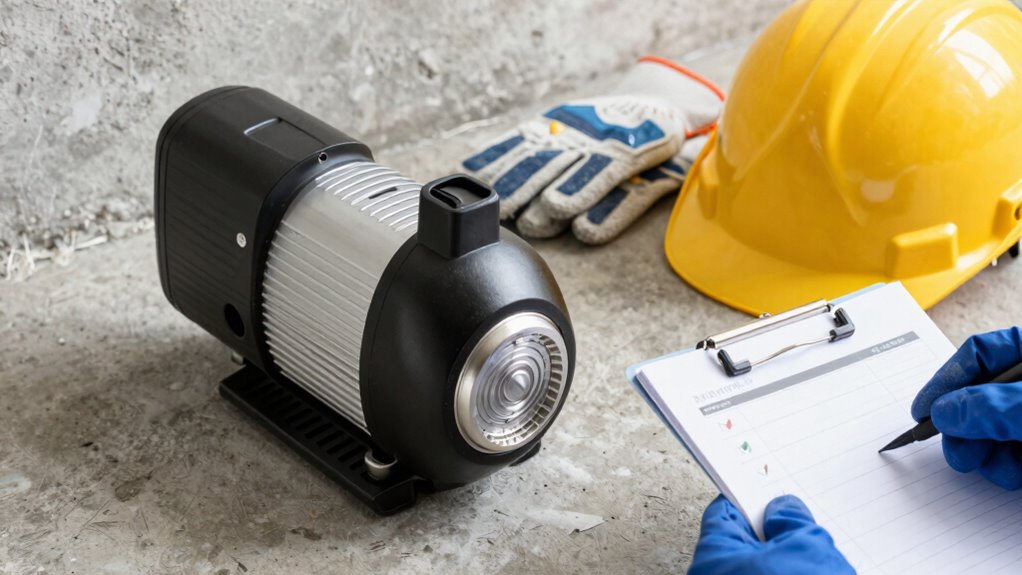

Before dropping a portable sump pump in, check it for any damage, corrosion, or debris, and ensure the float switch moves freely. Test the pump in a bucket of water to confirm it works properly. Use outdoor-rated extension cords and connect everything securely to prevent electrical hazards. Verify your power source—whether a GFI outlet or generator—delivers sufficient power. Proper setup and inspection are vital, and if you keep looking, you’ll discover essential safety steps to keep you protected.
Key Takeaways
- Check for physical damage, corrosion, and debris before setup.
- Test the pump in water to ensure proper operation and float switch function.
- Use outdoor-rated cords and verify power sources (outlet or generator) meet wattage needs.
- Secure all electrical connections and keep them protected from water exposure.
- Regularly clean, inspect, and store the pump properly to maintain safety and extend lifespan.
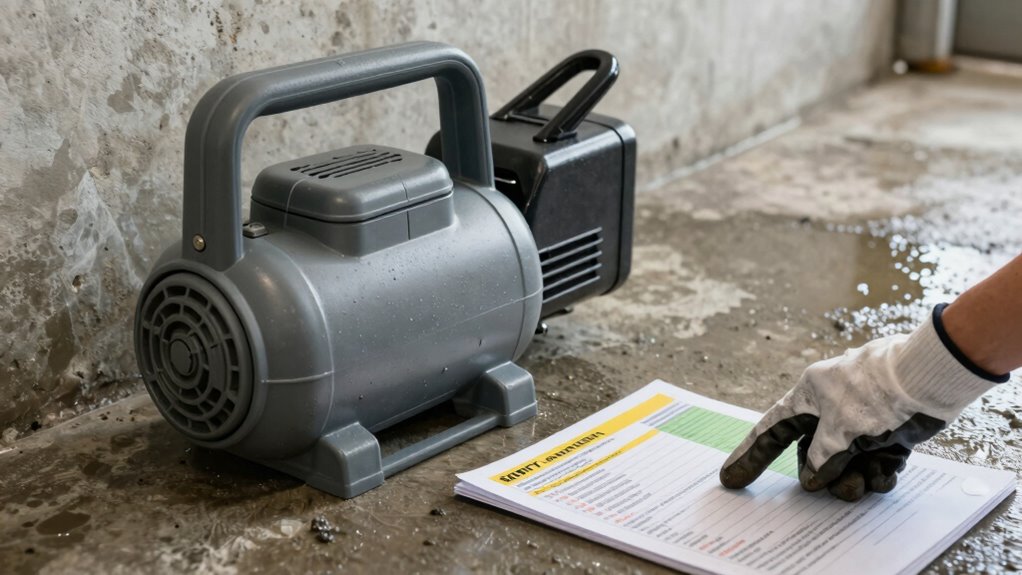
A portable sump pump is an indispensable tool for quickly removing water from basements, crawl spaces, or any area prone to flooding. Before you drop one in, it’s essential to ensure it’s in good working condition and set up correctly to avoid surprises during an emergency. Proper maintenance tips can extend your pump’s lifespan and ensure it operates reliably when you need it most. Regularly inspect the pump for any signs of damage, such as cracks or corrosion, and clean out debris from the intake screen. Check the float switch to make sure it moves freely and isn’t obstructed, as this component is critical for activating the pump when water levels rise. Testing the pump periodically by running it in a bucket of water helps verify that it’s functioning properly, saving you from discovering issues during a flood.
Another crucial aspect to consider is the power source options. Most portable sump pumps are powered by either a standard electrical outlet or a portable generator. If you’re relying on an indoor outlet, ensure that the cord is long enough to reach your pumping area without stretching or creating a trip hazard. For outdoor or backup power, a generator can be a dependable choice, especially during power outages common during storms. When using a generator, verify that it provides sufficient wattage to run the sump pump continuously. Keep extension cords in good condition, rated for outdoor use, and connect everything securely to prevent electrical hazards. Also, think about the convenience of having multiple power options; some pumps come with built-in battery backups or can be connected to a secondary power source for added peace of mind.
Additionally, understanding the field‑of‑view and imaging‑scale of your setup can help you better plan for space and visibility, even in emergency conditions. Maintaining your portable sump pump goes beyond just inspecting it once or twice a year. After every use, rinse it with clean water to remove any dirt or debris, especially if you’ve used it outdoors. Store the pump in a dry, sheltered location when not in use to prevent rust and deterioration. Periodic testing, combined with diligent maintenance, ensures your pump will operate efficiently when flooding strikes. Remember, the right power source choice can make all the difference, providing flexibility and reliability in emergency situations. By paying close attention to these details, you’ll be well-prepared to handle unexpected water intrusions without delay or failure. Proper maintenance and thoughtful power source options are simple steps that can save you time, money, and stress when it counts most.
Frequently Asked Questions
Can Portable Sump Pumps Handle Continuous Use During Storms?
Yes, portable sump pumps can handle continuous use during storms if you’re prepared. For storm readiness, guarantee your pump is well-maintained, with clean filters and proper power sources. Regular pump maintenance prevents overheating and motor burnout, enabling it to run longer when needed. Keep an eye on water levels and test your pump periodically to ensure it operates efficiently during heavy rain, giving you peace of mind in storm conditions.
What Safety Gear Should I Wear When Operating a Sump Pump?
Think of yourself as a safety superhero when operating a sump pump. You should wear protective clothing to shield your skin from splashes and safety goggles to guard your eyes from debris or splattering water. These gear pieces act like your armor, ensuring you stay safe while managing water chaos. Always double-check you’re fully equipped before starting, and you’ll be ready to conquer any storm’s flood.
How Often Should I Test My Portable Sump Pump?
You should test your portable sump pump at least once a month to guarantee proper pump maintenance and reliable operation. During testing, check its ability to activate smoothly and pump water effectively. Also, inspect power sources like cords and batteries for damage or corrosion. Regular testing helps prevent failures during critical moments, so make it a routine to keep your pump ready and functioning when needed most.
Are There Specific Electrical Requirements for Portable Sump Pumps?
You should guarantee your portable sump pump meets specific electrical safety and power requirements before use. It needs a grounded outlet and a GFCI (Ground Fault Circuit Interrupter) to prevent shocks. Check the voltage and amperage match the pump’s specifications to avoid overloads. Always inspect cords and plugs for damage. Proper electrical setup not only keeps you safe but guarantees reliable operation, preventing malfunctions during critical moments.
What Should I Do if My Sump Pump Fails Unexpectedly?
If your sump pump fails unexpectedly, first disconnect it from power and switch to backup power if available. Check for clogs or mechanical issues, and perform a quick maintenance inspection. Follow your maintenance schedule regularly to prevent surprises. If the problem persists, consider replacing the unit or calling a professional. Staying proactive helps make sure your sump pump works when you need it most, especially during heavy rain.
Conclusion
Before you plunge into pumping, prioritize safety and prepare properly. Double-check your device, stay vigilant, and follow all instructions to prevent potential problems. Remember, prudence and preparedness protect you from surprises and setbacks. By taking these simple safety steps, you’ll smoothly manage your sump pump tasks without unnecessary stress. Stay smart, stay safe, and let your sump pump serve you successfully, ensuring your space stays dry and secure every time you power it up.