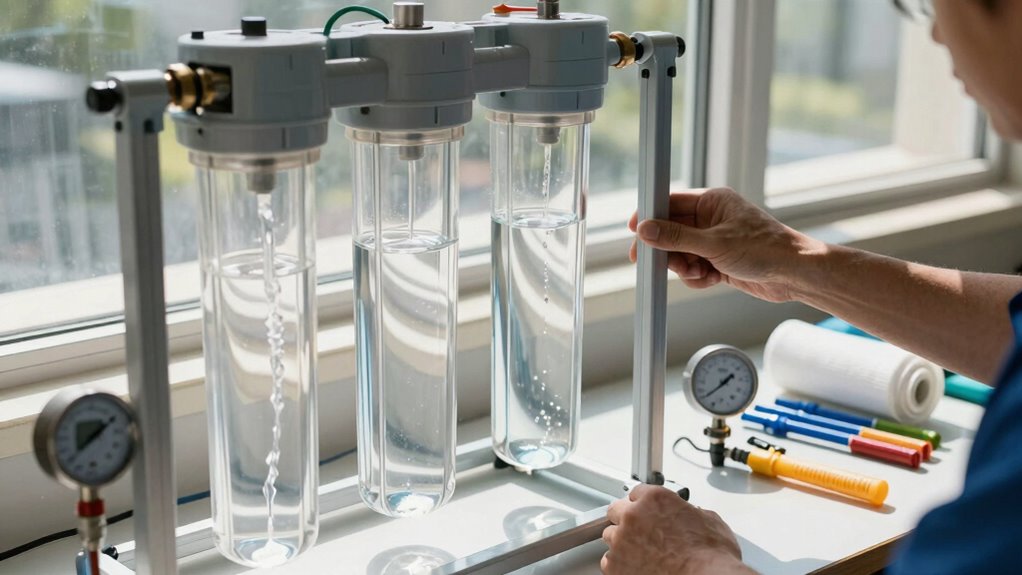

Before your window cleaning shift, inspect your pure water system thoroughly. Check filters for clogs or wear and replace them if needed, as dirty filters can reduce water quality. Verify all hoses, pumps, and connections for leaks or damage, and tighten fittings. Monitor water pressure and water quality indicators to catch any issues early. Ensuring proper regeneration and system efficiency is key. Keep going to discover more tips for a smooth, effective clean.

Get cleaning gear delivered free — and shop member deals
- Fast, free delivery on millions of items
- Access to Prime Big Deal Days deals on October 6–7
- Prime Video, Amazon Music and more included
Key Takeaways
- Inspect and replace filters to prevent clogging and ensure water quality.
- Check water quality indicators to confirm purity before starting.
- Examine hoses, pumps, and connections for leaks or damage.
- Verify resin system regeneration and filtration components are functioning properly.
- Monitor system pressure and performance metrics for consistent operation.
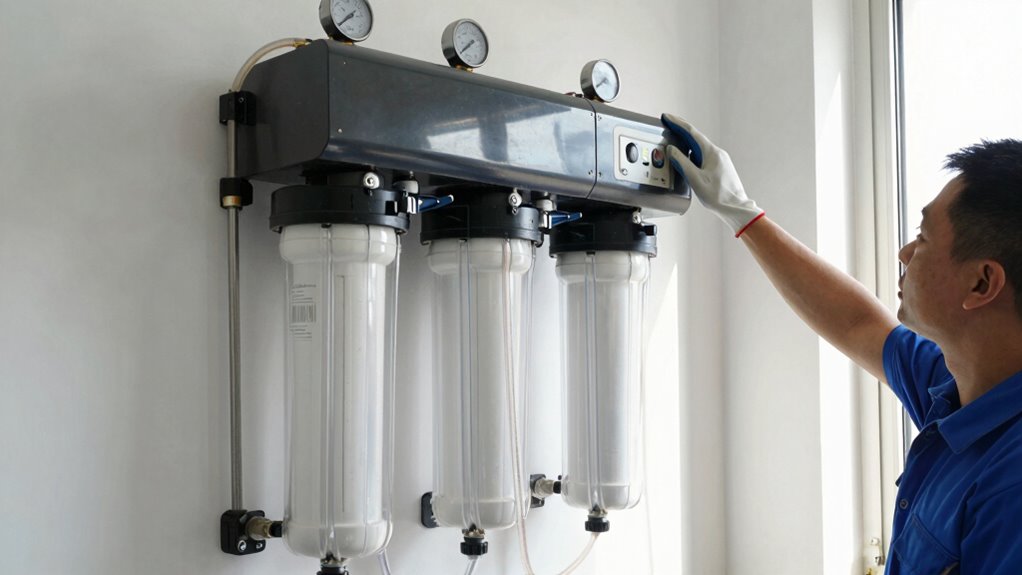
Are you confident that your pure water system is functioning properly? Before you head out for a window cleaning shift, it’s essential to verify that your water filtration system is working effectively. A well-maintained system ensures you get the clean, pure water needed to do a thorough job and avoid wasting time or risking streaks on windows. The first step is to check your water filtration components. Inspect the filters for any signs of clogging or wear. If filters haven’t been replaced recently, it’s wise to swap them out to maintain ideal flow and purity. Dirty or clogged filters can compromise the water quality, leading to inefficient cleaning and potential damage to your equipment. Additionally, understanding water quality indicators can help you assess whether your system is producing the desired purity level.
Next, focus on system maintenance. Regular maintenance is vital to keep your pure water system running smoothly. Start by examining hoses, pumps, and connections for leaks or damage. Tighten fittings if needed, and replace any worn parts to prevent disruptions during your shift. Also, check the water pressure; low pressure can indicate blockages or a failing pump. If you notice inconsistent pressure, troubleshooting the pump or replacing filters might be necessary. Don’t forget to verify that your resin exchange system, if you use one, is regenerating correctly. Insufficient regeneration can lead to poor water quality, which defeats the purpose of having a pure water system. Ensuring your filtration components are functioning properly is critical for maintaining optimal water quality. Regularly inspecting your water quality and understanding how to interpret its indicators can help catch issues early and save you time in the field. Additionally, staying informed about system performance can help you identify potential problems before they impact your work. Always remember that monitoring system efficiency can be a key factor in preventing unexpected breakdowns and ensuring your system operates at peak performance.
window cleaning pure water system filters
As an affiliate, we earn on qualifying purchases.
As an affiliate, we earn on qualifying purchases.
Frequently Asked Questions
What Are the Common Signs of a Malfunctioning Pure Water System?
You’ll notice signs of a malfunctioning pure water system through poor water filtration, like cloudy or discolored water, which indicates filter issues. Reduced water flow or pressure suggests blockages or pump problems. If your system takes longer to fill or doesn’t produce clean water, it’s time for system maintenance. Regularly inspecting filters, hoses, and connections helps prevent these issues, ensuring your pure water system works efficiently during your window cleaning shifts.
How Often Should Pure Water Systems Be Serviced?
Think of your pure water system as a finely tuned orchestra—regular tuning keeps everything harmonious. You should service your system every 3 to 6 months, ensuring water filtration components are replaced and system calibration is accurate. Regular maintenance prevents performance issues, extends equipment life, and guarantees streak-free windows. Don’t wait for problems to surface; stay proactive and keep your pure water system performing at its best for every window cleaning shift.
Can I Troubleshoot Pure Water System Issues Myself?
Yes, you can troubleshoot pure water system issues yourself. Start by checking the water filtration to confirm it’s free of clogs or debris, which can affect water purity. Then, verify system calibration to make sure the output matches the required specifications. If you notice reduced water flow or impurities, clean or replace filters as needed and recalibrate the system to restore peak performance.
What Safety Precautions Are Necessary When Checking the System?
Did you know that nearly 60% of accidents in window cleaning happen due to inadequate safety measures? When checking the system, always wear protective gear like gloves and goggles to guard against splashes. Make sure proper system calibration before starting. Keep the area dry and clear of obstacles, and follow manufacturer instructions carefully. These precautions help prevent injuries and ensure your equipment works efficiently, giving you a safe, productive shift.
Are There Specific Tools Required for System Inspection?
Yes, specific tools are essential for system inspection. You’ll need a TDS meter to measure water purity, guaranteeing tool calibration for accurate readings. A pressure gauge helps monitor system pressure, indicating proper system maintenance. Additionally, inspect hoses and filters for blockages or damage. Using these tools ensures your system functions correctly, maintains water quality, and prevents issues during window cleaning. Regular checks with calibrated tools keep your system in ideal condition.
Conclusion
Think of your pure water system as the clear, untainted mirror reflecting your professionalism. When you check it thoroughly, you’re polishing that mirror, ensuring every surface is spotless and true. A well-maintained system is like a pristine window itself, offering a perfect view without distortions. By verifying the purity, you’re not just preparing for the shift—you’re setting the stage for a flawless reflection that leaves clients seeing nothing but clarity and excellence.
Fall Picks
fall essentials
As an affiliate, we earn on qualifying purchases.