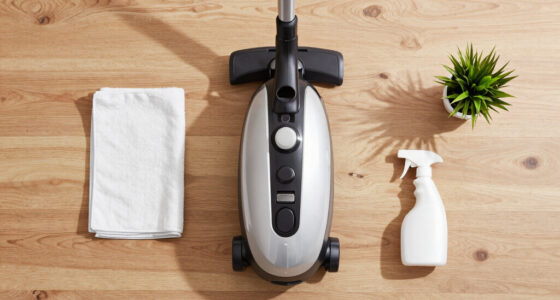
To fold your cleaning cloths for more usable sides, fold microfiber into thirds lengthwise, then into smaller sections like halves or quarters, creating multiple layers. This allows you to flip and rotate clean surfaces easily, reducing contamination and extending their life. Proper folding keeps cloths cleaner longer and improves efficiency. By mastering these techniques, you’ll get the most out of your cloths. Continue to explore for even more tips to maximize durability and hygiene.

Get cleaning gear delivered free — and shop member deals
- Fast, free delivery on millions of items
- Access to Prime Big Deal Days deals on October 6–7
- Prime Video, Amazon Music and more included
Key Takeaways
- Fold microfiber cloth into thirds lengthwise to create multiple clean sides for extended use.
- Consider folding into halves, quarters, or eighths based on cloth size and cleaning needs.
- Aim for a compact, multi-sided fold to easily rotate and access fresh surfaces.
- Ensure folds are crisp to prevent creases that can damage fibers and reduce usability.
- Store folded cloths in a dry, clean environment to maintain their integrity and hygiene.

Folding cleaning cloths efficiently can make a significant difference in how many sides remain usable for different tasks. When you master the right folding techniques, you extend the life of your cloths and ensure maximum effectiveness during cleaning. Proper microfiber maintenance is essential for keeping your cloths in good condition, preventing lint buildup, and maintaining their absorbency. The way you fold your cloths directly impacts how many sides are accessible for use, which in turn affects cleaning efficiency and overall durability. Additionally, understanding the proper storage practices can help preserve the quality of your microfiber cloths over time. Start with a simple method: fold your microfiber cloth into thirds lengthwise. This creates multiple clean sides that you can rotate through during use. After folding into thirds, fold the cloth in half or into smaller sections, depending on its size and your cleaning needs. The goal is to create a compact, multi-sided square or rectangle that allows you to flip to a fresh surface quickly. This approach minimizes cross-contamination and reduces the need to wash the cloth as often, saving you time and effort. Proper folding not only improves hygiene but also helps maintain the integrity of the fibers, ensuring your cloth remains effective longer. Microfiber maintenance is crucial for preserving the quality of your cloths. Wash them in cold or warm water with a mild detergent, avoiding fabric softeners and bleach, which can degrade the fibers. Regularly inspect your cloths for signs of wear, such as fraying or thinning, and replace them when necessary. Proper storage also matters—keep them in a clean, dry place to prevent mold and bacteria growth. When you fold your microfiber cloths carefully, you also reduce the risk of creases or damage that can compromise their effectiveness over time. Folding techniques are simple but impactful. For example, folding the cloth into smaller sections creates more usable sides and keeps the cloth from becoming overly saturated in one area. You might also consider folding in a way that creates multiple layers—such as folding into quarters or eighths—so that each side can be used individually. This technique keeps the cloth cleaner longer and reduces waste, especially when cleaning multiple surfaces or tackling different tasks in succession. Proper folding techniques combined with good maintenance and storage habits can significantly extend the lifespan and effectiveness of your microfiber cloths. Understanding the importance of fiber quality can also help you choose more durable cloths that perform better over time. Additionally, selecting high-quality microfiber ensures that your cloths retain their absorbency and cleaning power longer, making your efforts more efficient.
As an affiliate, we earn on qualifying purchases.
Frequently Asked Questions
Can Folding Techniques Extend the Lifespan of Cleaning Cloths?
Yes, folding techniques can extend the lifespan of your cleaning cloths. By folding properly, you prevent wrinkles that cause stress on the material, reducing wear and tear. This method also promotes wrinkle prevention and maintains material durability, making your cloths last longer. You’ll find that carefully folded cloths stay in better condition, allowing you to use more sides before needing a replacement, ultimately saving you money and effort.
What Materials Are Best Suited for Folding Cleaning Cloths?
You should choose cleaning cloths made from durable materials like microfiber or cotton blends, as they offer great material durability for repeated folding. Opt for fabrics with good breathability to prevent moisture buildup, which helps maintain the cloth’s integrity and cleanliness. These materials withstand frequent folding and washing, ensuring your cloths stay effective longer, and their breathability keeps them dry and fresh after each use.
How Often Should I Rotate the Folded Sides During Cleaning?
Think of your cloth as a garden that needs tending. You should rotate the folded sides every few uses, roughly after each cleaning session, to maintain cloth durability and guarantee all sides get equal wear. By doing this, you prevent overuse of one area, prolonging its life. Regular folding frequency keeps your cloth fresh and effective, so your cleaning stays thorough. Stay attentive, and your cloth will serve you well longer.
Does Folding Method Affect the Cloth’s Cleaning Effectiveness?
Yes, your folding method impacts cleaning cloth durability and folding hygiene. When you fold cloths properly, you spread out dirt and bacteria, reducing wear on any single side. This not only keeps the cloth cleaner longer but also guarantees more effective cleaning. Proper folding also prevents cross-contamination, maintaining hygiene. So, adopting an efficient folding technique helps your cloth last longer and cleans better, making your efforts more effective and hygienic.
Are There Specific Storage Tips for Folded Cleaning Cloths?
Think of your cleaning cloths as loyal allies, needing a safe haven. Store them in labeled storage containers, using color coding to easily identify their purpose—blue for windows, green for kitchens. Fold them neatly to prevent dirt transfer and keep them dry. Keep the containers in a cool, dry place, ensuring your cloths stay fresh and ready for action. Proper storage makes your cleaning tools more effective and long-lasting.
Conclusion
By adopting this folding method, you’ll maximize every cleaning cloth’s surface, making each one last longer and work more efficiently. Did you know that using each side of a cloth can reduce waste by up to 50%? So, next time you fold your cleaning cloth, remember that a simple change can save you time, money, and resources. It’s a small step that makes a big difference—better for your cleaning routine and better for the environment.
Fall Picks
fall essentials
As an affiliate, we earn on qualifying purchases.