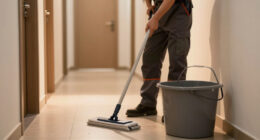
To ensure a thorough office clean, make sure your janitor checks often-overlooked areas like behind desks, under equipment, and inside storage closets. High-touch items such as keyboards, phones, and mice should also be sanitized regularly. Don’t forget to inspect behind or underneath heavy furniture and in corners where dust can hide. If you keep these spots in mind, you’ll create a cleaner, healthier workspace. Keep going to discover all the hidden spots that might be missed.
Key Takeaways
- Clean behind and underneath desks, printers, and heavy machinery to remove hidden dust and debris.
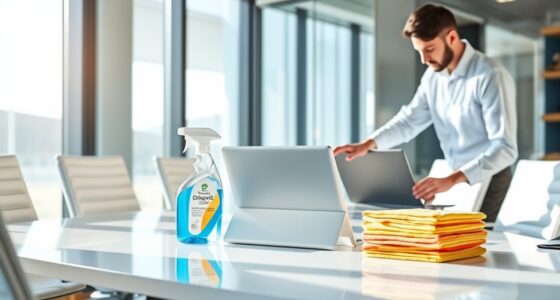
- Wipe down high-touch areas like keyboards, mice, phones, and door handles regularly.
- Inspect and clean storage closets, supply shelves, and corners to prevent dust accumulation.
- Pay attention to less obvious spots such as behind monitors, under chairs, and in hard-to-reach corners.
- Use appropriate cleaning agents and tools to avoid damaging electronics and delicate surfaces.
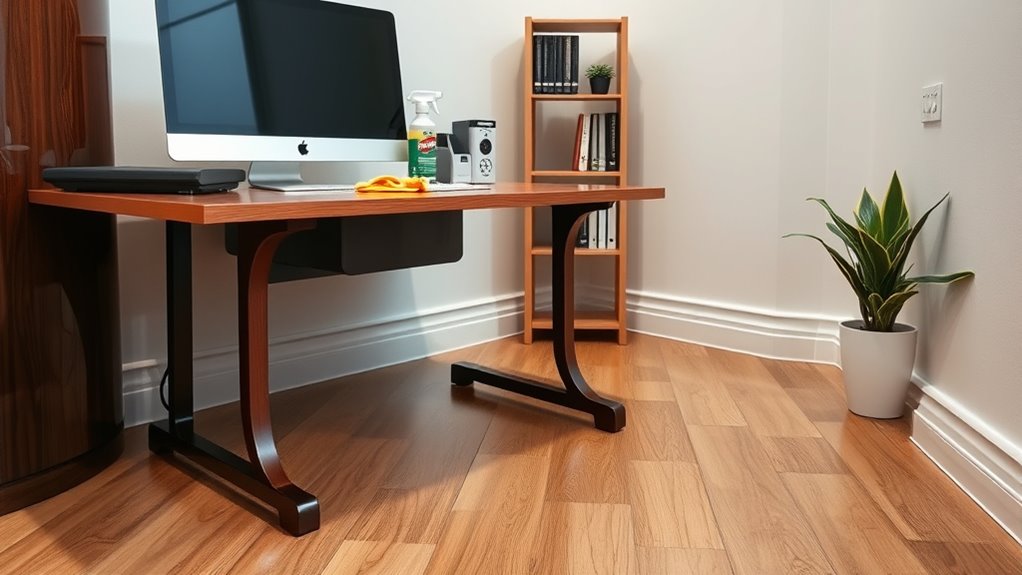
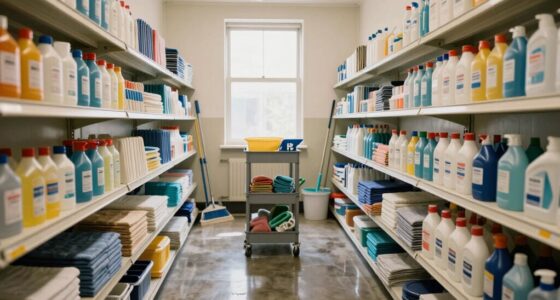
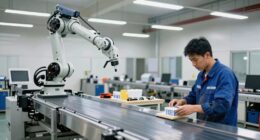
Keeping your office clean is essential for creating a productive and healthy work environment. When it comes to maintaining a spotless space, it’s easy to overlook certain areas, especially around industrial equipment and employee workspaces. These zones are critical because they directly impact safety, efficiency, and overall cleanliness. If you want to ensure nothing slips through the cracks, you need to be diligent about inspecting these areas regularly. Industrial equipment, such as printers, copiers, and specialized machinery, can accumulate dust, ink residue, or debris that can interfere with their operation. A quick wipe-down of surfaces, keyboard areas, and vents not only prolongs equipment lifespan but also reduces the risk of malfunctions. Many janitorial staff might focus on visible surfaces like desks and floors but forget to clean behind or underneath heavy machinery that’s often tucked away in corners. Regularly check and clean these hard-to-reach spots to prevent dust buildup and ensure that your equipment functions properly. Using the right cleaning agents is vital to avoid damaging delicate surfaces or electronics. Your employee workspace also demands close attention. It’s more than just cleaning desks; it’s about creating a space where employees feel comfortable and motivated. Often, cluttered desks or neglected areas can harbor germs, allergens, and dirt, which can impact health and productivity. Make it a routine to sanitize keyboards, mice, and phone receivers, as these are high-touch items that can harbor bacteria. Clear out trash and sanitize surfaces daily, especially in shared workspaces. Also, don’t forget to examine less obvious areas like under desks, chair wheels, and behind monitors. These spots tend to accumulate dust and crumbs, which can attract pests or cause allergies. Keeping these areas clean not only enhances the work environment but also helps maintain a professional appearance. In addition, don’t overlook storage spaces and supply closets. These areas often become dumping grounds for miscellaneous items, and dust can settle on forgotten supplies. Regularly organize and wipe down shelves to prevent dust and mold development. When cleaning around industrial equipment and employee workspaces, use appropriate cleaning agents that won’t damage sensitive electronics or machinery. Proper training for janitorial staff on handling such equipment is vital to avoid accidental damage. When routine inspections and cleaning protocols include these often-missed spots, you considerably reduce the risk of health issues, equipment failure, and clutter. Keeping these areas pristine demonstrates your commitment to a safe, efficient, and welcoming environment. Ultimately, a meticulous approach to cleaning every corner and equipment piece will foster a healthier, more productive workplace for everyone.

BISSELL SpinWave Hard Floor Expert Corded Spin Mop Cleaner, 20393
- Deep Cleaning Power: Effortless tough mess removal with spin mop
- Safe for All Floors: Protects wood, tile, and linoleum surfaces
- Targeted Spray Dispenser: Press-button for precise cleaning solution
As an affiliate, we earn on qualifying purchases.
Frequently Asked Questions
How Often Should High-Touch Surfaces Be Disinfected?
You should disinfect high-touch surfaces daily to prevent germs from spreading. Regular cleaning helps keep your workspace safe and healthy. Incorporate hand sanitizer stations nearby to encourage frequent use, especially after touching shared objects. Additionally, consider air purification systems to reduce airborne bacteria. By maintaining a consistent cleaning schedule, you create a cleaner environment, reducing the risk of illness and ensuring everyone feels comfortable in your office.
What Cleaning Supplies Are Safest for Sensitive Office Environments?
When choosing cleaning supplies for sensitive office environments, you should prioritize eco friendly products and allergy safe cleaners. These options minimize harsh chemicals, reducing health risks and allergic reactions. Look for labels that specify eco friendliness and allergy safety. Using these supplies guarantees a healthier workspace for everyone while maintaining cleanliness. Always follow manufacturer instructions for safe and effective use, and consider consulting professionals for tailored recommendations.
How Can I Ensure My Janitor Covers All Hidden Spots?
To guarantee your janitor covers all hidden spots, you should implement thorough janitor training that highlights overlooked areas like under desks, behind furniture, and vents. Create a detailed cleaning schedule that specifies tasks and frequency, helping your janitor stay organized and consistent. Regular inspections and checklists can also help identify missed spots, ensuring every nook and cranny gets proper attention and your office remains spotless.
What Are Common Overlooked Areas During Office Cleaning?
You might overlook areas like air vents, behind furniture, or under desks, where dust buildup often conceals. Don’t forget to check high-touch surfaces, baseboards, and light fixtures, which can harbor dirt and germs. Regularly inspecting these spots ensures thorough cleaning. By paying attention to overlooked areas like air vents and dust buildup spots, you keep your office healthier, cleaner, and more inviting for everyone.
How Do I Train Staff for Proper Cleaning Techniques?
To train staff for proper cleaning techniques, focus on clear, hands-on staff training that emphasizes key areas and proper methods. Show them how to clean effectively, avoid missing spots, and use the right products. Encourage questions and provide ongoing feedback. Regularly review cleaning procedures, update training as needed, and reinforce their importance. Proper staff training guarantees thorough cleaning and helps prevent overlooked spots in your office.
Conclusion
Now, with this checklist in hand, you’re equipped to spot what’s often overlooked. While shining floors and disinfected desks create a clean workspace, it’s the hidden corners and overlooked spots that truly make a difference. Don’t let the mundane slip by unnoticed—because in cleanliness, every detail counts. When you pay attention to both the obvious and the hidden, you create an environment that’s not only tidy but also healthier and more welcoming.