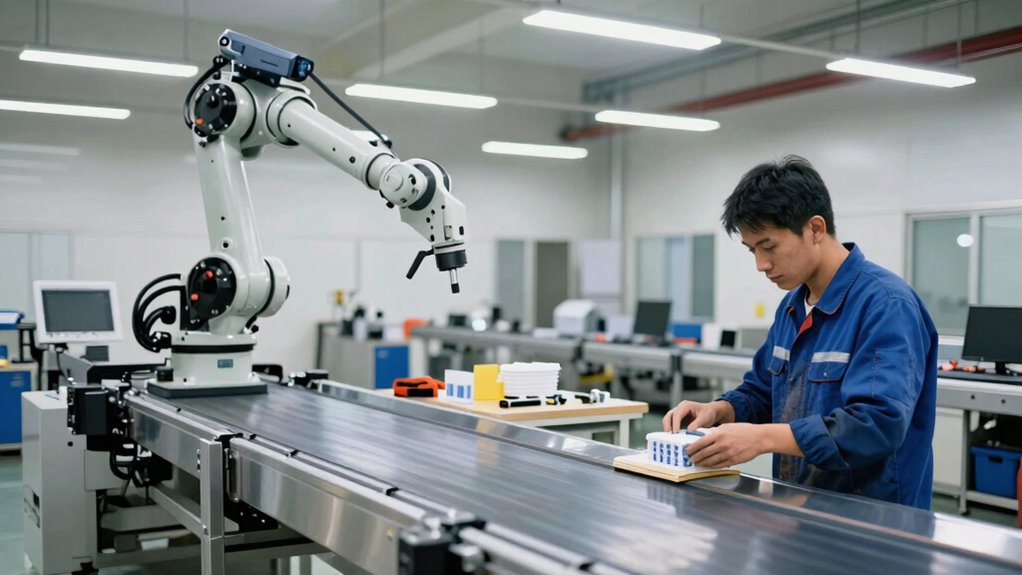

Upgrading to a stronger machine doesn’t always mean faster service because performance depends on more than just hardware. If your software isn’t optimized or workflows are inefficient, the new hardware won’t improve speed much. Network issues and automation delays can also slow things down, even with more processing power. To truly boost performance, you need to address these underlying factors too. Keep exploring to discover how to unleash your system’s full potential.
Key Takeaways
- Hardware upgrades alone don’t improve speed if software, workflows, or network issues remain unoptimized.
- Increased processing power can be offset by automation delays or unrefined processes.
- Bottlenecks like slow database queries or inefficient code limit performance gains from stronger machines.
- System performance depends on holistic improvements, including software, automation, and infrastructure, not just hardware.
- Monitoring and addressing underlying system inefficiencies are essential for realizing true speed enhancements.

Have you ever assumed that upgrading to stronger machines automatically speeds up your service? It’s a common belief—more powerful hardware should mean faster processing, better performance, and quicker results. But in reality, it’s not always that straightforward. Sometimes, despite investing in high-end servers or faster processors, you notice little to no improvement in your overall service speed. That’s because many factors influence performance, and hardware upgrades alone don’t guarantee a smoother, faster user experience. One key aspect to contemplate is automation delays. When you implement new systems or expand your infrastructure, automation processes often become more complex. These processes, while designed to streamline tasks, can introduce delays if not properly optimized. For instance, automated workflows might require additional validation steps, or new scripts may not be perfectly tuned for the upgraded hardware. Instead of speeding things up, these automation delays can create bottlenecks, nullifying the benefits of stronger machines. As a result, users might experience longer wait times or inconsistent service, despite the underlying hardware improvements.
Moreover, focusing solely on hardware ignores the importance of optimizing your user experience. Better hardware can’t fix poor software design or inefficient workflows. If your applications aren’t optimized for performance, or if your network infrastructure isn’t robust enough, the speed gained from stronger machines won’t translate into tangible improvements for users. In fact, a faster machine can sometimes expose underlying issues like slow database queries, unoptimized code, or network latency, making these problems more evident rather than resolving them. This means that before you rush into hardware upgrades, you need to evaluate and refine your software and process workflows. Ensuring that your systems are designed for efficiency will make the most of your new hardware, instead of just adding more capacity that sits idle or is underutilized. Additionally, understanding how automation delays can impact overall performance is crucial for making meaningful improvements. Recognizing the role of system bottlenecks and addressing them alongside hardware upgrades can lead to more effective results. It’s also worth noting that hardware limitations can sometimes create a false sense of progress if underlying issues aren’t addressed first. Furthermore, system monitoring can help identify hidden inefficiencies that hardware upgrades alone cannot resolve.
A comprehensive approach, considering both hardware and software optimization, is essential for truly enhancing service speed. Ultimately, the relationship between hardware strength and service speed isn’t linear. Upgrading your machines is just one piece of the puzzle. To genuinely improve service speed, you must address automation delays, streamline workflows, and enhance your overall user experience. Otherwise, you risk pouring resources into hardware that doesn’t deliver the expected results. Remember, the goal isn’t just faster machines but a faster, smoother experience for your users. When you align hardware improvements with process and software optimization, you’ll see real progress—and your service will truly feel faster, not just on paper but in every interaction.
system performance monitoring tools
As an affiliate, we earn on qualifying purchases.
As an affiliate, we earn on qualifying purchases.
Frequently Asked Questions
How Do Software Limitations Affect Machine Performance?
Software limitations can substantially impact machine performance by creating hardware bottlenecks. If your software isn’t optimized, it may not utilize the full potential of your hardware, leading to slower processing speeds. Inefficient code, outdated algorithms, or poor resource management can cause delays, regardless of how powerful your machine is. To improve performance, focus on software optimization, ensuring your programs run smoothly and effectively leverage your hardware’s capabilities.
Can Employee Training Impact Service Speed More Than Equipment?
Yes, employee training can impact service speed more than equipment. When you focus on employee motivation and skill development, staff become more efficient and confident, often outperforming hardware improvements. Well-trained employees handle tasks faster, troubleshoot issues quickly, and adapt to new processes seamlessly. This creates a smoother workflow, ultimately delivering faster service. So, investing in your team’s growth directly boosts performance, sometimes more than upgrading machines.
What Role Does Maintenance Play in Machine Efficiency?
Maintenance plays a vital role in machine efficiency by preventing breakdowns and guaranteeing smooth operation. You should leverage predictive analytics to identify potential issues before they escalate. Additionally, ergonomic design reduces wear and tear on parts, extending machine lifespan. Regular maintenance combined with these strategies keeps your equipment running at peak performance, minimizing downtime, and ultimately, boosting service speed. Proper care guarantees your machines perform at their best, regardless of their strength.
Are There Cost Benefits to Upgrading Machines Versus Process Changes?
Upgrading machines can offer cost benefits if a thorough cost analysis shows long-term savings, but process changes might be more economical upfront. Use upgrade strategies to determine whether investing in new equipment reduces downtime and maintenance costs or if optimizing existing processes improves efficiency without significant expenses. Consider both options carefully, balancing initial costs against potential gains, to choose the most cost-effective solution for your operation.
How Does Customer Demand Variability Influence Service Speed?
Think of customer demand as a river that constantly shifts its course. When demand fluctuates, your service speed can slow down, despite stronger machines. Customer expectations rise with demand spikes, stretching your capacity. You need flexibility, not just power, to keep pace. By adjusting processes, you can respond swiftly to demand fluctuations, ensuring your service remains smooth and satisfying, even when the current of customer expectations changes unpredictably.
Conclusion
Remember, a powerful engine isn’t always the key to quick service. Sometimes, it’s like a race car stuck in first gear—designed for speed but held back by unseen barriers. As you navigate the race, recognize that smoother, smarter systems often outperform mere strength. Think of a delicate ballet, where finesse and coordination outshine brute force. So, don’t just chase the biggest machine—seek the right one, tuned for harmony and efficiency, to truly speed up your success.