When choosing a moisture meter, consider your needs. Pin meters use two pins to measure moisture at specific depths, making them great for detailed analysis but invasive to surfaces. Pinless meters scan surfaces non-destructively, ideal for delicate materials and quick checks. Both types serve important roles in cleaning and restoration. To make the best choice for your projects, understanding their differences is key — and there’s more to discover if you keep exploring.
Key Takeaways
- Pin meters provide precise moisture readings at specific depths, ideal for targeted inspections.
- Pinless meters scan surface moisture non-invasively, suitable for delicate or finished materials.
- Non-destructive testing with pinless meters prevents surface damage during assessments.
- Understanding the differences helps restoration teams select the right tool for efficiency and accuracy.
- Modern moisture meters combine traditional and advanced technologies for environmentally responsible restoration practices.
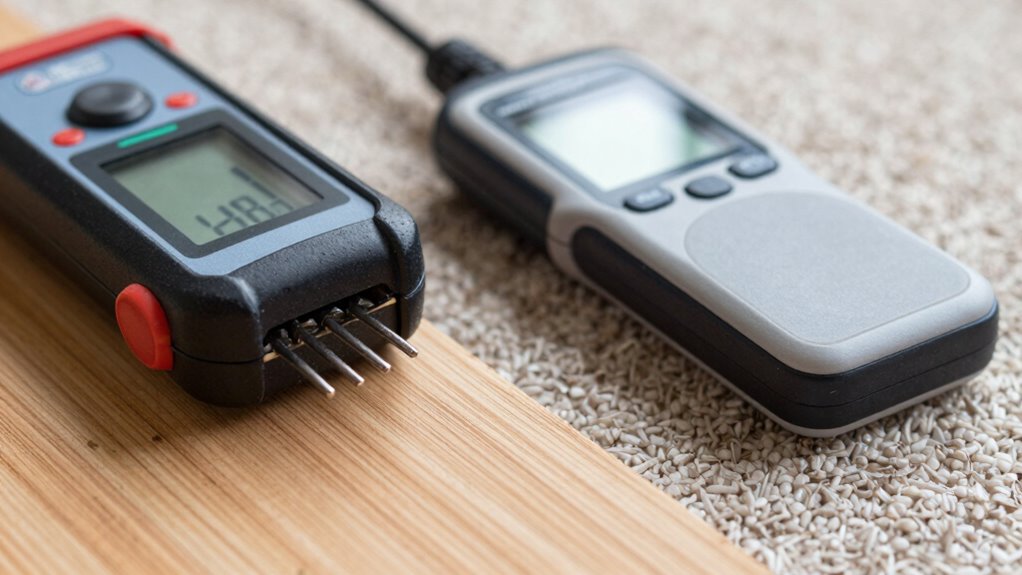
When choosing a moisture meter for cleaning and restoration work, understanding the difference between pin and pinless models is essential. Both types serve the purpose of detecting moisture levels, but they do so in unique ways that can considerably influence your workflow and results. Pin-type meters use two pins that penetrate the material’s surface, measuring the resistance between them to determine moisture content. In contrast, pinless meters employ electromagnetic sensors that scan the surface without damaging it, making them ideal for delicate materials or finished surfaces. Recognizing these differences helps you select the right tool for each job, ensuring accuracy and efficiency. Modern moisture meters have evolved from invasive techniques, offering non-destructive options that save time and preserve material integrity. As you compare pin and pinless models, think about how historical practices inform current technology—pin meters, for example, have roots in traditional resistance measurements, while pinless models leverage electromagnetic principles developed over decades. This evolution reflects a broader shift toward environmental impact considerations; using non-invasive tools reduces waste and minimizes damage to surfaces, aligning with sustainable restoration practices. Non-destructive testing methods like these contribute to more environmentally responsible restoration workflows by reducing waste and damage. Additionally, advancements in sensor technology continue to enhance the precision and usability of both pin and pinless moisture meters.
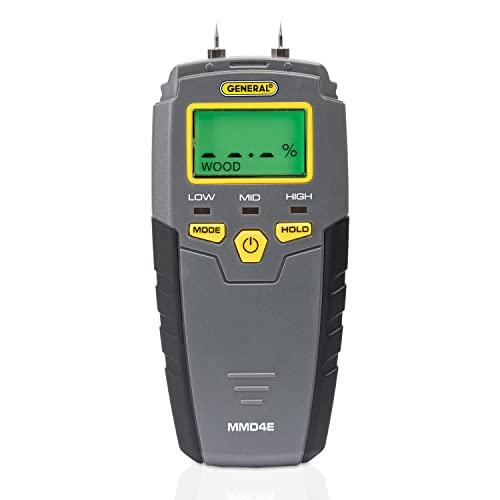
General Tools MMD4E Digital Moisture Meter, Water Leak Detector, Moisture Tester, Pin Type, Backlit LCD Display With Audible and Visual High-Medium-Low Moisture Content Alerts, Grays
HUMIDITY SENSOR: Our handy meter tool can quickly determine what level of remediation is needed to keep your…
As an affiliate, we earn on qualifying purchases.
As an affiliate, we earn on qualifying purchases.
Frequently Asked Questions
Can Moisture Meters Detect Mold or Bacteria Growth?
Moisture meters can’t directly detect mold or bacterial growth. They measure moisture levels in materials, which can indicate conditions conducive to mold and bacteria, but they don’t identify these contaminants themselves. For mold detection and bacterial growth assessment, you need specialized tools like air quality tests or surface sampling. Monitoring moisture helps you identify areas at risk, but confirming mold or bacteria requires specific testing methods.
How Often Should Moisture Meters Be Calibrated?
You should calibrate your moisture meter at least once a year to guarantee accuracy. Regular calibration frequency depends on how often you use it and the environmental conditions it’s exposed to. Follow maintenance tips like storing it in a cool, dry place and keeping the sensors clean to maintain performance. Periodic calibration checks, especially before critical projects, help guarantee reliable readings and extend your device’s lifespan.
Are There Specific Moisture Meters for Different Materials?
Are there specific moisture meters for different materials? Absolutely. Material-specific sensors ensure accurate readings for wood, drywall, or carpet. You should also consider calibration frequency to keep your meter reliable. Using the right meter with appropriate sensors makes your moisture measurements more precise, reducing errors in restoration work. Always select a device tailored for your material types, and regularly calibrate to maintain measurement accuracy and guarantee successful results.
Can Moisture Meters Be Used Underwater?
Moisture meters aren’t designed for underwater measurements, so you shouldn’t use them submerged. However, waterproof devices can handle exposure to water, making them suitable for wet environments, but usually not fully submerged use. If you need to measure moisture underwater, look for specialized underwater moisture meters. These waterproof devices are crafted specifically for aquatic conditions, ensuring accurate readings without damaging the device.
What Safety Precautions Are Needed When Using Moisture Meters?
When using moisture meters, you need to follow safety protocols and proper device handling to prevent accidents. Always read the manufacturer’s instructions before operating the device, wear protective gear if necessary, and make certain your hands are dry to avoid electrical shocks. Keep the device away from water or moisture when not in use, and regularly inspect it for damage. Prioritizing safety guarantees accurate readings and keeps you safe during moisture detection.

Pinless Moisture Meters Non-Invasive Digital Wood Moisture Tester Water Leak Detector for Wall,Lumber, building,Firewood,Humidity Tester
Non-Invasive Moisture Detection: Quickly measure moisture up to 19mm deep without damaging walls or surfaces. Works great on…
As an affiliate, we earn on qualifying purchases.
As an affiliate, we earn on qualifying purchases.
Conclusion
Ultimately, mastering moisture meter methods makes your measurements more accurate and your restorations more reliable. Whether you choose pin or pinless, your diligence delivers detailed data and dampness detection. By balancing the boldness of probing with the ease of scanning, you can confidently conquer moisture challenges. Remember, precision and patience paint the perfect picture of dry, damage-free surfaces—making your work not just effective, but exceptional. Keep calibrating, keep conquering, and keep creating clean, confident spaces.

Klein Tools ET140 Pinless Moisture Meter for Non-Destructive Moisture Detection in Drywall, Wood, and Masonry; Detects up to 3/4-Inch Below Surface
WATER LEAK DETECTOR detects relative moisture content from leaks and flooding
As an affiliate, we earn on qualifying purchases.
As an affiliate, we earn on qualifying purchases.

General Tools Digital Moisture Meter MMD7NP – Humidity Sensor- Pinless and Non-Invasive
WOOD MOISTURE METER: Prevent water and moisture build-up with our humidity reader. It can quickly determine what level…
As an affiliate, we earn on qualifying purchases.
As an affiliate, we earn on qualifying purchases.