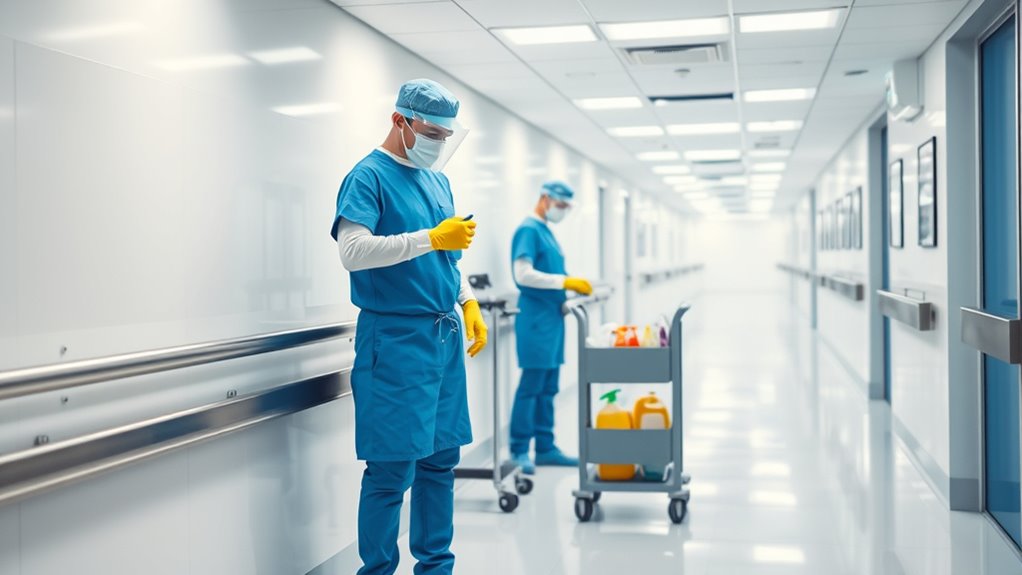

Hospital cleaning protocols are essential for keeping medical environments safe and infection-free. You’ll find staff using EPA-approved disinfectants on high-touch surfaces like bed rails, doorknobs, and medical equipment. Critical areas such as operating rooms are cleaned more frequently with advanced technology, while regular zones follow standard schedules. Inspections and documentation ensure protocols are adhered to consistently. If you want to understand how these procedures effectively prevent infections, keep exploring the key strategies hospitals use to stay sanitized.
Listen free for 30 days with Audible
Thousands of audiobooks and originals — cancel anytime.
As an affiliate, we earn on qualifying purchases.
Key Takeaways
- Hospitals implement strict cleaning protocols targeting high-touch surfaces with EPA-approved disinfectants to prevent infection spread.
- Staff are trained to follow standardized procedures for effective manual cleaning and proper disinfectant application.
- Critical areas like operating rooms and isolation wards undergo more frequent and thorough cleaning schedules.
- Regular inspections and documentation ensure compliance, accountability, and continuous quality improvement.
- Advanced disinfection technologies complement manual cleaning to maintain a safe, hygienic hospital environment.
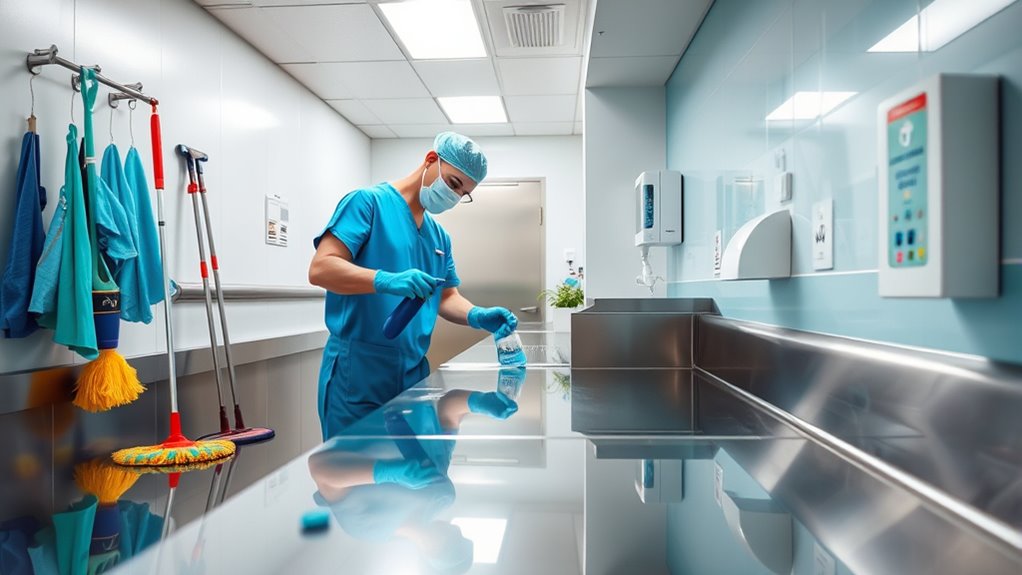
Hospital cleaning protocols are essential for maintaining a safe and hygienic environment for patients, staff, and visitors. When you walk into a healthcare facility, you might not see the meticulous efforts behind the scenes, but they’re critical to preventing infections and ensuring high patient safety. Cleaning standards in hospitals aren’t arbitrary; they’re carefully designed procedures that target the most common sources of contamination. You need to understand that every surface, from bed rails to doorknobs, can harbor harmful bacteria and viruses if not properly disinfected. That’s why adherence to strict cleaning protocols isn’t just a matter of appearance—it’s a crucial component of infection control.
You play a key role in upholding these standards by following established cleaning procedures. Hospitals typically use a combination of manual cleaning and advanced disinfection technologies to eliminate pathogens. Staff members are trained to use EPA-approved disinfectants that are effective against a broad spectrum of microbes. These disinfectants are applied systematically, focusing on high-touch surfaces that see frequent contact, such as light switches, handrails, and medical equipment. When you perform these tasks, you’re directly contributing to patient safety, reducing the risk of healthcare-associated infections (HAIs). Proper cleaning isn’t just about wiping surfaces; it’s about understanding the chemistry of disinfectants and knowing how to apply them correctly to ensure maximum efficacy.
In addition, hospitals follow rigorous cleaning schedules that are tailored to different areas within the facility. Critical zones like operating rooms and isolation wards require more frequent and thorough cleaning compared to general areas. You need to be aware of these distinctions so that you can prioritize your cleaning efforts accordingly. Regular audits and inspections are conducted to verify that cleaning standards are being met consistently. When you see these checks, understand they’re in place to maintain the highest level of cleanliness, which ultimately protects everyone in the hospital. Proper documentation of cleaning activities is also essential, providing accountability and ensuring protocols are followed meticulously. Furthermore, understanding the importance of contrast ratio and other image quality factors can help maintain the clarity and effectiveness of visual displays in the facility, ensuring staff and visitors have clear information when needed.
Frequently Asked Questions
How Often Are Hospital Cleaning Protocols Reviewed and Updated?
You might wonder how often cleaning protocols are reviewed and updated. Typically, hospitals revise their cleaning schedule and protocols regularly, often annually or whenever new health guidelines emerge. These protocol revisions ensure that sanitation standards stay current with best practices. Staying informed about these updates helps you understand that hospitals prioritize a clean, safe environment, and they adapt their cleaning schedules as needed to maintain ideal hygiene and prevent infections.
What Specialized Cleaning Agents Are Used for Sensitive Equipment?
You should understand that specialized cleaning agents are vital for sensitive equipment. Disinfectant selection is carefully considered to guarantee effectiveness without damaging delicate instruments. You’ll use solutions like alcohol-based disinfectants, hydrogen peroxide, or specialized enzymatic cleaners, all designed for equipment sterilization. Proper selection helps prevent contamination, maintains equipment integrity, and guarantees patient safety, making it indispensable to follow manufacturer guidelines and hospital protocols for ideal results.
How Do Hospitals Ensure Staff Compliance With Cleaning Procedures?
Think of staff compliance like a well-choreographed dance, where every step matters. You guarantee this harmony through thorough staff training, teaching the importance of meticulous cleaning. Compliance monitoring acts as your vigilant spotlight, catching missteps early. Regular audits and feedback keep everyone in sync, reinforcing best practices. This way, your team stays committed, making cleanliness second nature and safeguarding patient health with unwavering dedication.
Are There Differences in Cleaning Protocols Between Patient Rooms and Operating Theaters?
You’ll notice that patient room sanitation and operating theater sterilization follow different protocols. In patient rooms, cleaning focuses on general disinfecting to reduce infection risks, while operating theaters require strict sterilization procedures for all surfaces and equipment. You must abide by these specific protocols to ensure safety, with operating theaters demanding higher standards due to invasive procedures. This difference helps prevent infections and ensures patient safety across the hospital.
How Is Biohazard Waste Safely Managed During Cleaning Processes?
You need to handle biohazard waste carefully during cleaning, as improper disposal can pose serious risks. You’ll use hazardous disposal methods, ensuring contaminated waste is sealed in leak-proof, labeled containers. Waste containment is critical; it prevents exposure and cross-contamination. Always follow strict protocols, wear protective gear, and double-check that waste is properly contained before removal. This meticulous process keeps everyone safe and maintains the integrity of the healthcare environment.
Conclusion
By following these cleaning protocols, you’re building an invisible shield around patients and staff, turning the hospital into a fortress of health. Every wipe, disinfectant, and careful step acts like bricks in a wall, blocking the spread of germs. Remember, your diligence isn’t just routine—it’s the heartbeat of a safe, sanitized environment. Stay vigilant, because in this fight against infection, your actions are the strongest defense you can provide.
Flea & tick season Picks
flea and tick prevention
As an affiliate, we earn on qualifying purchases.