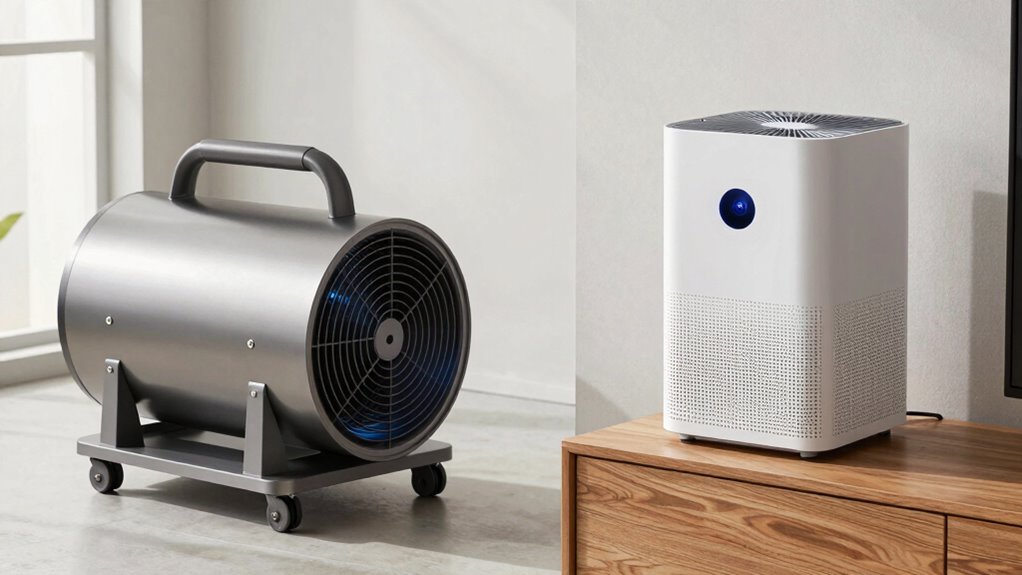

Air scrubbers and air purifiers serve different needs. Air scrubbers are large, heavy-duty units designed for commercial spaces, removing a wide range of airborne pollutants with HEPA and activated carbon filters. Air purifiers are smaller, portable devices best suited for homes and personal use, mainly targeting allergens, dust, and odors. To choose the right one, understand your environment and air quality goals—exploring these differences further can help you make the best decision.

Get cleaning gear delivered free — and shop member deals
- Fast, free delivery on millions of items
- Access to Prime Big Deal Days deals on October 6–7
- Prime Video, Amazon Music and more included
Key Takeaways
- Air scrubbers are large, heavy-duty units designed for continuous use in industrial or commercial environments, while air purifiers are smaller, portable devices for homes.
- Air scrubbers often include additional filters like activated carbon to remove chemicals and odors, unlike most residential air purifiers.
- Air scrubbers process high volumes of air rapidly, suitable for large spaces, whereas air purifiers target specific rooms or small areas.
- Air scrubbers are built for long-term, heavy-duty operation in demanding settings, while air purifiers focus on convenience and quick setup for personal use.
- Both use HEPA filters, but their design and capacity serve different scales and types of airborne contaminant removal.

When it comes to improving indoor air quality, understanding the differences between air scrubbers and air purifiers is essential. While both devices aim to clean the air you breathe, they operate differently and serve distinct purposes. Air scrubbers are typically used in larger, commercial applications where removing a wide range of airborne contaminants is necessary. They often feature HEPA filtration, which is highly effective at capturing tiny particles like dust, pollen, mold spores, and even some bacteria and viruses. This makes air scrubbers ideal for environments such as hospitals, industrial sites, or large office buildings, where maintaining air purity is critical. Their design allows for high airflow rates, ensuring they can process significant volumes of air quickly, which is crucial in spaces with high occupancy or pollution levels.
In contrast, air purifiers are generally smaller, consumer-grade devices designed for personal or residential use. They focus on filtering out common indoor pollutants—dust, pet dander, smoke, and odors—using various filtration technologies, with HEPA filters being among the most popular. HEPA filtration in air purifiers captures 99.97% of particles as small as 0.3 microns, providing effective protection against airborne allergens and irritants. While air purifiers are excellent for improving air quality in homes or small offices, they aren’t typically built for the scale or heavy-duty demands of commercial applications. Instead, they offer a convenient solution for individuals looking to reduce indoor allergens and maintain cleaner air within a specific room or space.
Another key difference lies in their design and capacity. Air scrubbers are larger, more robust units built to handle continuous operation over extended periods. They often come equipped with additional features like activated carbon filters to absorb odors or chemicals, making them versatile for various industrial needs. Commercial applications benefit from these features because they help create healthier indoor environments in settings prone to airborne contaminants, such as construction sites or manufacturing plants. On the other hand, air purifiers are more portable and user-friendly, designed for quick setup and maintenance. They’re perfect for everyday use in homes, bedrooms, or small offices where space is limited, and ease of use is a priority. Additionally, understanding the different filtration capacities of these devices can help users select the most appropriate solution for their specific needs.
As an affiliate, we earn on qualifying purchases.
Frequently Asked Questions
Can Air Scrubbers Eliminate Odors Effectively?
Yes, air scrubbers can eliminate odors effectively. They use air filtering technology to trap and remove odor-causing particles from the air, making your space smell fresher. By pulling in contaminated air and filtering out pollutants and odors, air scrubbers provide efficient odor removal. Keep in mind, for ongoing odor control, regular maintenance and choosing a scrubber with carbon filters can enhance the results.
Are Air Purifiers Safe for Pets and Children?
Yes, air purifiers are generally safe for pets and children when you choose models with proper certifications. They help improve air quality, providing relief for pet allergies and reducing airborne irritants. Regular air quality monitoring guarantees your space stays safe. Always follow manufacturer guidelines, avoid devices with harmful chemicals, and keep filters clean. This way, you create a healthier environment for your loved ones while effectively managing pet allergy symptoms.
How Loud Are Industrial Air Scrubbers During Operation?
Imagine a gentle whisper in a noisy room—that’s roughly the noise level of industrial air scrubbers during operation. They typically emit decibel ratings between 60 and 80, comparable to a conversation or background music. While they’re louder than household air purifiers, they aren’t disruptive and are designed to balance effective air cleaning with manageable noise levels, making them suitable for industrial settings without overwhelming the environment.
Do Air Purifiers Require Frequent Filter Replacements?
Yes, air purifiers do require frequent filter replacements. Depending on the filter type and usage, the filter lifespan can range from a few months to a year. Regular maintenance frequency is essential to keep your air purifier functioning effectively. You should check and replace filters as recommended by the manufacturer, especially if you notice reduced airflow or odors, to guarantee peak air quality and prolong the device’s life.
Can Both Devices Operate Simultaneously for Better Air Quality?
Yes, you can operate both devices simultaneously for better air quality synergy. They complement each other by targeting different contaminants, enhancing overall air purification. Just make certain device compatibility with your space and maintenance requirements. Using an air scrubber alongside an air purifier can improve indoor air quality effectively, especially in allergy-prone or polluted environments, giving you cleaner, healthier air with minimal effort.
Conclusion
Now that you know the key differences between air scrubbers and purifiers, you’re better equipped to choose the right device for your space. But here’s the twist—there’s more to ponder than just their functions. What if the perfect solution isn’t just one or the other? Stay tuned, because uncovering the hidden benefits and potential surprises could change how you breathe indoors forever. Are you ready to make the smartest choice for your air quality?
Fall Picks
fall essentials
As an affiliate, we earn on qualifying purchases.