
To prevent repeat moisture problems, follow the proper restoration equipment sequence: start with water extraction to remove standing water, then use air filtration to eliminate airborne contaminants and mold spores. Next, deploy dehumidifiers and air movers to thoroughly dry surfaces and reduce residual moisture. This strategic order guarantees moisture doesn’t get trapped and causes future issues. Understanding and applying this sequence helps protect your property long-term—if you want to learn more, keep exploring the essential steps involved.

Get cleaning gear delivered free — and shop member deals
- Fast, free delivery on millions of items
- Access to Prime Big Deal Days deals on October 6–7
- Prime Video, Amazon Music and more included
Key Takeaways
- Follow the proper sequence: water extraction, air filtration, then drying to ensure complete moisture removal.
- Use targeted equipment like HEPA filters and air scrubbers after water removal to eliminate airborne contaminants.
- Deploy dehumidifiers and air movers after filtration to accelerate drying and prevent residual moisture.
- Address all moisture sources early to prevent mold growth and structural damage over time.
- Implement a strategic, step-by-step approach to reduce repeat moisture issues and ensure long-term property protection.
Ever wondered what the proper order is when setting up restoration equipment? It’s a critical question because the sequence you follow can determine whether you eliminate moisture effectively or face repeat problems. The first step is always focused on water extraction. You want to prioritize removing as much standing water as possible before moving on to other processes. Using powerful water extraction tools, like wet vacuums and extractors, helps you pull out the bulk of moisture from carpets, floors, and structures. The quicker you remove water, the less it seeps into hidden spaces, reducing the risk of mold growth and long-term damage. Once you’ve extracted the water, it’s time to turn your attention to air filtration.
Start with water extraction to prevent mold and long-term damage. Proper order ensures effective drying and lasting results.
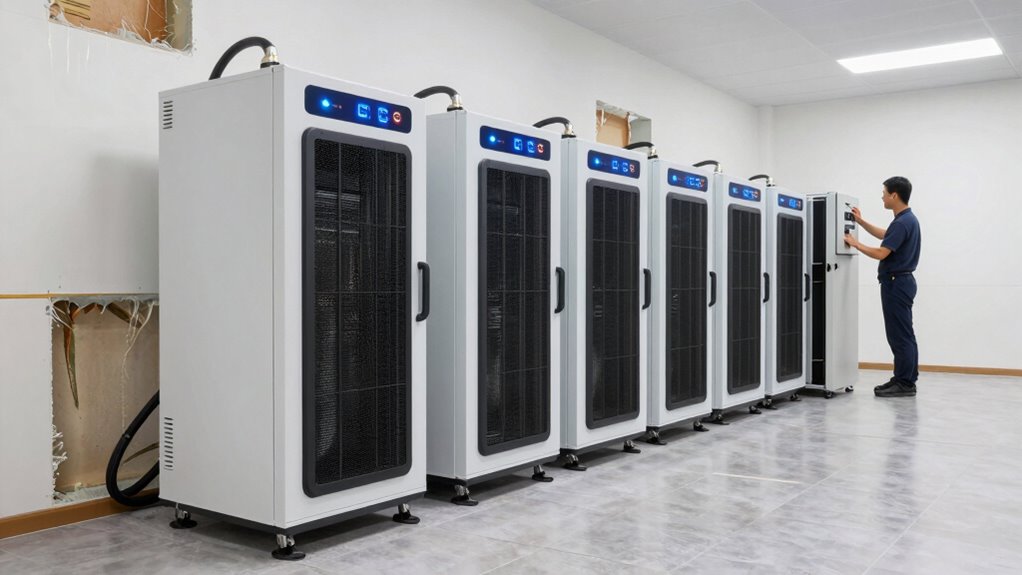
Air filtration plays an essential role in the drying process. After water extraction, airborne contaminants and mold spores can become airborne, posing health risks and potentially causing secondary damage. Proper air filtration helps remove these particles, improving indoor air quality and preventing the spread of moisture-related issues. Setting up high-efficiency particulate air (HEPA) filters and air scrubbers ensures that contaminated air is cleaned continuously during the drying process. These units also help to accelerate moisture evaporation by circulating dry, clean air throughout the affected space. It’s critical to position air filtration equipment strategically—near the source of moisture and in airflow pathways—to maximize their effectiveness. Proper placement ensures that moist air is replaced with dry, filtered air, supporting faster and more thorough drying. Incorporating moisture control strategies into your setup can further enhance the overall effectiveness of the process. Additionally, understanding how airflow management impacts drying efficiency can lead to better outcomes. Implementing effective ventilation techniques can help optimize the drying environment and prevent stagnant moist air.
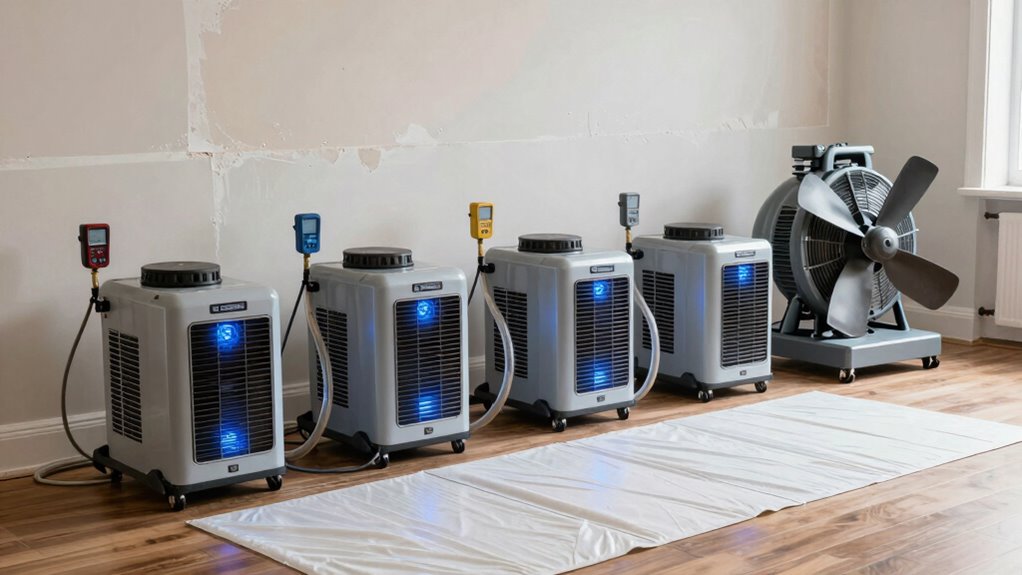
After water extraction and air filtration, you should focus on deploying drying equipment like dehumidifiers and air movers. Dehumidifiers remove residual moisture from the air, which speeds up the drying process and prevents mold from settling in. Air movers increase air circulation, helping to dry surfaces and materials more evenly. The sequence—water extraction first, then air filtration, followed by drying—is designed to prevent moisture from lingering and creating a conducive environment for mold growth or structural damage. Properly following this sequence is essential for moisture mitigation and ensuring long-term results. Skipping or misordering these steps can lead to trapped moisture, which might cause repeat problems down the line. Understanding the importance of proper restoration equipment sequence is essential for effective moisture control.
In essence, understanding and following this sequence guarantees that moisture is thoroughly removed the first time. You’re not just drying surfaces; you’re eliminating the root causes of ongoing issues. Properly sequencing your restoration equipment saves time, reduces costs, and protects the integrity of the property—making sure moisture problems don’t return. When you approach restoration with this order in mind, you’re setting up for a successful, long-lasting result that keeps your space safe and dry.
As an affiliate, we earn on qualifying purchases.
Frequently Asked Questions
How Long Does the Entire Restoration Process Typically Take?
The entire restoration process typically takes anywhere from a few days to a week, depending on the extent of damage. You’ll see that proper equipment calibration and crew training are vital for efficiency. When your team is well-trained, and equipment is correctly calibrated, it speeds up drying and repairs. This guarantees moisture problems don’t recur, ultimately saving time and preventing additional issues down the line.
What Are the Signs of Hidden Moisture Behind Walls?
You might suspect hidden moisture behind walls when you notice a musty smell or peeling paint. During wall inspection, look for discolored or warped drywall. Moisture detection tools reveal hidden dampness that’s invisible to the eye. Keep an eye on any unexplained stains or soft spots. If you notice these signs, it’s essential to act quickly, as undetected moisture can lead to mold growth and structural damage.
Can DIY Restoration Equipment Be Effective for Small Leaks?
DIY restoration equipment can be effective for small leak solutions if you’re careful and understand the limits of your tools. For minor leaks, using high-quality sealants, portable fans, and moisture meters can help dry out the area and prevent further damage. However, keep in mind that DIY effectiveness depends on leak size; larger or hidden leaks may require professional assessment and specialized equipment to guarantee complete drying and prevent mold growth.
How Often Should Equipment Be Maintained During Restoration?
You should maintain your restoration equipment daily, focusing on proper calibration and moisture monitoring. Check calibration regularly to guarantee accurate readings, especially for moisture meters and sensors. Conduct moisture monitoring consistently to track progress and detect any lingering issues. Clean equipment after each use to prevent contamination. Regular maintenance helps prevent repeat moisture problems, ensuring your tools perform reliably and that the restoration process stays effective and efficient.
What Are the Safety Precautions When Operating Restoration Equipment?
When operating restoration equipment, you should always follow safety protocols, like wearing personal protective gear and guaranteeing proper ventilation. Keep equipment calibrated regularly to prevent malfunctions. Before starting, inspect all cords and connections for damage, and never bypass safety features. Stay alert, and follow manufacturer instructions closely. Proper training is essential to avoid accidents, protect yourself, and assure effective, safe operation throughout the restoration process.
Conclusion
By following the proper restoration equipment sequence, you set the stage for a thorough, effective drying process. Each step builds on the last, creating a chain that’s only as strong as its weakest link. Skipping or rushing can leave moisture lurking, like shadows in the corners of a room. Remember, a well-planned sequence isn’t just a procedure—it’s the shield that prevents repeat problems. After all, in restoration, precision isn’t just recommended—it’s your best defense.
Fall Picks
fall essentials
As an affiliate, we earn on qualifying purchases.