Electrostatic sprayers don’t provide perfect, complete coverage as many believe. While they use charged particles to improve surface adhesion, they still require proper technique and understanding of features like spray patterns and battery life. Relying solely on the sprayer’s technology can lead to missed spots or uneven coverage. To truly optimize disinfecting, it’s essential to understand how these tools work and their limitations—more insights will help you get better results every time.
Key Takeaways
- Electrostatic sprayers do not automatically guarantee 100% coverage; proper spray patterns and technique are essential.
- Wide spray patterns cover large surfaces quickly but may use more disinfectant, affecting efficiency.
- Focused streams are effective for hard-to-reach areas but require strategic targeting for thorough coverage.
- Battery life impacts coverage duration; a longer-lasting battery ensures more comprehensive disinfection without interruption.
- Understanding device features and proper usage dispels the myth of automatic perfect coverage and enhances disinfecting effectiveness.
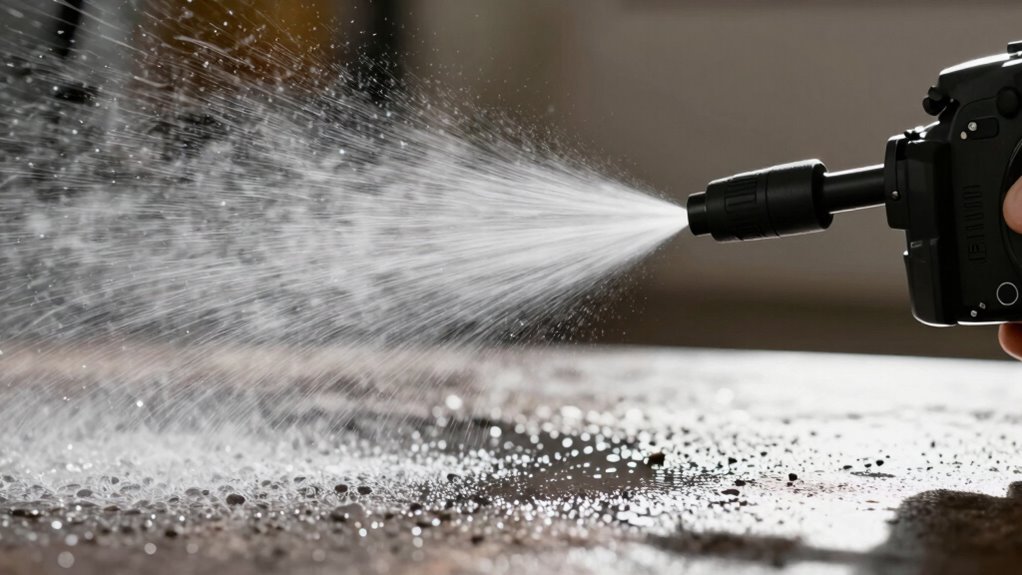
Have you ever wondered how electrostatic sprayers make disinfecting more efficient? The secret lies in their ability to deliver a fine mist of disinfectant that clings to surfaces, even those that are hard to reach. But to truly understand their effectiveness, you need to look beyond the surface and consider how features like battery life and spray patterns play essential roles. When you’re using an electrostatic sprayer, the battery life determines how long you can operate it before needing a recharge. If the battery drains quickly, you might find yourself rushing through a cleaning task or needing multiple units to finish a job. Longer battery life means you can cover larger areas without interruptions, making the process smoother and more efficient. This is especially important in environments that require frequent disinfecting, such as hospitals or large commercial spaces. A device with a solid battery life ensures you won’t lose momentum halfway through your work, saving you time and effort. Additionally, understanding the charging cycles of your sprayer can help you maintain optimal performance over the long term.
Spray patterns are equally indispensable to how well an electrostatic sprayer performs. When you activate the device, it emits a charged mist that wraps around surfaces, providing thorough coverage. The spray pattern determines how evenly and extensively this mist disperses across different surfaces. Some sprayers offer wide, fan-shaped patterns, perfect for covering large flat areas quickly. Others provide more focused streams, which are better suited for detailed or hard-to-reach spots. Understanding the spray pattern helps you target your disinfectant more effectively, ensuring that no area is missed. It also influences how much disinfectant you use—wider patterns can reduce waste by covering more surface with less product. Conversely, narrow patterns give you more control when disinfecting specific spots. When selecting an electrostatic sprayer, considering the variety of spray patterns it offers can make a tangible difference in your cleaning efficiency. It allows you to adapt to different environments and surfaces, ensuring comprehensive coverage without excessive product use.
In essence, the effectiveness of electrostatic sprayers hinges on more than just their ability to electrically charge disinfectant particles. Battery life and spray patterns are key factors that influence how well you can perform your disinfecting tasks. A device with a long-lasting battery ensures you won’t be constantly recharging or swapping units, while versatile spray patterns give you control over coverage and application. Mastering these features helps dispel the myth that electrostatic sprayers automatically cover everything perfectly. Instead, understanding their capabilities allows you to optimize their use, making your disinfecting process faster, more thorough, and ultimately more effective.
Frequently Asked Questions
How Do Electrostatic Sprayers Compare to Traditional Sprayers?
Electrostatic sprayers outperform traditional sprayers in coverage accuracy and spraying efficiency. You’ll notice they evenly coat surfaces, reaching hard-to-access areas, reducing waste and labor time. Unlike traditional methods, electrostatic technology charges particles, causing them to cling to surfaces more effectively. This means you get more thorough coverage with less solution, making your cleaning or disinfecting faster, more effective, and cost-efficient.
Are Electrostatic Sprayers Safe for All Surfaces?
Electrostatic sprayers are generally safe for most surfaces, but you should always check surface compatibility and material safety first. Some delicate materials, like certain plastics or electronics, might be damaged by the disinfectant or the spray’s charge. Always follow the manufacturer’s guidelines and test a small, inconspicuous area before applying widely. This way, you guarantee safe, effective coverage without risking surface damage.
What Maintenance Is Required for Electrostatic Sprayers?
Did you know that proper maintenance can extend your electrostatic sprayer’s lifespan by up to 30%? To keep it running smoothly, regularly check the battery life and charge it as needed. Also, clean the nozzle after each use to prevent clogs and guarantee even coverage. Don’t forget to inspect seals and replace parts if they show signs of wear—this keeps your sprayer efficient and reliable.
How Effective Are Electrostatic Sprayers Against Viruses?
Electrostatic sprayers are highly effective against viruses because they provide excellent surface penetration, ensuring disinfectants reach hard-to-access areas. This technology enhances virus resistance by evenly coating surfaces, reducing the chance of virus survival. You’ll see quicker, more thorough disinfection, especially on irregular or complex surfaces. Keep in mind, proper maintenance and correct disinfectant use are essential for maximum results, maximizing the sprayer’s ability to combat viruses effectively.
Can Electrostatic Sprayers Be Used Indoors Safely?
Like Icarus soaring too close to the sun, you can safely use electrostatic sprayers indoors if you follow proper guidelines. Make certain indoor safety by ventilating the area and wearing protective gear. Check surface compatibility to prevent damage, and keep the sprayer at the right distance. When used correctly, electrostatic sprayers offer effective coverage without risking harm, making them a reliable tool for indoor disinfection.
Conclusion
Electrostatic sprayers might seem like magic wands, promising perfect coverage with a flick of your wrist. But remember, they’re just tools—like a brush in a painter’s hand. To truly protect your space, understand their limits and don’t rely solely on their allure. Like a garden needs both water and sunlight, effective disinfection needs careful planning and proper technique. Use these sprayers wisely, and you’ll guarantee your environment stays safe and truly covered.