

To effectively schedule custodial work, analyze your team’s workload, considering cleaning protocols and staff skill levels. Assign complex tasks to experienced members and routine chores to newer staff, ensuring a balanced distribution that prevents burnout. Incorporate ongoing training and adjust schedules based on workload fluctuations and hygiene requirements. By continuously refining your approach, you’ll create a flexible, efficient plan that maintains high standards and keeps your team productive. Keep exploring to discover more tips for optimizing your scheduling strategies.

Get cleaning gear delivered free — and shop member deals
- Fast, free delivery on millions of items
- Access to Prime Big Deal Days deals on October 6–7
- Prime Video, Amazon Music and more included
Key Takeaways
- Develop detailed schedules aligning cleaning tasks with team members’ skill levels and experience.
- Incorporate cleaning protocols to define task priorities, frequency, and responsibilities clearly.
- Allocate complex or specialized tasks to experienced staff, while routine tasks are assigned to less experienced team members.
- Include regular training sessions to update skills, adapt schedules, and address evolving hygiene standards.
- Use continuous feedback and evaluations to adjust workloads, optimize efficiency, and prevent staff burnout.
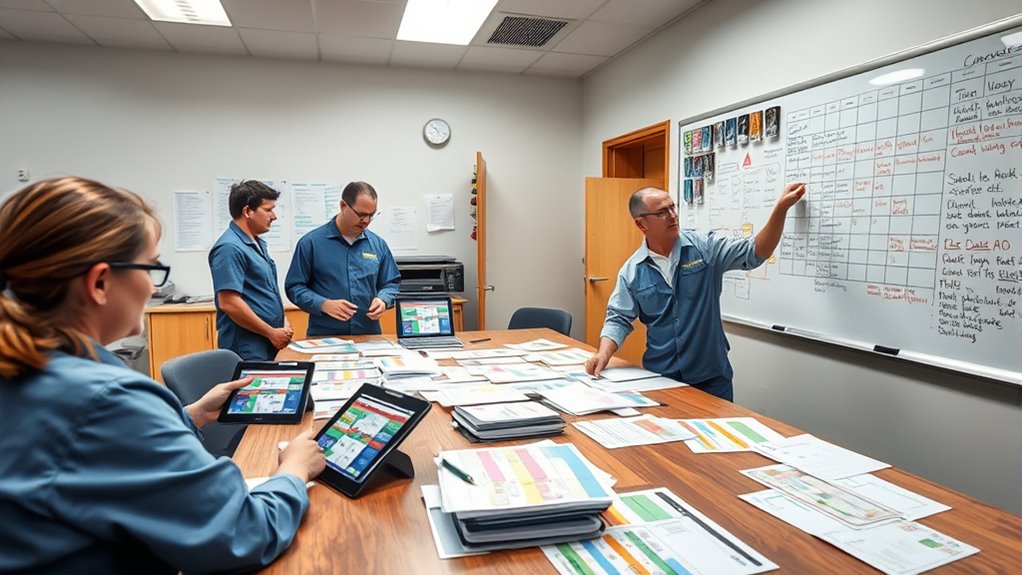
Effective scheduling is vital to guarantee custodial teams can meet cleaning demands without burnout or inefficiency. When you develop a clear schedule, you ensure that each team member knows their responsibilities and can work efficiently within designated timeframes. To do this effectively, you need to integrate thorough cleaning protocols into your planning. These protocols serve as the blueprint for what needs to be cleaned, how it should be done, and the frequency of tasks. By aligning your schedule with these protocols, you prevent unnecessary overlaps or missed areas, which can lead to inefficiencies or compromised hygiene standards.
Staff training plays an indispensable role in this process. When your custodial team is well-trained, they understand the importance of adhering to cleaning protocols and can execute their tasks more confidently and quickly. Proper training ensures that everyone on the team is familiar with the latest cleaning techniques, safety procedures, and the correct use of cleaning supplies and equipment. This familiarity reduces the time spent figuring out procedures or correcting mistakes, which streamlines the overall workload. When scheduling, consider each team member’s skill level and training status. For instance, more experienced staff can handle complex tasks or train new hires, while less experienced team members can focus on routine cleaning. This approach optimizes the workload and minimizes downtime caused by errors or confusion.
Furthermore, integrating staff training into your scheduling process encourages continuous improvement. Regular refresher courses or updates on cleaning protocols keep everyone aligned with current standards, ensuring efficiency and safety. You might also schedule periodic evaluations to identify areas where additional training can improve performance or speed. Additionally, awareness of scientific skepticism regarding some cleaning claims can help you make more informed decisions about protocols and products. When you’re deliberate about combining cleaning protocols with ongoing staff training, you create a more adaptable and competent team. This adaptability allows you to adjust schedules based on workload fluctuations or new hygiene requirements, ensuring you meet demands without overburdening your staff.
custodial work scheduling software
As an affiliate, we earn on qualifying purchases.
As an affiliate, we earn on qualifying purchases.
Frequently Asked Questions
How Do You Handle Last-Minute Custodial Staffing Emergencies?
When a last-minute staffing emergency arises, you act quickly by evaluating available personnel and reallocating shifts to cover urgent needs. You maintain a pool of on-call staff for emergency staffing, ensuring they’re ready to step in. You communicate promptly with your team, explaining the situation and adjusting schedules as necessary. This proactive approach minimizes disruptions and ensures custodial services continue smoothly despite last-minute scheduling challenges.
What Technology Tools Assist in Custodial Scheduling Efficiency?
You can boost custodial scheduling efficiency by using digital rostering and scheduling apps. These tools streamline shift planning, allow quick adjustments, and improve communication with your team. With features like real-time updates and automated notifications, you’re always aware of staffing changes. Implementing these technologies helps you manage staffing more effectively, reduces errors, and guarantees your custodial team stays well-organized and prepared for any last-minute emergencies.
How Is Custodial Workload Balanced Across Different Facility Types?
Imagine your custodial team as a well-orchestrated symphony, each facility type playing its part. You balance workload by facility prioritization, focusing more effort on high-traffic or critical areas, and adjust staff allocation accordingly. Smaller or less busy facilities receive targeted support, ensuring efficiency. This dynamic approach keeps every space spotless, prevents burnout, and maintains a harmonious flow across all types of facilities.
What Training Is Required for Custodial Team Schedulers?
To effectively schedule your custodial team, you need training certification in scheduling software to optimize workflows. This training covers essential skills like managing shifts, assigning tasks, and tracking progress. You should also learn best practices for balancing workloads across different facility types. With proper certification and hands-on experience with scheduling software, you’ll improve efficiency, ensure coverage, and maintain high cleanliness standards in all your facilities.
How Do Custodial Schedules Adapt to Seasonal Demand Changes?
You adapt custodial schedules to seasonal demand changes by analyzing seasonal staffing needs and adjusting workload accordingly. During peak seasons, increase staffing levels to handle higher workloads, and reduce staffing during slower periods to save resources. Regularly monitor cleaning demands and communicate with your team to make certain workload adjustments are effective. Flexibility and proactive planning help you maintain efficient operations while responding to seasonal fluctuations seamlessly.
Conclusion
Mastering the art of scheduling is like conducting a symphony—you harmonize your custodial team’s efforts, turning chaos into a well-orchestrated flow. When you balance workloads thoughtfully, you create a seamless rhythm that keeps spaces clean and spirits high. Remember, a well-planned schedule isn’t just a timetable; it’s the heartbeat of a thriving custodial operation. Embrace the rhythm, and watch your team perform at its finest, every time.
Fall Picks
fall essentials
As an affiliate, we earn on qualifying purchases.