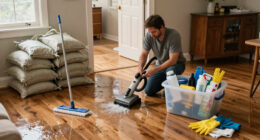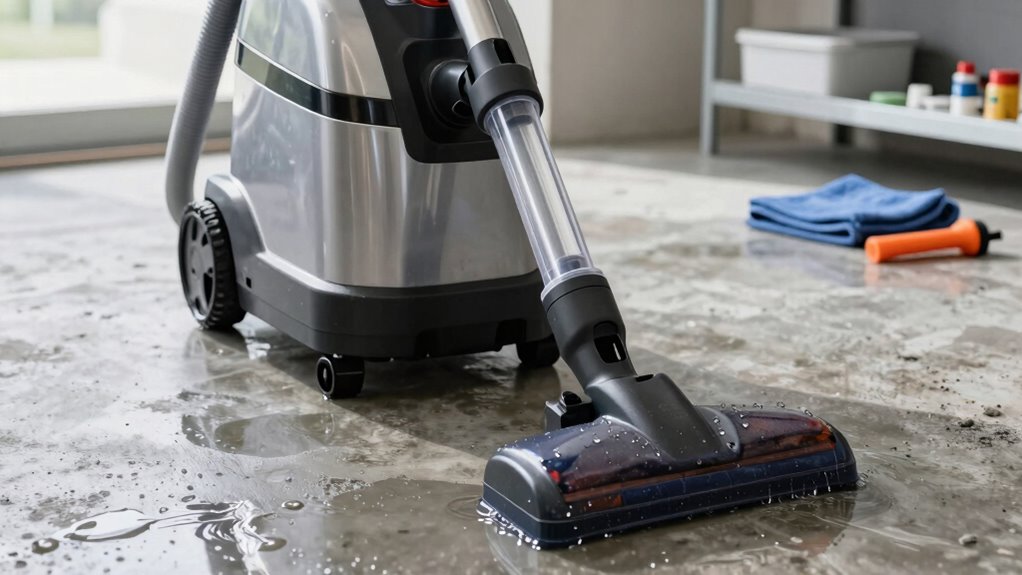

To recover water fast without wicking back, use a high-quality water extraction vacuum with strong suction to thoroughly remove moisture from surfaces. Move systematically across affected areas, overlapping passes to prevent missed spots. Combine the extraction with proper drying methods like fans and dehumidifiers to speed up drying and reduce residual moisture. Regularly maintain your equipment for ideal performance. If you want to learn more about perfecting your technique, keep exploring how to optimize your water recovery process.

Get cleaning gear delivered free with Prime
- Fast, free delivery on millions of items
- Prime Video, Amazon Music and more included
- Member-only deals all year
Key Takeaways
- Use high-suction, commercial-grade water extraction vacuums to maximize moisture removal and speed up recovery.
- Move systematically and overlap passes to ensure thorough extraction and prevent missed spots.
- Regularly empty tanks and check filters to maintain optimal suction power during operation.
- Follow extraction with dehumidifiers and air movers to accelerate drying and prevent wicking back.
- Ensure deep moisture is removed to avoid residual dampness that can cause secondary wicking and damage.
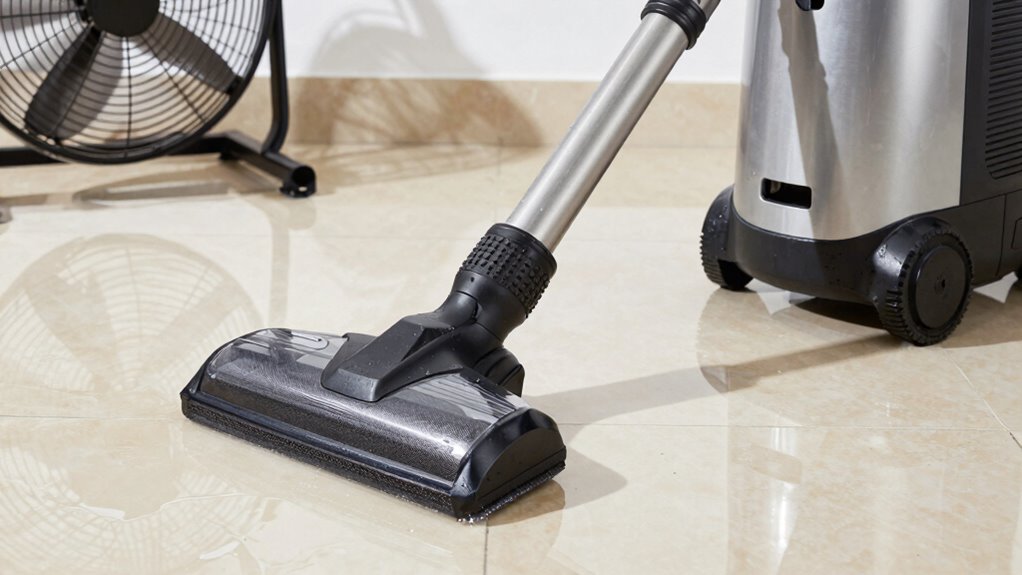
Water extraction vacuums are powerful tools designed to efficiently remove excess water from carpets, floors, and other surfaces. When you’re dealing with water damage or flooding, quick action is essential to minimize long-term damage. Using a water extraction vacuum allows you to perform effective carpet drying by removing a significant amount of moisture in a short period. This step is crucial because the longer moisture remains trapped in the fibers or beneath the surface, the higher the risk of mold growth and structural deterioration. By focusing on moisture removal early, you can prevent costly repairs and restore your space faster.
Water extraction vacuums quickly remove moisture, preventing mold and structural damage after flooding.
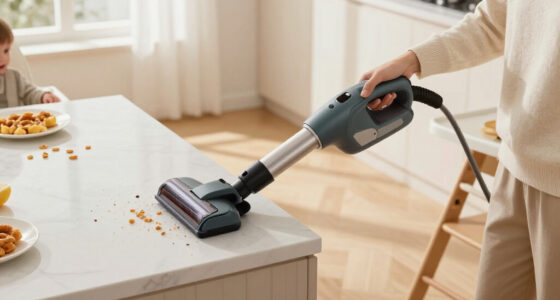
To get the best results, you need to operate the vacuum properly, ensuring it has enough suction power to pull water out of deep within the carpet fibers or porous materials. As you work, it’s important to move systematically across the affected area, overlapping each pass to prevent missed spots. This method guarantees thorough moisture removal and reduces the chances of wicking back. Wicking back happens when residual moisture trapped deep within the material rises back to the surface after initial drying, causing secondary damage and persistent odors. To avoid this, you should follow up with secondary drying techniques, like using fans or dehumidifiers, to guarantee that all moisture is eliminated completely. Proper maintenance of the vacuum, including regular filter checks and tank emptying, also plays a critical role in maintaining optimal suction and preventing wicking issues.
Additionally, the type of water extraction vacuum you use plays a vital role. Commercial-grade models typically have higher suction capabilities and larger recovery tanks, enabling you to process larger areas more efficiently. Investing in or renting a high-quality unit can considerably speed up the drying process and minimize wicking issues. Always remember to empty the tank frequently and check the filters to maintain ideal suction. Proper maintenance ensures maximum moisture removal and prolongs the equipment’s lifespan.
While operating the vacuum, don’t forget to pay attention to the surrounding environment. Using air movers and dehumidifiers in conjunction with the water extraction process accelerates carpet drying and enhances moisture removal. This combined approach helps to prevent secondary damage and mold growth. Keep in mind that quick response, thorough moisture removal, and appropriate drying techniques are key to recovering water fast and avoiding wicking back. When you act swiftly and systematically with the right tools, you’ll restore your space more effectively, saving time and money in the process. Additionally, understanding the importance of proper equipment maintenance can significantly improve your drying outcomes.
high suction water extraction vacuum
As an affiliate, we earn on qualifying purchases.
As an affiliate, we earn on qualifying purchases.
Frequently Asked Questions
Can Water Extraction Vacuums Be Used on Wet Carpets Safely?
Yes, water extraction vacuums are safe for wet carpets if you check carpet safety and vacuum compatibility first. Make certain your vacuum is designed for water recovery to prevent damage and wicking back. Use it carefully, avoiding excessive pressure that could harm the carpet fibers. Always follow the manufacturer’s instructions, and test a small area first to confirm safety and effectiveness. This way, you protect your carpet while efficiently removing water.
How Often Should I Clean My Water Extraction Vacuum’s Filter?
Think of your vacuum’s filter as the gatekeeper of efficiency. You should clean your filter regularly, ideally after every few uses or weekly if you’re cleaning large areas. Implement a consistent cleaning schedule to prevent clogs and maintain peak suction. Regular filter maintenance ensures your water extraction vacuum works at its best, preventing wicking back and prolonging its lifespan. Keep that filter spotless, and your machine will reward you with powerful performance.
Are There Specific Models Best for Large Water Spills?
For large water spills, you should consider industrial models or heavy-duty equipment designed for high-volume extraction. These vacuums feature robust motors and larger tanks, allowing you to recover water quickly without wicking back. Look for units with powerful suction and durable construction, guaranteeing they handle extensive spills efficiently. Investing in a specialized industrial model ensures faster cleanup, minimizes downtime, and keeps your space dry and safe.
What Maintenance Is Required to Prevent Wicking Back?
Did you know that improper maintenance can cause up to 30% of wicking back issues? To prevent this, you should regularly check your vacuum’s filters and replace or clean them as needed. Additionally, inspect the hoses for cracks or blockages, ensuring a tight seal. Proper filter maintenance and hose inspection keep water from wicking back, helping you recover water quickly and efficiently without setbacks.
Can I Use a Water Extraction Vacuum for Outdoor Water Removal?
Yes, you can use a water extraction vacuum for outdoor cleaning if it’s designed with water resistance. Make certain the vacuum’s motor and electrical components are protected from moisture, and use it on flat, stable surfaces to avoid damage. Outdoor water removal works best with models that have durable seals and water-resistant features, making cleanup efficient without risking wicking back or equipment failure. Always check your vacuum’s specifications first.
Conclusion
Now that you’ve discovered the secrets to quick water recovery, you’re well on your way to restoring your space efficiently. With the right vacuum technique, you can minimize lingering issues and keep things looking their best. Remember, patience and the right tools make all the difference. Keep these tips in mind, and you’ll handle any water situation smoothly, ensuring your environment stays fresh and inviting. You’ve got this—just take it one step at a time.
Halloween Picks
halloween
As an affiliate, we earn on qualifying purchases.