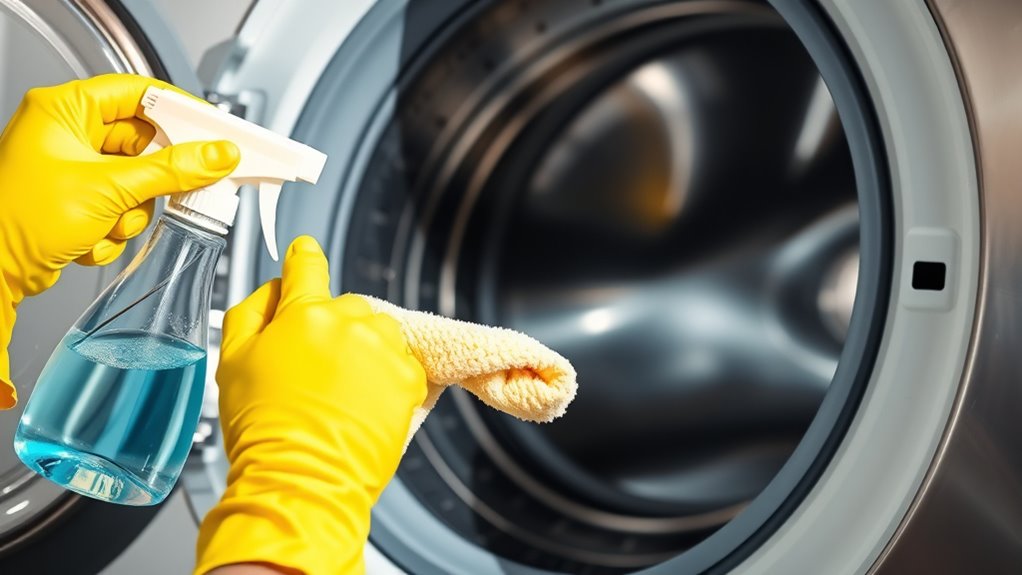
To sanitize your washing machine, start with an empty hot water cycle and add two cups of white vinegar to kill germs and remove residue. Follow with a second cycle using half a cup of baking soda to deodorize and tackle any grime. Regularly clean the detergent dispenser and door seals, then leave the door open after cycles to dry out moisture, preventing mold. Keep your appliance fresh and efficient by mastering these simple steps—more tips await if you continue exploring.

Get cleaning gear delivered free — and shop member deals
- Fast, free delivery on millions of items
- Access to Prime Big Deal Days deals on October 6–7
- Prime Video, Amazon Music and more included
Key Takeaways
- Run an empty hot water cycle with white vinegar to disinfect the drum and eliminate bacteria.
- Perform a deep clean with baking soda to deodorize and remove grime from hard-to-reach areas.
- Regularly clean the detergent dispenser and door seals with vinegar or mild cleaning solutions.
- Leave the washing machine door open after cycles to allow thorough drying and prevent mold buildup.
- Use high-efficiency washing machine cleaners monthly for ongoing sanitation and maintenance.
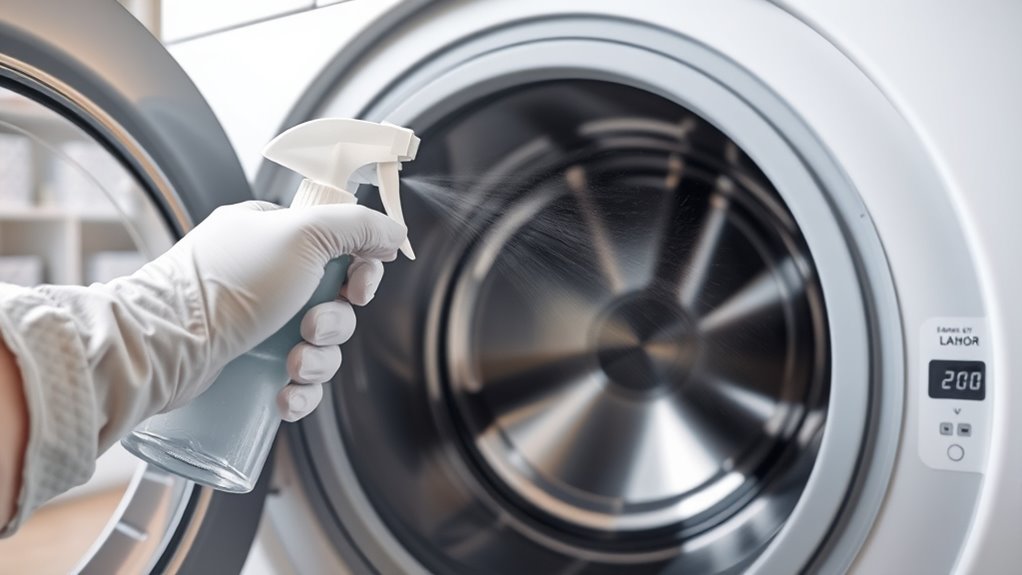
Have you ever wondered if your washing machine needs cleaning? Over time, detergent residue can build up inside the drum and other components, creating a breeding ground for bacteria and mold. This buildup not only affects the cleanliness of your laundry but can also lead to unpleasant odors and even skin irritation. Regularly sanitizing your washing machine is essential to keep it functioning efficiently and to prevent mold from forming, especially in hidden areas where moisture tends to linger.
To start, run an empty hot water cycle with no laundry inside. Add two cups of white vinegar directly into the drum or the detergent dispenser. Vinegar is a natural disinfectant that helps break down detergent residue and dissolves soap scum that collects in the machine’s crevices. After the cycle completes, wipe down the door seal, gasket, and rubber lining with a clean cloth dipped in a mixture of equal parts water and vinegar. These areas are prone to mold buildup, especially if you tend to leave the door closed after washing. Regularly cleaning them helps prevent mold and keeps your washer smelling fresh. Proper cleaning techniques are vital for maintaining your appliance’s longevity and hygiene.
Next, run a second hot water cycle, this time with half a cup of baking soda added directly into the drum. Baking soda is excellent for deodorizing and further breaking down any leftover detergent residue. It also helps scrub away grime that may have accumulated in hard-to-reach spots. If your washing machine has a cleaning cycle option, you can use that instead, following the manufacturer’s instructions. After completing the cycle, leave the door open for a few hours to allow the interior to dry thoroughly. Proper drying prevents moisture from lingering inside, which is indispensable for mold prevention.
For ongoing maintenance, consider using high-efficiency (HE) washing machine cleaners once a month. These products are formulated to target soap scum, detergent residue, and mold spores. Always follow the instructions on the packaging to avoid overuse or damage. Remember, keeping the detergent dispenser clean is also indispensable. Remove it periodically and scrub away any buildup with an old toothbrush dipped in vinegar or a mild cleaning solution. This prevents residue from clogging the dispenser and stops bacteria from thriving in those moist environments.
washing machine cleaning tablets
As an affiliate, we earn on qualifying purchases.
As an affiliate, we earn on qualifying purchases.
Frequently Asked Questions
How Often Should I Sanitize My Washing Machine?
You should disinfect your washing machine at least once a month to maintain proper hygiene. Following regular cleaning schedules helps prevent mold, bacteria, and odors from building up. If you wash heavily soiled items or use your machine frequently, consider increasing the frequency recommendations to every two weeks. Staying consistent with sanitizing ensures your washer stays fresh and your laundry stays clean, protecting your family’s health.
Can I Use Bleach to Sanitize My Washing Machine?
Yes, you can use bleach to sanitize your washing machine, but you should prioritize bleach safety. Use a cup of regular bleach and run a hot water cycle with no laundry inside. If you’re concerned about harsh chemicals, consider alternative disinfectants like white vinegar or commercial washing machine cleaners. Always follow manufacturer instructions and guarantee proper ventilation. Regularly sanitizing helps eliminate mold, bacteria, and unpleasant odors effectively.
Is It Necessary to Sanitize a Front-Load and Top-Load Washer Differently?
Like a knight choosing armor, you should consider washer design considerations when sanitizing. Front-loaders and top-loaders differ in cleaning needs due to their structures; front-loaders may harbor more mold and require thorough door seal cleaning, while top-loaders benefit from agitator-focused sanitizing. Use appropriate methods for each, ensuring you address their unique vulnerabilities. Proper sanitization keeps your washer fresh, extending its lifespan and ensuring spotless laundry every time.
What Are Signs My Washing Machine Needs Sanitizing?
If you notice a musty odor, visible mold growth around the door seal, or persistent detergent residue buildup, your washing machine likely needs sanitizing. These signs indicate bacteria and mold are thriving, which can cause odors and affect laundry cleanliness. Regularly checking for these issues and cleaning your washer helps prevent mold growth and keeps it fresh and sanitary. Don’t ignore these clues—they’re your machine’s way of telling you it needs a good clean.
Are There Eco-Friendly Sanitizing Options Available?
Think of eco-friendly sanitizing options like gentle rain washing away germs. You can use biodegradable cleaners and natural disinfectants that are safe for your family and the environment. These options break down naturally and avoid harsh chemicals, making your washing machine a cleaner, greener space. Simply run an empty cycle with vinegar or natural disinfectant, and you’ll keep your machine fresh without harming the planet.
Conclusion
By regularly sanitizing your washing machine, you’re tending to the heart of your home’s freshness. Think of it as tending a garden—you must prune away the dirt and neglect to allow new growth and cleanliness to flourish. When you keep your machine clean, you’re nurturing a space where purity blooms, and bacteria fade away like shadows at dawn. Your effort transforms your laundry routine into a ritual of renewal, ensuring every load starts fresh and vibrant.
Fall Picks
fall essentials
As an affiliate, we earn on qualifying purchases.