
To clean sliding door tracks without leaving mud behind, start by vacuuming the track thoroughly with a narrow nozzle to remove loose dirt and debris. Use a stiff brush to loosen stubborn grime, then wipe with a damp cloth soaked in mild soap and water, avoiding excess moisture. For stubborn spots, gently scrub with an old toothbrush dipped in a vinegar solution. Finish by drying completely to prevent rust. Keep these tips in mind to maintain smooth operation and discover more secrets to a spotless track.

Get cleaning gear delivered free with Prime
- Fast, free delivery on millions of items
- Prime Video, Amazon Music and more included
- Member-only deals all year
Key Takeaways
- Vacuum the track thoroughly with a narrow nozzle to remove loose dirt and prevent pushing mud further inside.
- Use a stiff brush with a mild cleaning solution to scrub away grime without causing damage.
- Wipe with a damp cloth, ensuring no excess moisture remains to avoid mud residue and rust.
- For stubborn dirt, apply a vinegar and water mixture with a small brush for effective removal.
- Dry the track completely with a clean cloth to prevent moisture buildup and future mud accumulation.
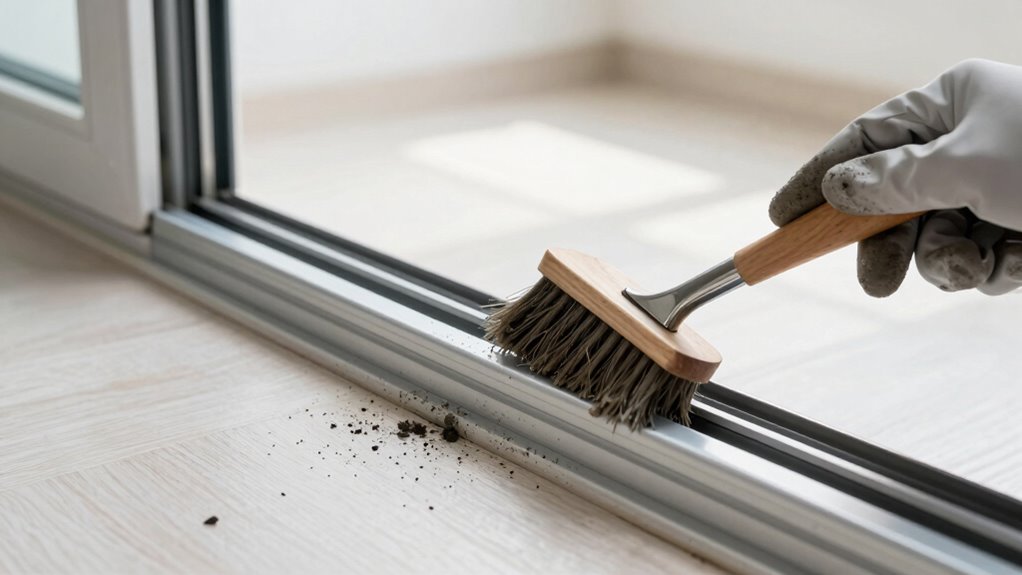
Sliding door tracks can quickly accumulate dirt, dust, and debris, making your doors stick or slide poorly. When this happens, it’s tempting to reach for any cleaning tools you have on hand, but using the wrong ones or making common mistakes can make the problem worse. The goal is to clean thoroughly without leaving behind mud or debris that could hinder smooth operation. Start by gathering the right cleaning tools— a stiff-bristled brush, a damp cloth, a vacuum with a narrow nozzle, and a mild cleaning solution or soap. Avoid using overly harsh chemicals, as they can damage the track or cause buildup over time.
Use gentle tools like a stiff brush and mild soap to keep sliding door tracks clean and smooth.
Before you begin, remove any loose dirt or debris with the vacuum. A narrow nozzle attachment works best for reaching deep into the track grooves. This step is essential because it prevents pushing dirt further into the track during cleaning. Once you’ve vacuumed, use the stiff brush to scrub the track’s surface and corners, loosening caked-on grime. Be gentle but firm, ensuring you don’t scratch or damage the material. After loosening the dirt, wipe down the track with a damp cloth soaked in a mixture of mild soap and water. Avoid using excessive water or harsh cleaning agents—these common mistakes can leave mud or excess moisture that might cause rust or damage. Incorporating regular maintenance into your cleaning routine can help prevent buildup and keep your sliding doors functioning smoothly. Additionally, scheduling routine cleanings can help you catch dirt buildup early, making each cleaning session more effective.
Many people make the mistake of rushing through the cleaning process or neglecting to dry the track afterward. Once you’ve wiped away the dirt, dry the track thoroughly with a clean, dry cloth. This prevents water from seeping into crevices and causing corrosion over time. If you notice stubborn grime in hard-to-reach spots, you can use a small brush or an old toothbrush dipped in your cleaning solution. For sticky spots or stubborn dirt, a mixture of vinegar and water can be effective, but avoid overly aggressive scrubbing, which can scratch the track’s surface. Using proper cleaning techniques can also help minimize the risk of pushing debris further into the track or creating muddy residue. Proper maintenance not only keeps the track clean but also extends the lifespan of your sliding door hardware.
Regular maintenance is key to keeping your sliding door tracks clean and functioning smoothly. Avoid the common mistake of waiting until the track is visibly dirty before cleaning—doing so makes the task more difficult and may require harsher scrubbing. Instead, clean the tracks every few months or whenever you notice resistance or sticking. Proper cleaning tools, gentle techniques, and avoiding common mistakes will guarantee your sliding doors glide effortlessly without leaving behind mud or debris. Remember, consistent care can significantly reduce the frequency and intensity of deep cleanings needed over time.
sliding door track cleaning brush
As an affiliate, we earn on qualifying purchases.
As an affiliate, we earn on qualifying purchases.
Frequently Asked Questions
How Often Should I Clean My Sliding Door Tracks?
You should clean your sliding door tracks at least once every few months to maintain smooth operation and prevent buildup. Regular door track maintenance helps prevent dirt and mud accumulation. Use effective mud removal techniques, like vacuuming debris first, then scrubbing with a brush and a cleaning solution. If you notice stubborn dirt, repeat the process. Consistent cleaning keeps your sliding door functioning well and keeps mud and grime at bay.
Can I Use a Pressure Washer on Sliding Door Tracks?
Yes, you can use a pressure washer on sliding door tracks, but beware of pressure washer risks like damaging the tracks or forcing debris further inside. To avoid this, use a low-pressure setting and keep the nozzle at a safe distance. Alternatively, opt for manual cleaning methods like a brush and mild detergent, which are safer and more effective for detailed cleaning without risking damage.
Are There Eco-Friendly Cleaning Alternatives for Door Tracks?
Yes, eco-friendly options like biodegradable cleaners and reusable cleaning tools are great choices. Think of biodegradable cleaners as the gentle giants of cleaning—tough on dirt but kind to the planet. Pair them with reusable brushes or cloths to reduce waste. This way, you keep your door tracks spotless while giving Mother Earth a helping hand, turning your cleaning routine into a sustainable act of kindness.
What Tools Are Best for Deep Cleaning Stubborn Dirt?
For deep cleaning stubborn dirt, you should use cleaning brushes and vacuum attachments. The brushes are great for scrubbing away grime stuck in corners and crevices, while vacuum attachments help remove loose debris and dirt without spreading mud. Start by vacuuming the track thoroughly with the attachments, then scrub stubborn spots with a cleaning brush dipped in eco-friendly solution. This combo guarantees your sliding door tracks get a thorough, mud-free clean.
How Can I Prevent Mud From Accumulating in the Tracks?
To prevent mud buildup and simplify track maintenance, regularly sweep and hose down the tracks, especially after rainy days. Applying a protective sealant or weather stripping can also minimize mud intrusion. Keep an eye on the weather, and clear debris promptly to avoid dirt accumulation. Consistent cleaning and preventive measures guarantee your sliding door tracks stay mud-free, making maintenance easier and extending their lifespan.
Conclusion
Now that you’ve learned how to gently clear the path for your sliding door, you can keep it gliding smoothly, almost like new. Regular maintenance guarantees nothing gets stuck in the way of your daily routine, helping your door stay in top shape without a fuss. With just a little effort, you’ll enjoy seamless operation and a tidy space—making it easier to let in the sunshine and keep things running effortlessly.
Fall Picks
fall essentials
As an affiliate, we earn on qualifying purchases.