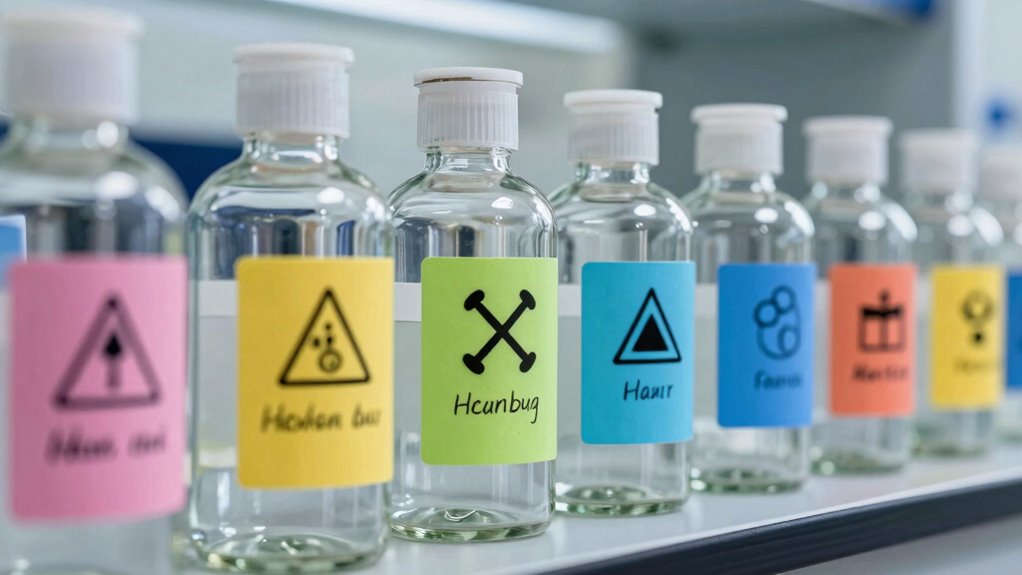

To prevent mix-ups, guarantee your chemical bottles are clearly labeled with large, legible information including the chemical name, concentration, hazard symbols, and handling instructions. Use weather- and chemical-resistant labels with durable, waterproof markers or printed labels. Place labels on flat, smooth surfaces and remove old labels before reusing bottles. Regularly inspect and update labels for clarity and damage. Keep labeling consistent, and you’ll minimize confusion—continue with this approach to master effective labeling practices.
Listen free for 30 days with Audible
Thousands of audiobooks and originals — cancel anytime.
As an affiliate, we earn on qualifying purchases.
Key Takeaways
- Use standardized labels with clear chemical names, hazard symbols, and color codes for quick identification.
- Ensure labels are weather- and chemical-resistant, with legible, large text for easy reading.
- Apply labels on flat, clean surfaces, removing old labels before re-labeling reused bottles.
- Train team members regularly on labeling standards and hazard recognition to promote consistency.
- Conduct routine inspections to replace damaged labels and verify labeling accuracy.
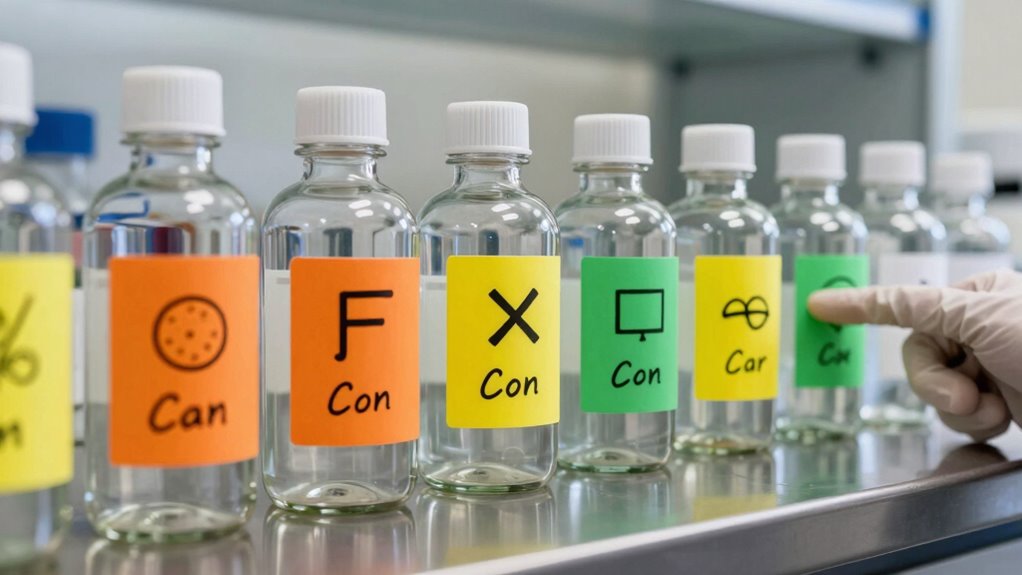
Labeling chemical bottles accurately is essential for safety and efficient laboratory management. When you follow proper safety protocols and use the right labeling materials, you minimize the risk of accidents and ensure everyone knows exactly what’s inside each container. Clear, consistent labeling helps prevent the costly and dangerous mistakes that can happen when chemicals are confused or misidentified. To achieve this, you need to understand the key components of effective labeling and the materials best suited for the task.
Start by selecting durable labeling materials designed for laboratory environments. Weather-resistant, chemical-resistant labels or tapes are ideal because they stay intact even if exposed to moisture, spills, or corrosive substances. Use waterproof markers or printed labels for legibility. Always double-check that your labels are resistant to fading or smudging over time. The goal is to create labels that remain clear and legible throughout the chemical’s use, storage, and transport. Proper label placement and chemical identification are crucial for quick recognition and safety. Incorporating standardized symbols and color codes**** can further enhance quick hazard recognition.
When creating labels, adhere to strict safety protocols. This means including all critical information such as the chemical’s name, concentration, hazard symbols, and date of receipt or preparation. Use standardized symbols and color codes where applicable, as these are universally recognized and help communicate hazards quickly. Make sure the text is large enough to read at a glance and that the layout is clean and organized. You should also include any specific handling instructions or emergency procedures directly on the label if necessary. Additionally, understanding the importance of labelling accuracy ensures that labels communicate the correct information without confusion. Proper training on label interpretation further supports labelling consistency across your team. Regularly reviewing and updating your labels is vital to accommodate any changes in chemical properties or safety information.
Applying labels properly is just as important as the content itself. Clean the bottle surface thoroughly before sticking the label to ensure adhesion and prevent peeling. Avoid placing labels over existing labels or residues, which can obscure important information. Position the label prominently on the bottle, ideally on a flat, smooth surface, so it’s easy to locate and read. In cases where bottles are reused, always remove old labels completely to prevent confusion. Regularly inspecting labels for damage or deterioration is also essential for maintaining clarity and safety. Establishing a routine for label checks can help catch issues early and maintain a safe lab environment.
Regularly review and update your labeling system to reflect any changes in chemicals or safety protocols. Train your team members on how to interpret labels correctly and emphasize the importance of maintaining accurate labeling at all times. When everyone follows consistent labeling practices, it reduces the likelihood of mix-ups and enhances overall safety. Remember, clear, well-maintained labels are a simple yet vital part of chemical safety and lab efficiency. Ensuring proper label maintenance can greatly reduce risks and improve overall laboratory safety.
chemical bottle waterproof labels
As an affiliate, we earn on qualifying purchases.
As an affiliate, we earn on qualifying purchases.
Frequently Asked Questions
What Are the Best Materials for Chemical Bottle Labels?
You should choose labels made from waterproof, chemical-resistant materials like vinyl or polyester for best label durability. These materials withstand spills, moisture, and harsh chemicals. Guarantee the labels have strong adhesive strength, so they stay securely attached even during frequent handling or cleaning. Using high-quality, durable labels helps prevent smudging or peeling, making it easier for your team to identify chemicals quickly and safely, reducing the risk of mix-ups.
How Often Should Chemical Labels Be Updated or Replaced?
Did you know that poorly maintained labels can lead to accidents, costing industries millions annually? You should update or replace chemical labels at least annually, or whenever label durability or design is compromised. Regular updates guarantee labels resist wear and tear, maintaining clarity and safety. Keep an eye on label condition and design clarity, replacing them promptly to prevent mix-ups and guarantee ongoing compliance with safety standards.
Can Digital Labels Be More Effective Than Paper Labels?
Digital labels can be more effective than paper labels because of digital integration and label customization. You can easily update information, add safety instructions, or change labels instantly without reprinting. Digital labels reduce errors and guarantee everyone sees current data. Plus, customization options allow you to tailor labels to specific chemicals or team needs. This flexibility and real-time updating streamline safety and organization, making digital labels a smarter choice for managing chemical bottles.
How Do You Handle Labeling for Hazardous Chemicals?
Did you know that improper labeling contributes to over 30% of chemical accidents? For hazardous chemicals, you should use clear, standardized labels with bold warnings, including chemical names, hazard symbols, and safety precautions. Prioritize chemical safety by ensuring label accuracy through regular checks. Use durable, weather-resistant labels to prevent fading or peeling, and train your team to recognize and understand these labels, reducing risks and ensuring safety compliance.
What Are Common Labeling Mistakes to Avoid?
You should avoid common labeling mistakes like inconsistent label formats, neglecting to use clear, readable fonts, and ignoring color coding standards. Guarantee label consistency across all bottles so team members can quickly identify contents. Use color coding effectively to differentiate chemicals, but don’t rely solely on color—include clear text. Double-check labels for accuracy to prevent mix-ups, and keep labels updated whenever contents change.
Conclusion
So, next time you see a bottle with a mysterious label, remember: a little effort in labeling could save your team from a chemical catastrophe—and perhaps a visit from the fire department. Imagine mixing up bleach with lemon juice—talk about a sparkling disaster! Proper labels are your superhero capes, preventing chaos and keeping everyone safe. So grab that marker and let’s turn those chemical bottles into the most well-organized, accident-free party in the lab!
Flea & tick season Picks
flea and tick prevention
As an affiliate, we earn on qualifying purchases.