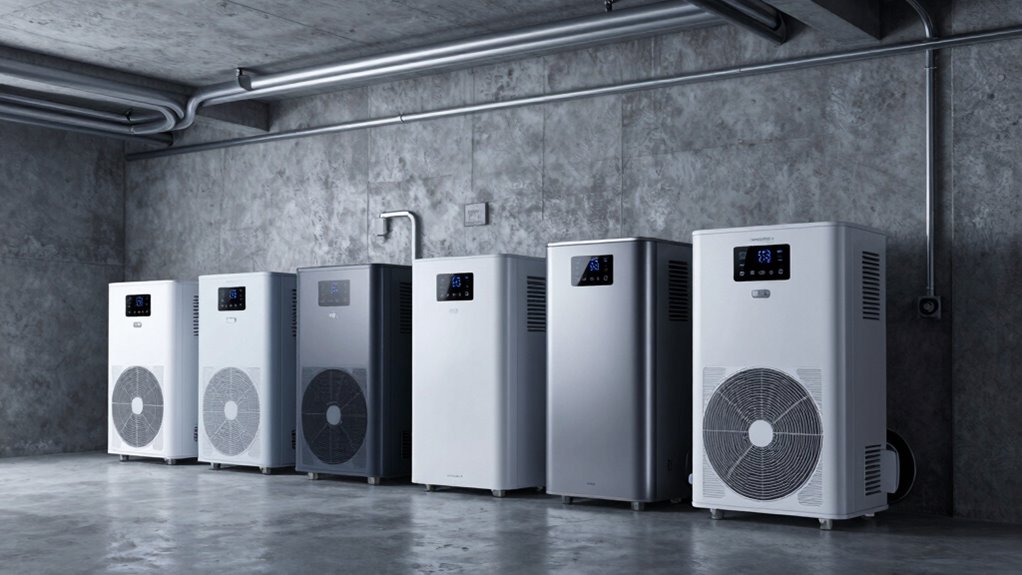

A whole-house dehumidifier system can help control dampness across connected living areas, but the right choice depends on more than the largest pint rating. I rank the Waykar 120-Pint as the best overall pick for buyers prioritizing high stated capacity, while the Moiswell WD160 stands out for its fresh-air function and the AEOCKY LEO-001 for its upward-drainage pump. The main tradeoffs are capacity versus installation needs, room coverage claims versus real airflow, and added features versus simpler operation. Some models are portable room units rather than ducted systems, so buyers should check the installation plan before treating one as a whole-home solution. Read on for the full comparison and guidance on choosing the right setup.

Get cleaning gear delivered free with Prime
- Fast, free delivery on millions of items
- Prime Video, Amazon Music and more included
- Member-only deals all year
Complete the kit


Key Takeaways
- The Waykar 120-Pint has the highest stated capacity among the listed models, making it the strongest starting point for buyers prioritizing moisture-removal headroom.
- The Moiswell WD160 is the only listed model identified as a whole-house unit with a fresh-air function, giving it a different role from the portable room-focused dehumidifiers.
- The AEOCKY LEO-001’s upward-drainage pump may suit locations where gravity drainage is impractical, but buyers should verify the pump’s lift and drainage route before installation.
- Several options cite coverage around 5,000 to 6,000 square feet, so those figures alone do not distinguish them; layout, doorways, airflow, and humidity load matter too.
- The KNKA 80-Pint and AEOCKY RHEA-001 80-Pint share a capacity class, while the AEOCKY 5000 Sq Ft model emphasizes ENERGY STAR Version 6.0; matching the feature set to the home matters more than choosing by brand name.
| KNKA Energy Star Dehumidifier for Spaces up to 5,500 Sq. Ft., 80-Pint |  | Best for Straightforward Basement Control | Coverage area: Up to 5,500 sq. ft. | Moisture removal: Up to 80 pints/day; 56 pints/day in typical basement conditions | Energy certification: ENERGY STAR certified | VIEW ON AMAZON | See Our Full Breakdown |
| ENERGY STAR WiFi Dehumidifier, 100-Pint Capacity, for Areas up to 6,000 Sq. Ft. |  | Best for App and Voice Control | Coverage area: Up to 6,000 sq. ft. | Moisture removal capacity: Up to 100 pints/day at 95°F, 90% RH; 60 pints/day at 86°F, 80% RH | Energy certification: ENERGY STAR | VIEW ON AMAZON | See Our Full Breakdown |
| Waykar 120-Pint Dehumidifier for Spaces up to 6,000 Sq. Ft. |  | Best for High Moisture Loads | Coverage area: Up to 6,000 sq. ft. | Moisture removal capacity: 120 pints/day at 95°F and 90% RH | Tank capacity: 1.24 gallons | VIEW ON AMAZON | See Our Full Breakdown |
| AEOCKY LEO-001 Dehumidifier with Upward-Drainage Pump |  | Best for Upward Drainage | Model: LEO-001 | Type: Compressor dehumidifier | Coverage area: Up to 4,500 sq. ft. | VIEW ON AMAZON | See Our Full Breakdown |
| Moiswell WD160 Whole-House Dehumidifier with Fresh Air Function |  | Best for Ducted Whole-Home Installation | Listed floor area: 2,500 sq. ft. | Capacity figures: 160 pints in description; 70 pints listed; 65 pints/day DOE capacity | Airflow: 330 CFM | VIEW ON AMAZON | See Our Full Breakdown |
| AEOCKY 5000 Sq Ft Energy Star Version 6.0 Dehumidifier for Basement |  | Best for Quiet, Cool Basements | Coverage area: Up to 5,000 sq. ft. | Compressor: Rotary Compressor PRO+ | Auto defrost: Yes | VIEW ON AMAZON | See Our Full Breakdown |
| AEOCKY RHEA-002 Dehumidifier for Homes up to 6,000 Sq. Ft. |  | Best for Buyers Who Want Published Capacity | Coverage area: Up to 6,000 sq. ft. | Capacity at 95°F and 95% RH: 105 pints per day | Capacity at 86°F and 80% RH: 83 pints per day | VIEW ON AMAZON | See Our Full Breakdown |
| AEOCKY RHEA-001 80-Pint Dehumidifier for up to 5,500 Sq. Ft. |  | Best for Buyers Who Need a Listed Footprint | Model: RHEA-001 | Coverage area: Up to 5,500 sq. ft. | Dehumidification capacity: Up to 80 pints per day | VIEW ON AMAZON | See Our Full Breakdown |
| whole house dehumidifier system | Coverage area | Noise level | Certification |
|---|---|---|---|
| KNKA Energy Star Dehumidifier | Up to 5,500 sq. ft. | 40–45 dB | — |
| ENERGY STAR WiFi Dehumidifier | Up to 6,000 sq. ft. | 45 dB | — |
| Waykar 120-Pint Dehumidifier f | Up to 6,000 sq. ft. | 40 dB on low; up to 55 dB | — |
| AEOCKY LEO-001 Dehumidifier wi | Up to 4,500 sq. ft. | — | ENERGY STAR Most Efficient 2025 |
| Moiswell WD160 Whole-House Deh | — | — | — |
| AEOCKY 5000 Sq Ft Energy Star | Up to 5,000 sq. ft. | — | ENERGY STAR Version 6.0 |
| AEOCKY RHEA-002 Dehumidifier f | Up to 6,000 sq. ft. | — | ENERGY STAR Most Efficient 2024 |
| AEOCKY RHEA-001 80-Pint Dehumi | Up to 5,500 sq. ft. | As low as 44 dB | ENERGY STAR Most Efficient 2025 |
More Details on Our Top Picks
KNKA Energy Star Dehumidifier for Spaces up to 5,500 Sq. Ft., 80-Pint
The KNKA makes sense for buyers who want a large portable unit without app controls or a built-in pump. Its 80-pint maximum rating is paired with a more specific figure of 56 pints per day in typical basement conditions, which gives a more grounded expectation than the headline capacity alone. Choose the continuous-drain hose to avoid routine tank emptying, or use the tank with its full alert and automatic shutoff. Compared with the WiFi-enabled ENERGY STAR 100-Pint model, KNKA offers fewer connected features but a slightly larger tank and a clear, adjustable humidity range. The tradeoff is that the optional external tank costs extra, and its 6.56-foot hose may not reach a convenient drain in every basement. I’d also plan for the required 24-hour upright wait before first use.
Pros:- ENERGY STAR certified, with a stated 56-pint daily capacity in typical basement conditions
- Continuous drainage option plus tank-full alert and automatic shutoff
- Adjustable humidity settings and three operating modes
- Casters, washable filter, and a stated 40–45 dB noise range
Cons:- Optional 2.64-gallon external tank is sold separately
- The included drain hose is 6.56 feet long and may limit placement
- Requires 24 hours upright before first use
Best for: Homeowners who want an ENERGY STAR portable unit for a damp basement and can place it near a drain or empty its tank.
Not ideal for: Buyers who need remote app control, a built-in pump for upward drainage, or a long-term setup far from a floor drain.
- Coverage area:Up to 5,500 sq. ft.
- Moisture removal:Up to 80 pints/day; 56 pints/day in typical basement conditions
- Energy certification:ENERGY STAR certified
- Built-in tank:1.45 gallons
- Drain hose:6.56 feet
- Noise level:40–45 dB
- Humidity setting range:30%–80% RH
- Operating modes:Auto, Dry, Setting
- Filter:Washable and reusable
Our verdict“Choose the KNKA for adjustable, conventional basement dehumidification, but pick the AEOCKY LEO-001 if water must be pumped upward.”
ENERGY STAR WiFi Dehumidifier, 100-Pint Capacity, for Areas up to 6,000 Sq. Ft.
This model’s main distinction is connected control: the Tuya Smart or Smart Life app and Alexa support let owners adjust settings without walking to the unit. That can be useful in a large basement or a secondary living area, though it does not turn this portable appliance into a ducted whole-house system. Its capacity is rated at 100 pints per day under very humid test conditions, with a separate 60-pint figure at 86°F and 80% RH. Compared with the KNKA 80-Pint, it covers a stated 500 additional square feet and adds remote control, but its 1.13-gallon tank is smaller. Continuous drainage is available through the included short hose or a standard garden hose, which is not included. I’d choose it for control flexibility, not for hands-free pumping or the largest collection tank.
Pros:- App and Alexa controls add remote adjustment options
- ENERGY STAR certification and stated coverage up to 6,000 sq. ft.
- Offers tank collection and continuous drainage
- Auto shutoff, auto defrost, auto restart, and three fan speeds
Cons:- The 1.13-gallon tank is relatively small for extended operation
- A garden hose for drainage is not included, and the included hose is 3.3 feet long
- The filter requires cleaning about every 30 days
Best for: Owners of large basements or lower-level living spaces who want to change humidity settings by app or Alexa.
Not ideal for: Buyers who need a built-in pump, a large tank for less frequent emptying, or a complete ducted whole-home installation.
- Coverage area:Up to 6,000 sq. ft.
- Moisture removal capacity:Up to 100 pints/day at 95°F, 90% RH; 60 pints/day at 86°F, 80% RH
- Energy certification:ENERGY STAR
- Tank capacity:4.28 liters (1.13 gallons)
- Drainage:Tank, included 3.3-foot hose, or standard 3/4-inch garden hose (not included)
- Controls:Touch panel, Tuya Smart or Smart Life app, Amazon Alexa
- Noise level:45 dB
- Fan speeds:3
- Dimensions and weight:13.62 × 10.47 × 19.57 inches; 30.9 pounds
Our verdict“Pick this model over the KNKA if remote control matters more than tank capacity or simpler controls.”
Waykar 120-Pint Dehumidifier for Spaces up to 6,000 Sq. Ft.
The Waykar is the strongest portable choice here for a space that produces a heavy moisture load: its stated 120-pint daily capacity is higher than the KNKA’s 80-pint and the WiFi model’s 100-pint rating. That figure is specified at 95°F and 90% RH, so it describes hot, very humid conditions rather than every basement. It covers up to 6,000 square feet and gives buyers both a removable tank and continuous drainage, while wheels make moving its 28.8-pound body easier. On low, the listed 40 dB noise level is quieter than the WiFi model’s 45 dB, though the Waykar can reach 55 dB. Its main compromise is drainage convenience: the included hose is only 3.3 feet, and a garden hose for a longer run is not supplied. This is a portable solution, not a ducted whole-home unit.
Pros:- Highest stated removal capacity among these portable models: 120 pints/day under specified conditions
- Coverage listed up to 6,000 sq. ft.
- Tank or continuous-drain operation with automatic full-tank shutoff
- Wheels, washable filter, and low-speed noise rating of 40 dB
Cons:- Included drain hose is only 3.3 feet long
- A garden hose for extended drainage is not included
- Noise can reach 55 dB at higher settings
Best for: Owners of very damp, large basements who want a high-capacity portable unit and can position it close to a drain.
Not ideal for: Buyers who need a built-in pump, a long included drain line, or a ducted unit serving several separated rooms.
- Coverage area:Up to 6,000 sq. ft.
- Moisture removal capacity:120 pints/day at 95°F and 90% RH
- Tank capacity:1.24 gallons
- Drainage:Removable tank or included 3.3-foot hose
- Noise level:40 dB on low; up to 55 dB
- Humidity range:30%–80% RH
- Airflow:230 CFM
- Power:470 watts
- Certifications:2025 ENERGY STAR, ETL listed, DOE-compliant
Our verdict“Choose the Waykar over the 100-Pint WiFi model when moisture-removal capacity matters more than app control and drainage reach.”
AEOCKY LEO-001 Dehumidifier with Upward-Drainage Pump
The LEO-001 earns its place through a feature the other portable picks lack: a built-in pump for upward drainage. With the included 5-meter hose, it can send collected water to a higher drain rather than relying on gravity or frequent tank emptying. That makes it a better fit for a basement without a conveniently placed floor drain than the KNKA or Waykar, whose included hoses need a suitable drainage route. Capacity is listed as 80 pints per day at 95°F and 95% RH, and 56 pints at 86°F and 80% RH, so the conditions behind each figure matter when comparing it with the Waykar’s 120-pint maximum. The listed coverage is also lower, at 4,500 square feet. ENERGY STAR Most Efficient 2025 certification and a three-year warranty add useful ownership details, but the supplied data gives no noise figure.
Pros:- Built-in pump supports upward water removal
- Includes a 5-meter drainage hose
- Rated for up to 80 pints/day under hot, humid conditions
- Advertised with ENERGY STAR Most Efficient 2025 certification and a three-year warranty
Cons:- Listed coverage is lower than the 6,000-square-foot Waykar and WiFi models
- Capacity figures apply to specified temperature and humidity conditions
- No measured noise level is provided
Best for: Basement owners who need to move water upward to a sink, drain, or other elevated outlet without manually emptying a tank.
Not ideal for: Buyers covering more than 4,500 square feet or those who need published noise data before choosing a unit for a living area.
- Model:LEO-001
- Type:Compressor dehumidifier
- Coverage area:Up to 4,500 sq. ft.
- Dehumidification capacity:80 pints/day at 95°F and 95% RH; 56 pints/day at 86°F and 80% RH
- Drainage:Built-in pump with upward drainage
- Included hose length:5 meters
- Certification:ENERGY STAR Most Efficient 2025
- Warranty:3 years
Our verdict“Choose the LEO-001 over the KNKA when a drain sits above the dehumidifier and automatic water removal is the priority.”
Moiswell WD160 Whole-House Dehumidifier with Fresh Air Function
Unlike the portable units in this group, the Moiswell WD160 is presented as a whole-house installation option, with fresh-air intake, adjustable airflow, and ducting flexibility. That makes it the closest match for buyers seeking a system that can serve a larger home or crawl space as part of a planned installation, rather than a wheeled appliance placed in one damp room. Its 330 CFM airflow and fresh-air function offer a different approach from the KNKA or Waykar, which focus on moisture removal in a local area. The capacity data needs careful reading: the description claims up to 160 pints, while the specs list 70 pints and a DOE figure of 65 pints per day. I would not compare it directly with the portable models’ headline capacities until the seller clarifies which figure applies. At 820 watts and nearly 25 inches wide, it also calls for installation and electrical planning.
Pros:- Designed for whole-home installation rather than use as a single-room portable unit
- Fresh-air intake and adjustable airflow provide installation flexibility
- 330 CFM airflow with two fan speeds
- Includes humidity controls, cycle timer, automatic restart and shutoff, and child lock
Cons:- Listed capacity figures conflict: 160 pints in the description, 70 pints in specs, and 65 pints DOE capacity
- Larger dimensions require space and installation planning
- At 820 watts, it has higher listed power draw than the portable options in this group
Best for: Homeowners planning a fixed, ducted humidity-control setup for a large home, basement, or crawl space who want fresh-air intake.
Not ideal for: Renters or buyers who need a compact plug-in unit, easy room-to-room mobility, or a clearly stated capacity figure before purchase.
- Listed floor area:2,500 sq. ft.
- Capacity figures:160 pints in description; 70 pints listed; 65 pints/day DOE capacity
- Airflow:330 CFM
- Power and voltage:820 watts; 120 volts
- Fan speeds:2
- Operation modes:Continuous, standard, cycle timer
- Features:Fresh-air intake, adjustable airflow and humidity control, automatic restart and shutoff, child lock, digital display
- Dimensions:14.88 × 24.72 × 21.46 inches (D × W × H)
Our verdict“Choose the WD160 over the portable Waykar when you want a fixed whole-home setup with fresh-air capability, but confirm its applicable capacity rating first.”
AEOCKY 5000 Sq Ft Energy Star Version 6.0 Dehumidifier for Basement
The AEOCKY LEO-Lite is the strongest fit here for buyers prioritizing a quieter appliance in a cool basement. Its stated coverage reaches 5,000 sq. ft., while auto-defrost is designed to keep the unit operating in lower temperatures rather than stopping when frost forms. The manufacturer lists sound as low as 44 dB and ENERGY STAR Version 6.0 compliance, giving it a quieter, efficiency-focused profile than the higher-capacity AEOCKY RHEA-002. That comparison comes with a data gap: the LEO-Lite listing provides no pints-per-day figure, so I can’t match its moisture-removal output directly against the RHEA-002’s stated capacity. It’s a room dehumidifier with broad coverage, not a ducted whole-house system; buyers seeking integrated HVAC treatment should look at a dedicated whole-house model instead.
Pros:- Rated to cover spaces up to 5,000 sq. ft.
- Auto-defrost is designed for operation in cool basements.
- Lowest stated sound level is 44 dB.
- ENERGY STAR Version 6.0 compliance emphasizes efficiency.
Cons:- No pints-per-day capacity is provided, making output hard to compare with the RHEA-002.
- Coverage is a manufacturer rating and does not establish performance across a home with closed rooms.
- This is not described as a ducted whole-house system.
Best for: Homeowners with a cool, open basement who want low-noise operation and broad stated coverage in a portable dehumidifier.
Not ideal for: Buyers comparing moisture-removal capacity by pints per day, or anyone seeking ducted, HVAC-integrated whole-house dehumidification.
- Coverage area:Up to 5,000 sq. ft.
- Compressor:Rotary Compressor PRO+
- Auto defrost:Yes
- Lowest stated noise:44 dB
- Certification:ENERGY STAR Version 6.0
- Core components:Copper tubes; 3+2 evaporator/condenser structure
Our verdict“Choose the LEO-Lite for a quiet, cool-basement setup, but pick a model with published pint capacity if moisture-removal output is your main comparison point.”
AEOCKY RHEA-002 Dehumidifier for Homes up to 6,000 Sq. Ft.
The AEOCKY RHEA-002 earns this spot because its listing gives a clearer capacity picture than the LEO-Lite: it states 105 pints per day under hot, very humid conditions and 83 pints at a second specified condition. That helps buyers compare moisture-removal claims instead of relying on coverage area alone. Its stated range of up to 6,000 sq. ft. is the broadest among these three AEOCKY options, and automatic defrost, humidity compensation, and power-off memory add useful controls for basement operation. The tradeoff is that those capacity figures describe warm, humid test conditions, not every home or cooler basement. At the lowest fan setting it is rated at 44 dB, matching the RHEA-001, while the RHEA-001 has a lower stated maximum capacity of 80 pints per day and a listed footprint.
Pros:- Lists capacity at two specific temperature and humidity conditions.
- Rated for spaces up to 6,000 sq. ft.
- Automatic defrost supports use in cooler environments.
- Power-off memory can restore settings after an interruption.
Cons:- The published capacity figures are tied to warm, humid conditions.
- The listing does not provide dimensions or weight for installation planning.
- It is a compressor dehumidifier, not a stated ducted whole-house system.
Best for: Homeowners with a large, moisture-prone basement who want stated pint-capacity figures and automatic restart after power interruptions.
Not ideal for: Buyers who need output figures for cool conditions, a confirmed ducted whole-house installation, or a compact unit with published dimensions.
- Coverage area:Up to 6,000 sq. ft.
- Capacity at 95°F and 95% RH:105 pints per day
- Capacity at 86°F and 80% RH:83 pints per day
- Certification:ENERGY STAR Most Efficient 2024
- Lowest fan noise:44 dB
- Defrost:Automatic
- Humidity control:Dynamic detection with humidity compensation
- Power-off memory:Yes
Our verdict“Pick the RHEA-002 when stated moisture-removal capacity and broad coverage matter more than having a published footprint or whole-house duct integration.”
AEOCKY RHEA-001 80-Pint Dehumidifier for up to 5,500 Sq. Ft.
The AEOCKY RHEA-001 is the easiest of these three to size physically because the listing includes dimensions and weight: 14.45 × 8.66 × 24.09 inches and 31 lb. That makes it a more practical choice for buyers checking a basement corner or planning to move the unit between areas. Its stated 80-pint daily capacity and coverage up to 5,500 sq. ft. sit below the RHEA-002’s published 105-pint figure and 6,000-sq.-ft. coverage, but the RHEA-001 carries ENERGY STAR Most Efficient 2025 certification. It also lists humidity control, power-off memory, low-temperature defrost, and sound as low as 44 dB. The main uncertainty is water handling: tank capacity and drainage options are not supplied, unlike the details a buyer would need to plan ongoing operation.
Pros:- Dimensions and 31-lb. weight help with placement and moving.
- Rated to remove up to 80 pints per day and cover up to 5,500 sq. ft.
- ENERGY STAR Most Efficient 2025 certification.
- Includes humidity control, power-off memory, and low-temperature defrost.
Cons:- RHEA-002 lists higher capacity and broader coverage.
- The description does not state tank capacity or drainage options.
- Manufacturer-provided capacity and energy claims do not establish results in every home.
Best for: Homeowners who need a compact, movable dehumidifier with stated dimensions, efficiency certification, and coverage for a large basement or open floor.
Not ideal for: Buyers who need maximum stated capacity, verified drainage arrangements, or an HVAC-integrated system for whole-home humidity control.
- Model:RHEA-001
- Coverage area:Up to 5,500 sq. ft.
- Dehumidification capacity:Up to 80 pints per day
- Noise level:As low as 44 dB
- Dimensions:14.45 × 8.66 × 24.09 in.
- Weight:31 lbs.
- Certification:ENERGY STAR Most Efficient 2025
- Compressor:Rotary compressor
Our verdict“Choose the RHEA-001 if its listed footprint and 80-pint capacity fit your space; choose the RHEA-002 if you need higher stated capacity.”

How We Picked
I compared the eight models by how directly they can serve a whole-house moisture-control goal, not by capacity claims alone. The main criteria were stated pint capacity and coverage, whether the product is presented as a ducted whole-house unit or a portable dehumidifier, drainage options, controls, energy-related features, and the amount of installation planning implied by the design. A higher capacity can be useful in a damp or large home, but it does not prove that a portable unit will distribute dry air evenly through every room.
The ranking favors options with a clear advantage for a defined buyer need and enough available product information to explain that advantage. The Waykar leads on stated capacity; the Moiswell earns a distinct place for its whole-house positioning and fresh-air function; and the LEO-001 is differentiated by its upward-drainage pump. Other models follow where their listed features overlap more closely or where buyers should verify fit, drainage, or installation details before choosing. I treat coverage figures as manufacturer claims, not guarantees for every floor plan.
| whole house dehumidifier system | Coverage area | Certification |
|---|---|---|
| KNKA Energy Star Dehumidifier | Up to 5,500 sq. ft. | — |
| ENERGY STAR WiFi Dehumidifier | Up to 6,000 sq. ft. | — |
| Waykar 120-Pint Dehumidifier f | Up to 6,000 sq. ft. | — |
| AEOCKY LEO-001 Dehumidifier wi | Up to 4,500 sq. ft. | ENERGY STAR Most Efficient 2025 |
| Moiswell WD160 Whole-House Deh | — | — |
| AEOCKY 5000 Sq Ft Energy Star | Up to 5,000 sq. ft. | ENERGY STAR Version 6.0 |
| AEOCKY RHEA-002 Dehumidifier f | Up to 6,000 sq. ft. | ENERGY STAR Most Efficient 2024 |
| AEOCKY RHEA-001 80-Pint Dehumi | Up to 5,500 sq. ft. | ENERGY STAR Most Efficient 2025 |
Factors to Consider When Choosing Whole House Dehumidifier System
Before choosing a model, decide whether you need a ducted system connected to your HVAC setup or a portable unit placed in a strategic area. Then match capacity and drainage to your home’s moisture load and layout. These factors can matter more than a headline coverage figure.
Choose Between Ducted and Portable Before Comparing Capacity
A true whole-house setup usually depends on how air moves between rooms, not just on the dehumidifier’s rated coverage. Ducted units can serve multiple areas through planned air paths, but they may call for professional installation and space for equipment and drainage. Portable units are easier to position and may cost less to install, yet closed doors, separate floors, and distant rooms can limit their reach. A common mistake is to buy a portable model advertised for a large area and assume it will control humidity evenly in a multi-level home. Map the damp areas and airflow routes first, then decide whether one unit is enough or whether zoning or multiple units would be more practical.
Treat Pint Capacity as a Starting Point, Not a Guarantee
A pint-per-day rating helps compare models, but it does not tell you exactly how much moisture a unit will remove under your home’s conditions. Temperature, humidity, room volume, air leakage, and how often damp air enters all affect performance. A larger capacity can give a unit more headroom in a wet basement or humid climate, but may add operating and space demands that a drier home does not need. Avoid selecting solely by the square-foot figure: an open plan and a divided plan with the same floor area present different air-circulation challenges. If the dampness is severe or persistent, investigate its source as well as the equipment capacity.
Plan Drainage Before Deciding Where the Unit Will Go
Continuous drainage can reduce the chore of emptying a tank, but it only helps if the hose can reach a suitable drain and the water can flow as required. Gravity drainage needs the outlet below the unit; a pump can move water upward, though its lift distance and routing limits still need checking. A drain route with sharp bends, a long hose, or a high outlet can create installation problems even when a pump is included. Buyers often choose a location for convenience and only later discover that drainage is awkward. Confirm the drain point, hose path, and power access before committing to a placement.
Compare Airflow and Controls With Your Home’s Layout
Humidity control works best when moist air can reach the unit and treated air can circulate back through the space. Open basements and connected living areas are simpler than homes with closed bedrooms, multiple floors, or isolated additions. Wi-Fi controls can make remote adjustments easier, but they do not fix poor air movement or replace a sensible sensor location. A fresh-air function also serves a different purpose from basic moisture removal, so buyers should check how it operates and whether it fits their ventilation plan. Prioritize control features that solve a real access or scheduling problem rather than choosing them as a proxy for performance.
Look Beyond Energy Labels to the Expected Operating Pattern
A dehumidifier may run for long stretches during humid seasons, so energy use and control behavior affect ownership over time. An ENERGY STAR designation can help narrow choices, but it does not reveal the exact electricity use in your home or how frequently the unit will cycle. Think about your local climate, target humidity, and whether the machine will run continuously or only during damp periods. A model with an automatic humidity setting may reduce unnecessary operation, provided its sensor reads conditions representative of the area you want to protect. Compare the product documentation for rated power, operating modes, and maintenance needs before treating an efficiency label as the whole answer.
Check Service Access, Noise, and Maintenance Space
Filters, coils, tanks, hoses, and pump components need access for routine care, so installation in a cramped corner can make a capable unit frustrating to maintain. Noise matters if the dehumidifier sits near bedrooms or frequently used rooms; specifications and placement are more useful than assuming every high-capacity model sounds alike. Leave room for airflow and follow the manufacturer’s clearance guidance rather than enclosing the unit to hide it. If the equipment will be hard to reach, favor a drainage plan and maintenance routine that remain practical year-round. The best fit is one you can keep clean and operating correctly, not simply the unit with the largest rating.
Frequently Asked Questions
Can a portable dehumidifier advertised for 6,000 square feet control humidity throughout my whole house?
Not automatically. A coverage figure does not account for closed doors, separate floors, narrow hallways, or poor air circulation between rooms. A portable unit may work well in an open basement or central area, but isolated spaces can stay humid even while the unit’s sensor reports a satisfactory reading nearby. Check whether the manufacturer describes the model as portable or ducted, then assess your floor plan and likely air paths. For a divided home, you may need more than one unit or a purpose-built ducted system.
Should I choose the Waykar 120-Pint or the Moiswell WD160 for a damp home?
The Waykar’s stated 120-pint capacity makes it a candidate when high moisture-removal capacity is the leading concern. The Moiswell WD160 is described as a whole-house dehumidifier with a fresh-air function, so it may appeal more to buyers seeking that specific system style and feature. Those labels do not make the two interchangeable: confirm installation requirements, duct connections, drainage, and operating conditions in the product documentation. If you need a system integrated across rooms, the Moiswell’s whole-house positioning deserves close attention; if capacity is your first filter, compare the Waykar’s specifications with your measured moisture problem.
Is an upward-drainage pump worth choosing if my drain is nearby?
A pump is most useful when the water must travel upward or the unit cannot sit above a suitable drain. If a floor drain is close and below the unit, gravity drainage may be simpler and may leave fewer components to maintain. For the AEOCKY LEO-001, verify the pump’s maximum lift and permitted hose route rather than assuming any outlet location will work. Also check whether the pump changes the unit’s placement options or maintenance schedule. The right choice depends on the actual elevation and path from the unit to the drain.
Do I need a professional to install a whole-house dehumidifier?
It depends on the product design and how you want it connected. A portable unit typically needs a stable location, power, and a workable drainage plan, while a ducted whole-house unit may require HVAC connections, duct changes, or electrical work. Follow the manufacturer’s installation instructions and local requirements, and ask a qualified contractor when the setup involves ductwork or permanent wiring. Before buying, confirm what installation parts are included and what the home must provide. This can prevent choosing a system that does not fit your available space or existing HVAC layout.
How should I choose between the 80-pint AEOCKY models and the 80-pint KNKA?
Start by comparing the specific features that affect your placement and daily use, since the listed models share an 80-pint capacity class. The KNKA is specified for spaces up to 5,500 square feet, while the AEOCKY RHEA-001 carries a similar stated coverage figure; the AEOCKY 5000 Sq Ft model is distinguished by its ENERGY STAR Version 6.0 designation. Those claims do not settle questions about drainage, controls, maintenance, or actual performance in your home. Review the product specifications and manuals for those details, then choose based on the feature that solves your main constraint rather than brand or coverage wording alone.
Conclusion
For the strongest stated capacity among these options, I’d start with the Waykar 120-Pint as my best overall pick, while checking that its portable design suits the intended area. For a buyer seeking a unit explicitly positioned for whole-house use with a fresh-air function, the Moiswell WD160 is the best premium-style choice in this lineup, subject to installation fit. My best pick for drainage flexibility is the AEOCKY LEO-001, especially where water must be pumped upward. For beginners, I’d favor a straightforward portable model such as the KNKA 80-Pint when the target is one open area and the drain plan is simple. The AEOCKY 5000 Sq Ft ENERGY STAR Version 6.0 is a value-minded option for shoppers prioritizing its stated efficiency designation, while buyers comparing the 80-pint models should check controls and maintenance details before deciding. If your goal is genuinely whole-home control across closed rooms or multiple floors, make ducting and air circulation the deciding factors—not the largest coverage claim.
Veterans Day Picks

Shark Matrix Plus 2-in-1 Robot Vacuum and Mop with 60-Day Self-Emptying Base
As an affiliate, we earn on qualifying purchases.