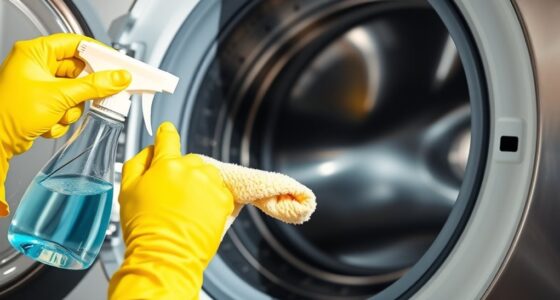
To guarantee safety and avoid equipment damage, never put incompatible chemicals like acids, alkalines, or reactive substances in a sprayer not designed for them. Mixing chemicals without checking compatibility can cause dangerous reactions, leaks, or corrosion. Always verify ingredients with manufacturer guidelines or compatibility charts before spraying. Using the wrong chemicals may lead to costly repairs or safety hazards. Keep informed about what to avoid so your sprayer stays safe and effective—there’s more to learn to protect yourself and your equipment.

Get cleaning gear delivered free — and shop member deals
- Fast, free delivery on millions of items
- Access to Prime Big Deal Days deals on October 6–7
- Prime Video, Amazon Music and more included
Key Takeaways
- Never spray incompatible chemicals such as acids in sprayers designed for neutral or alkaline substances.
- Avoid using corrosive or reactive chemicals like chlorine or bleach in sprayers not rated for such substances.
- Do not mix pesticides or chemicals unless confirmed compatible to prevent dangerous reactions.
- Refrain from filling sprayers with solvents or chemicals that can degrade the material or cause leaks.
- Do not use substances with extreme pH levels outside the sprayer’s chemical resistance range.
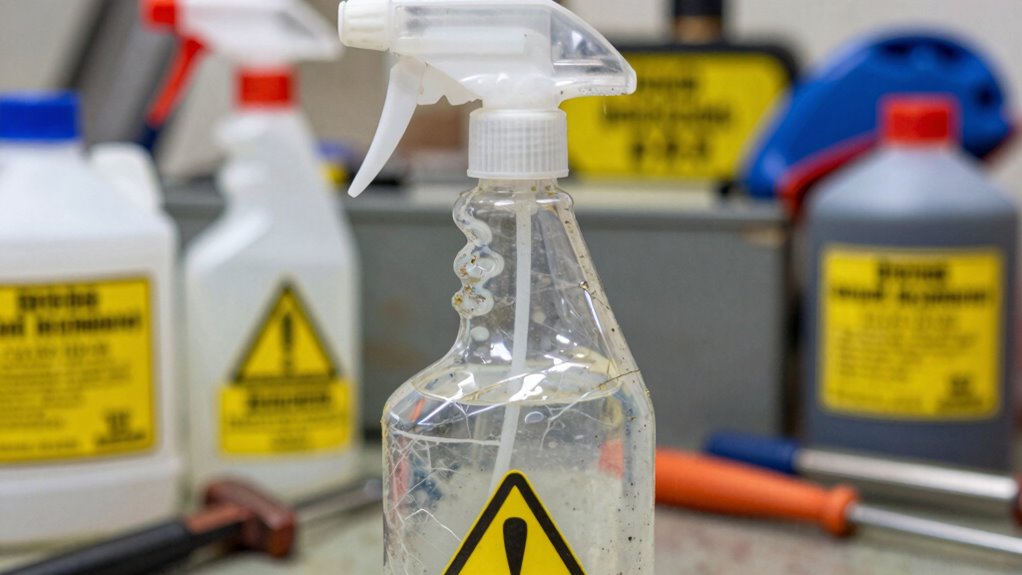
Understanding chemical compatibility is essential to guarantee that different substances can coexist without causing dangerous reactions or damage. When you’re working with a sprayer, knowing which chemicals are compatible helps prevent mishaps, leaks, or even catastrophic failures. One critical aspect is corrosion resistance, which determines how well the sprayer’s materials can withstand exposure to various chemicals. If you put incompatible substances inside your sprayer, you risk triggering chemical reactions that can corrode metal parts, degrade seals, or weaken the container itself. This not only shortens the lifespan of your equipment but also creates safety hazards, such as leaks or bursts that could harm you or the environment. chemical reactions occur when substances interact in ways that produce heat, gases, or other byproducts. Some reactions can be highly violent, especially if you mix incompatible chemicals. For example, introducing an acidic substance into a sprayer designed for neutral or alkaline solutions can lead to corrosive damage that compromises the integrity of the container. Over time, this corrosion resistance diminishes, making your equipment more susceptible to leaks and failures. It’s essential to understand the chemical properties of what you’re spraying—such as pH levels, reactivity, and toxicity—to avoid these dangerous interactions. Many chemicals, like solvents, acids, or chlorinated compounds, are especially aggressive and can cause rapid deterioration of common materials used in sprayers, including plastics, rubber, and metal alloys. If the sprayer isn’t made from corrosion-resistant materials specifically designed for such chemicals, damage can happen quickly. That’s why checking compatibility charts and manufacturer guidelines before filling your sprayer is so important. It helps you select the right equipment that can resist chemical reactions and maintain its integrity over multiple uses. Failing to consider chemical compatibility not only risks damage but also endangers your safety and the environment. Incompatible chemicals can cause containers to rupture or leak, releasing harmful vapors or liquids. These reactions can be unpredictable, especially if heat or pressure build-up occurs. Consequently, always verify whether the substances you plan to use will react adversely with each other or with the materials of your sprayer. When in doubt, opt for specialized, chemically resistant equipment designed for specific chemicals. Protecting your sprayer from incompatible substances keeps it functional longer, reduces maintenance costs, and prevents accidents caused by unexpected chemical reactions or corrosion.
As an affiliate, we earn on qualifying purchases.
Frequently Asked Questions
Can I Use Household Cleaning Products in a Garden Sprayer?
You shouldn’t use household cleaning products in a garden sprayer because they often aren’t pesticide compatible and can damage the sprayer or harm plants. Household cleaners contain chemicals that aren’t designed for outdoor use or plant safety, risking clogging or corrosion. Always check pesticide compatibility and use products specifically made for gardening. This guarantees your sprayer stays functional and your plants stay healthy.
Are Essential Oils Safe to Put in a Sprayer for Pest Control?
Essential oils can seem like natural magic, but when it comes to pesticide safety, they aren’t always safe in your sprayer. While they’re popular for pest control, they can damage sprayers or harm beneficial insects if misused. Always research specific oils, dilute properly, and follow guidelines. Remember, even natural ingredients need respect—using essential oils responsibly ensures your pest control efforts stay safe and effective.
What Should I Do if a Chemical Leaks Into the Sprayer?
If a chemical leaks into your sprayer, you should immediately stop using it and carefully rinse the entire system with water. To prevent chemical residue and contamination, thoroughly clean all parts and guarantee no residual chemicals remain. Discard any contaminated solution properly, and consider testing the sprayer with water before reuse. Regular maintenance and proper cleaning help ensure safe, effective spraying and prevent cross-contamination.
Can I Reuse a Sprayer After Spraying Incompatible Chemicals?
You shouldn’t reuse a sprayer after spraying incompatible chemicals; it’s just asking for trouble. Residue from these chemicals can cause material degradation and contamination, even after thorough cleaning. If you ignore this, you risk damaging the sprayer or spreading residues that could harm plants or surfaces. Better to clean the sprayer thoroughly or use a new one to make sure of safety and effectiveness, rather than putting all your eggs in one basket.
How Do I Clean a Sprayer After Using Corrosive Substances?
To clean your sprayer after using corrosive substances, you should first wear protective gear. Rinse the sprayer thoroughly with water to remove chemical residue, then follow the cleaning procedures recommended for the specific chemical. Use appropriate cleaning solutions if necessary, ensuring all residue is removed. Rinse again to prevent corrosion. Proper cleaning guarantees safe reuse and maintains the sprayer’s integrity.
Conclusion
Remember, your sprayer is like a delicate dance partner—trust it to perform smoothly only when you choose your chemicals wisely. Mixing incompatible substances is like throwing a wrench into the gears, causing chaos and damage. Treat your sprayer with respect, and it’ll serve you faithfully, like a loyal steed ready to carry your garden dreams. When in doubt, play it safe—your tools and your garden will thank you for it.
Fall Picks
fall essentials
As an affiliate, we earn on qualifying purchases.