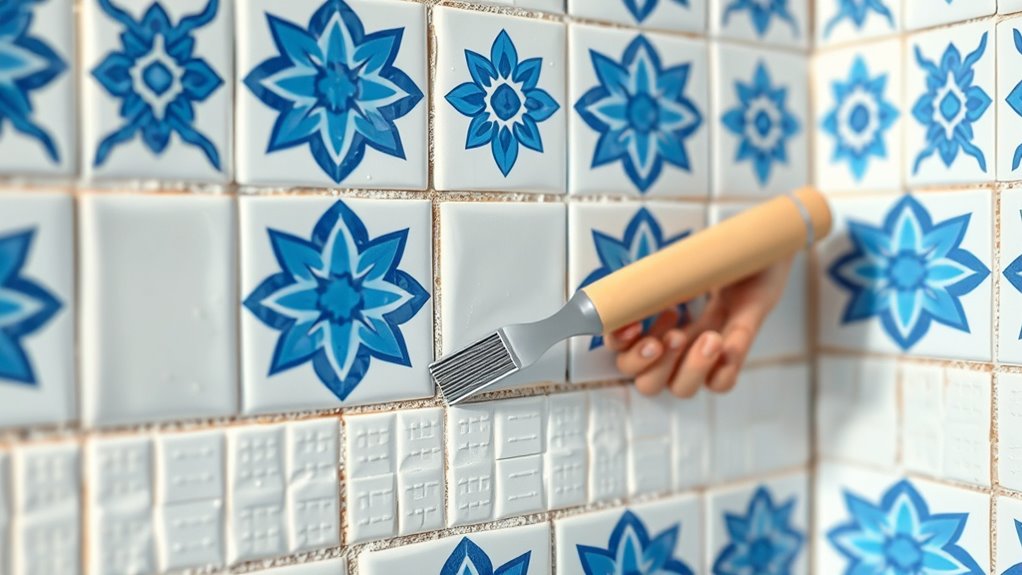
To maintain your tile shower between deep cleans, wipe down tiles and grout after each use with a squeegee or microfiber cloth to remove excess water. Use mold prevention sprays regularly and guarantee good ventilation to reduce humidity. Avoid harsh chemicals and abrasive scrubbing, sticking instead to gentle cleaners. Regular inspections for cracks or damage help you catch issues early. Keep these practices in mind to keep your shower fresh and protected—there’s more to learn to keep it in top shape.
Key Takeaways
- Wipe down tiles and grout daily with a microfiber cloth or squeegee to remove excess water and soap residue.
- Use a shower mold prevention spray regularly to inhibit mold spores from settling and growing.
- Ensure proper bathroom ventilation by running exhaust fans or opening windows after each use.
- Inspect grout and tiles weekly for cracks or chips and repair promptly to prevent water infiltration.
- Clean grout lines with gentle, non-abrasive solutions to prevent buildup and maintain seal integrity.
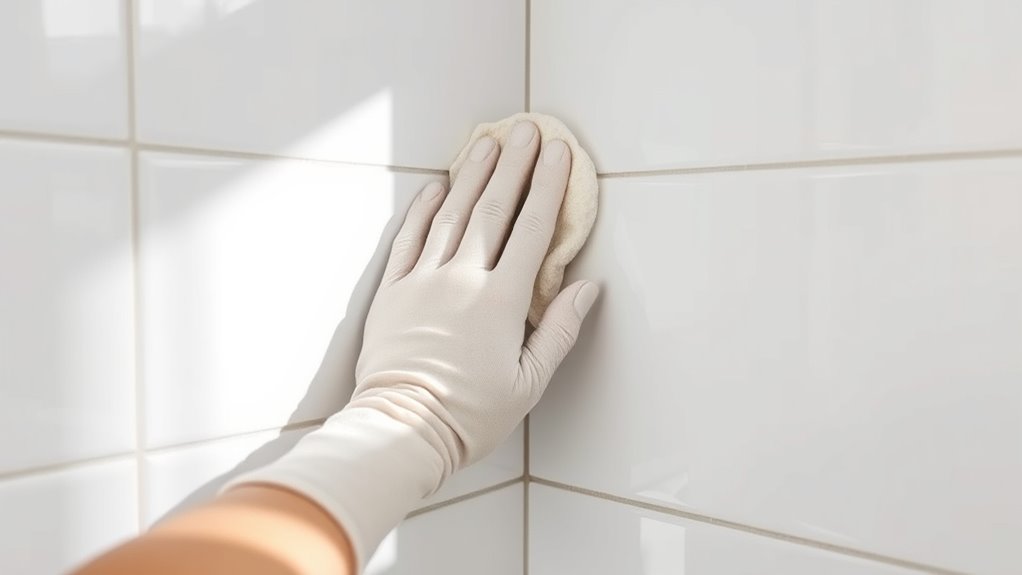
Are you wondering how to keep your tile shower looking its best? Regular maintenance isn’t just about cleaning; it’s about protecting your investment and preventing issues before they start. One of the most effective ways to do this is through grout sealing. Grout is porous, which makes it vulnerable to absorbing water, dirt, and soap scum. When you apply a quality grout sealer, it creates a protective barrier that repels moisture and stains. This simple step can markedly extend the life of your grout and keep your shower looking fresh. Sealing your grout about once a year is usually enough, but if your shower gets heavy use, consider doing it more frequently. Proper grout sealing also plays a crucial role in mold prevention. Mold thrives in damp, porous environments, so sealing your grout reduces the chances of mold spores settling and growing.
Sealing grout annually prevents mold, stains, and extends your shower’s lifespan.
Between deep cleans, you can maintain your shower’s cleanliness by wiping down the tiles and grout after each use. Use a squeegee or a microfiber cloth to remove excess water from the surface and grout lines. This helps prevent water from sitting on the tiles and seeping into the grout, which could cause discoloration or mold growth over time. Additionally, keep the bathroom well-ventilated by running the exhaust fan or opening a window during and after showers. Good airflow helps reduce humidity levels, making it harder for mold spores to settle and thrive.
For more targeted mold prevention, consider using a daily or weekly spray made specifically for shower mold prevention. These products often contain antimicrobial agents that inhibit mold growth. Applying them regularly keeps the environment less hospitable for mold and mildew. Using appropriate cleaning tools can also help maintain grout integrity and prevent buildup. Applying them regularly keeps the environment less hospitable for mold and mildew. Avoid using harsh chemicals or abrasive scrubbers between deep cleans, as they can damage the grout and tiles, creating more opportunities for mold and dirt to collect. Instead, opt for gentle, non-abrasive cleaning solutions that effectively remove soap scum and dirt without compromising your grout’s integrity.
Finally, schedule regular inspections of your shower grout and tiles. Catching cracks or chips early allows you to repair them before they turn into bigger problems. Repairing damaged grout promptly also maintains the seal and prevents water infiltration, which can lead to mold and structural damage. With consistent effort—sealing grout, wiping down surfaces, ensuring ventilation, and addressing issues promptly—you’ll keep your tile shower looking its best and avoid costly repairs down the line. Maintenance between deep cleans isn’t complicated; it’s about creating a protective routine that preserves your shower’s beauty and functionality.
Frequently Asked Questions
How Often Should I Reseal My Tile Shower?
You should reseal your tile shower every 1 to 2 years to keep grout sealing effective and prevent water damage. Regularly check for cracks or wear in shower caulking and reseal or replace as needed. Maintaining proper grout sealing and shower caulking helps keep moisture out, reduces mold, and extends the life of your shower. Consistent resealing guarantees your shower stays fresh, clean, and leak-free.
What Are the Signs of Mold Growth?
You might think mold only appears in obvious spots, but the signs of mold can be subtle. Look for musty odors, discoloration, or a fuzzy texture on tile grout and caulking. Mold prevention is key, so regularly clean and dry your shower. If you notice these signs of mold, address them quickly with proper cleaning solutions to prevent health issues and further growth. Stay vigilant to keep your shower safe and mold-free.
Can I Use Vinegar for Daily Cleaning?
Yes, you can use vinegar for daily cleaning of your tile shower. It’s a natural cleaner that effectively removes soap scum and prevents mold growth. Vinegar acts as a mild disinfectant, keeping your shower fresh and sanitized without harsh chemicals. Just spray it on the tiles, let it sit for a few minutes, then rinse. For best results, alternate with other natural cleaners or mild disinfectants to maintain a clean shower.
How Do I Prevent Grout Cracks?
Think of your grout as the foundation of a sturdy castle—prevent cracks by sealing it regularly, just like fortifying walls. You should reseal your grout every year to keep moisture out and maintain flexibility. Avoid using harsh cleaners that weaken the grout, and address any grout damage immediately. Proper grout sealing and crack prevention keep your shower looking pristine and help it withstand daily use without cracking over time.
What’s the Best Way to Remove Hard Water Stains?
To remove hard water stains, you should use a mixture of equal parts white vinegar and water. Spray it on the stains, let it sit for 10-15 minutes, then scrub gently with a soft brush or sponge. Rinse thoroughly with water afterward. For stain prevention, wipe down your tiles after each shower to prevent mineral buildup and reduce hard water removal issues in the future.
Conclusion
Think of your tile shower like a garden; regular maintenance is your watering schedule. Just as consistent care keeps plants lush and free of weeds, routine cleaning prevents mold and grime from taking root. When you stay on top of deep cleans, you’re nurturing a space that stays bright and inviting, like a well-tended garden in full bloom. Keep up with your upkeep, and your shower will continue to shine like a beautiful, thriving oasis.