If you over-wet your sofa with an upholstery extractor, you risk saturating the fabric deep inside, which profoundly extends drying times and increases mold and mildew growth. Rushing or using too much water without adjusting water flow and suction can also cause permanent fabric damage or color changes. Failing to test solutions or control moisture levels worsens the problem. Keep these mistakes in mind—stick around to find out how to avoid them and properly clean your sofa.

Get cleaning gear delivered free with Prime
- Fast, free delivery on millions of items
- Prime Video, Amazon Music and more included
- Member-only deals all year
Key Takeaways
- Using excessive water volume or high pressure increases saturation, risking over-wetting the sofa fabric.
- Moving the extractor too quickly prevents proper soil removal and causes uneven moisture distribution.
- Failing to adjust water flow and suction for fabric type leads to deep saturation and longer drying times.
- Neglecting to test cleaning solutions first can cause discoloration and fabric damage, prompting over-wetting attempts.
- Rushing through large sections without overlapping sections results in uneven cleaning and excessive moisture retention.
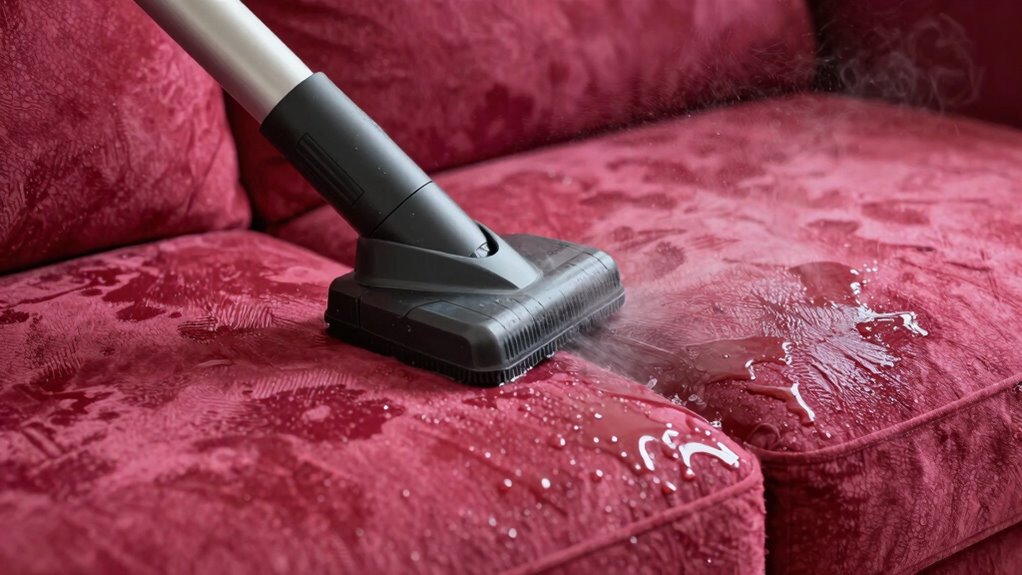
When using an upholstery extractor, mistakes can easily lead to damage or ineffective cleaning. You might think that just running the machine over your sofa will do the trick, but improper use can cause more harm than good. To get the best results, it’s essential to understand how to operate your cleaning equipment properly. Customer tips can be invaluable here—learning from those who’ve been through the process helps you avoid common pitfalls.
One of the biggest mistakes is over-wetting the fabric. While it might seem logical to use lots of water to loosen dirt, applying too much liquid can saturate the upholstery deeply. This not only makes drying take longer but also risks mold and mildew growth. Using the right cleaning equipment involves adjusting the water flow and suction power, depending on the fabric type. Many extractors have settings for different fabrics or levels of soil, so take the time to familiarize yourself with your machine.
Over-wetting fabric prolongs drying and risks mold; adjust water and suction for different upholstery types.
Another common error is rushing the process. Some people try to clean large sections quickly, but this often leads to uneven cleaning and excess moisture. Customer tips emphasize working in small sections and overlapping slightly to ensure thorough coverage. Moving the extractor slowly allows the machine to remove more dirt and moisture effectively. Remember, your goal isn’t just to clean superficially but to extract as much water and dirt as possible in one pass.
Using improper cleaning solutions is another mistake that can damage your upholstery. Not all cleaning agents are suitable for every fabric type, and some may leave residues or discolorations. Always check the manufacturer’s recommendations or consult customer tips for which cleaning solutions work best with your furniture. When mixing cleaning solutions, follow the instructions carefully to avoid over-concentrating, which can lead to stiff fabrics or residue buildup.
Lastly, neglecting to test a small, hidden area before a full clean-up is a mistake that can cause irreversible damage. Some fabrics are sensitive to water or cleaning solutions and may discolor or shrink. Before you start, apply a small amount of water or cleaner to an inconspicuous spot and wait a few minutes to check for any adverse reactions. Additionally, understanding your at-home cleaning technology can help you operate your extractor more safely and effectively. This simple step can save you from costly repairs or replacements down the line.
Products Worth Considering

Dyson Ball Animal Total Clean Upright Vacuum

Sonos Era 100 Wireless Smart Speaker, Black

Ring Battery Doorbell and Chime (3rd Gen), Satin Nickel
As an affiliate, we earn on qualifying purchases.
Frequently Asked Questions
How Can I Tell if My Sofa Is Over-Wet After Extraction?
You can tell if your sofa is over-wet after extraction by checking for fabric discoloration or a musty odor development. If the fabric looks darker or feels damp to the touch long after cleaning, it’s a sign of over-wetting. These issues indicate excess moisture, which can lead to mold or mildew. To avoid this, use the extractor sparingly and guarantee proper drying to prevent damage.
What Are the Signs of Water Damage in Upholstery?
You’ll notice water damage in upholstery through water stains and fabric discoloration. If your sofa’s fabric appears darker or has spots that don’t dry, it’s a sign of excess moisture. You might also feel dampness or detect a musty smell, indicating incomplete drying. Keep an eye out for these signs after cleaning; addressing water damage promptly prevents mold growth and further fabric deterioration.
Can Over-Wetting Cause Mold or Mildew Growth?
Did you know that mold spores can start growing within 24 to 48 hours of moisture retention? Over-wetting your sofa with excessive water or cleaning chemicals creates ideal conditions for mold and mildew. When you use too much moisture, it doesn’t fully evaporate, encouraging fungal growth. To prevent this, control moisture levels during cleaning and make certain of proper drying, avoiding the risk of mold developing in your upholstery.
How Long Does It Take for a Sofa to Dry Completely?
It typically takes 6 to 8 hours for a sofa to dry completely, depending on drying methods and moisture levels. To speed up drying, use fans, open windows, and dehumidifiers to improve airflow and reduce moisture. Keep in mind, thicker cushions or high humidity can extend drying time. Check periodically by feeling moisture levels in the fabric, ensuring it’s fully dry before use to prevent mold or mildew growth.
Are There Specific Fabrics More Prone to Over-Wetting?
Certain fabrics, like delicate or highly sensitive ones, are more prone to over-wetting because they absorb moisture quickly. Fabrics with low stain resistance tend to hold onto water longer, increasing over-wetting risk. You should be cautious with microfiber, velvet, or natural fibers like cotton and linen, as they’re more sensitive to excess moisture. Always test a small area first and adjust your extraction technique to prevent damaging your upholstery.
Conclusion
Think of your sofa as a delicate garden needing just the right amount of water. Over-wetting with an upholstery extractor is like flooding those tender plants—dangerous and hard to recover from. By avoiding common mistakes, you protect your furniture’s health and keep it looking fresh. Remember, patience and care are your best tools. Handle your sofa gently, and it’ll reward you with lasting beauty and comfort—like a well-tended garden that blooms year after year.