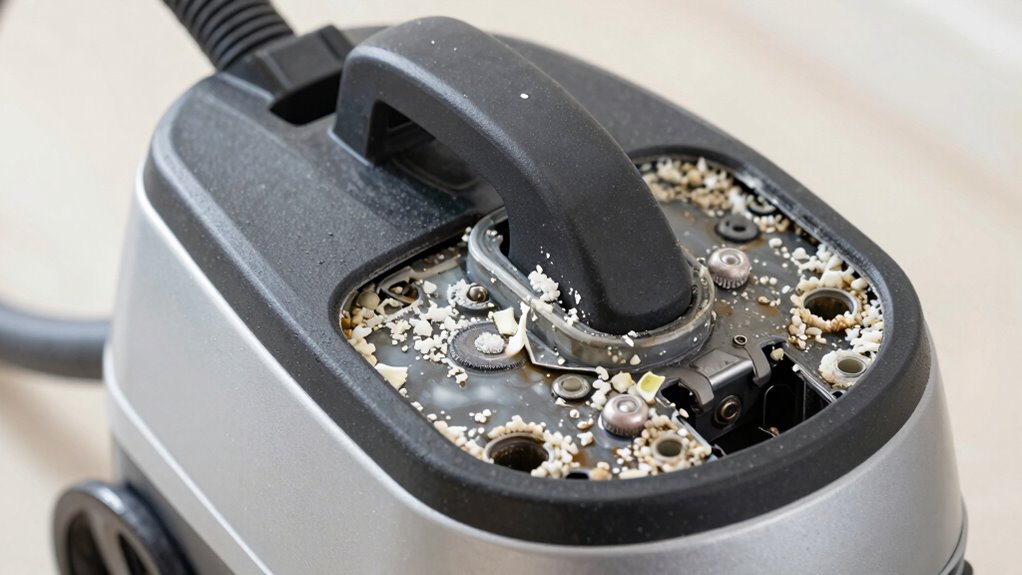

To descale your steam cleaner before performance drops, start by unplugging it and emptying the water tank. Fill the tank with a mixture of equal parts vinegar and water and let it sit for 15-30 minutes to loosen deposits. Run the cleaner for a few minutes, then turn it off and rinse thoroughly with clean water. Using distilled water can prevent future buildup. Keep going to discover more tips for maintaining your device’s peak efficiency.

Get cleaning gear delivered free with Prime
- Fast, free delivery on millions of items
- Prime Video, Amazon Music and more included
- Member-only deals all year
Key Takeaways
- Unplug the cleaner, empty the water tank, and fill with a vinegar-water descaling solution.
- Run the cleaner briefly to circulate the solution, then turn off and let sit for 15-30 minutes.
- Thoroughly rinse the tank with clean water to remove vinegar residue before reusing.
- Use distilled or demineralized water for future cleaning to prevent mineral buildup.
- Regularly repeat descaling every few months, especially in areas with hard water, to maintain optimal performance.
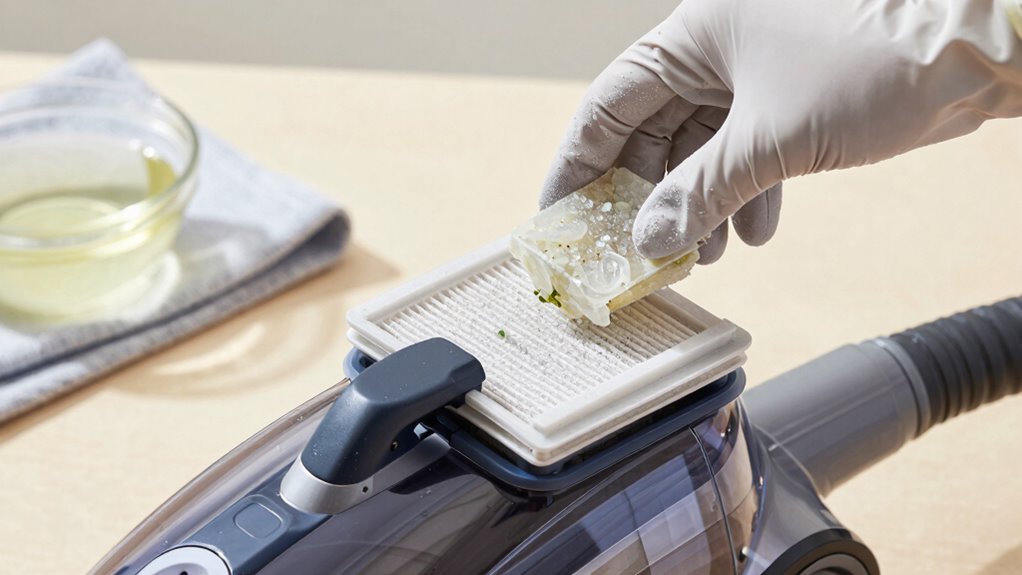
Have you ever wondered why your steam cleaner isn’t working as efficiently as it used to? Over time, mineral deposits from tap water can accumulate inside the device, leading to reduced steam output and longer cleaning times. That’s where proper steam cleaner maintenance becomes essential. Regularly descaling your unit helps prevent performance drops and extends its lifespan. Descaling isn’t complicated, but skipping this step can cause your cleaner to sputter or produce weak steam, making cleaning more frustrating.
Mineral buildup reduces steam power; regular descaling keeps your cleaner running smoothly and efficiently.
The first step in maintaining your steam cleaner is to perform mineral buildup removal. Start by unplugging the machine and emptying any remaining water from the tank. Next, fill the tank with a descaling solution—usually a mixture of equal parts white vinegar and water. Vinegar is a natural and effective descaler that dissolves mineral deposits without harming the internal components. Allow the solution to sit in the tank for about 15-30 minutes, giving it time to loosen any stubborn buildup.
Once the solution has soaked, turn on the cleaner and let it run for a few minutes to allow the vinegar mixture to circulate through the system. This process helps break down mineral deposits inside the boiler and steam pathways. Afterward, turn off the machine and allow the solution to cool inside the system. Then, empty the tank and rinse it thoroughly with clean water to remove any vinegar residue. Refill the tank with fresh water and run the cleaner again to flush out remaining deposits and vinegar smell. Using distilled or demineralized water can significantly reduce mineral buildup, making your maintenance routine easier and more effective. Additionally, using proper water types can prevent future buildup and extend the intervals between descaling. Regular maintenance routines are vital for keeping your steam cleaner in top shape and avoiding costly repairs.
To keep your steam cleaner performing optimally, repeat this descaling process regularly—every few months or as recommended by the manufacturer. It’s especially important if you live in an area with hard water, which tends to leave more mineral deposits. Proper steam cleaner maintenance isn’t just about descaling; it also involves inspecting the hoses and nozzles for clogs and wiping down the exterior to prevent dust buildup. Understanding the importance of maintenance can help you avoid unnecessary repairs and extend the life of your appliance.
In the end, consistent mineral buildup removal is key to ensuring your steam cleaner maintains peak performance. Taking the time to descale your device regularly will help you enjoy powerful steam, efficient cleaning, and a longer-lasting machine. When your steam cleaner is well-maintained, you won’t have to worry about performance dips or costly repairs. Instead, you’ll keep your cleaning routine smooth and effective, saving you both time and money in the long run.
Products Worth Considering

Ring Alarm 14-Piece Wireless Security System Kit

Samsung 85 M80H Series Mini LED 4K Smart TV (2026)

Roborock Q7 M5+ Robot Vacuum and Mop with Self-Emptying Dock
As an affiliate, we earn on qualifying purchases.
Frequently Asked Questions
How Often Should I Descale My Steam Cleaner?
You should descale your steam cleaner every 1 to 3 months, depending on your maintenance routines and cleaning frequency. If you use it frequently or have hard water, more regular descaling is necessary to keep it performing at its best. Regularly checking for mineral buildup and following the manufacturer’s instructions will help you determine the right schedule. Staying consistent with descaling ensures your steam cleaner stays efficient and prolongs its lifespan.
Can I Use Vinegar for Descaling?
Yes, you can use vinegar for descaling your steam cleaner. Vinegar is a popular DIY solution that effectively removes mineral build-up. However, if you prefer a commercial descaler, those are specially formulated for steam cleaners and may work more efficiently. Always check your manufacturer’s instructions before using vinegar or any descaler, and make sure you rinse thoroughly afterward to prevent any residue that could affect performance.
What Signs Indicate Descaling Is Needed?
Think of your steam cleaner as a delicate instrument that whispers when it’s out of tune. If you notice reduced water mineralization, longer heating times, or less steam power, it’s a sign descaling is needed. Regular descaling frequency prevents mineral buildup from clogging the system, keeping your device humming smoothly. Don’t wait for performance to falter—listen to these signs and act before your cleaner’s efficiency dims.
Are Descaling Chemicals Safe for All Steam Cleaners?
Descaling chemicals aren’t safe for all steam cleaners, so you should check the manufacturer’s instructions first. Chemical safety varies, and some may damage certain models. Opt for eco-friendly solutions whenever possible, as they’re generally safer for both your device and the environment. Always test a small area first, and follow the recommended dilution ratios to prevent harm. When in doubt, consult your steam cleaner’s manual or a professional.
Is Descaling Necessary for Handheld Steam Cleaners?
Think of your handheld steam cleaner as a heart that needs proper care to beat strong. Yes, descaling is necessary for handheld steam cleaners. Regular steam cleaner maintenance, including descaling techniques, keeps their performance at its peak. Mineral build-up can clog the system, reducing efficiency and lifespan. So, don’t skip this crucial step—it’s essential for maintaining the power and longevity of your device.
Conclusion
Just like a well-tuned instrument, your steam cleaner performs best when properly maintained. Descaling keeps it humming smoothly, ensuring every steam burst feels as fresh as a mountain spring. Think of your cleaner as a trusted companion on your cleaning journey—neglect it, and it falters; care for it, and it rewards you with sparkling results. Keep it descaled, and it’ll serve you as faithfully as a loyal knight guarding your castle of cleanliness.