
To remove sticky residue from cabinet doors, start by spraying a mixture of equal parts vinegar and warm water onto the affected areas. Let it sit for a few minutes to loosen grime. Then, wipe with a soft cloth or sponge. For stubborn spots, apply a baking soda paste and gently scrub with a soft-bristled brush. If you want extra tips and techniques to keep your cabinets spotless, keep exploring further.
Listen free for 30 days with Audible
Thousands of audiobooks and originals — cancel anytime.
As an affiliate, we earn on qualifying purchases.
Key Takeaways
- Spray a vinegar and water mixture onto sticky areas, let sit, then wipe with a soft cloth.
- Apply a baking soda paste to stubborn patches and gently scrub with a soft-bristled brush.
- Rinse the surface with a damp cloth to remove residue and prevent streaks.
- Dry thoroughly with a clean, dry cloth to avoid water spots.
- Maintain cleanliness by wiping spills immediately and regularly cleaning cabinet doors.
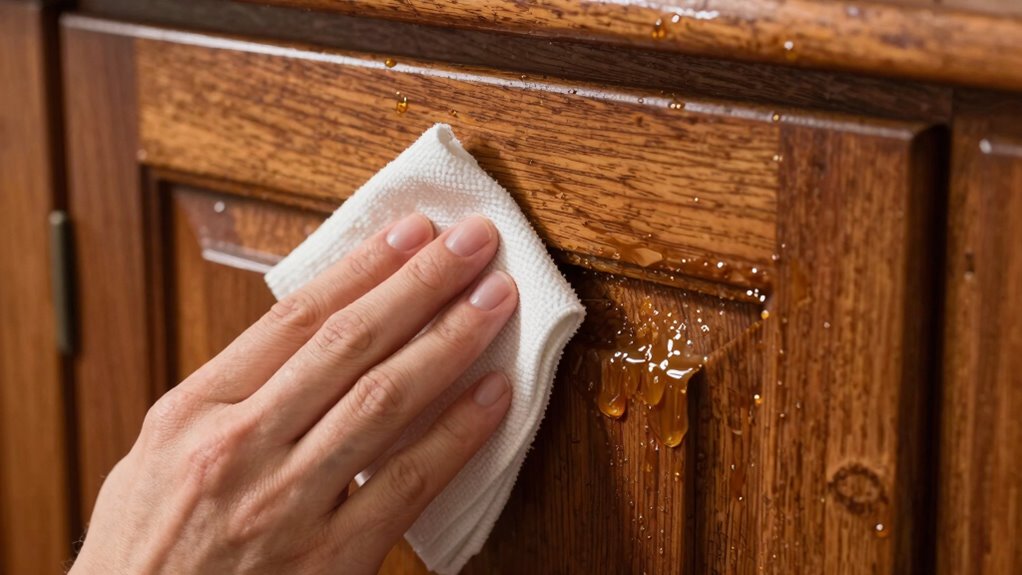
Sticky residue on cabinet doors can be frustrating, but luckily, removing it is straightforward. When you notice that gooey film or sticky patches have built up on your cabinets, it’s often caused by spills, grease, or residue from cleaning products. Instead of reaching for harsh chemicals, you can use simple household items like cleaning vinegar and baking soda to restore your cabinets’ appearance. These natural solutions are effective, affordable, and gentle on your surfaces.
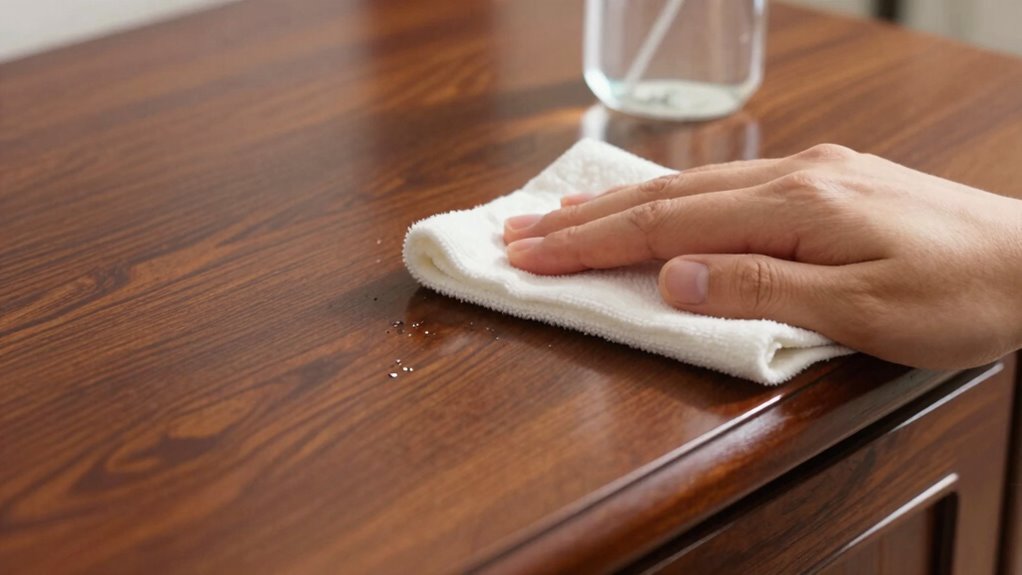
Start by preparing your cleaning solution with vinegar. Mix equal parts of cleaning vinegar and warm water in a spray bottle. Spray the mixture generously onto the sticky areas, making sure to cover all affected spots. Allow it to sit for a few minutes—this helps break down the sticky residue and loosen it from the surface. Afterward, grab a soft cloth or sponge and wipe the area clean. If the residue persists, don’t hesitate to repeat the process. Vinegar’s acidity is excellent for dissolving grease and sticky substances, making it a go-to solution for many cleaning tasks.
Mix vinegar and warm water, spray on sticky spots, and wipe clean for easy residue removal.
If the sticky residue proves stubborn, try a baking soda scrubbing method. Make a paste by mixing baking soda with a small amount of water until it forms a thick, grainy paste. Apply this paste directly onto the sticky patches on your cabinet doors. Use a soft-bristled brush or an old toothbrush to gently scrub the paste into the residue. Baking soda acts as a mild abrasive that lifts grime without scratching the surface. As you scrub, the baking soda will help lift and loosen the sticky film. Once you’ve scrubbed thoroughly, wipe away the paste with a damp cloth, rinsing the cloth frequently to remove any loosened residue. For particularly stubborn spots, repeat the baking soda scrubbing process until the surface feels clean. Additionally, incorporating regular cleaning routines can help prevent future buildup of sticky residues, saving you time and effort in the long run.
Understanding home maintenance techniques can help prevent future buildup of sticky residues. Regular cleaning and preventative care can extend the life of your cabinets and keep them looking fresh. Incorporating preventative measures like wiping spills immediately and using gentle cleaning products can significantly reduce the likelihood of sticky residue accumulation. For best results, combine these methods. Start with vinegar spray to soften the residue, then follow up with baking soda scrubbing on any remaining sticky patches. After cleaning, wipe down the entire cabinet door with a damp cloth to remove any leftover cleaning solution and baking soda residue. Finish by drying the surface with a clean, dry cloth to prevent water spots. Being aware of common household spills and addressing them promptly can also significantly reduce buildup over time.
vinegar spray for cleaning cabinets
As an affiliate, we earn on qualifying purchases.
As an affiliate, we earn on qualifying purchases.
Frequently Asked Questions
Is It Safe to Use Vinegar on Painted Cabinet Doors?
Yes, vinegar is generally safe on painted finishes if used carefully. Vinegar safety is important because its acidity can damage some paints or finishes over time. To avoid any issues, dilute the vinegar with water and test it on a small, hidden area first. If there’s no damage, gently wipe the cabinet doors. Always follow up with a clean, damp cloth to remove any residue.
Will Harsh Chemicals Damage My Cabinet Finish?
Harsh chemicals can damage your cabinet finish, especially on sensitive materials like painted or lacquered surfaces. Think of your cabinet material as delicate glass—you wouldn’t scrub it with a gritty brush. Using strong chemicals too often can wear down the finish, leading to peeling or discoloration. Stick to gentle cleaners and clean regularly; this preserves your cabinet’s beauty and extends its lifespan, much like routine care keeps a fine piece of art pristine.
Can I Use a Hairdryer to Soften Sticky Residue?
Yes, you can use a hairdryer to soften sticky residue, but you need to prioritize hairdryer safety. Keep the dryer on a low or warm setting and hold it a few inches away from the surface to prevent heat damage. This residue softening technique helps loosen stubborn gunk without harsh chemicals. Gently heat the area, then wipe away the softened residue with a soft cloth for best results.
How Long Does It Take for the Residue to Fully Remove?
The residue’s removal time is like watching paint dry—it varies, but generally takes about 10 to 30 minutes. Residue duration depends on how stubborn it is and the method you use. If you soften it with a hairdryer first, it will come off faster. Be patient, and you’ll see the surface clear up, revealing your cabinet doors’ original shine. Just stay consistent, and you’ll get there!
Are There Eco-Friendly Methods for Cleaning Sticky Residues?
Yes, you can use eco-friendly methods like natural remedies and DIY solutions to clean sticky residues. For instance, mix equal parts of vinegar and water or apply a small amount of baking soda paste. These options are gentle, non-toxic, and environmentally friendly. Simply rub the solution on the residue, let it sit for a few minutes, then wipe clean with a damp cloth. It’s effective and safe for your cabinets and the environment.
Conclusion
Now that you’ve tackled that stubborn sticky residue, your cabinet doors are practically restored to their original glory—glossier than a mirror, smoother than silk, and cleaner than a whistle in a hurricane. With this simple trick, you’ve turned a sticky nightmare into a shiny, pristine masterpiece that could make even the most tired kitchen sparkle with envy. So go ahead, admire your work—your cabinets are now the shining stars of your home, and nobody will ever guess what you’ve accomplished!
Fall Picks
fall essentials
As an affiliate, we earn on qualifying purchases.