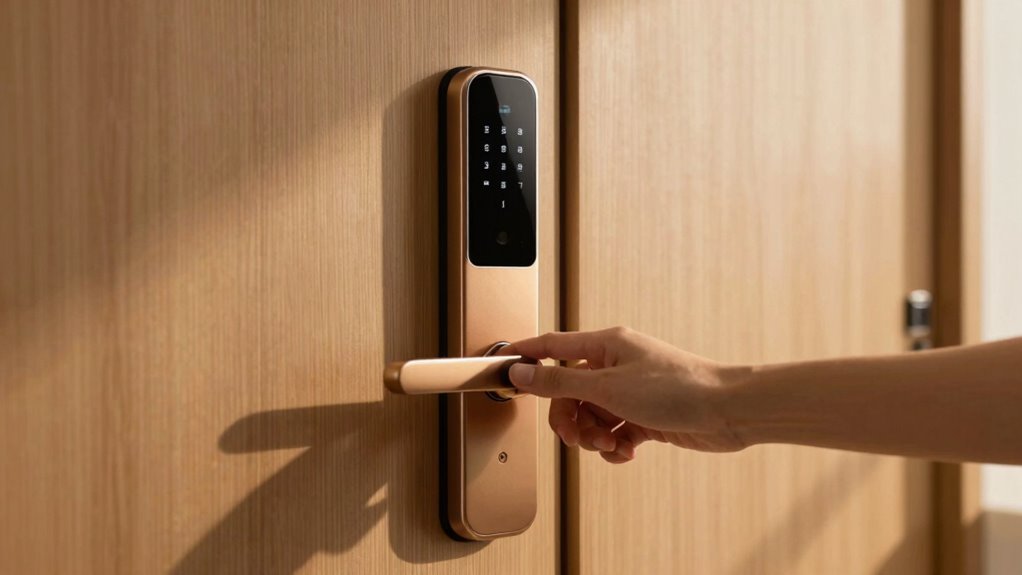

Smart locks make turnovers easier by allowing you to remotely update access permissions, saving time and avoiding physical key handovers. They are convenient for quickly changing who can enter, especially for tenants or service providers. However, they also add risks if security features are weak, such as hacking or cyber threats. Proper security measures and battery management are essential to prevent disruptions or unauthorized access. To learn more about balancing convenience and safety, keep exploring the details below.
Key Takeaways
- Smart locks simplify turnovers by allowing remote access updates, reducing physical key exchanges and speeding up processes.
- They pose risks if security features are weak, making them vulnerable to hacking or unauthorized remote access.
- Regular software updates and strong encryption are essential to protect against cyber threats.
- Battery failures can cause lockouts, so proactive management and backup options are crucial.
- Balancing convenience with robust security measures minimizes risks while maximizing turnover efficiency.
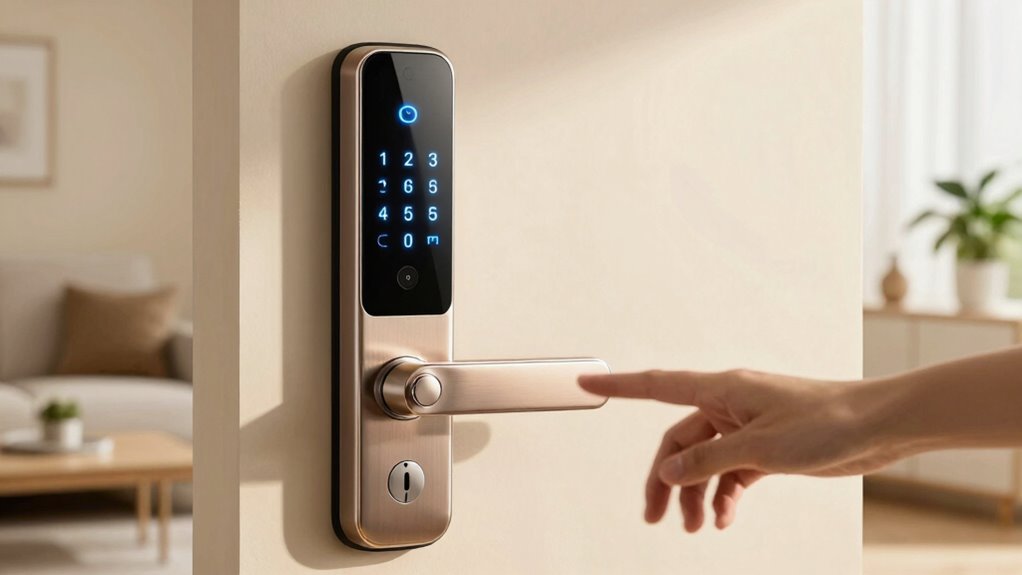
Smart lock turnovers are becoming increasingly common as more homeowners and property managers adopt digital security solutions. These devices simplify the process of changing access for new tenants, service providers, or temporary visitors. Instead of physically swapping out locks or handing over spare keys, you can simply update the lock’s access credentials remotely. This feature, known as remote access, allows you to grant or revoke entry from anywhere—whether you’re at home, in the office, or halfway across the world. It’s a game-changer for convenience, especially in situations demanding quick turnover. With just a few taps on your smartphone, you can provide a new code or disable an old one, streamlining the entire process.
However, while remote access offers undeniable benefits, it also introduces some risks. If your smart lock’s security isn’t robust, hackers could potentially gain control and manipulate access. That’s why choosing a device with strong encryption and multi-factor authentication is vital. Additionally, you need to be cautious about the security of your internet connection, making sure your Wi-Fi network is secure and your app is updated regularly. These measures help prevent unauthorized remote access and keep your property safe. It’s also important to consider the security features that a smart lock offers to ensure it can withstand potential cyber threats.
Another important consideration is the lock’s battery life. Smart locks depend on batteries to operate, and if the batteries die unexpectedly, you could find yourself locked out or forced to use backup options. Some models provide notifications when battery levels are low, allowing you to replace batteries proactively. Others may have backup keys or auxiliary power options, but relying solely on these can be inconvenient if you’re unprepared. Properly managing battery life is essential to prevent disruptions during turnover periods. Regularly checking battery status and keeping spare batteries nearby ensures you’re never caught off guard. Additionally, understanding the power management features of your smart lock can help optimize battery performance and longevity. Incorporating security best practices can further reinforce your system’s resilience against potential threats. It’s also helpful to research whether your chosen device offers software updates that patch vulnerabilities and improve overall security. Moreover, choosing a smart lock with cloud connectivity can offer additional layers of security and remote management options, further enhancing your control and peace of mind.
When a smart lock makes turnovers easier, it’s often because of its remote access capabilities combined with manageable battery life. These features allow you to handle multiple turnovers efficiently without the need for physical key exchanges or lock replacements. Yet, if you overlook security protocols or neglect battery maintenance, the same smart lock can become a liability. The convenience of remote access should always be balanced with strong security practices, and battery management should be a routine part of your maintenance. In doing so, you maximize benefits while minimizing risks, making smart lock turnovers a reliable and streamlined process rather than a potential security headache.
As an affiliate, we earn on qualifying purchases.
Frequently Asked Questions
How Secure Are Smart Locks Compared to Traditional Locks?
Smart locks generally offer good security, but they can be vulnerable if not properly protected. They score high on user convenience and sleek smart lock aesthetics, making access easy. However, you should make certain of strong, unique passwords and keep firmware updated. While they’re often as secure as traditional locks, they can pose risks if hacked or malfunctioning. Proper use and maintenance help maximize their security benefits.
Can Smart Locks Be Hacked Easily?
Smart locks can be hacked, but it’s not always easy. Hackers often exploit encryption vulnerabilities or find ways to bypass security through weak passwords. Regular firmware updates are essential because they fix security flaws and strengthen protection. If you keep your smart lock’s firmware current and use strong, unique passwords, you greatly reduce the risk of hacking. Stay vigilant and prioritize security to keep your smart lock safe.
Do Smart Locks Require Professional Installation?
Smart locks usually don’t require professional installation, making user convenience straightforward. You can often install them yourself using simple tools, thanks to their user-friendly design. Plus, their sleek smart lock aesthetics blend well with your existing door hardware. This DIY approach saves time and money, while ensuring you enjoy easy access and enhanced security. Just follow the manufacturer’s instructions carefully to avoid any installation issues.
Are Smart Locks Compatible With All Home Security Systems?
Think of your smart lock as a key in a vast, interconnected kingdom. Not all locks fit every castle’s security system, but many are compatible. With voice control and remote access, your smart lock can work seamlessly with various home security systems. However, compatibility depends on the lock’s make and your system’s tech. Double-checking the specifications guarantees you maximize security without opening unintended doors.
How Does Battery Life Affect Smart Lock Reliability?
Battery life directly impacts your smart lock’s reliability. When battery longevity is high, you’ll enjoy consistent security without frequent replacements, while poor power management can lead to unexpected lock failures. To guarantee dependable performance, monitor battery levels regularly and choose locks with efficient power management features. This way, your smart lock stays functional, providing peace of mind and avoiding inconvenience caused by dead batteries.
Conclusion
Smart locks can simplify turnovers, offering convenience and enhanced security, but they also introduce new risks if not properly managed. Did you know that nearly 30% of smart lock users experience some form of technical issue or security breach? Staying informed and cautious helps you assure the benefits while minimizing potential pitfalls. Ultimately, weighing the convenience against the risks ensures you make the best choice for your property’s safety and ease.