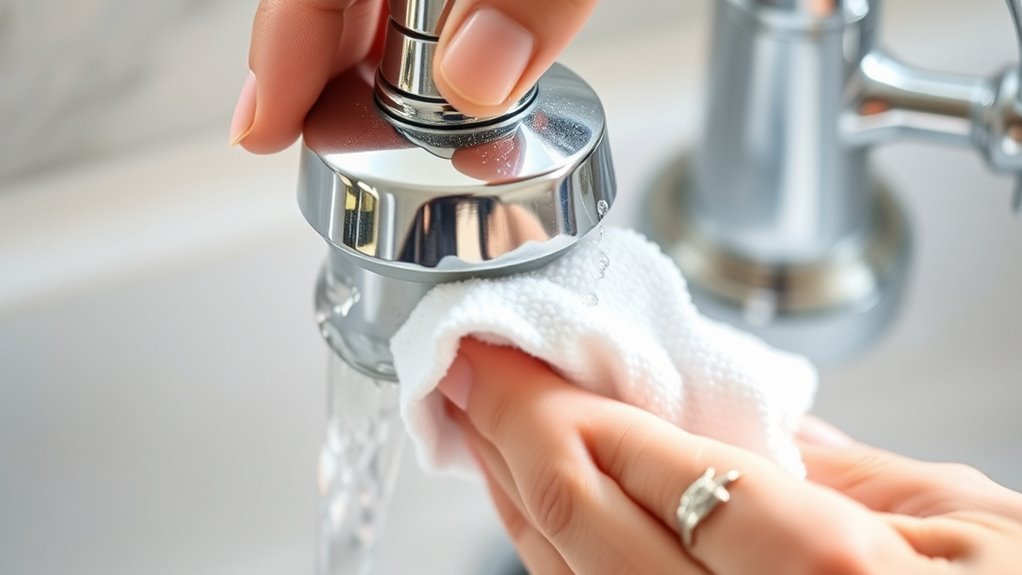

To remove limescale from your faucets, start by soaking a cloth in white vinegar and wrapping it around the affected areas for an hour or overnight to dissolve deposits. For stubborn buildup, make a baking soda paste with water and scrub gently with an old toothbrush. You can also use commercial limescale cleaners safely by following the instructions carefully. If you’d like more tips on preventing future buildup, there’s helpful advice below.
Key Takeaways
- Use white vinegar soaked in a cloth or paper towel to wrap around the faucet and let sit for an hour or overnight.
- Apply a baking soda paste directly to limescale areas, let sit, then scrub gently with a toothbrush or cloth.
- For stubborn deposits, use commercial limescale cleaners following manufacturer instructions carefully.
- Wear gloves and ensure proper ventilation when using chemical cleaners to protect skin and respiratory health.
- Regularly wipe faucets with a damp cloth and consider installing a water softener to prevent future limescale buildup.
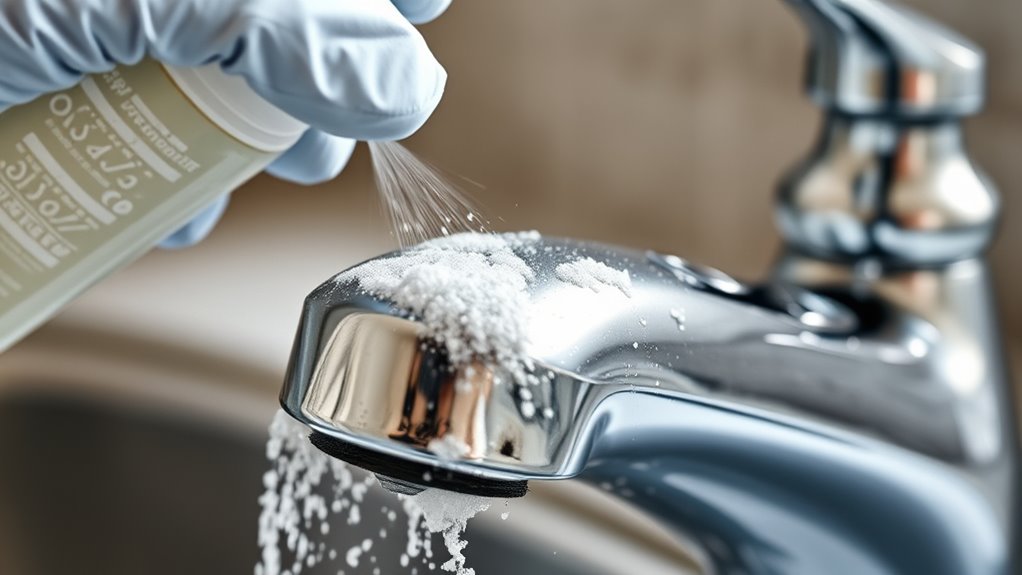
Limescale buildup on faucets can make your fixtures look grimy and reduce water flow, but luckily, it’s easy to remove with simple methods. When tackling limescale, you have two main options: natural remedies and commercial cleaners. Natural remedies are often preferred because they’re affordable, eco-friendly, and free from harsh chemicals. Common household items like vinegar and baking soda work wonders for breaking down mineral deposits. To use vinegar, soak a cloth or paper towel in white vinegar and wrap it around the affected area. Let it sit for an hour or overnight if the buildup is stubborn, then scrub gently with an old toothbrush or cloth. Baking soda can be made into a paste by mixing it with a small amount of water, then applied directly to the limescale. Let it sit for a few minutes before scrubbing. These natural methods are effective for light to moderate buildup and are safe to use regularly. Proper faucet maintenance can help prevent future buildup and extend the lifespan of your fixtures.
If natural remedies don’t do the trick, commercial cleaners are available that can quickly dissolve stubborn deposits. These products often contain stronger acids or chemicals designed specifically to target limescale. When using commercial cleaners, always read and follow the manufacturer’s instructions carefully. Wear gloves and ensure good ventilation because some cleaners can be harsh on your skin or produce fumes. Apply the cleaner directly to the affected area, let it sit for the recommended time, then scrub with a brush or cloth. Rinse thoroughly afterward to remove any residue. Commercial cleaners tend to work faster and are especially useful for heavy buildup or persistent deposits that don’t respond to natural remedies.
Regardless of which method you choose, it’s best to prevent future limescale buildup by wiping down your faucets regularly, especially if you live in an area with hard water. Wiping down with a damp cloth after each use minimizes mineral deposits and keeps your fixtures looking shiny. Installing a water softener can also considerably reduce limescale formation over time. Remember, consistency is key. Regular maintenance can save you time and effort in the long run, making your faucets last longer and perform better. Whether you opt for natural remedies or commercial cleaners, the goal is to restore your fixtures’ appearance and water flow without damaging their finish. By choosing the right approach and maintaining your faucets, you’ll keep your bathroom and kitchen looking clean, functional, and free from unsightly limescale buildup.
Frequently Asked Questions
Can Limescale Build-Up Damage My Faucet Over Time?
Yes, limescale build-up can damage your faucet over time, leading to faucet corrosion and leaks. When limescale accumulates, it can clog water flow and cause the internal parts to wear out faster. Poor water quality often worsens this issue, making it more likely for your faucet to suffer damage. Regular cleaning and maintenance help prevent extensive limescale build-up, protecting your faucet and extending its lifespan.
Are There Eco-Friendly Methods to Remove Limescale?
You can use eco-friendly methods like biodegradable solutions and natural cleaning agents to remove limescale effectively. For example, imagine using a mixture of white vinegar and baking soda on your faucet, which dissolves the mineral deposits safely. These natural options are not only gentle on your plumbing but also better for the environment. They work just as well as chemical cleaners, helping you maintain a clean faucet without harmful impacts.
How Often Should I Clean Limescale From My Faucets?
You should clean limescale from your faucets at least once a month as part of your maintenance schedule. Regular cleaning prevents buildup and keeps your faucets functioning smoothly. If you notice more mineral deposits, increase cleaning frequency to every two weeks. Consistent maintenance diminishes the need for harsh scrubbing later and helps keep your bathroom or kitchen looking fresh and clean. Staying proactive ensures limescale doesn’t become a stubborn problem.
Will Lemon Juice Harm My Faucet’s Finish?
Lemon cleaning generally won’t harm your faucet’s finish if you use it properly. However, frequent or prolonged exposure to lemon juice can cause faucet corrosion over time, especially on sensitive finishes. To prevent damage, dilute lemon juice with water and avoid leaving it on your faucet for too long. Always rinse thoroughly after cleaning and dry the surface to maintain its shine and prevent corrosion.
What Tools Are Best for Removing Stubborn Limescale?
You’ll want to grab abrasive pads and plastic scrapers—they’re your trusty tools for stubborn limescale. Imagine a tiny battle where abrasive pads gently scrub away the residue, while plastic scrapers pry loose those stubborn deposits. The irony? These simple tools, often overlooked, are your best allies in restoring that shiny faucet. Just be careful not to scratch the finish, and you’ll have your faucet looking brand new in no time.
Conclusion
Now that you know how to remove limescale from your faucets, you can restore their shine and function. Think of it as turning back time, much like a skilled artisan restoring a cherished masterpiece. With a little effort, your faucets will gleam like new, reminding you that even the toughest stains can be conquered. So go ahead, reclaim your space and enjoy the satisfaction of a job well done—your home deserves it.