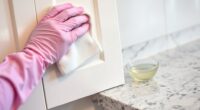
To remove turmeric stains from surfaces, start by blotting excess with a clean cloth to prevent spreading. Use warm water and mild dish soap or a baking soda paste depending on the surface. Gently scrub with a soft brush or sponge and rinse thoroughly. For stubborn stains, carefully apply hydrogen peroxide or a vinegar solution, testing first on a small area. If you want detailed steps for different surfaces, you’ll find useful tips below.
Key Takeaways
- Blot fresh turmeric stains immediately to prevent spreading and set-in.
- Use a mild cleaning solution like warm water with dish soap or a baking soda paste for light stains.
- For stubborn stains, carefully apply 3% hydrogen peroxide or a vinegar-water mixture, testing first on a small area.
- Gently scrub surfaces with soft brushes or sponges, avoiding abrasive materials to prevent damage.
- Rinse thoroughly and dry the surface to remove residue and prevent re-staining.

Turmeric stains can be stubborn, but with the right approach, you can restore your surfaces to their original condition. The key is acting quickly and choosing effective stain removal techniques tailored to the material you’re dealing with. Whether the stain is on your kitchen counter, tile, or fabric, understanding surface cleaning tips can make all the difference in achieving a clean, stain-free look.
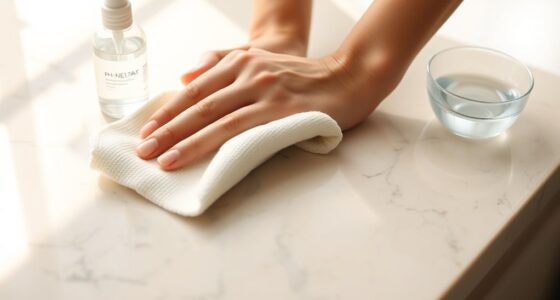
Start by blotting up as much of the turmeric as possible if the stain is fresh. Use a clean cloth or paper towel to gently absorb the excess without spreading it further. For hard surfaces like countertops, a mixture of warm water and mild dish soap often works well. Apply the soapy solution with a soft cloth or sponge, then rinse with clean water and dry thoroughly. This simple surface cleaning tip can often lift light stains before they set in.
If the stain persists, consider more targeted stain removal techniques. For tile or ceramic surfaces, a paste made from baking soda and water can be a powerful ally. Spread the paste over the stain, let it sit for 10-15 minutes, then scrub gently with a soft-bristled brush or sponge. Rinse thoroughly to remove any residue. For stubborn stains on smooth surfaces, a 3% hydrogen peroxide solution can be effective. Apply it carefully with a cloth, letting it sit briefly before wiping clean. Always test any cleaning solution on a small, inconspicuous area first to guarantee it won’t damage the surface.
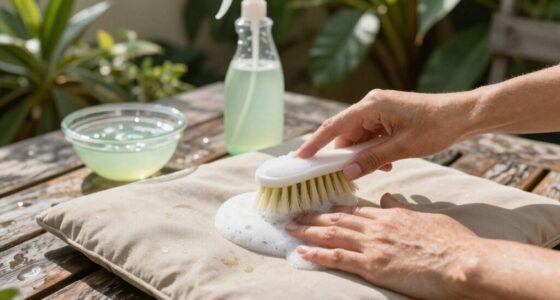
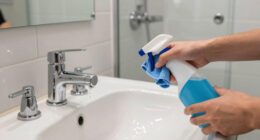
When dealing with fabric or upholstery, act quickly to prevent the stain from setting. Blot excess turmeric, then apply a mixture of cold water and a small amount of liquid detergent directly onto the stain. Gently blot or dab to lift the color, avoiding rubbing, which can spread the stain further. For persistent stains, a mixture of equal parts white vinegar and water can help break down turmeric pigments. Spray or dab this solution onto the stain, then rinse with cold water. Remember, patience is key—repeating these steps may be necessary for complete removal. Additionally, understanding surface materials and their cleaning requirements can help prevent damage during stain removal.

Goof Off Marks, Messes & Stains Remover, 8 fl. oz. Spray, Household Surface Safe, Removes Spots and Stains from Plastics, Fabric, and Clothing, Ideal for Households with Kids
HOUSEHOLD SPOT & STAIN REMOVER: Goof Off Marks, Messes & Stains Remover works the first time, cutting through…
As an affiliate, we earn on qualifying purchases.
As an affiliate, we earn on qualifying purchases.
Frequently Asked Questions
Can Turmeric Stains Be Removed From Delicate Fabrics?
Yes, turmeric stains can be removed from delicate fabrics if you act quickly. Use a gentle stain remover that’s safe for fabric safety, and avoid harsh scrubbing to prevent damage. To prevent stains, treat spills immediately and test any cleaning solution on a small area first. By acting swiftly and choosing the right products, you’ll improve your chances of completely removing turmeric stains from delicate fabrics.
Are There Natural Remedies for Turmeric Stain Removal?
You can definitely try natural remedies for turmeric stain removal. Many people prefer these options because they’re gentle and eco-friendly. For effective stain removal, mix baking soda with water to create a paste, or apply lemon juice directly to the stain. Let it sit, then scrub gently. Vinegar is also useful. These natural remedies often work well for stubborn turmeric stains without damaging surfaces or fabrics.
How Long Does It Take for Turmeric Stains to Set?
Turmeric stains typically set within 15 to 30 minutes, depending on the surface and amount of turmeric. The stain duration varies, but the longer it sits, the more stubborn it becomes. To prevent deep setting, you should act quickly once the stain appears. The setting time is usually quick, so prompt removal increases your chances of successful cleaning. Don’t wait too long, or you might face more difficulty in removing the stain.
Do Different Surfaces Require Different Cleaning Techniques?
Yes, different surfaces require different cleaning techniques due to surface compatibility. For example, delicate surfaces like wood or marble need gentle stain removal methods, avoiding harsh chemicals that could cause damage. On the other hand, tiles or countertops might handle stronger cleaners. Always identify the surface type first, then choose appropriate stain removal methods to effectively eliminate turmeric stains without harming the material.
Is It Safe to Use Bleach on Turmeric Stains?
Thinking of using bleach on turmeric stains? Be cautious. Bleach safety isn’t guaranteed on all surfaces, especially delicate ones. It’s a powerful stain removal chemical, but it can damage certain surfaces or cause discoloration if misused. Before you proceed, test a small area first. Usually, gentler methods are safer and just as effective for turmeric stains. Don’t risk surface damage—explore safer, more suitable options first.
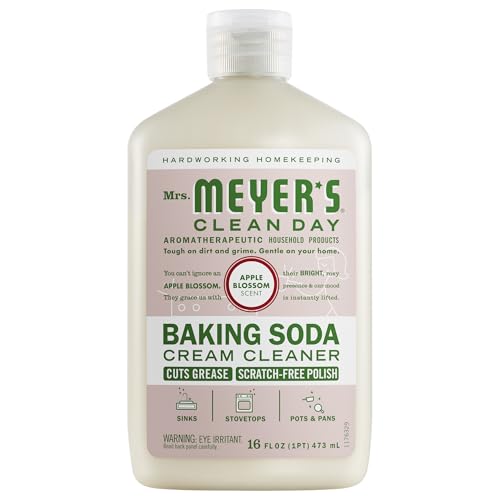
MRS. MEYER'S CLEAN DAY Baking Soda Cream Cleaner, Cuts Grease, Scratch-Free Polish, Apple Blossom, 16 Fl Oz, Pack of 1
Mrs. Meyer’s Baking Soda Cream Cleaner removes soap scum and grease build-up to make your kitchen sparkle
As an affiliate, we earn on qualifying purchases.
As an affiliate, we earn on qualifying purchases.
Conclusion
Removing turmeric stains from surfaces is simple when you act quickly and use the right solutions. Remember, turmeric stains can set in within just 15 minutes, making them harder to remove. So, don’t wait—tackle spills as soon as they happen. With these tips, you can keep your surfaces looking spotless. In fact, studies show that immediate cleaning can increase stain removal success by up to 80%, so it’s worth acting fast!
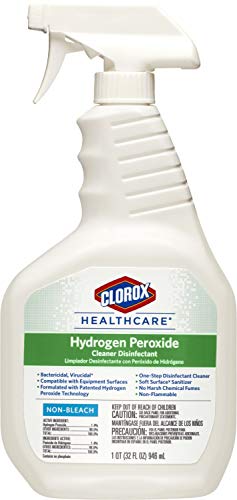
Clorox Healthcare Hydrogen Peroxide Cleaner Disinfectant, Bleach Free, 32 Fluid Ounces (Package May Vary)
HYDROGEN PEROXIDE DISINFECTANT: Clorox Healthcare Hydrogen Peroxide Cleaner Disinfectant delivers great surface compatibility, low residue and fast kill…
As an affiliate, we earn on qualifying purchases.
As an affiliate, we earn on qualifying purchases.

Skylarlife Multi-purpose Surface Stone Cleaning Powder (200g) to remove rust stain, yellowing, oil stains, from most marble, granite, quartz, concrete, countertop and other non-porous surface, remove adhesive spots and stains from boat and plastic and leather
Natural stone stain remover powder. A heavy-duty cleaner for spots, marks and stains.
As an affiliate, we earn on qualifying purchases.
As an affiliate, we earn on qualifying purchases.