
To clean your shower curtains and liners, start by inspecting for mold, soap scum, or discoloration. Fabric curtains can go in the washing machine with gentle detergent and a cup of vinegar or baking soda. For plastic or vinyl liners, soak them in warm water with vinegar, then scrub with a soft brush before rinsing. Dry thoroughly after each use and keep the bathroom well-ventilated to prevent mold. Learning more will help keep your bathroom fresh and mold-free.

Get cleaning gear delivered free — and shop member deals
- Fast, free delivery on millions of items
- Access to Prime Big Deal Days deals on October 6–7
- Prime Video, Amazon Music and more included
Key Takeaways
- Check for signs of mold, soap scum, or discoloration to determine when cleaning is needed.
- Wash fabric curtains in the washing machine with gentle detergent and white vinegar or baking soda.
- Clean plastic or vinyl liners by soaking in warm water with vinegar or mild detergent, then scrubbing and rinsing thoroughly.
- Dry shower curtains and liners after each use by hanging or wiping to prevent moisture buildup and mold growth.
- Maintain good bathroom ventilation and regularly clean to keep curtains and liners mold-free and fresh.
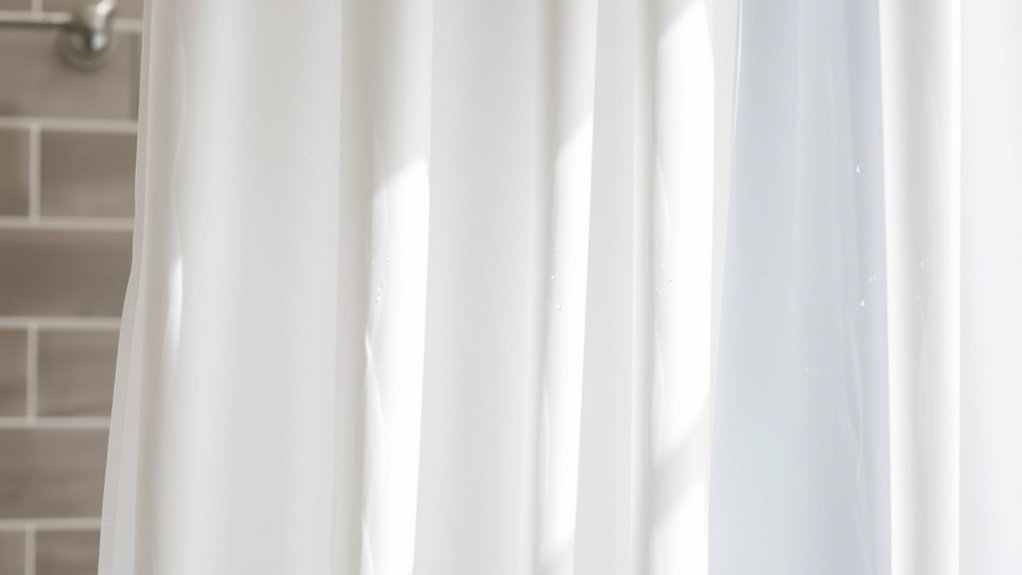
Are your shower curtains and liners starting to look dingy or develop mold? If so, it’s time to take action. Proper fabric maintenance is essential to keep your shower environment fresh, clean, and safe. Mold prevention is a key part of this process because mold thrives in damp, warm spaces like your bathroom. By staying on top of cleaning and maintenance, you prevent the buildup of mold and soap scum that can make your shower look unappealing and potentially cause health issues.
Start by inspecting your shower curtain and liner regularly. If you notice any discoloration, soap scum, or a musty smell, it’s a sign that cleaning is overdue. For fabric curtains, a thorough wash can work wonders. You can usually toss them in the washing machine, but check the care label first. Use warm water and a gentle detergent, and add a cup of white vinegar or a half-cup of baking soda to boost mold prevention. These natural ingredients help break down grime and inhibit mold growth without harsh chemicals. After washing, hang your curtain back up to air dry completely. This promotes proper fabric maintenance by preventing moisture from lingering, which is crucial for mold prevention.
Inspect and wash your shower curtains regularly to prevent mold and keep your bathroom fresh.
For plastic or vinyl liners, cleaning involves a different approach. Fill your bathtub or a large basin with warm water and add a cup of white vinegar or mild detergent. Submerge the liner and use a soft-bristled brush or sponge to scrub away soap scum, mold spots, or any buildup. Pay special attention to corners and creases where mold tends to hide. Rinse thoroughly with clean water to remove any residue. Dry the liner by hanging it in a well-ventilated area or using a towel to wipe it down. Keeping the liner dry after each use is a simple yet effective step in mold prevention, reducing the chances of mold spores taking hold.
Additionally, incorporating Powerful persuasive words into your cleaning routine can motivate consistent maintenance efforts. To further prevent mold growth, consider using a daily shower spray or a squeegee after each shower. This reduces moisture on the surface and helps maintain fabric and material integrity. Regularly washing your curtains and liners every few weeks also prevents stubborn mold from gaining a foothold. Good bathroom ventilation, like running an exhaust fan or opening a window, is equally important. It keeps humidity levels down, making it harder for mold to thrive. By maintaining a consistent cleaning routine and practicing proper fabric maintenance, you can keep your shower curtains and liners looking fresh, clean, and mold-free for years to come.
As an affiliate, we earn on qualifying purchases.
Frequently Asked Questions
How Often Should I Replace My Shower Curtain?
You should replace your shower curtain every 6 to 12 months, depending on its curtain material and condition. If it shows mold, mildew, or persistent stains despite cleaning, it’s time for a replacement. Regularly inspect it to see if it’s faded, torn, or retaining odors. Following a consistent replacement schedule helps prevent mold buildup and keeps your bathroom fresh and hygienic.
Can I Use Bleach on All Types of Shower Liners?
You can use bleach on some shower curtain materials, but it’s crucial to check bleach safety first. For plastic or vinyl liners, a diluted bleach solution can effectively disinfect and remove mold. However, avoid bleach on fabric or fabric-like liners, as it may cause damage or discoloration. Always read the manufacturer’s care instructions to ensure you’re using the right cleaning method without harming your shower curtain or liner.
Are There Eco-Friendly Cleaning Alternatives for Shower Curtains?
Yes, you can use eco-friendly cleaning alternatives for shower curtains. You might explore natural cleaning methods like vinegar and baking soda, which are safe and effective. Recycling options, such as repurposing old curtains or choosing biodegradable liners, help reduce waste. These methods avoid harsh chemicals, support sustainability, and keep your bathroom eco-conscious while maintaining a clean, fresh shower environment.
How Can I Prevent Mold From Forming on My Curtain?
You might think mold prevention is impossible, but consistent curtain maintenance keeps it at bay. After each shower, open the curtain fully to air out, reducing humidity that fosters mold. Regularly clean your curtain using eco-friendly methods, and consider applying a mold-resistant spray. Proper ventilation also plays an essential role. By maintaining your curtain properly and controlling moisture, you considerably lower the risk of mold formation.
Is It Safe to Wash Shower Curtains in a Washing Machine?
Yes, it’s safe to wash shower curtains in a washing machine if you check the material and detergent compatibility first. Use a gentle cycle with warm water and a mild detergent to prevent damage. Remove any hooks or rings beforehand, and consider adding some old towels to balance the load. This method effectively cleans away mold, soap scum, and grime, keeping your curtain fresh and hygienic.
Conclusion
Now that you know how to clean your shower curtains and liners, keeping them fresh is simple. Regular cleaning can cut down mold and bacteria buildup considerably. Did you know that mold spores can cause respiratory issues in 70% of households? Staying on top of cleaning not only keeps your bathroom looking great but also promotes healthier living. Make it a habit, and enjoy a cleaner, safer shower environment every day.
Evergreen bestsellers Picks
bestsellers
As an affiliate, we earn on qualifying purchases.