To winterize your pressure washer, start by adding a fuel stabilization additive to the gas tank and run the engine briefly to circulate it. Next, flush out the system with clean water by running the pressure washer until the flow stops, then clean the detergent system. Disconnect the spark plug wire, store the high-pressure hose indoors, and wipe down the entire unit. Proper storage in a dry, protected area prevents damage and keeps your equipment ready for spring, and here’s more to guarantee you’re fully prepared.

Get cleaning gear delivered free — and shop member deals
- Fast, free delivery on millions of items
- Access to Prime Big Deal Days deals on October 6–7
- Prime Video, Amazon Music and more included
Key Takeaways
- Add a fuel stabilizer to the gasoline and run the engine to circulate it through the system.
- Flush the system with clean water to remove detergent and debris, then drain remaining water.
- Disconnect and store the high-pressure hose indoors to prevent cracking.
- Store the pressure washer in a dry, sheltered area, and cover it with a breathable tarp.
- Check electrical cords and components for damage, and ensure all parts are clean and dry before storage.
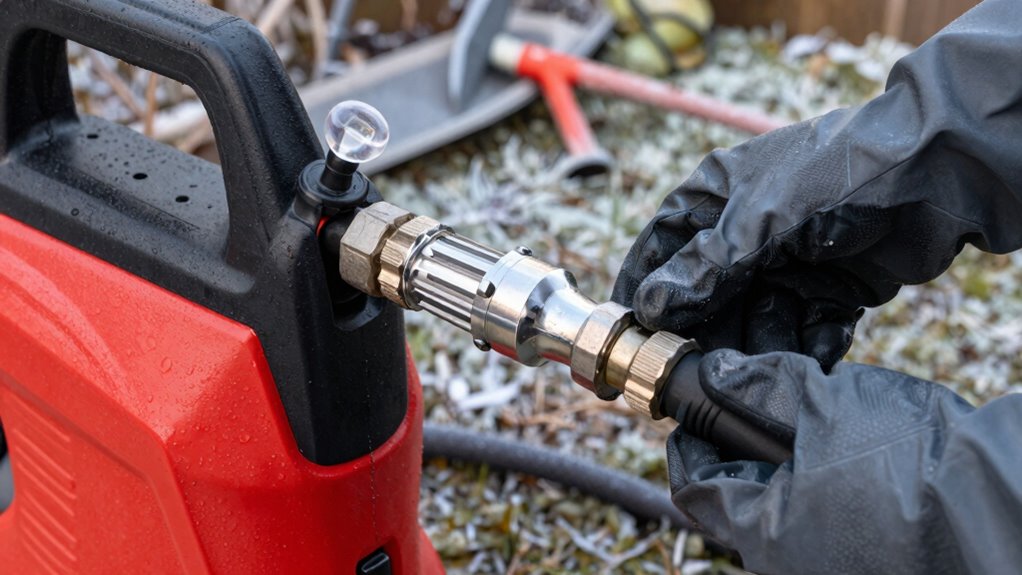
As winter approaches, it’s essential to properly winterize your pressure washer to prevent damage from freezing temperatures. One of the first steps is to address the fuel system. If your pressure washer runs on gasoline, you should add fuel stabilization additive to the tank. This prevents the fuel from breaking down and gumming up the carburetor over the storage period. Run the engine for a few minutes to circulate the stabilized fuel through the system, ensuring all components are protected. Once the engine has cooled, drain any remaining fuel from the tank if you prefer to store it empty, but using stabilized fuel is usually easier and more effective. Remember, leaving untreated fuel can lead to clogs, corrosion, and costly repairs come spring.
Next, focus on electrical safety. Before doing any maintenance, disconnect the spark plug wire to prevent accidental starting. Check the power cord for any signs of damage, such as cracks or frays, and replace it if necessary. If your pressure washer has an electric motor, ensure it’s clean and dry, avoiding moisture infiltration. It’s wise to store the unit in a dry, sheltered location to prevent electrical components from exposure to humidity, which can cause corrosion or short circuits over time. Proper storage of the electrical parts not only enhances safety but also prolongs your pressure washer’s lifespan. Additionally, understanding gadget reviews and product specifications can help you select the best storage solutions for your equipment. To further safeguard your equipment, consider using protective covers designed specifically for pressure washers. Using proper storage techniques can also help prevent corrosion and other damage caused by environmental exposure.
After handling the fuel and electrical safety, you should run the pressure washer to flush out any remaining water in the system. Use clean water and run the unit until the flow stops, indicating that the internal system is clear. If your model has a detergent injection system, clean it thoroughly to avoid mold or residue buildup. Once drained, it’s recommended to remove and store the high-pressure hose indoors to prevent cracking or deterioration. Wipe down the entire unit to remove dirt and moisture, then store it in a dry, protected space. Covering it with a breathable tarp can provide extra protection from dust and debris during winter. Proper winterization not only protects the equipment but also ensures it’s ready for use when warmer weather returns.
pressure washer winterization kit
As an affiliate, we earn on qualifying purchases.
As an affiliate, we earn on qualifying purchases.
Frequently Asked Questions
Can I Winterize My Pressure Washer if It Has Residual Detergent?
Yes, you can winterize your pressure washer even if it has residual detergent. First, you should perform detergent removal by running clean water through the system to flush out any remaining cleaning solution. This step helps prevent residue buildup and potential damage during storage. Ensuring thorough residual cleaning keeps your pressure washer in good condition, ready for use when warmer weather returns. Always follow proper winterization steps for the best results.
How Long Does the Winterization Process Typically Take?
The winterization process usually takes about 30 minutes to an hour, depending on your pressure washer’s complexity. You’ll want to perform spring maintenance and equipment inspection during this time to guarantee everything’s ready for next season. Start by draining water, adding antifreeze if needed, and running the system briefly. This thorough process helps prevent damage, making spring maintenance smoother and extending your equipment’s lifespan.
Is It Necessary to Drain the Oil Before Winter Storage?
Yes, you should drain the oil before winter storage to prevent it from becoming thick or contaminated. An oil change guarantees the engine stays lubricated and in good condition. Additionally, stabilize the fuel by adding a fuel stabilizer, which prevents gumming and corrosion during storage. Properly draining oil and stabilizing fuel help extend your pressure washer’s lifespan and ensure it’s ready for use when spring arrives.
What Temperature Is Too Cold for Pressure Washer Operation?
You shouldn’t operate your pressure washer if temperatures drop below 32°F, as freezing water can cause chemical corrosion and damage internal components. Most units have temperature limits listed in the manual—typically around 32°F to 40°F. When temperatures fall below this range, it’s best to wait until it warms up. Running the pressure washer in extremely cold weather risks damaging the pump and hoses, leading to costly repairs.
Should I Store the Pressure Washer Indoors or Outdoors During Winter?
Storing your pressure washer indoors is like tucking a delicate flower into a cozy garden shed—out of harsh weather. During winter, outdoor storage exposes your equipment to freezing temperatures that can crack components. Indoor protection keeps it safe from snow, ice, and moisture, ensuring your pressure washer stays in good shape. So, always opt for indoor storage during winter to prolong its lifespan and keep it ready for action.
Conclusion
By winterizing your pressure washer, you’re giving it a cozy blanket of protection against the harsh cold, ensuring it stays in top shape for when spring rolls around. Think of it as tucking a delicate flower into a winter bed—safeguarding its importance for future blooms. With these simple steps, you’re not just preserving your equipment; you’re preventing headaches and costly repairs. So, take the time now, and your pressure washer will thank you with many more seasons of reliable service.
Fall Picks
fall essentials
As an affiliate, we earn on qualifying purchases.