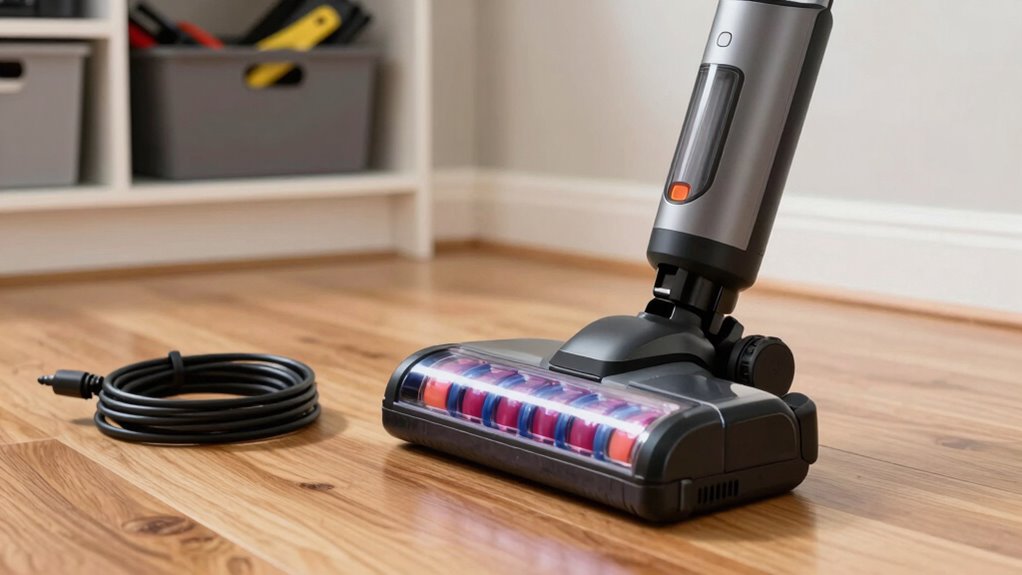
To prevent your cordless vacuum battery from losing runtime too soon, avoid constant charging after every use and only recharge when the battery drops below 20-30%. Keep your vacuum in a cool, dry place, and unplug once fully charged to prevent excess heat. Regularly monitor your charging habits and store batteries at about 50% during long breaks. Smart maintenance and proper use can keep your battery healthy longer, so stick around for more helpful tips.
Key Takeaways
- Charge the vacuum only when the battery drops below 20-30% to avoid deep discharges.
- Store batteries at around 50% charge in a cool, dry environment during inactivity.
- Avoid overcharging and unplug once fully charged to prevent heat buildup.
- Use the vacuum in short, frequent sessions rather than sporadic long runs.
- Keep the vacuum away from extreme heat or cold to maintain battery health.
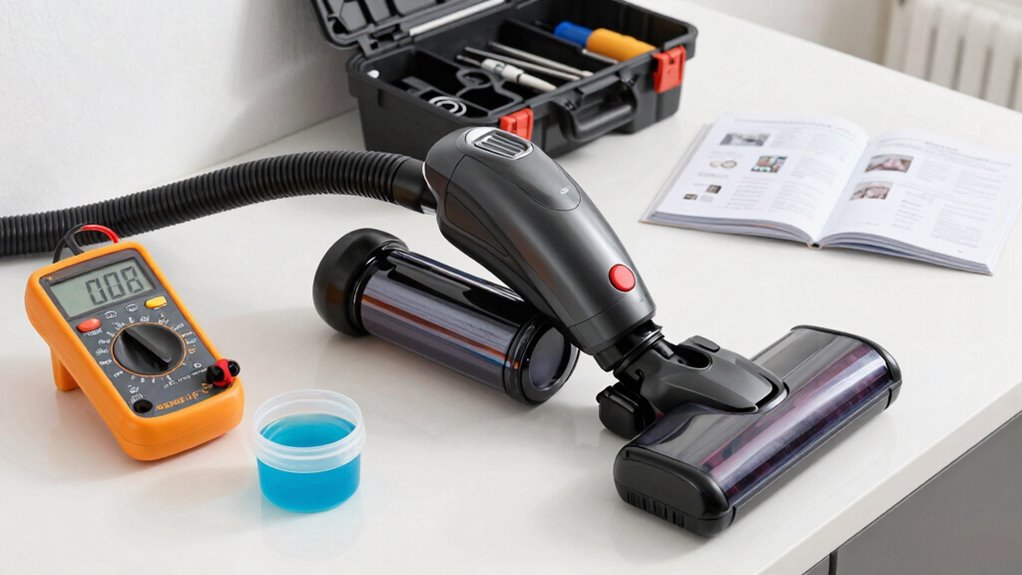
If you notice your cordless vacuum losing power sooner than it used to, it’s likely due to battery wear. Over time, the battery’s ability to hold a charge diminishes, leading to shorter runtimes and less effective cleaning. To keep your vacuum running smoothly for as long as possible, paying attention to battery longevity and charging habits is essential. Proper maintenance can considerably extend your battery’s lifespan and help you avoid the inconvenience of replacing it prematurely.
First, consider how you’re charging your vacuum. Many users make the mistake of leaving it plugged in constantly or charging it after every use, regardless of whether the battery is fully drained. This can strain the battery and reduce its overall longevity. Instead, aim to charge the vacuum only when the battery level drops below 20-30%. Avoid letting the battery completely die before recharging, as deep discharges can harm lithium-ion batteries commonly used in cordless vacuums. Also, try to unplug the device once it’s fully charged—overcharging can generate excess heat, which accelerates battery wear. Developing consistent charging habits, like charging in a cool, dry place and avoiding overcharging, will help preserve *battery health*. Additionally, understanding the importance of proper battery maintenance can significantly impact the lifespan of your vacuum’s power source.
Another critical aspect is understanding the importance of avoiding extreme temperatures during charging and storage. Excessive heat, for example, can cause chemical stress within the battery, leading to faster capacity loss. Conversely, extremely cold environments can temporarily reduce performance but are less damaging long-term. Keep your vacuum in a temperate setting and avoid charging it in direct sunlight or very cold areas. Additionally, if you plan on not using the vacuum for an extended period, store the battery at around 50% charge in a cool, dry location. Completely discharging or fully charging the battery during storage can negatively impact its capacity when you start using it again.
Lastly, be mindful of how often you use your vacuum. Frequent, short cleaning sessions are better for battery health than sporadic, long runs. Continuous deep discharges and overuse can accelerate battery degradation, so pace your cleaning routine to give the battery time to recover between sessions. Regularly cleaning and maintaining your vacuum, such as clearing out the filter and brush, ensures efficient operation, which in turn helps preserve battery life.
cordless vacuum battery replacement
As an affiliate, we earn on qualifying purchases.
As an affiliate, we earn on qualifying purchases.
Frequently Asked Questions
Can Using the Vacuum While Charging Damage the Battery?
Using your vacuum while charging generally won’t damage the battery if your device supports it, but it can affect battery life over time. Poor charging habits and neglecting proper battery maintenance might cause faster degradation. To keep your battery healthy, avoid overcharging or discharging fully, and follow the manufacturer’s charging instructions. Proper charging habits help maintain ideal runtime and extend your vacuum’s overall battery lifespan.
What’s the Ideal Storage Temperature for Batteries?
You should store batteries at an ideal temperature of around 50°F to 77°F, depending on their chemistry. Keep the storage area dry, with low humidity, to prevent corrosion. Excessive heat or cold can damage the battery’s internal chemistry, reducing its lifespan. Always store your vacuum batteries in a cool, dry place, away from direct sunlight, to maintain peak performance and prevent premature capacity loss.
Do Battery Types Affect Longevity and Performance?
Yes, battery types greatly influence longevity and performance. Lithium-ion batteries, with their superior battery chemistry, offer longer runtime and faster charging. Nickel-metal hydride batteries provide good power but degrade quicker. Proper power cycle management—avoiding deep discharges and overcharging—further extends your battery’s lifespan. By understanding your battery’s chemistry and practicing smart power cycle management, you guarantee ideal performance and longer-lasting cordless vacuum batteries.
How Often Should I Replace My Vacuum’s Battery?
You should replace your vacuum’s battery when you notice a significant drop in runtime or performance, usually after 2-3 years, depending on usage. Proper battery recycling is essential to dispose of old batteries safely and for environmental health. Keep in mind that battery lifespan varies with care; regular maintenance can extend it. When performance declines despite proper care, it’s time for a new battery to guarantee your vacuum continues to work efficiently.
Are Third-Party Batteries Safe for My Vacuum?
Third-party batteries can be safe if you choose reputable brands that prioritize safety and quality. Always consider battery recycling options when replacing batteries to avoid environmental harm. Make certain you follow proper charging safety by using compatible chargers and avoiding overcharging, which can damage the battery and pose safety risks. While third-party options might be cheaper, investing in trusted brands ensures your vacuum operates safely and maintains peak runtime.
Conclusion
Think of your cordless vacuum battery as a fragile seedling—you must nurture it with proper care. Keep it charged wisely, avoid extremes, and store it in a cool, dry place, much like sheltering a delicate bloom. When well-tended, your battery blooms into a vibrant, lasting force, ready to tackle dirt and debris. With gentle, consistent care, your vacuum’s power stays strong, ensuring your home remains fresh and inviting, season after season.