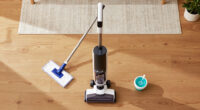
To empty your HEPA vacuum with less mess and exposure, turn it off and unplug it first. Wear gloves and a mask if needed, then carefully remove the container or bag without shaking or hitting filters. Keep the bag upright and seal it tightly before disposal. Avoid opening or shaking the container excessively, and clean filters afterward. For more tips on safe vacuum maintenance, keep exploring these essential precautions.

Get cleaning gear delivered free — and shop member deals
- Fast, free delivery on millions of items
- Access to Prime Big Deal Days deals on October 6–7
- Prime Video, Amazon Music and more included
Key Takeaways
- Turn off, unplug, and wear gloves before emptying to minimize contact and exposure.
- Remove the bag or container slowly and carefully near a trash bin to reduce dust dispersion.
- Seal the bag tightly or secure the container immediately after disposal to prevent dust escape.
- Clean filters and interior parts regularly to maintain filtration efficiency and reduce dust handling.
- Wash hands thoroughly afterward and store the vacuum in a clean, dry environment to prevent contamination.

Have you ever wondered how to safely and effectively empty your HEPA vacuum? Properly emptying your vacuum is crucial to maintaining its air filtration capabilities and ensuring your safety. HEPA vacuums are designed to trap tiny particles, including allergens and dust, which makes handling their contents with care essential. When you’re ready to empty it, start by turning off the vacuum and unplugging it from the power source. This simple safety precaution prevents any accidental activation during the process. Before opening the container, wear a pair of gloves to minimize direct contact with potentially allergenic debris. This small step can help reduce exposure to dust and other particles that might become airborne.
Next, locate the vacuum’s container or bag, which is typically easy to access. If your model has a bag, carefully remove it, holding it upright to prevent dust from spilling. For canister-style vacuums, unlock or unlatch the container following the manufacturer’s instructions. As you do this, keep the container close to the trash bin to minimize the distance dust and debris can travel. When emptying, do so slowly and carefully to avoid shaking loose dust into the air, which can compromise your air filtration system and increase exposure. If your vacuum uses a HEPA filter, avoid knocking or hitting it, since this can damage the filter or dislodge trapped particles. Proper disposal of the contents is also crucial to prevent dust dispersion into your environment. Regular maintenance, including filter replacement, is also essential to uphold the vacuum’s air filtration effectiveness. Additionally, understanding the proper handling techniques can help prevent contamination and extend the lifespan of your vacuum. To further protect yourself, consider wearing a mask during the process, especially if you are sensitive to dust or allergens. Investing in proper vacuum storage can also prevent buildup of dust and bacteria.
While handling the contents, be mindful of safety precautions, such as avoiding shaking the container excessively or creating a cloud of dust. Once emptied, seal the bag or container tightly before disposing of it in your trash. This ensures dust and allergens stay contained and don’t get released into your environment. After disposal, clean the vacuum’s filter and interior components following manufacturer instructions, which can help maintain optimal air filtration and suction power for your next cleaning session. Regularly replacing or cleaning filters is vital to keep your vacuum functioning properly and to prevent dust from bypassing the filtration system. Proper storage of the vacuum in a clean, dry place can also help preserve its components and reduce the risk of mold or bacterial growth.
Finally, wash your hands thoroughly after completing the process, especially if you didn’t wear gloves. This extra step helps eliminate any residual dust or allergens that might have come into contact with your skin. By following these safety precautions and handling the vacuum’s contents carefully, you preserve your air filtration system’s efficiency and reduce the risk of exposure to harmful particles. Properly emptying your HEPA vacuum isn’t just about cleanliness; it’s about protecting your health and keeping your environment safe and allergen-free.
As an affiliate, we earn on qualifying purchases.
Frequently Asked Questions
Can I Wash and Reuse HEPA Vacuum Filters?
You shouldn’t wash and reuse HEPA vacuum filters because it can damage their delicate fibers and compromise their filtration efficiency. Proper HEPA filter maintenance usually involves replacing the filter when it reaches the end of its vacuum filter lifespan. Reusing or washing filters can lead to reduced air quality and potential health risks, so always follow the manufacturer’s guidelines for replacing your HEPA filter to guarantee peak performance.
What Safety Gear Should I Wear When Emptying?
Think of your safety gear as a shield protecting you from invisible foes. When emptying your HEPA vacuum, you should wear protective gloves to keep dust and allergens off your skin. A respirator mask is essential too, preventing you from inhaling tiny particles that can harm your lungs. With these, you take charge of your health, turning a messy task into a safe and manageable one.
How Often Should I Empty the Vacuum?
You should empty your HEPA vacuum when the bin is about two-thirds full to maintain ideal vacuum performance. Regular vacuum maintenance includes timely filter replacement and emptying to prevent clogging and guarantee effective filtration. Avoid waiting too long, as a full bin reduces suction and can release dust into the air. By staying on top of these tasks, you keep your vacuum functioning efficiently and protect indoor air quality.
Are There Specific Disposal Methods for Contaminated Debris?
Think of contaminated debris as fragile glass—handle it with care. You should use contaminant containment techniques like sealed bags or specialized disposal containers. Consider disposable bag alternatives with secure closures to prevent leaks. Always double-bag waste if possible, and dispose of it according to local hazardous waste guidelines. This careful approach minimizes exposure, keeping you safe while ensuring contaminated debris stays contained and doesn’t become a hidden threat.
Can I Use a HEPA Vacuum for Wet Spills?
You shouldn’t use a HEPA vacuum for wet spills because most are designed for dry debris only. Doing so can damage the vacuum and compromise its filtration. Regular vacuum maintenance, like filter replacement, is essential to keep it working effectively. Always check your vacuum’s specifications before attempting to clean up wet messes, and use appropriate equipment designed for liquids to avoid damaging your HEPA vacuum.
Conclusion
Now, as you gently release the latch and watch the dust spill into the bag, picture the clean, fresh air returning to your space. With each careful step, you’re not just emptying a vacuum—you’re clearing away the mess and shielding yourself from unseen particles. Feel the satisfaction of a job well done, the quiet hum of the vacuum settling, and the promise of a healthier home. Breathe easy, knowing you’ve handled it with care and precision.
Fall Picks
fall essentials
As an affiliate, we earn on qualifying purchases.