
To clean your front-load washer door seal properly, start by inspecting for mold, debris, or soap buildup, then wipe it with a vinegar-water solution using a soft cloth or sponge. Pay special attention to folds and creases, and use an old toothbrush for stubborn spots. Rinse thoroughly and dry completely to prevent mold growth. To keep your washer fresh, run a monthly hot water cycle with vinegar. Keep exploring for more tips to maintain your machine’s cleanliness.
Key Takeaways
- Inspect the door seal for debris, mold, or residue before cleaning.
- Wipe the seal thoroughly with a vinegar-water solution using a soft cloth or sponge.
- Use an old toothbrush to scrub stubborn stains or buildup in folds and creases.
- Rinse the seal with clean water and dry completely to prevent mold growth.
- Leave the washer door open after use and run regular cleaning cycles for maintenance.

A clean front-load washer door seal is vital for preventing mold, mildew, and unpleasant odors from developing in your machine. Over time, soap scum, detergent buildup, and dirt can accumulate in the folds of the seal, creating a breeding ground for mold and bacteria. Regular cleaning not only keeps your washer smelling fresh but also guarantees your clothes come out clean and free of musty odors. To keep the seal in top condition, you need to pay attention to the buildup that can hide in the tight crevices.
Regularly clean the door seal to prevent mold, odors, and detergent buildup for fresher laundry and a healthier machine.
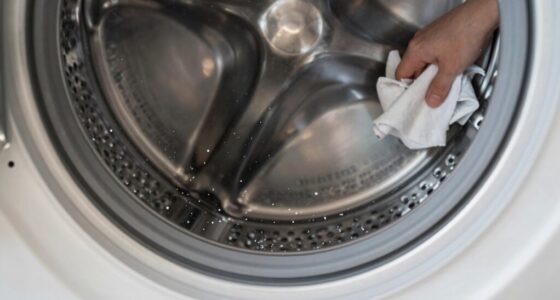
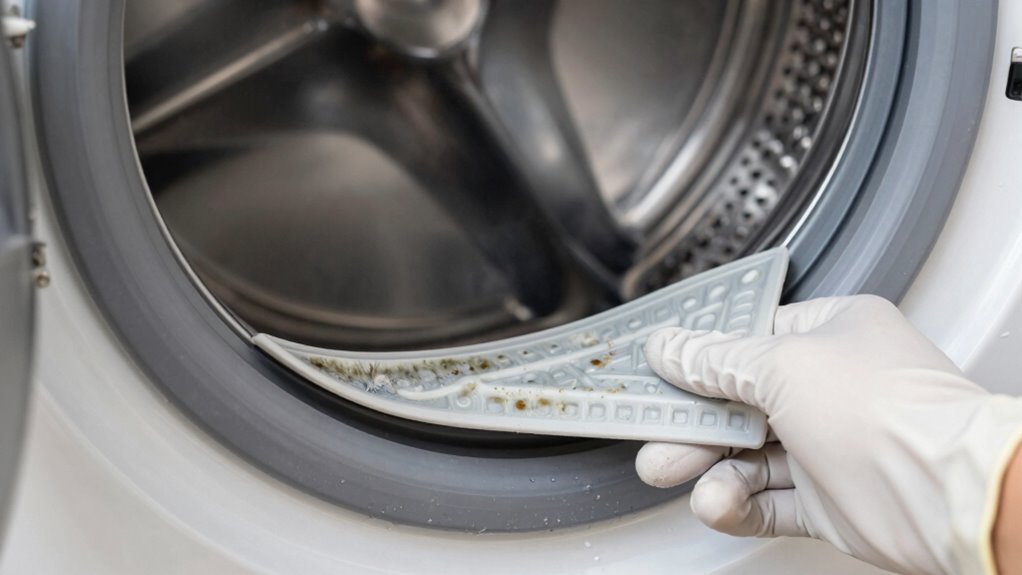
Start by inspecting the seal for visible debris, soap residue, or mold patches. Wipe away any loose dirt with a damp cloth. To tackle detergent buildup, mix a solution of equal parts white vinegar and water, then dip a soft cloth or sponge into it. Use this to thoroughly wipe down the entire surface of the seal, paying special attention to the folds and creases where detergent and dirt tend to hide. Vinegar is an excellent natural mold prevention agent, helping to inhibit mold growth and eliminate lingering odors. For stubborn stains or buildup, you may need to use an old toothbrush dipped in the vinegar solution to scrub those tricky spots. Additionally, using proper cleaning techniques can significantly enhance the effectiveness of your maintenance routine.
Once you’ve cleaned the seal with vinegar, give it a rinse with clean water and wipe it dry with a clean towel. Leaving the seal moist can encourage mold growth, so drying it thoroughly is imperative. Incorporating mold prevention strategies into your routine is essential for maintaining a healthy washing environment. For added mold prevention, you can leave the washer door open after each load to allow air circulation and prevent moisture buildup inside the drum and around the seal. Additionally, running a monthly maintenance cycle with hot water and a cup of vinegar or a specialized washer cleaner helps keep mold and detergent buildup at bay. Incorporating effective cleaning methods into your routine can further prolong the life of your washer and ensure optimal performance.
It’s also important to regularly check the seal for any signs of mold or mildew, especially if you notice a musty smell or visible spots. If mold has already taken hold, you may need to use a commercial mold cleaner or a diluted bleach solution. Always wear gloves and ensure good ventilation when using chemical cleaners, and rinse the seal thoroughly afterward to remove any residue. Regularly monitor indoor air quality to ensure your laundry space remains healthy and free from airborne contaminants. Proper ventilation and air circulation are crucial components of a comprehensive cleaning approach. By incorporating these simple steps into your routine, you’ll prevent detergent buildup, keep mold at bay, and enjoy fresh-smelling laundry and a healthier washing machine.

ACTIVE Mold Stain Remover Gel Cleaner Heavy Duty Stain Cleaner for Front Loader Washing Machine Seal, Bathroom Grout, Shower, Caulk – Front Load Washer Cleaning Solution – 7 Fl Oz
- Fast and Effective Cleaning: Instant mold and grime removal in minutes
- Versatile Cleaning Use: Cleans washer seals, grout, tiles, and more
- Easy to Apply: Gel formula for targeted, mess-free application
As an affiliate, we earn on qualifying purchases.
As an affiliate, we earn on qualifying purchases.
Frequently Asked Questions
How Often Should I Clean the Door Seal?
You should clean the seal at least once a month to maintain proper seal maintenance and prevent mold or mildew buildup. If you notice any soap scum, moisture, or foul odors, increase the cleaning frequency. Regular cleaning helps keep your washer fresh and functioning efficiently. Don’t forget to wipe around the door seal thoroughly, especially in the folds, to remove any trapped dirt or debris.
Can I Use Bleach to Disinfect the Seal?
You can use bleach to disinfect the door seal, but you need to follow bleach safety guidelines. Dilute it properly and avoid overusing, as strong bleach can damage rubber and seals over time. If you’re concerned about potential damage, consider alternative disinfectants like white vinegar or hydrogen peroxide, which are gentler yet effective. Always ventilate the area and rinse thoroughly after disinfecting to prevent residue buildup.
What Tools Are Best for Removing Mold?
For mold removal, you need effective cleaning tools like a soft brush or an old toothbrush to scrub away mold from the seal. You can also use a cloth or sponge for wiping surfaces. Make sure you wear gloves and a mask to protect yourself from mold spores during cleaning. These tools help you thoroughly clean the seal, ensuring mold doesn’t return and your washer stays fresh.
How Do I Prevent Mold Buildup in the Seal?
To prevent mold buildup in the seal, you should regularly perform seal maintenance by leaving the door slightly open after each wash to air out the drum. Wipe the seal with a dry cloth and use a mild cleaning solution periodically. Keep the door dry and dry any moisture promptly. These steps promote mold prevention and keep your washer smelling fresh and functioning best.
Is It Safe to Use DIY Cleaning Solutions?
Using DIY cleaning solutions is generally safe if you choose household solutions like vinegar or baking soda, which are gentle and effective. Avoid harsh chemicals that could damage your washer or cause fumes. Always dilute your DIY cleaners properly and test a small area first. Stick to proven household solutions for cleaning your washer door seal to prevent mold buildup and keep your appliance in good condition.
Conclusion
By regularly cleaning your washer’s door seal, you’re giving it a fresh breath of life and preventing mold from creeping in like unwelcome guests. Think of it as tending to a garden—you nurture it, and it rewards you with spotless, fresh-smelling laundry every time. So, don’t let grime take root; stay vigilant, and your washer will thank you with long-lasting performance and cleaner clothes. Keep up the good work, and your machine will serve you well!