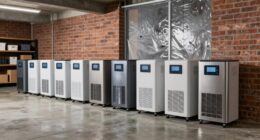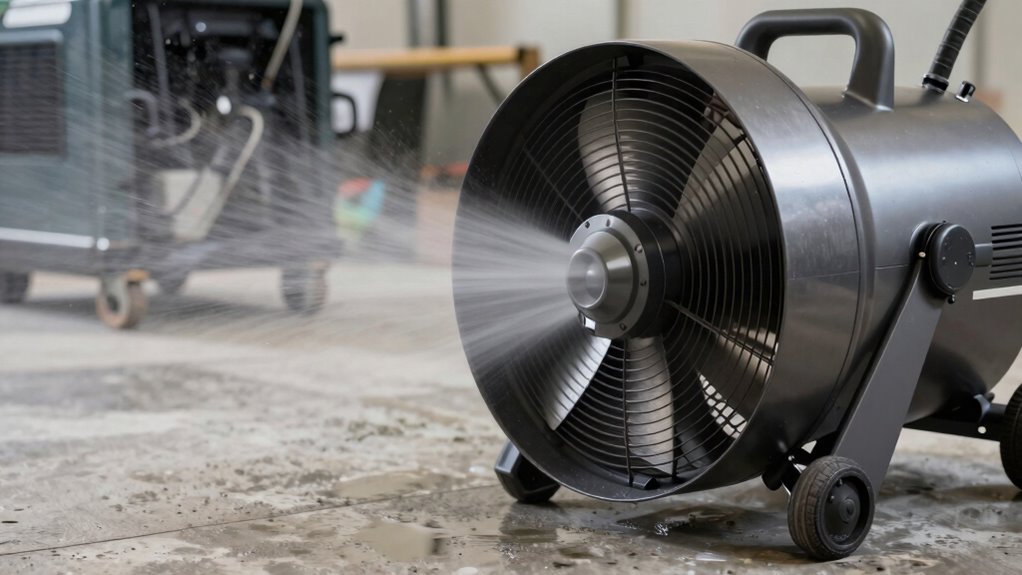

To cut drying time with your air movers, angle them about 45° rather than pointing directly at wet surfaces. This adjustment helps maximize airflow coverage, spreads air evenly across the area, and reduces turbulence that can slow evaporation. Proper positioning speeds up moisture removal and prevents overworking your equipment. If you keep experimenting with angles and placement, you’ll find the most efficient setup to dry surfaces faster and safer.
Key Takeaways
- Tilt air movers at approximately 45° to maximize surface coverage and evaporation efficiency.
- Avoid pointing units directly at wet surfaces to promote better airflow circulation.
- Angle air movers to blow across floors, preventing turbulence and moisture pockets.
- Proper positioning enhances even drying and reduces overall drying time.
- Always follow electrical safety practices to prevent hazards and ensure effective operation.

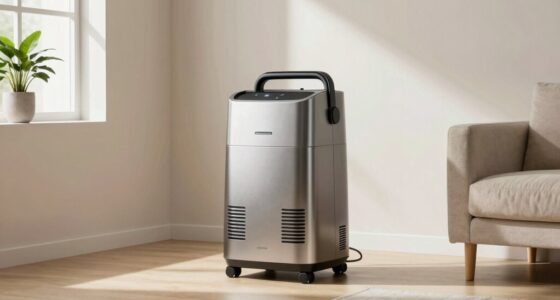
Ever wondered how to effectively dry a wet space or speed up air circulation? Using air movers can make a significant difference, especially when you’re trying to cut down on drying time. One of the most useful tricks involves adjusting the angle of the air mover to optimize airflow. Instead of pointing the device directly at the surface, tilt it at an angle—usually around 45 degrees—to maximize air circulation across a larger area. This simple adjustment enhances evaporation by increasing the contact between moving air and damp surfaces, speeding up the drying process. Proper positioning also helps you avoid overworking the equipment, which can lead to unnecessary wear and tear. When employing ventilation strategies with air movers, it’s vital to consider the layout of the space. Position the units so that they direct airflow toward the wet areas without causing turbulence or creating dead zones. For example, in a flooded basement, angling the air mover so that it blows across the floor rather than directly at a wall ensures even air distribution. This approach prevents moisture pockets from lingering and promotes more uniform drying. Additionally, understanding safe electrical practices is essential when working with air movers, especially in moist environments. Always make sure your power cords and outlets are dry and free of damage before plugging in any equipment. Use Ground Fault Circuit Interrupters (GFCIs) to protect against electrical shocks, especially in damp or wet areas. Never force an extension cord into a socket or overload a circuit, as this can cause sparks or fires. Keep cords away from water or damp surfaces, and avoid running cords under rugs or furniture where they can overheat or become tripping hazards. Regularly inspect your air movers for signs of wear or damage—frayed cords, loose plugs, or malfunctioning switches—and replace or repair them promptly. Additionally, always follow manufacturer instructions regarding electrical safety and ventilation strategies. Using the right equipment correctly can prevent accidents and ensure your drying efforts are both safe and effective. When adjusting the angle of your air mover, do so carefully to avoid tipping or knocking it over, which could damage the device or cause injury. Remember, good ventilation isn’t just about airflow—it’s also about maintaining a safe environment. Properly positioned and safely operated air movers can accelerate drying times, prevent mold growth, and protect your space from further damage. By combining smart ventilation strategies with diligent electrical safety practices, you’ll get the job done faster and safer.
Frequently Asked Questions
Can Air Movers Be Used Outdoors Effectively?
Yes, you can use air movers outdoors effectively, but you need to take into account outdoor ventilation and weather conditions. Position the air movers to promote airflow and improve drying, especially in open areas. Keep an eye on weather considerations like wind, rain, and humidity, as they can impact drying efficiency. Using the right angle and placement helps maximize airflow, ensuring faster drying even in outdoor environments.
What Safety Precautions Should I Take With High-Powered Air Movers?
When using high-powered air movers, prioritize electric safety by ensuring your equipment is properly grounded and plugged into GFCI outlets to prevent shocks. Always handle the equipment carefully, avoiding contact with water or wet surfaces, and keep cords organized to prevent trips. Wear appropriate personal protective gear, like gloves and eye protection, and follow manufacturer instructions for safe operation. Regularly inspect the air movers for damage before use.
How Often Should I Clean or Maintain My Air Mover?
You should clean and maintain your air mover regularly, ideally following a monthly maintenance schedule. Use proper cleaning techniques like unplugging the unit first, then wiping the blades and exterior with a damp cloth. Check for debris and dust buildup, especially around vents and filters. Regular maintenance keeps your air mover running efficiently, extends its lifespan, and guarantees it operates safely during every use.
Are There Noise Level Considerations for Residential Use?
You should consider noise levels when using an air mover Residential noise levels are important for comfort. While some models operate quietly, others can be quite loud, disrupting daily life or sleep. Check the decibel ratings and choose a quieter unit if noise considerations matter. Position the air mover away from bedrooms and living areas, and opt for models with noise reduction features to keep your home peaceful during drying.
How Do I Choose the Right Angle for Different Drying Situations?
You should adjust the angle selection based on the surface you’re drying to maximize drying efficiency. For flat surfaces like floors, aim the air mover at a shallow angle, around 15-20 degrees, to promote airflow across the material. For vertical surfaces or corners, tilt the unit more steeply, about 30-45 degrees, to direct airflow effectively. Experiment with angles, and always monitor progress to guarantee ideal drying results.
Conclusion
Now that you know the angle trick, you’re ready to cut drying time like a pro. Think of your air mover as a mighty wind swirling around your space, speeding up the process. When you adjust the angle just right, it’s like giving your drying job a turbo boost. Keep practicing this simple tip, and you’ll see faster, more efficient results every time. Happy drying, and remember—your air mover’s power is in your hands!