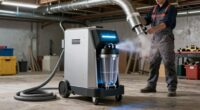
A professional air duct cleaning vacuum system needs to loosen debris and collect it without being a poor match for the ductwork. My best overall pick is the 2800 W HVAC Duct Cleaning Machine with Camera and 11-Inch Display, which pairs high power with a visual way to monitor work. The Fresh Air Duct Vacuum and Cleaning Machine with Rotary Brushes is a standout for brush-led cleaning, while the Professional Air Duct and Dryer Vent Cleaning Tool Kit suits buyers who need a more focused tool for smaller passages. The main tradeoffs are power and visibility versus portability, duct-size fit, and setup complexity. Read on for how the eight options differ and which kind of job each one is better suited to.

Get cleaning gear delivered free with Prime
- Fast, free delivery on millions of items
- Prime Video, Amazon Music and more included
- Member-only deals all year
Complete the kit


Key Takeaways
- The 2800 W machine stands apart for visibility: its camera and large display can help an operator follow cleaning progress, while the other listed systems do not advertise the same viewing setup.
- Brush configuration matters as much as motor wattage: the Fresh Air model emphasizes rotary brushes, while EQCOTWEA and TECHTONGDA specify three brushes for adapting the cleaning approach.
- Duct-size information is a meaningful separator: TECHTONGDA lists a 1.97–7.87-inch range, and the 220V model lists 50–200 mm ducts; buyers should compare those limits with their actual work.
- Several picks center on 1600 W power: INTSUPERMAI, Banfluxion, and the 220V model share that rating, so their choice depends more on duct compatibility and configuration than wattage alone.
- The kit is a different kind of solution: the Professional Air Duct and Dryer Vent Cleaning Tool Kit may suit focused vent work, but it should not be treated as equivalent to a powered vacuum-and-brush machine for larger duct jobs.
| 2800 W HVAC Duct Cleaning Machine with Suction, Camera, and 11-Inch Display |  | Best for Visual Inspection | Voltage: 110 V / 60 Hz | Power: 2800 W | Rotating speed: 0–1000 rpm | VIEW ON AMAZON | See Our Full Breakdown |
| Fresh Air Duct Vacuum and Cleaning Machine with Rotary Brushes |  | Best for Brush and Accessory Flexibility | Power: 1600 W | Voltage: 220 V; transformer included for 110 V use | Applicable pipe diameter: 50–200 mm | VIEW ON AMAZON | See Our Full Breakdown |
| EQCOTWEA Air Duct Cleaning Machine with Vacuum Suction, 3 Brushes and 3 Pipe Plugs |  | Best for Compact-Duct Crews | Power: 1600 W | Voltage: 220 V; included transformer supports 110 V | Applicable pipe diameter: 50–200 mm (1.97–7.87 in) | VIEW ON AMAZON | See Our Full Breakdown |
| TECHTONGDA Air Duct Cleaning Machine with Sweeping and Vacuuming, 3 Brushes, 1.97–7.87 in Pipe Diameter |  | Best for Mobile Jobsite Handling | Voltage: 110 V / 220 V | Power: 1600 W | Compatible pipe diameter: 50–200 mm (1.97–7.87 in) | VIEW ON AMAZON | See Our Full Breakdown |
| INTSUPERMAI 1600W Air Duct Cleaning Machine with Vacuum |  | Best for Trolley-Based Collection | Voltage: 110–220 V | Power: 1600 W | Compatible pipe diameter: 50–200 mm (1.97–7.87 in) | VIEW ON AMAZON | See Our Full Breakdown |
| Professional Air Duct and Dryer Vent Cleaning Tool Kit |  | Best for Compressor-Based Versatility | Brand: Generic | Model: ProPackage | Included components: Five 5-foot rods, forward and reverse 12-hole air skipper balls, multiple forward and reverse air whips, and blowgun | VIEW ON AMAZON | See Our Full Breakdown |
| Banfluxion 1600W Fresh Air Duct Cleaning Machine with Sweeping and Vacuum Suction |  | Best for Adjustable Brush-and-Vacuum Cleaning | Power: 1600 W | Applicable pipe diameter: 50–200 mm (1.97–7.87 in) | Voltage: 220 V; transformer included for 110 V supply | VIEW ON AMAZON | See Our Full Breakdown |
| 220V Fresh Air Duct Cleaning Machine, 1600W, for 50–200 mm Ducts |  | Best for Separate Sweeping and Vacuum Controls | Voltage: 220 V; transformer included for 110 V household power | Power: 1600 W | Applicable pipe diameter: 50–200 mm (1.97–7.87 in) | VIEW ON AMAZON | See Our Full Breakdown |
| air duct cleaning vacuum system professional | Voltage | Power | Rotating speed | Air volume |
|---|---|---|---|---|
| 2800 W HVAC Duct Cleaning Mach | 110 V / 60 Hz | 2800 W | 0–1000 rpm | — |
| Fresh Air Duct Vacuum and Clea | 220 V; transformer included for 110 V use | 1600 W | 0–1400 r/min, stepless adjustment | 1000 m³/h |
| EQCOTWEA Air Duct Cleaning Mac | 220 V; included transformer supports 110 V | 1600 W | 0–1400 r/min, stepless adjustment | 1000 m³/h |
| TECHTONGDA Air Duct Cleaning M | 110 V / 220 V | 1600 W | 0–1400 RPM, stepless | 1000 m³/h |
| INTSUPERMAI 1600W Air Duct Cle | 110–220 V | 1600 W | 0–1400 RPM | 1000 m³/h |
| Professional Air Duct and Drye | — | — | — | — |
| Banfluxion 1600W Fresh Air Duc | 220 V; transformer included for 110 V supply | 1600 W | — | 1000 m³/h |
| 220V Fresh Air Duct Cleaning M | 220 V; transformer included for 110 V household power | 1600 W | 0–1400 r/min, stepless adjustment | 1000 m³/h |
More Details on Our Top Picks
2800 W HVAC Duct Cleaning Machine with Suction, Camera, and 11-Inch Display
For contractors who need to see what the brush is doing, this is the most inspection-focused option in this group. Its 2 MP wide-angle camera and 11-inch display provide a live view while the rotating brush and suction work, helping an operator monitor progress inside compatible ducts rather than relying only on access-point checks. The 49.2 ft flexible shaft also offers reach comparable to the EQCOTWEA and TECHTONGDA machines, but its stated duct range extends much wider, from 3.9 to 31.5 inches. That range makes it a more versatile fit for larger ductwork than those 50–200 mm systems. The tradeoff is a more involved setup: the shaft must be fully extended, safety gear is needed, and remote batteries are not included. Choose it for camera-guided work, not a minimal, low-setup kit.
Pros:- Camera and 11-inch display provide live visibility during cleaning.
- Combines rotating-brush cleaning with suction to collect loosened debris.
- Stated compatible duct range spans 3.9–31.5 inches.
- Wheels and quick-release buckles support movement and one-person operation.
Cons:- Requires careful setup, including fully extending the flexible shaft before use.
- Remote controller batteries are not included.
- Safety gear and attention to setup add work compared with simpler equipment.
Best for: HVAC contractors who need live visual monitoring and work across a wider range of duct diameters than compact 50–200 mm systems support.
Not ideal for: Technicians cleaning only small ducts who want a simpler setup without a display, camera, and additional safety and shaft-preparation steps.
- Voltage:110 V / 60 Hz
- Power:2800 W
- Rotating speed:0–1000 rpm
- Compatible duct diameter:3.9–31.5 in (100–800 mm)
- Flexible shaft length:49.2 ft
- Display and camera:11-inch display; 2 MP wide-angle camera
- Remote control range:Up to 78.7 ft (24 m) unobstructed
Our verdict“Choose this machine when live camera inspection and broad duct-size compatibility matter more than a simpler setup.”
Fresh Air Duct Vacuum and Cleaning Machine with Rotary Brushes
This EQCOTWEA machine suits crews that want a broad set of cleaning accessories in one system. Its three brushes and three pipe plugs, along with adjustable forward and reverse rotation, give operators more ways to match the tool to the job than the camera-led 2800 W HVAC machine, which prioritizes visibility and a wider stated duct range. The 15 m shaft is designed to pass through three consecutive right-angle bends, while separate suction and cleaning controls let the operator run those functions independently. Its 1000 m³/h airflow and 6 m dust hose make it a dedicated brushing-and-collection setup for smaller ducts. There is a fit caveat: the stated compatible range is 50–200 mm, yet one supplied brush is 300 mm. I would confirm accessory fit before relying on the full set, and fully extend the shaft before use.
Pros:- Includes three brushes and three pipe plugs for varied setups.
- Stepless speed adjustment and forward/reverse rotation offer control over brush action.
- Separate controls allow suction and cleaning to operate independently.
- 15 m shaft is designed to pass through three consecutive right-angle bends.
Cons:- The included 300 mm brush exceeds the stated 50–200 mm compatible pipe range.
- Flexible shaft must be fully extended before use to avoid damage.
- No camera or display is listed for monitoring work inside ducts.
Best for: Duct-cleaning crews working mainly in 50–200 mm runs who want adjustable brush direction, independent suction controls, and several included accessories.
Not ideal for: Contractors who need camera inspection, larger duct compatibility, or assurance that every included brush matches the stated pipe range.
- Power:1600 W
- Voltage:220 V; transformer included for 110 V use
- Applicable pipe diameter:50–200 mm
- Flexible shaft:15 m long; 6 mm diameter
- Rotating speed:0–1400 r/min, stepless adjustment
- Air volume:1000 m³/h
- Dust absorption hose:6 m long; EVA corrugated pipe
- Included accessories:3 brushes (100, 200, and 300 mm); 3 pipe plugs (110, 150, and 200 mm)
Our verdict“Pick this EQCOTWEA when accessory choice and separate suction controls matter more than camera visibility or broad duct-size coverage.”
EQCOTWEA Air Duct Cleaning Machine with Vacuum Suction, 3 Brushes and 3 Pipe Plugs
This EQCOTWEA is aimed at crews cleaning smaller duct runs who want brushing and collection in one machine without paying for inspection hardware. Like the Fresh Air Duct Vacuum and Cleaning Machine with Rotary Brushes, it pairs a 15 m flexible shaft with 1000 m³/h airflow, adjustable speed, and reversible rotation. Its stated 50–200 mm duct range makes the working envelope clear, while independent cleaning and suction systems allow each function to be used separately. That is a practical distinction from the TECHTONGDA, which also targets this duct range but foregrounds a pushcart design. Here, buyers should inspect the accessory list closely: brush and plug measurements are listed as 100, 20, and 30 mm, and 110, 15, and 20 mm respectively. Those figures may not align with common expectations, so confirm the supplied sizes before purchase.
Pros:- Combines rotary brushing and vacuum suction in one system.
- Adjustable speed and forward/reverse operation give control over cleaning action.
- Flexible shaft is designed to pass through up to three right-angle bends.
- Cleaning and suction systems can be operated independently.
Cons:- Listed brush and pipe-plug dimensions are unusual and should be confirmed before relying on them.
- Limited to the stated 50–200 mm pipe diameter range.
- The shaft must be fully extended before use.
Best for: Small-duct service crews who need adjustable rotary brushing and vacuum suction in a compact-diameter range, and can verify accessory sizing before ordering.
Not ideal for: Buyers who need camera monitoring, larger duct coverage, or clearly specified brush and plug sizes without checking the listing.
- Power:1600 W
- Voltage:220 V; included transformer supports 110 V
- Applicable pipe diameter:50–200 mm (1.97–7.87 in)
- Flexible shaft:15 m long; 6 mm diameter
- Rotating speed:0–1400 r/min, stepless adjustment
- Air volume:1000 m³/h
- Dust absorption pipe:6 m long
- Machine dimensions:About 48 × 26 × 102 cm
Our verdict“Choose this EQCOTWEA for controlled cleaning in smaller duct runs if its listed accessory sizes match your work.”
TECHTONGDA Air Duct Cleaning Machine with Sweeping and Vacuuming, 3 Brushes, 1.97–7.87 in Pipe Diameter
The TECHTONGDA stands out in this group for jobsite movement: its pushcart design is a useful distinction from the EQCOTWEA compact-duct models, which emphasize shaft and brush controls instead. The cleaning setup is familiar for this class, with 1600 W power, 0–1400 RPM adjustment, reversible rotation, and simultaneous brushing and suction. A separate dust-blowing function adds another way to handle debris, and the 15 m shaft is designed to navigate three consecutive right-angle bends. Its limits are just as clear: it is specified for 50–200 mm pipes, not the wider duct sizes claimed for the camera-equipped 2800 W HVAC machine. The machine’s roughly 102 cm height and heavy-duty format may also be awkward to store in a small van or home workshop. Check brush and plug sizes against the ducts you service.
Pros:- Pushcart design supports moving the machine around a jobsite.
- Combines rotary sweeping and dust suction, with a separate dust-blowing function.
- Adjustable forward and reverse rotation supports different cleaning conditions.
- 15 m flexible shaft is designed to pass through three consecutive right-angle bends.
Cons:- Heavy-duty dimensions can make storage and transport awkward in confined spaces.
- The 50–200 mm working range excludes larger ductwork.
- Included brush and plug sizes may not suit every duct.
Best for: Technicians who move a duct-cleaning machine between jobs and mainly service 50–200 mm pipes.
Not ideal for: Small operators with limited storage, or contractors whose work requires camera inspection or duct sizes beyond 200 mm.
- Voltage:110 V / 220 V
- Power:1600 W
- Compatible pipe diameter:50–200 mm (1.97–7.87 in)
- Flexible shaft:15 m long; 6 mm diameter
- Rotating speed:0–1400 RPM, stepless
- Air volume:1000 m³/h
- Dust absorption pipe:6 m long; EVA corrugated pipe
- Product dimensions:48 × 26 × 102 cm
Our verdict“Choose the TECHTONGDA if jobsite mobility is your priority and your ductwork falls within its 50–200 mm range.”
INTSUPERMAI 1600W Air Duct Cleaning Machine with Vacuum
For buyers who want collection and machine handling built into the same workflow, the INTSUPERMAI pairs a split dust box, trolley, and casters with rotary cleaning and vacuum suction. That makes it a different proposition from the camera-equipped 2800 W HVAC machine: this model emphasizes moving and emptying the collection system, not inspecting the duct interior. Its dual-voltage specification and 50–200 mm range suit crews with compatible small ducts, while the 15 m shaft and adjustable speed support reach and control similar to the TECHTONGDA. The major caution is its listed 200 lb weight; casters help with rolling but do not make lifting or vehicle loading easy. The shaft-length data also conflicts, listing 15 m alongside 19.2 ft, so confirm the delivered configuration rather than planning around the shorter figure.
Pros:- Split dust collection box is described as easy to clean.
- Trolley and casters help roll the machine between work areas.
- Dual-voltage operation supports 110–220 V power.
- Combines vacuum suction with adjustable rotary cleaning for 50–200 mm ducts.
Cons:- Listed item weight of 200 lb makes lifting and vehicle loading difficult.
- Shaft length is inconsistent in the listing: 15 m is also described as 19.2 ft.
- Compatible pipe diameter is limited to 50–200 mm, with no camera listed.
Best for: Service teams cleaning compatible 50–200 mm ducts who value a trolley-mounted machine and a dust box designed for easier cleaning.
Not ideal for: Solo operators who must lift equipment into a vehicle, or buyers who need camera inspection or unambiguous shaft-length specifications.
- Voltage:110–220 V
- Power:1600 W
- Compatible pipe diameter:50–200 mm (1.97–7.87 in)
- Flexible shaft:15 m; listing also gives 19.2 ft
- Rotating speed:0–1400 RPM
- Air volume:1000 m³/h
- Dust absorption pipe:6 m long; EVA corrugated pipe
- Item weight:200 lb
Our verdict“Pick the INTSUPERMAI for trolley-based handling and a cleanable dust box, provided its weight and shaft details suit your setup.”
Professional Air Duct and Dryer Vent Cleaning Tool Kit
This kit is the most adaptable choice here for professionals who already own a suitable air compressor. Its five flexible rods, air skipper balls, multiple air whips, and blowgun cover several duct and dryer-vent tasks without adding a powered brush-and-vacuum machine. The forward and reverse attachments give more options for directing debris than a basic single-tool setup. Compared with the Banfluxion 1600W machine, this kit is lighter and less equipment-heavy, but it does not provide built-in vacuum suction or dust collection. The main limitation is the compressor requirement: the forward air whip calls for 125 PSI or higher, so buyers need to check their existing equipment before relying on it. I’d choose this for mobile technicians who value interchangeable pneumatic tools, not crews seeking a self-contained vacuum system.
Pros:- Includes rods, air skipper balls, air whips, and a blowgun
- Five flexible 5-foot rods use quick-connect ends
- Forward and reverse attachments suit different cleaning directions
- Designed for both air ducts and dryer vents
Cons:- Forward air whip requires a compressor rated at 125 PSI or higher
- No built-in vacuum or dust collection system
- Performance depends on having compatible compressor equipment
Best for: HVAC and dryer-vent technicians who already have a compressor rated for the kit’s requirements and want several pneumatic cleaning attachments in one package
Not ideal for: Buyers without a compatible compressor or crews that need integrated vacuum suction and dust collection
- Brand:Generic
- Model:ProPackage
- Included components:Five 5-foot rods, forward and reverse 12-hole air skipper balls, multiple forward and reverse air whips, and blowgun
- Rod diameter:3/8 in
- Rod material:Memory material
- Rod connectors:1/8 in male and female quick-connect ends
- Recommended compressor pressure:125+ PSI
- Item weight:8 lb
- Intended use:Air duct and dryer vent cleaning
Our verdict“Choose this kit if you have a suitable compressor and want a flexible pneumatic tool set rather than an integrated brush-and-vacuum machine.”
Banfluxion 1600W Fresh Air Duct Cleaning Machine with Sweeping and Vacuum Suction
The Banfluxion suits technicians who want powered brushing and vacuum suction in one machine, with control over brush speed as duct conditions change. Its stepless range reaches 1400 RPM, while the 15 m flexible shaft is specified to pass through up to three right-angle bends. Three brush sizes and three tube plugs help match the setup to supported ducts from 50 to 200 mm. Compared with the Professional Air Duct and Dryer Vent Cleaning Tool Kit, this is a more self-contained approach to dust removal, but it is larger and relies on electrical power rather than a compressor. Its shaft length can limit work in longer runs, and the 110 V supply requires the included transformer. I’d favor it over a simpler pneumatic kit when collecting loosened debris during cleaning matters more than portability.
Pros:- Combines rotating brush cleaning with vacuum suction and a removable dust box
- Stepless speed adjustment from 0 to 1400 RPM
- 15 m shaft is designed to pass through up to three right-angle bends
- Includes three brushes and three tube plugs for different duct sizes
Cons:- A 15 m shaft may require repositioning or sectional cleaning on longer runs
- 110 V supply requires use of the included transformer
- Main unit is substantially larger than the compressor-based tool kit
Best for: Professional duct-cleaning operators working on 50–200 mm ducts who want variable brush speed and suction in a single powered setup
Not ideal for: Technicians cleaning duct runs longer than the 15 m shaft can reach in one setup, or buyers seeking a compact, compressor-driven kit
- Power:1600 W
- Applicable pipe diameter:50–200 mm (1.97–7.87 in)
- Voltage:220 V; transformer included for 110 V supply
- Flexible shaft length:15 m
- Flexible shaft diameter:6 mm
- Speed:0–1400 RPM, stepless
- Air volume:1000 m³/h
- Vacuum hose length:6 m
- Included brushes and tube plugs:Three brushes (100, 200, and 300 mm); three plugs (110, 150, and 200 mm)
Our verdict“Pick the Banfluxion if you want adjustable powered brushing with suction and can work within its shaft reach and electrical setup.”
220V Fresh Air Duct Cleaning Machine, 1600W, for 50–200 mm Ducts
This machine is a close alternative to the Banfluxion: both pair a 1600 W rotating brush with vacuum suction, a 15 m shaft, and attachments for 50–200 mm ducts. Its distinguishing detail is separate sweeping and vacuum controls, which gives operators direct control over those functions rather than treating cleaning as one combined operation. Forward and reverse rotation and stepless speed adjustment add flexibility when working through changing duct sections. The three brushes and three pipe plugs cover common size changes, while the soft shaft is designed to pass through three right-angle bends. Against the Banfluxion, the listed capability is broadly similar, so this pick makes more sense when the separate controls match your workflow. The controller batteries are not included, and 110 V use requires the supplied transformer.
Pros:- Sweeping and vacuum functions have separate controls
- Brush supports forward and reverse rotation with stepless speed adjustment
- Soft 15 m shaft is designed to pass through three right-angle bends
- Includes three brushes and three pipe plugs for different duct sizes
Cons:- Handle controller batteries are not included
- 110 V household power requires the included transformer
- The 15 m shaft may not reach through longer duct runs without repositioning
Best for: Duct-cleaning technicians who want separate controls for sweeping and vacuuming, plus reversible brush rotation for varied duct sections
Not ideal for: Buyers who need a shaft longer than 15 m, want controller batteries included, or prefer a compressor-powered setup without an electrical transformer
- Voltage:220 V; transformer included for 110 V household power
- Power:1600 W
- Applicable pipe diameter:50–200 mm (1.97–7.87 in)
- Soft shaft length:15 m (49.21 ft)
- Soft shaft diameter:6 mm (0.236 in)
- Rotating speed:0–1400 r/min, stepless adjustment
- Air volume:1000 m³/h
- Dust absorption pipe length:6 m (19.69 ft)
- Included brushes and pipe plugs:Three brushes (100, 200, and 300 mm); three plugs (110, 150, and 200 mm)
Our verdict“Choose this machine over the Banfluxion when separate sweeping and vacuum controls better fit your workflow, and plan for the transformer and controller batteries.”

How We Picked
I compared these systems by the job-relevant details stated in their product descriptions: motor power, whether vacuum suction is paired with sweeping or rotary brushes, brush and plug options, stated duct-size compatibility, and any visibility or control features. I also considered how clearly each listing describes its intended scope. A system with a camera can offer a different kind of work oversight than one whose main distinction is a three-brush setup, while a tool kit has a narrower role than a powered cleaning machine.
The ranking favors options with a useful combination of cleaning functions and clear fit information, rather than treating wattage as a stand-in for real-world performance. The 2800 W camera-equipped system leads for its combination of power and visual monitoring; brush-forward systems follow for their cleaning configuration; and the 1600 W models are separated by their stated features and duct ranges. I place the tool kit in a specialized role because the supplied information does not establish it as a full vacuum system. Buyers should verify airflow, hose reach, included attachments, power requirements, and service support with the seller before choosing.
Factors to Consider When Choosing Air Duct Cleaning Vacuum System Professional
Choosing a professional system is less about finding the largest motor number and more about matching the machine to the duct layout, debris, and work routine. I would start with access and compatibility, then compare how each system loosens and collects debris, and finally account for setup, transport, and maintenance.
Match Duct Dimensions Before Comparing Power
Measure the duct openings and note changes in shape, diameter, and access before selecting equipment. A published range, such as TECHTONGDA’s 1.97–7.87 inches or the 220V model’s 50–200 mm, gives a starting point, but it does not prove the machine will pass every bend or branch. Buyers often focus on the largest compatible diameter and overlook narrow sections, transitions, and access openings. Ask whether the stated range refers to brush reach, pipe size, or the full working setup. If the job spans several duct sizes, flexibility may matter more than a higher wattage rating.
Separate Debris Agitation From Debris Collection
Brushes loosen material; suction is meant to collect it. A machine that combines both functions can be more convenient than separate tools, but the product name alone does not reveal how effectively debris is contained. Ask for details on airflow, filtration, dust containment, and how the hose connects to the duct. A rotating brush may help with material that clings to duct walls, while gentler methods may suit fragile or sensitive sections better. Avoid assuming that more brushes automatically mean better cleaning: brush shape, stiffness, and access to the surface all affect whether the setup fits the task.
Treat Wattage as One Clue, Not a Performance Guarantee
Motor wattage can help compare electrical demands, but it does not provide a complete picture of suction or cleaning capacity. Airflow, static pressure, filtration, hose diameter, and the condition of the duct system also affect results. This roundup includes multiple 1600 W machines, so the shared rating does little to distinguish them by itself. Before buying, ask for performance specifications that relate to collection and check what circuit or power connection the equipment requires. A higher power draw may also add practical demands for transport and job-site setup.
Decide Whether Visual Monitoring Justifies Added Complexity
A camera and display can help an operator see sections that are otherwise difficult to inspect, which is why the 2800 W pick has a distinct role here. Visual monitoring is useful only when the camera can reach the areas that matter and the image remains usable in dusty, confined conditions. It also adds components that may need cleaning, protection, or repair. If jobs are straightforward and inspection happens with separate equipment, a camera-equipped unit may add less value than a simpler brush-and-suction setup. Ask about camera reach, lighting, recording options, and replacement parts rather than judging the feature by screen size alone.
Account for Portability, Setup, and Maintenance
Professional work often involves moving equipment between locations, setting up near access points, and cleaning the machine after each job. Before choosing a large system, check its dimensions, weight, wheel arrangement, hose storage, and the number of parts that must be assembled. More attachments can expand the range of jobs, but they can also slow setup and create more items to inspect and maintain. Ask how filters and brushes are removed, cleaned, and replaced, and whether common wear parts are available. A compact kit may be easier to carry for focused dryer-vent work, while a larger machine may suit crews who regularly handle broader duct-cleaning tasks.
Buy for the Actual Work Scope and Safety Requirements
Residential duct runs, commercial systems, and dryer vents can call for different reach, brush designs, containment, and operating procedures. A tool marketed for dryer vents should not automatically be assumed suitable for a full HVAC system, and a large duct cleaner may be cumbersome for narrow vent runs. Check the equipment instructions alongside applicable worksite and electrical safety requirements. Confirm that the machine’s filtration and collection approach matches the debris and environment you expect to handle. If the system will be used by a crew, prioritize clear operating instructions and parts support as well as cleaning features.
Frequently Asked Questions
Is the 2800 W camera-equipped machine the right choice for every professional job?
No. Its combination of higher stated wattage and camera monitoring makes it a distinctive option for work where seeing the cleaning path matters, but those features may add cost, setup needs, and maintenance. It may be more machine than needed for short, accessible runs or focused vent work. Check the duct-size compatibility, camera reach, filtration, and power requirements against the job before choosing it. For buyers who prioritize brush configuration over visual monitoring, the Fresh Air rotary-brush model or a three-brush option may fit better.
Can a 1600 W model handle the same work as the 2800 W option?
The wattage figures alone do not answer that. The listed 1600 W machines may suit their intended duct ranges and tasks, while the 2800 W model adds a different combination of stated power and camera features. Actual suitability also depends on airflow, static pressure, brush design, hose reach, filtration, and the condition of the ductwork. Compare those specifications with the debris and duct layout you encounter most often. If the seller does not provide key performance details, ask before treating either rating as proof of cleaning capacity.
How should I choose between a rotary-brush system and a three-brush system?
Start with the duct surfaces and access conditions you expect to clean, rather than counting brushes. The Fresh Air model specifically highlights rotary brushes, while EQCOTWEA and TECHTONGDA list three brushes; those descriptions indicate different configurations, not a guaranteed performance ranking. Ask for brush dimensions, materials, replacement availability, and guidance for different duct types. A brush that is too stiff or too large can be a poor fit even if the machine includes several options. Match the brush setup to the duct and pair it with appropriate debris collection.
Is the Professional Air Duct and Dryer Vent Cleaning Tool Kit a substitute for a vacuum system?
Not based on the supplied product description alone. It is presented as a tool kit, while the other picks are described as powered machines with vacuum suction or sweeping functions. That makes the kit a possible fit for focused vent work, but buyers should confirm whether it includes powered agitation, debris collection, and filtration before relying on it as a full system. It may also make sense as a supplemental set of tools for a crew that already owns a vacuum unit. Verify the included components and intended applications before purchase.
What should I verify before ordering a machine with a stated duct-size range?
Confirm what the range measures and whether it applies to the complete machine, the brush head, or a specific pipe connection. Compare both ends of that range with the narrowest and widest sections of your actual ductwork, including access points and bends. Ask about hose length, brush reach, and whether the machine can operate effectively through branches or elbows. Also check the required voltage and plug, since a system that fits the duct but not the available power supply will not suit the job. Get the seller’s compatibility guidance in writing when the work depends on a close fit.
Conclusion
For the broadest mix of stated power and job visibility, I’d choose the 2800 W HVAC Duct Cleaning Machine with Camera and 11-Inch Display as the best overall pick, provided its size and power needs suit the work. My best premium-style choice is also that camera-equipped system, since none of the other listed products combines those particular features. For value-minded buyers, the EQCOTWEA or TECHTONGDA may be the more practical starting points because each lists three brushes; compare the stated duct fit and included plugs before deciding. Beginners should favor the clearest match to their duct dimensions and operating needs rather than the highest wattage, with the TECHTONGDA’s published size range helping narrow compatibility questions. For focused dryer-vent work, consider the Professional Air Duct and Dryer Vent Cleaning Tool Kit, but verify that its contents meet your collection needs. If rotary brushing is your priority, the Fresh Air Duct Vacuum and Cleaning Machine is the most direct match among these options.
Fall Picks

eufy Security Essential 7-Piece Alarm System
As an affiliate, we earn on qualifying purchases.